 info@bamchocolate.com
 Login


 en

 BAM Cake converter
 Login
Claudia
Avtorica vsebin


 Reading time:
8 minutes
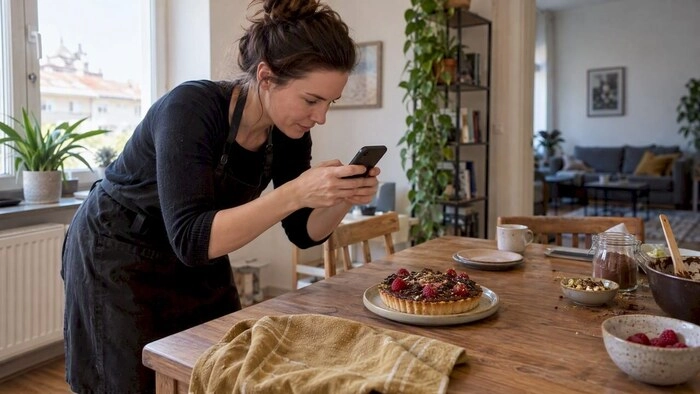
Build a baking ambassador portfolio with 6–8 sample posts, track results, follow Slovenia's sponsorship rules, and apply to BAM's ambassador program.
A food ambassador is someone brands pay or sponsor to represent and promote food products, usually through recipes, posts and event appearances. The fastest route into this role is building a small campaign-style portfolio with real metrics, then pitching it directly, including to a programme such as BAM - Become A Master.
Brands bring food ambassadors on board to create content that makes a product feel familiar and desirable. The job usually covers a handful of recurring tasks.
Brands judge candidates on signals that are easy to track: engagement rate, how many people watch a story through to the end, and clicks on a bio link or discount code. A creator who can point to these numbers has a far stronger pitch than one who only shows follower counts.
The skills worth building sit in five areas: photography that makes food look appetising in natural light, short-form video for reels and stories, basic food styling (plating, props, backgrounds), copywriting that is specific rather than generic, and enough analytics literacy to read a results screenshot and explain what it means. None of these need professional training to start. A phone camera, a consistent editing style and a habit of checking what content performs best will cover most of what a brand expects from a new ambassador.
A portfolio with real results beats a long follower count every time. Brands want evidence that someone can deliver content and move an audience to act, not just post nicely.
Pro Tip: Reshoot the same dish three times with different light and plating before choosing a final image. The difference between an average and a strong photo is almost always light, not equipment.
A media kit does more work than most new ambassadors expect. It gives a brand everything needed to say yes without a back-and-forth, and it signals that the content will arrive on time and in a usable format. Three case examples with numbers attached (reach, saves, click-throughs) carry more weight than a paragraph describing passion for food.
Any post made in exchange for money, free product or event access counts as advertising, and advertising has to be labelled as such. Vague wording is not enough on its own.
Promoting products that reach children or sit high in sugar and fat calls for extra care. National guidance adapting the WHO nutrient-profile model requires media providers to restrict advertising of energy-dense foods to younger audiences, so check whether a product category falls under those restrictions before posting content aimed at that group.
A short compliance checklist helps here: place the disclosure at the very start of a video and clearly on an image, ask the brand in writing to confirm who is the commissioning party, and keep a record of the contract, the brief and the final published post together in one folder.
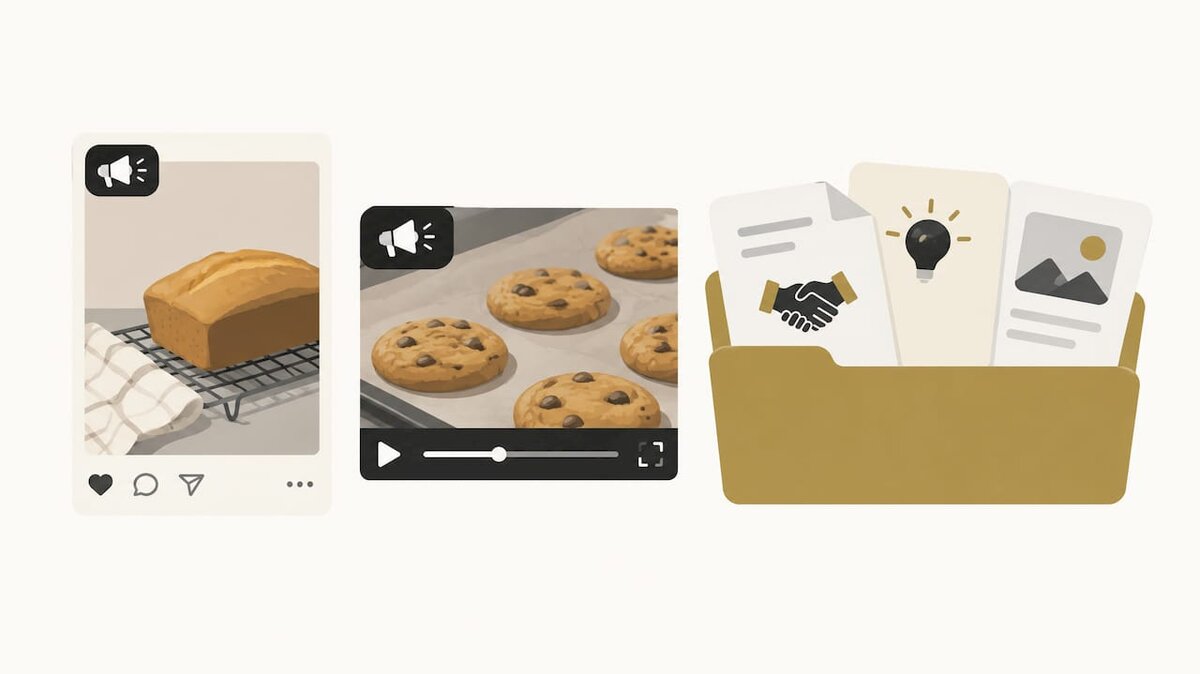
Opportunities usually surface in a few predictable places: brand social pages, product launch announcements, specialist agencies, and direct sign-up pages run by the brand itself. Checking a brand’s own site for an ambassador or community page is often faster than waiting for an open call to appear.
A pitch works best when it is short and backed by proof.
Negotiation at this stage usually covers three things: the form of compensation (cash, product or a mix), how long the brand can reuse the content, and a realistic delivery timeline both sides can commit to.
The biggest mistake new ambassadors make is pitching for recurring work before they have proof of one successful campaign. Document a single paid collaboration properly, with clear goals and tracked results, before approaching anyone about ongoing partnerships.
Disclosure and contract clarity protect everyone involved, not just the brand, so treat them as standard practice rather than paperwork to skip. Running ambassadorship like a small business, with invoices, clear KPIs and dependable delivery, is what turns a one-off collaboration into repeat work.
— Andraz
We built our ambassador route around the same proof-first approach: show what you can do, and we give you the support to do more of it. As an ambassador, you work with real products rather than samples picked for the sake of a photo.
We look for candidates who already have a small body of consistent food content and who can explain, in plain terms, how a post performed. A finished media kit and two or three sample posts with metrics are usually enough to start the conversation. From there, we match ambassadors to the product lines, from everyday spreads to our BAM FIT products, that fit their audience best. Visit Bamchocolate to see our current ranges and get in touch about joining.
A food ambassador typically needs a consistent content style, basic photography or video skills, and at least one documented post with measurable results such as reach or click-throughs. Brands look for reliability and clear communication as much as follower count.
Compensation varies and can include cash, free product, event access or a mix of these. Any of these forms counts as compensation under Slovenian disclosure rules, meaning the resulting content must be labelled as advertising.
The post needs a clear, explicit label such as “advertisement” or “plačana objava” in Slovene, placed where it cannot be missed, at the start of a video or clearly visible on an image. Vague terms like “in collaboration with” have often been judged insufficient by enforcement practice.
There is no fixed timeline, but most ambassadors build credibility by completing one well-documented campaign before pursuing recurring partnerships. Consistent posting, tracked metrics and a tidy media kit speed up that progression more than audience size alone.
Yes, we review candidates on content quality and consistency rather than requiring previous brand partnerships. A small portfolio with two or three sample posts and basic metrics is usually enough to start the conversation.


 Confectionery tips


 Slovenščina
 Hrvatski
 Deutsch
 Italiano
 Česky
 Polski
 Magyar
 Français
 Slovák
 Nederlands
 Español