 info@bamchocolate.com
  Login
Login 

 en
en 
 BAM Cake converter
  Login
Login Urša R.
Ustvarjalka vsebin


 Reading time:
6 minutes
Reading time:
6 minutes 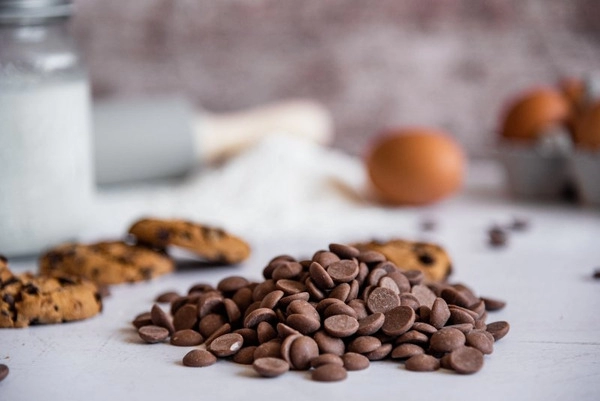
No good dessert without good chocolate. But how do you choose the right one, the best one, in a crowd of chocolates?
We have never had so much chocolate to choose from as we do today. There are more types of chocolate than ever before. We can choose from a variety of dark, milk and white chocolates. And these can have other flavours and additives added. And there are more and more origin chocolates on our market.
The variety of chocolates on offer gives us choice, but it can also be confusing. How do we know which chocolate is good enough and of the right quality to go with the other flavours in a dessert? Because it''s important to know the differences between different types of chocolate, we''ve written a little more about this below so you can choose the right one for your dessert.
Chocolate is made from cocoa beans that grow on a tree called the cocoa tree. The beans must be roasted and ground to make a paste, known as chocolate pulp, which can be separated into cocoa butter and cocoa powder. By combining cocoa powder, butter, sugar and other ingredients, different types of chocolates can be obtained.
For a more detailed chocolate-making process, see our article"From cocoa seed to dark chocolate bar".
There is not just one answer to this question. The truth is that there is no such thing as the best chocolate, or any answer to this question is rather subjective. It is best to rely on your own taste when choosing the right chocolate. Of course, there are some chocolates where, on first taste, you may find that they are not of good quality. They are either too sweet, completely hard and not at all creamy, and some may even have a rancid aftertaste. In general, however, the choice of good chocolate is a matter of individual taste. Nevertheless, it is a good idea to check the declaration before buying. Lower quality chocolates often have large amounts of sugar added, a small percentage of cocoa and contain vegetable fats other than cocoa butter.
Without good chocolate, there is no good dessert. But how do you choose the right chocolate, the best chocolate?
Price also plays a big part in choosing a "quality chocolate". The fact is that chocolate is not cheap and, according to forecasts, it is set to become even more expensive in the future. Therefore, the ''best'' chocolate is usually the one that tastes good and has a price that is easy on the wallet.
There are also branded chocolates which are generally considered to be of high quality. These include Belgian Callebaut chocolate, which you can find in our online shop under the brand BAM by Mojačokolada.si. As well as being top quality and tasting great, its price is also quite affordable.
It''s a funny question, but one that a lot of people ask themselves. We will know which chocolate tastes good by trying as many different chocolates as possible. But if we want to try chocolate like a pro, we need to take a closer look first. We want our chocolate to have a nice shine and to be spotless. If the chocolate is cloudy or grey, it may be old or it may have been exposed to large temperature variations. We then need to break the chocolate. If it bends or crumbles when it is broken, it is not of good quality or is old.
Good chocolate will have a strong chocolate smell. Rub your fingers over the surface of the chocolate to warm it up a little and then smell it. If it doesn''t smell like chocolate, or smells more like vanilla and other additives, then we know it won''t taste very chocolatey.
Finally, there is the tasting. We must pay particular attention to how it melts in the mouth. Is it chewy, smooth or does it leave a waxy feeling in the mouth? In general, a smooth and velvety taste is preferred. We should also pay attention to the different flavours of chocolate. Do we taste them all at once or do we taste them gradually? Above all, it is important to trust our taste buds. Choosing chocolate is very personal, so we should always choose the one that we would be most happy to eat.
Dark chocolate differs from other types of chocolate in that it has a higher percentage of cocoa and contains very little or no milk. It contains at least 35% cocoa solids. It is usually sweetened, but unsweetened ones can also be found on the market, which have an extremely high percentage of cocoa and a pronounced bitter or slightly sour taste. Unsweetened chocolate is often also referred to as ''baking chocolate'' or ''cooking chocolate''. It is often said that the more cocoa and the less sugar a dark chocolate has, the more noble and high quality it is.
Dark chocolate is also often described as a healthier alternative to milk and white chocolate. Chocolates with 70-85% cocoa are an excellent source of antioxidants, which is why they are also referred to as a superfood. The positive effects of dark chocolate are cited as reducing stress, regulating cholesterol, increasing brain function and reducing the risk of heart disease.
Despite its many positive effects, dark chocolate should not be overconsumed and should not be consumed in unlimited quantities. A piece or two a day is more than enough.
Milk chocolate is one of the most popular and best-selling chocolates in the world. Both milk and dark chocolate contain ''chocolate solids'', cocoa butter and sugar, but milk chocolate also contains milk powder or condensed milk, which gives it a creamy taste and texture and a lighter colour. In general, milk chocolate tastes much lighter and sweeter compared to dark chocolate and has a much softer texture.As a rule, it has a lower cocoa content than dark chocolate. It contains at least 20% cocoa solids, with higher quality chocolates containing up to 35% cocoa solids.
White chocolate is made from a large amount of cocoa butter, sugar, dairy products (cocoa powder, condensed milk) and often contains vanilla. It does not contain cocoa mass and is therefore not brown in colour. Some of the cheaper white chocolates may also contain additional fillers or additives. Higher quality white chocolates usually contain only the basic ingredients, are free of additives and have a pleasant creamy sweet taste. As with milk and dark chocolate, the quality of the chocolate can have a big influence on the final taste of the dessert.
Usually called ''table chocolate'', this chocolate has a higher cocoa content and less sugar, so it has a more bitter taste and is not usually intended to be eaten on its own, but is suitable for baking and cooking. This chocolate can be used for almost all desserts. It will work well in biscuits, cakes and brownies, it can be used to make delicious creams for cakes, cupcakes and scones, and it can also be used as a topping, although chocolate couverture would be better for this purpose.
Chocolate couverture contains the same basic ingredients as other chocolates, i.e. chocolate mass, sugar and cocoa butter, plus additives such as vanilla and milk powder. The difference with regular chocolate is that it contains a higher proportion of cocoa butter, so it melts nicer, faster and smoother. It is more stable once it has set. It is mainly used for tempering, making chocolates, various toppings and coatings. It is not usually the best choice for ganaches and mousses, depending on the recipe, because of the different ratio of ingredients, but the end result will be much better if ''classic chocolate'', or chocolate intended for baking and cooking, is used for this purpose.



 Chocolate novelties



 Slovenščina
 Hrvatski
 Deutsch
 Italiano
 Česky
Česky
 Polski
 Magyar
 Français
 Slovák
 Nederlands
 Español