 info@bamchocolate.com
  Login
Login 

 en
en 
 BAM Cake converter
  Login
Login Urša R.
Ustvarjalka vsebin


 Reading time:
2 minutes
Reading time:
2 minutes 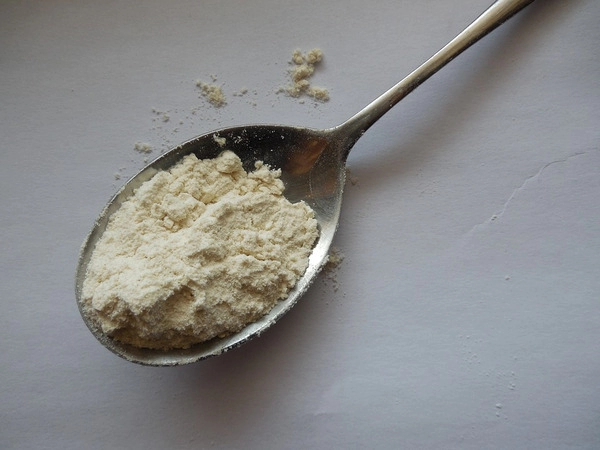
Both are white, odourless and indistinguishable at first sight. We really can''t imagine baking without them, as they both help us to create light, fluffy cakes and biscuits. Yet, they should not be equated, as they have different effects on the colour, texture and taste of the baked goods.
Baking soda consists of sodium bicarbonate. When exposed to heat, it triggers the production of carbon dioxide, which causes your dough to rise. Unfortunately, sodium carbonate is also produced at the same time, which leaves an unpleasant alkaline taste in the dough. This can be partly avoided by mixing it with an acid such as lemon juice. This partially neutralises the alkaline taste left by the soda ash and speeds up the carbonation reaction.
Baking powder has a slightly more complex structure compared to baking soda.
It consists of 1/4 baking soda to which is added an acid which reacts with the soda. Corn starch is also added to the mixture to prevent reactions during storage of the powder. Some baking powders use two acids (monocalcium phosphate and sodium aluminium sulphate), the first of which causes a reaction at room temperature while the dough is being mixed, and the second of which causes a reaction during baking, at higher temperatures.
There is quite a difference in the action of baking powder and baking soda. Baking soda allows the dough to expand, while baking powder allows the dough to rise more. Both have a positive effect on the rising and fluffiness of the dough. They also affect the colour of the dough. When baking soda is used instead of baking powder, it can cause the pastry to brown too much or even give a burnt appearance. At the same time, too much soda can give the dough a bitter taste.
So when using both types of powders, think carefully about which ingredients you mix them with. As mentioned above, baking soda works well in combination with sour. In case you use baking powder and your dough still contains sour ingredients, you can of course add a little baking soda to neutralize your dough for a better result.
Nowadays, we can never be sure what is actually in the baking powder we buy in the shop. Industrially produced baking powder has all sorts of preservatives added to keep it fresher for longer. Not only will homemade baking powder be healthier, it will also taste better. It is also a good recipe to use when you simply run out of baking powder at home.
You will need:
All you need to do is mix the ingredients well. The quantities mentioned above will be enough for 1 teaspoon of baking powder.



 Confectionery tips



 Slovenščina
 Hrvatski
 Deutsch
 Italiano
 Česky
Česky
 Polski
 Magyar
 Français
 Slovák
 Nederlands
 Español