 info@bamchocolate.com
 Login


 en

 BAM Cake converter
 Login
Claudia
Avtorica vsebin


 Reading time:
10 minutes
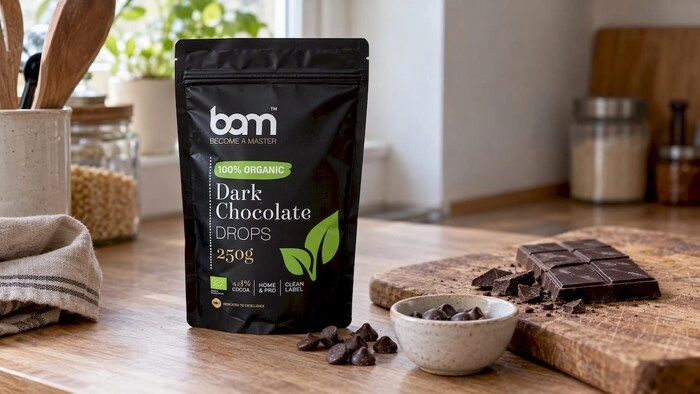
Learn why organic chocolate is not automatically healthier, how EU labels and cocoa processing matter, and where BAM sources premium organic bars.
Organic chocolate is not automatically healthier for you. Its farming rules and traceability address environmental and farming input concerns, while cocoa percentage and processing determine most of the health and flavour differences you will actually notice. The World Health Organization frames chocolate as food to enjoy in moderation regardless of label, so the smarter question is which bar gives you more cocoa and fewer additives.
Before the detail, here is what separates the two on a shelf.
Organic certification in the EU is governed by Regulation (EU) 2018/848, which sets out how cocoa must be grown and how processed products can carry the organic claim. Processed foods need to be made mainly from organic agricultural ingredients, and producers face regular audits to keep the certification.
On the farm, the differences are concrete:
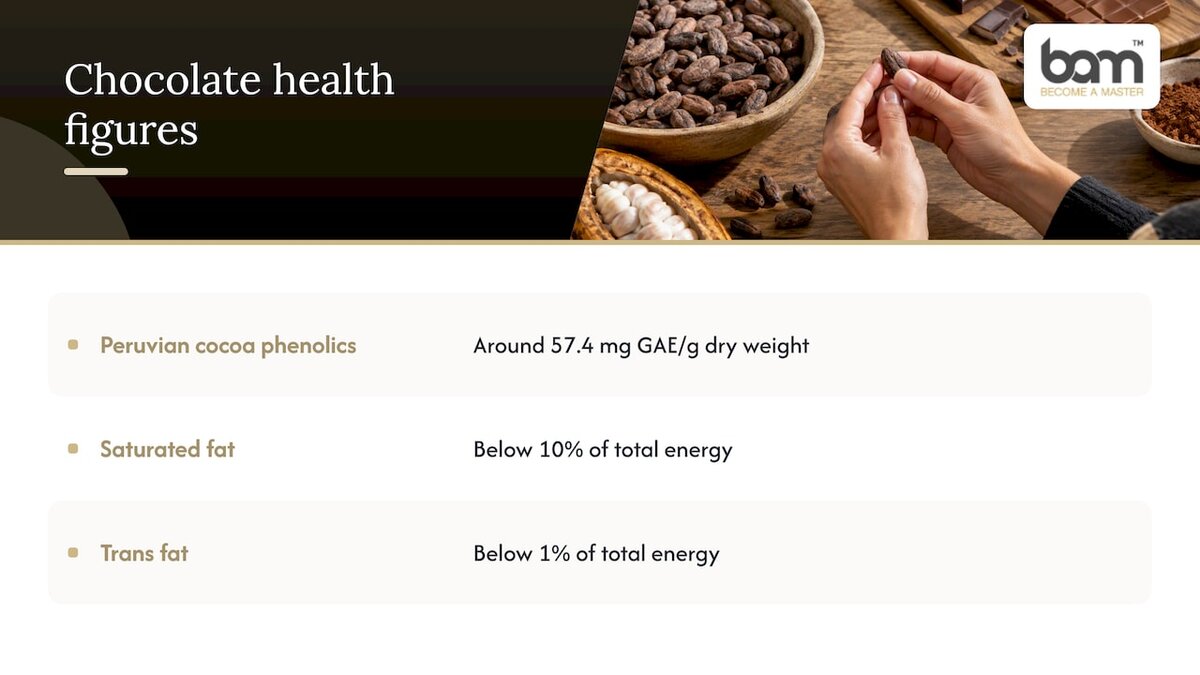
The health story in chocolate comes down to cocoa content and processing, not the organic label. A PMC review of cocoa powders found that non-alkalised, natural cocoa generally retains more total phenolic content and antioxidant activity than Dutch-processed cocoa. One non-alkalised Peruvian sample measured around 57.4 mg GAE per gram dry weight, well above typical alkalised results. Origin and post-harvest treatment affect polyphenol levels as much as, or more than, farming method.
Methylxanthines and polyphenols in cocoa are linked to antioxidant and cardiovascular benefits in the research literature, though effects tend to depend on dose and overall diet rather than any single bar. The WHO’s 2023 guidance recommends keeping saturated fats below 10% of total energy and trans fats below 1%, a useful frame for deciding how much chocolate fits into your week rather than whether a specific bar is “good” or “bad”.
Contaminants complicate the simple “organic equals cleaner” assumption. The George Washington University study found some organic dark chocolate samples with notable cadmium and lead levels that in some cases were higher than conventional products in the same analysis. Heavy metals in cocoa typically come from soil conditions and processing, not from whether synthetic pesticides were used, so an organic label is no guarantee of lower exposure.
The practical takeaway: choose a bar with a higher cocoa percentage, prefer one labelled non-alkalised or minimally processed, and treat portion size as the lever that matters most for your health, whichever label sits on the wrapper.
Flavour in chocolate traces back to bean origin, genotype and fermentation far more than to certification. Beans from Ecuador, Madagascar or Ghana carry distinct acidity, fruitiness and bitterness before a single processing decision is made.
Alkalisation (Dutching) is the processing step with the biggest sensory effect: it mellows bitterness and darkens colour, but it also reduces polyphenol content, as the PMC cocoa review documents. A naturally processed bar tends to taste sharper and more complex, which some shoppers mistake for an “organic” character when it is really a processing choice. Artisan bean-to-bar methods, roast profile and conching time usually explain a bar’s taste more than whether it carries an organic certificate.
Regulation (EU) 2018/848 permits the organic claim on processed foods only when the product mainly uses organic agricultural ingredients, backed by independent audits. Organic and Fairtrade are not interchangeable: Fairtrade ANZ explains that Fairtrade centres on social and wage standards and minimum pricing for farmers, while organic certification governs agricultural inputs and environmental practice.
A practical checklist when you are reading a label:
Organic cocoa farming reduces synthetic pesticide and fertiliser use, which generally benefits pollinators and soil health, and agroforestry systems common on organic farms help protect biodiversity around cacao plots.
The caveats matter too. A PMC analysis of organic certification outcomes notes that certification alone does not guarantee environmental superiority. Some smallholder farms are “organic by default” without certification, lower yields under organic management can push farmers to clear more land to maintain output, and without market access or sustainable intensification, that trade off can work against the environmental goal the label implies.
Pairing organic certification with transparent supply chains and fair labour terms produces more reliable outcomes for farmers and ecosystems than relying on the organic claim in isolation. A bar that discloses its cooperative, farm region or processor tends to tell you more than the certificate alone.
Sourcing transparency is often a better predictor of quality and ethics than the organic label by itself. A chocolate maker that names the cooperative, region or single farm behind its beans gives you a way to check claims; a bar that simply says “cocoa (origin: various)” gives you nothing to verify.
Regular chocolate supply chains vary widely: some large manufacturers blend beans from several countries for consistency, which can obscure farming practices and labour conditions. Organic supply chains are not automatically more transparent, since certification covers farming inputs, not disclosure of supplier names or farm-level detail.
The most useful signal is a brand that publishes supplier relationships alongside its certifications, whether organic, Fairtrade or both. That combination tells you more about environmental practice and labour standards than either label does on its own, and it is the detail worth hunting for in product descriptions rather than assuming from the word “organic” printed on the front.
For home bakers, the practical question is how a bar behaves once it is melted, tempered or folded into a ganache, and that comes down to cocoa percentage and fat content rather than certification. A high cocoa percentage bar, organic or not, gives a firmer set and a more pronounced chocolate flavour in brownies, truffles and glazes.
Non-alkalised cocoa, which is more common among smaller organic producers, brings a sharper, more acidic flavour that can change the balance of a recipe built around milder Dutch-processed cocoa. Bakers switching between the two sometimes need to adjust sugar or leavening slightly, since natural cocoa is more acidic and reacts differently with baking soda than alkalised cocoa does.
Bean origin still does more work than the organic claim when it comes to final flavour in baked goods. A single-origin bar with distinct fruit notes will show through in a simple tart or truffle far more than a generic organic bar blended for consistency, which is why bakers chasing flavour tend to shop by cocoa percentage and origin first and certification second.
Shoppers increasingly associate the word organic with “healthier” and “more ethical”, even where the evidence, as the research above shows, is more nuanced. That perception has pushed demand for organic and specialty chocolate upward, alongside growing interest in single-origin and bean-to-bar products that emphasise traceability over mass branding.
At the same time, shoppers are getting more literate about labels: cocoa percentage, origin and the presence of combined certifications increasingly influence purchase decisions alongside, or ahead of, the word organic on its own. Gift and premium segments in particular lean towards products that tell a clear origin story, which is part of why curated and limited offerings continue to find an audience among chocolate enthusiasts looking for something beyond a supermarket bar.
Shelf life in chocolate is governed by fat content, sugar and storage conditions far more than by organic status. Both organic and conventional dark chocolate typically keep well for a year or more when stored in a cool, dry place away from direct light, thanks to cocoa’s naturally low moisture content.
Organic bars that skip synthetic preservatives or emulsifiers found in some conventional products can be marginally more sensitive to temperature swings, developing bloom (a dull grey or white surface film) slightly sooner if stored somewhere warm. This is a cosmetic change rather than a safety issue, and the chocolate remains fine to eat. Keeping any bar, organic or regular, between 15 and 20 degrees Celsius and away from strong odours protects both flavour and texture for longer.
We built our range around the signals this comparison points to: cocoa percentage, provenance and honest labelling rather than marketing claims. Our BAM Chocolate line sits alongside organic and specialty options, including sugar-free and protein-rich formats, so you can choose by cocoa content and dietary need rather than guesswork. We favour gourmet-quality ingredients and clear sourcing over generic claims, which is the standard this article has set out.
— Andraz
If the checklist in this article matters to you, cocoa percentage, non-alkalised processing and combined certifications, our BAM Chocolate range is built around exactly those cues. We also stock 100% BAM Spreads for a different format of the same quality standard, and curated gifts for anyone buying for someone else. Browse the range or get in touch for bulk and corporate orders.
Dark chocolate with a higher cocoa percentage and minimal processing generally offers the most polyphenols and the least added sugar, regardless of whether it is organic. The WHO’s dietary guidance recommends keeping saturated and trans fat intake within set limits, so moderate portions of a high cocoa bar fit best into a balanced diet.
Organic chocolate is made from cocoa grown without synthetic pesticides or fertilisers and certified under rules such as Regulation (EU) 2018/848. The certification covers farming inputs and processing standards, not nutritional content or heavy metal levels.
A 90% bar generally contains more polyphenols and less sugar than a 70% bar, which can support the antioxidant benefits linked to cocoa in the research literature. The trade off is a more bitter, intense flavour, so the better choice depends on whether you can comfortably eat it regularly rather than leaving it unfinished.
Raw cacao, which is minimally processed and unroasted, tends to retain more polyphenols than regular cocoa powder, especially when the cocoa has been alkalised, as shown in research on cocoa powder composition. Non-alkalised cocoa sits closer to cacao in bioactive content, while Dutch-processed cocoa has a milder taste but fewer of those compounds.



 Confectionery tips




 Slovenščina
 Hrvatski
 Deutsch
 Italiano
 Česky
 Polski
 Magyar
 Français
 Slovák
 Nederlands
 Español