 info@bamchocolate.com
  Login
Login 

 en
en 
 BAM Cake converter
  Login
Login Claudia
Avtorica vsebin


 Reading time:
9 minutes
Reading time:
9 minutes 
Discover why use sugar-free spreads for better health. Learn how they can help manage blood sugar and support a balanced diet!
TL;DR:
- Sugar-free spreads are not calorie-free and still contain fats and carbohydrates, requiring portion control. They lower glycemic impact and support blood sugar management but can cause digestive issues if sweeteners like sugar alcohols are used excessively. Choosing spreads with mindful ingredients and pairing them with fiber-rich foods enhances their health benefits.
Sugar-free spreads are everywhere now, yet most people still misunderstand what they actually are. The question of why use sugar-free spreads goes beyond simple calorie counting. Traditional spreads, including many labelled as “natural,” are loaded with added sugars that contribute to blood glucose spikes, dental decay, and long-term metabolic strain. If you are managing diabetes, watching your weight, or simply trying to eat more deliberately, the type of spread on your toast matters more than you might expect. This guide cuts through the noise and gives you a clear, honest picture.
| Point | Details |
|---|---|
| Sugar-free is not calorie-free | Sugar-free spreads still contain fats and carbohydrates, so portion control remains necessary. |
| Blood sugar management | Lower glycemic index spreads help stabilise glucose levels, which is especially useful for diabetics. |
| Natural sugars still count | Honey, maple syrup, and agave carry the same metabolic risks as refined sugar when consumed in excess. |
| Texture requires special ingredients | Removing sugar changes spreadability, so quality products use thickeners like pectin or chia seeds. |
| Pair with fibre or protein | Combining sugar-free spreads with whole grain bread or Greek yoghurt improves blood glucose outcomes. |
The term “sugar-free” has a specific meaning on food labels. A product can only carry this claim if it contains less than 0.5 grams of sugar per serving. “Low sugar” is a looser term and typically means the product contains significantly less sugar than the standard version, though not zero.
Traditional spreads, from jam to chocolate hazelnut spreads, rely heavily on sucrose for sweetness, preservation, and texture. Sugar does three jobs at once in a spread: it sweetens, it binds water to prevent microbial growth, and it creates that thick, glossy consistency you expect. Remove it, and you need to solve all three problems differently.
Sugar-free spread alternatives use a range of substitutes to fill those roles:
The gel texture in sugar-free spreads requires these specialised thickeners because removing sugar fundamentally changes the physical chemistry of the product. This is why a homemade low-sugar jam behaves differently from a shop-bought one.
From a nutritional standpoint, the contrast with traditional spreads is real. Sugar-free versions typically contain lower total carbohydrates, a reduced glycemic load, and in some cases higher fibre content, particularly when ingredients like date paste are used. However, fat content can remain similar or even higher, depending on the product type.
Pro Tip: When reading a label, check both “total sugars” and “of which added sugars” separately. A product can be low in added sugars but still contain naturally occurring sugars from fruit concentrates.
The sugar-free spread health benefits are real, but they come with caveats worth knowing.
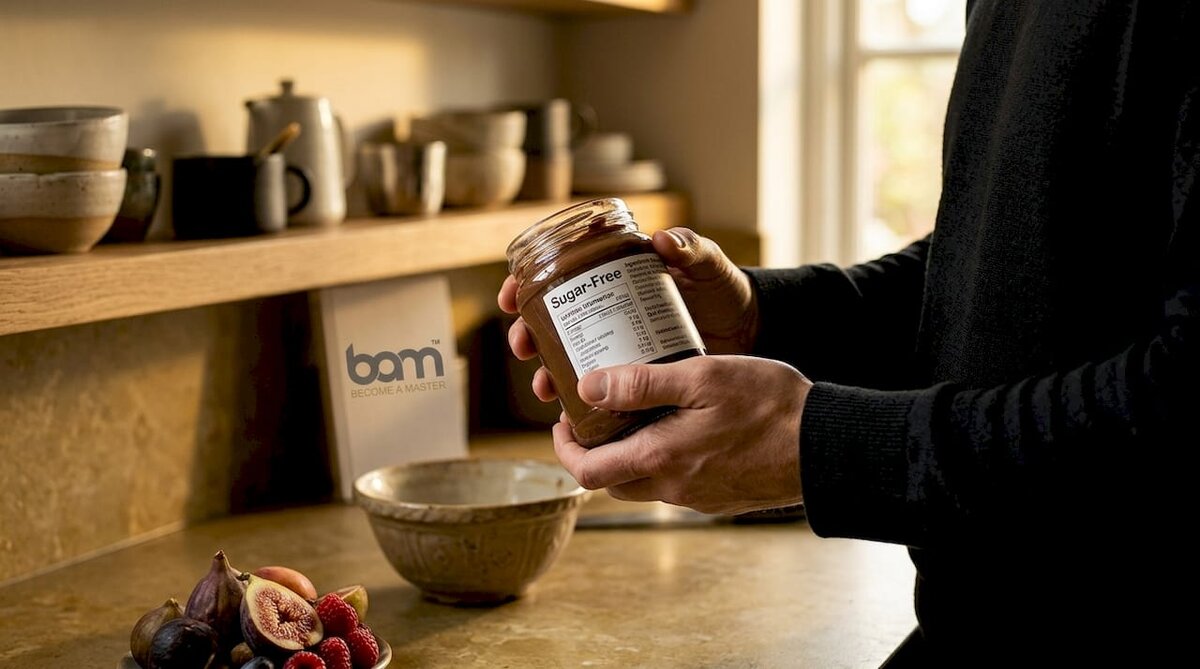
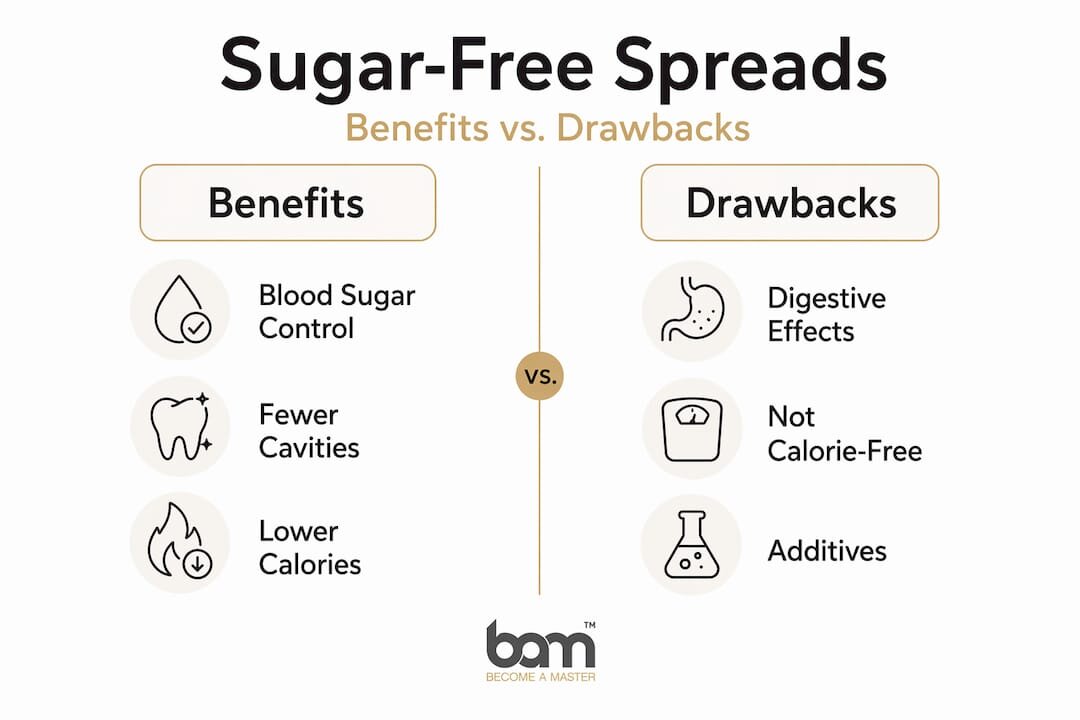
For people with type 2 diabetes or insulin resistance, the most significant benefit is glycemic control. The WHO recommends free sugars below 6 teaspoons per day, and a single tablespoon of standard jam can contain up to 3 teaspoons of sugar on its own. Sugar-free spreads offer a lower glycemic index alternative, which means a slower, steadier rise in blood glucose rather than a sharp spike followed by a crash. That stability translates directly into more consistent energy levels throughout the morning.
Dental health is another genuine advantage. Bacteria in the mouth feed on sugar to produce the acids that erode enamel. Spreads sweetened with xylitol are particularly notable here, as xylitol actively inhibits the bacteria responsible for tooth decay.
The health advantages of sugar-free spreads are not without limits. Sugar-free products can still contain calories, fats, and carbohydrates in meaningful amounts. A sugar-free chocolate spread, for example, may have a similar fat content to its standard counterpart.
Sugar alcohols are the other area to watch. Erythritol and xylitol cause bloating and digestive discomfort in sensitive individuals, particularly when consumed in larger quantities. If you notice digestive issues after switching to a sugar-free spread, the sweetener type is the likely cause.
Pro Tip: If you are sensitive to sugar alcohols, look for spreads sweetened with stevia or monk fruit instead. These do not ferment in the gut and are far less likely to cause bloating.
The broader point is that portion control remains essential even with sugar-free products. Many consumers fall into the trap of eating more because the label says “sugar-free,” which can negate the benefit entirely.
Not all sugar-free spreads are created equal. The type of sweetener used affects taste, texture, nutritional profile, and how the spread behaves in recipes.
| Sweetener type | Glycemic impact | Texture effect | Notable consideration |
|---|---|---|---|
| Stevia | Zero | Minimal change | Can have a slight bitter aftertaste at high doses |
| Erythritol | Very low | Can feel cooling | Generally well tolerated; low digestive risk |
| Xylitol | Low | Similar to sugar | Toxic to dogs; dental health benefits |
| Date paste | Moderate | Adds thickness and richness | Higher fibre and mineral content |
| Maltitol | Medium | Close to sugar | Higher glycemic impact than other sugar alcohols |
Date paste deserves particular attention. Research shows that substituting 50% sucrose with date paste in chocolate spreads improves the nutritional profile significantly, including higher fibre, better mineral content, and reduced saturated fats. The same research found that taste and texture scores remained high among consumers, which matters because a spread that does not taste good will not stay in your kitchen for long.
Sugar-free chocolate spreads enriched with date paste also deliver increased potassium, magnesium, and iron, making them a genuinely functional food rather than simply a product with less of one ingredient. This is the kind of nutritional upgrade that makes a real difference for people who eat spreads daily.
One point that surprises many people: natural sweeteners like honey, maple syrup, and agave carry the same metabolic risks as refined sugar when consumed in excess. A spread labelled “sweetened with agave” is not a sugar-free spread. It is still an added sugar product, regardless of how natural the source sounds. Understanding this distinction is covered well in Bamchocolate’s article on [natural sweetener health claims](https://bamchocolate.com/news/why-are-natural sweeteners-healthier-than-sugar).
Knowing why opt for sugar-free is one thing. Using these spreads effectively in your daily diet is another. Here is how to do it properly.
Read the full label, not just the front. Look at total sugars, added sugars, and the ingredients list. If a sugar alcohol or sweetener appears in the first three ingredients, it is present in a significant amount.
Pair with fibre or protein. Nutritionists recommend combining spreads with whole grain toast or Greek yoghurt to moderate any residual glycemic impact. This is especially relevant for spreads that still contain some carbohydrates from fruit or other sources.
Check the shelf life. Homemade low-sugar jams need refrigeration and should be consumed within about 30 days. Commercial sugar-free spreads use preservatives or modified atmosphere packaging to extend this, but always check the label after opening.
Use them in recipes, not just on toast. Sugar-free spreads work well as fillings in baked goods, stirred into porridge, or as a base for sauces. Bamchocolate’s guide on healthier confectionery techniques shows how to incorporate them into baking without compromising texture or flavour.
Avoid the health halo trap. Choosing a sugar-free spread is a good decision, but it does not offset a diet high in processed foods or refined carbohydrates elsewhere. The health impact depends on overall diet context, not individual food choices in isolation.
Pro Tip: If you are making sugar-free spreads at home, use low-methoxyl pectin or chia seeds as your gelling agent. Standard pectin requires sugar to set properly and will not work in low-sugar recipes.
I have spent years working with people trying to manage blood sugar through diet, and sugar-free spreads come up constantly. My view is straightforward: they are a useful tool, not a solution.
What I have found is that the biggest benefit is not the absence of sugar itself. It is the shift in thinking that comes with choosing these products deliberately. When someone starts reading labels and choosing a spread based on its sweetener type and glycemic impact, they are already eating more mindfully. That habit compounds across every other food decision they make.
The mistake I see most often is treating “sugar-free” as a green light to eat more. I have worked with clients who switched to sugar-free chocolate spread and then doubled their portion size, ending up with the same calorie intake as before. The label changed; the behaviour did not.
My recommendation is to use sugar-free spreads as part of a genuinely varied diet, paired with whole foods and eaten in reasonable amounts. Check the nutritional value of your chocolate spread before you buy, not after. And do not let one good swap convince you that the rest of your diet does not need attention.
— Andraz
Bamchocolate offers a focused range of sugar-free and low-sugar spreads designed for home bakers and health-conscious consumers who want quality without compromise. The spreads are formulated with thoughtful sweetener choices and clear nutritional information, so you know exactly what you are putting on your toast or folding into your baking.
For those who want to go further, the baking accessories range includes the speciality ingredients needed to create your own sugar-free spreads and confectionery at home. From pectin to natural thickeners, everything is sourced for quality and consistency. If you are building a healthier baking habit, starting with the right ingredients makes a measurable difference.
A product labelled sugar-free contains less than 0.5 grams of sugar per serving. It may still contain other carbohydrates, fats, and sweeteners such as sugar alcohols or stevia.
Yes, in most cases. Sugar-free spreads have a lower glycemic index than traditional spreads, which helps manage blood glucose levels. Pairing them with fibre-rich foods improves this effect further.
Some can. Spreads sweetened with sugar alcohols like xylitol or maltitol may cause bloating or loose stools in sensitive individuals. Spreads using stevia or monk fruit are less likely to cause these issues.
Not necessarily. Sugar-free spreads can still contain significant amounts of fat and carbohydrates. Always check the full nutritional panel rather than relying on the front-of-pack claim alone.
Natural sweeteners like honey and agave are still added sugars and carry the same metabolic risks when consumed in excess. True sugar-free spreads use non-sugar sweeteners such as stevia, erythritol, or date paste instead.



 Tales of chocolate



 Slovenščina
 Hrvatski
 Deutsch
 Italiano
 Česky
Česky
 Polski
 Magyar
 Français
 Slovák
 Nederlands
 Español