 info@bamchocolate.com
  Login
Login 

 en
en 
 BAM Cake converter
  Login
Login Claudia
Avtorica vsebin


 Reading time:
10 minutes
Reading time:
10 minutes 
Discover the crucial role of textures in desserts. Learn how texture influences flavor and elevates your baking skills for unforgettable treats.
TL;DR:
- Texture is a core ingredient in desserts that influences flavor perception and consumer satisfaction.
- Layering contrasting textures like crunchiness, creaminess, and chewiness enhances appeal and prolongs enjoyment.
Texture is the defining sensory quality that separates a forgettable dessert from one you think about for days. The role of textures in desserts goes far beyond how something feels in your mouth. It shapes flavour perception, signals quality, and controls how quickly you eat. 56% of global consumers actively seek interesting texture combinations in indulgent treats. That figure tells you texture is not a finishing touch. It is a core ingredient.
Texture in food science is formally called mouthfeel, a term that covers every physical sensation from the first bite to the final swallow. Home bakers tend to focus on flavour, but mouthfeel is what the brain processes first. The sound of a biscuit snapping, the drag of a caramel, the give of a ganache centre: each sends a distinct signal before taste even registers.
Crunchy and crispy textures are the most immediate quality cues a dessert can deliver. Auditory feedback from crispness tells the brain the product is fresh and premium. A praline shard on a mousse, a tuile balanced on a tart, a feuilletine layer inside a bonbon: all of these work because the crack is heard as much as felt.
Creamy and smooth textures operate differently. Creamy textures slow eating and allow flavours to develop across the palate, creating comfort and indulgence. A ganache that melts at body temperature, a panna cotta that barely holds its shape, a whipped mascarpone filling: these textures extend the pleasure of each mouthful rather than ending it quickly.
Chewy and gooey textures occupy a different emotional register entirely. They evoke nostalgia, encourage slower eating, and increase satisfaction and satiety by prolonging palatal stimulation. A dense brownie, a pulled caramel, a mochi centre: these textures keep you engaged long after the first bite.
Consumer data confirms these preferences are not evenly distributed:
The remaining preferences spread across aerated, flaky, and other niche textures. The key takeaway is that no single texture dominates. Desserts that offer more than one texture type reach a broader audience and deliver a more memorable experience.
Single-texture desserts are satisfying. Multi-texture desserts are memorable. Layered desserts combine snap, creaminess, and chewiness to maintain interest and slow consumption. Each layer delivers a new sensation, which prevents the palate from becoming bored.
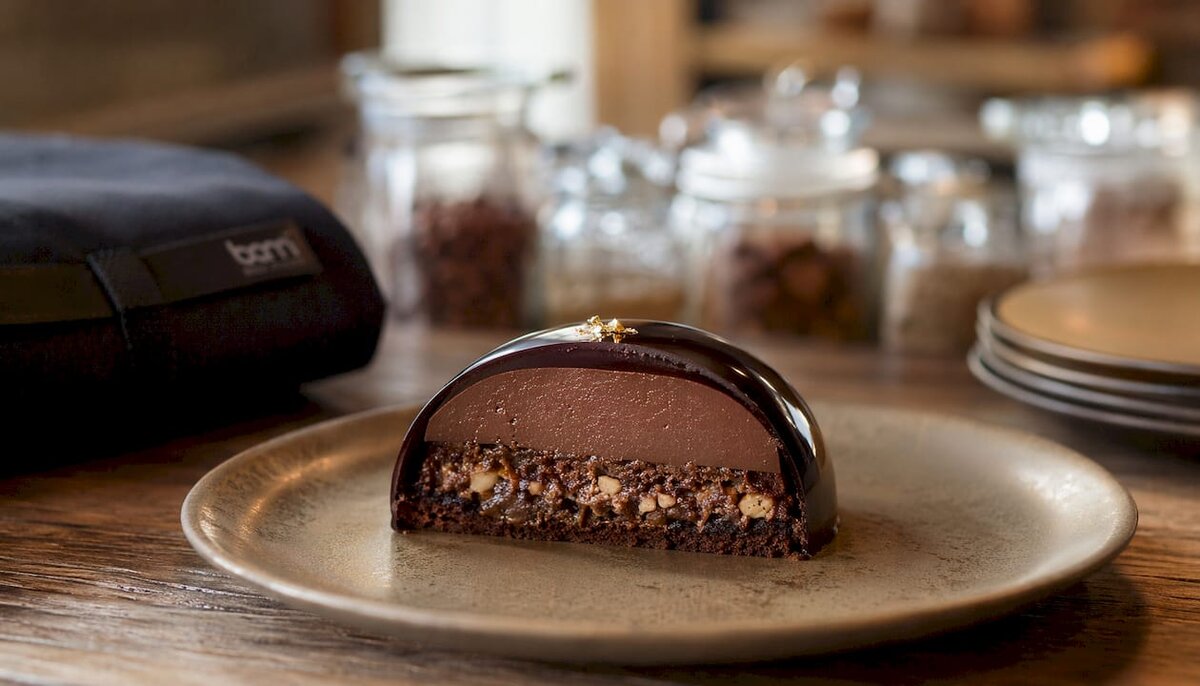
The classic example is a filled chocolate bar: a tempered shell that snaps cleanly, a ganache or praline centre that melts slowly, and perhaps a feuilletine or nut layer that adds crunch. Each element serves a specific textural purpose. Remove one and the experience flattens.
Layering also works at the structural level. A successful layered dessert requires careful balancing of shell thickness and cream viscosity to produce a satisfying one-bite reveal where textures contrast yet blend at mouth temperature. Too thick a shell and the filling is overwhelmed. Too thin and the structural contrast disappears. This is precision work, not guesswork.
The technical challenge in multi-texture desserts is moisture migration. Crisp elements placed next to moist fillings will soften within hours if not protected. Isolation techniques such as thin tempered chocolate layers or cocoa butter barriers prevent moisture from crossing between components. This is why professional chocolatiers temper their shells before adding fillings, not just for gloss, but for textural longevity.
| Texture pairing | Effect on eating experience |
|---|---|
| Crisp shell + creamy centre | Contrast creates immediate interest; prolongs flavour release |
| Chewy base + smooth glaze | Extends eating time; adds visual and tactile contrast |
| Crunchy inclusion + soft sponge | Breaks monotony; signals quality through auditory feedback |
| Aerated mousse + dense biscuit | Lightness balanced by substance; prevents palate fatigue |
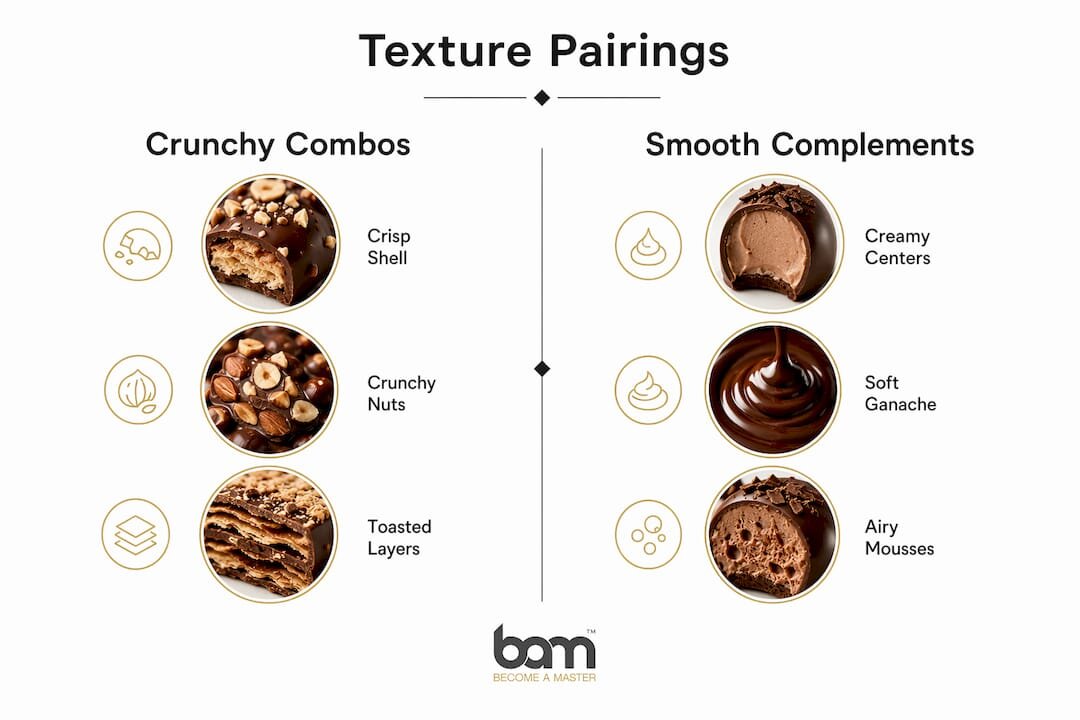
Pro Tip: When adding a crunchy layer to a moist dessert, coat the crunchy element in a thin layer of tempered chocolate before assembly. This creates a moisture barrier and buys you at least 24 extra hours of crispness.
The search volume for chocolate bar fillings increased by 191% in Q2 2025. That growth reflects a direct consumer appetite for the contrast that filled chocolates deliver. Bakers and chocolatiers who understand layering are already ahead of this curve.
Texture has moved from a background consideration to a primary driver of dessert choice. Search data makes this concrete. Searches for ‘chewy chocolate cookies’ surged 617% over the past year. Searches for ‘chewy chocolate brownie cookies’ grew by 392% in the same period. These are not minor fluctuations. They signal a structural shift in what consumers want from baked goods.
Several trends are driving this shift:
Younger consumers are particularly texture-driven. They prioritise how a food feels over its ingredient list, which represents a significant shift from the clean-label focus of the previous decade. For home bakers, this means texture-led thinking is now a creative and commercial necessity, not an optional refinement.
The role of mouthfeel in desserts also connects to satiety. Chewy and dense desserts encourage slower eating and prolonged palatal stimulation. Eating more slowly increases satisfaction, which means a smaller portion delivers more enjoyment. That is a compelling argument for texture investment at every level of baking.
Mastering textural balance in pastries and confectionery requires deliberate technique, not just good recipes. The following steps give you a practical framework.
Choose your target texture first. Before selecting a recipe, decide what mouthfeel you want to achieve. A chewy cookie requires a different fat-to-flour ratio and baking time than a crisp one. Starting with the texture in mind shapes every subsequent decision.
Control moisture at every stage. Moisture is the enemy of crunch and the friend of chew. For crisp textures, reduce water content in fillings, bake at higher temperatures for shorter periods, and store in airtight conditions. For chewy textures, use brown sugar over white (it retains more moisture), underbake slightly, and rest the product before serving.
Use isolation to protect contrast. When combining crunchy and moist elements, physically separate them with a fat barrier. Tempering chocolate correctly is the most reliable method. A well-tempered shell creates a moisture-resistant barrier that keeps fillings and bases texturally distinct.
Minimise artificial stabilisers. Overusing stabilisers suppresses the natural melt-away quality of artisan ingredients. A ganache made with quality chocolate and cream should melt cleanly at body temperature. Adding excessive gelatine or starch produces a stable but dull texture that lacks the sensory payoff of a well-made filling.
Control temperature precisely. Temperature affects texture at every stage: mixing, baking, cooling, and serving. Butter creamed at the wrong temperature produces a different crumb structure. Chocolate cooled too quickly blooms and loses its snap. Precise temperature control is the single most impactful variable a home baker can manage.
Pro Tip: Rest chewy cookies on the baking tray for five minutes after removing from the oven. The residual heat continues to set the structure, and the steam redistributes moisture evenly. This produces a more consistent chew than cooling on a rack immediately.
Choosing the right base ingredient also matters. The choice of chocolate for baking directly affects the texture of the finished product. Higher cocoa butter content produces a smoother melt and a cleaner snap. Lower-quality chocolate with added vegetable fats produces a waxy, flat texture that no technique can fully correct.
Texture is the primary sensory variable in dessert design, and mastering it requires deliberate technique, quality ingredients, and an understanding of how mouthfeel drives consumer satisfaction.
| Point | Details |
|---|---|
| Texture drives consumer choice | 56% of global consumers actively seek interesting texture combinations in indulgent products. |
| Contrast creates memorability | Layering crisp, creamy, and chewy elements keeps the palate engaged and slows consumption. |
| Moisture management is critical | Isolation techniques like tempered chocolate barriers preserve textural contrast in layered desserts. |
| Chewy textures are trending strongly | Searches for chewy chocolate cookies grew 617%, signalling a clear shift in consumer preference. |
| Stabiliser use affects quality | Minimising artificial stabilisers preserves the natural melt-away quality of artisan fillings. |
I have tasted hundreds of home-baked desserts over the years, and the ones that stay with me are almost never the most flavourful. They are the ones that surprised me physically. A tart with a base that shattered cleanly. A chocolate that resisted for a half-second before giving way to something impossibly smooth. A cookie that pulled apart in a way that felt almost theatrical.
What I have come to believe is that most home bakers underestimate texture because it is harder to taste in advance than flavour. You can adjust seasoning as you go. You cannot easily fix a soggy base or a grainy ganache once the dessert is assembled. Texture requires planning from the start, not correction at the end.
The other thing I have noticed is that texture and flavour are not separate concerns. They are the same concern expressed differently. A creamy filling tastes richer because it coats the palate slowly. A crunchy element tastes fresher because the brain interprets the sound as a freshness signal. When you work on texture, you are also working on flavour, whether you realise it or not.
My advice to any home baker serious about improving their results: spend one baking session focused entirely on texture. Make the same base recipe twice, once aiming for crisp and once for chewy. Compare them side by side. The difference will teach you more than any recipe can. You can also experiment with creative texture pairings using white chocolate as a base, which behaves very differently from dark or milk chocolate in terms of melt and mouthfeel.
— Andraz
Bamchocolate stocks a focused range of products designed to give home bakers direct control over texture outcomes. The baking additives and accessories range covers the tools and ingredients needed for moisture management, layering, and precision work. For bakers focused on fillings, the BAM Confectionery set Creamy fillings and the BAM Pastry set Exotic fillings provide ready-to-use options that deliver consistent mouthfeel across creamy, fruity, and exotic flavour profiles. Quality ingredients produce quality texture. Bamchocolate makes both accessible for home bakers at every level.
Texture defines the physical sensation of eating a dessert and directly influences flavour perception, satisfaction, and quality signals. It is the primary variable that separates a memorable dessert from an ordinary one.
The brain processes the sound of crispness as a freshness and quality cue. Auditory feedback from crunchy textures is a well-documented sensory mechanism that elevates the perceived premium quality of a product.
Coat crunchy inclusions in a thin layer of tempered chocolate or cocoa butter before assembly. This moisture barrier technique prevents moisture migration from adjacent fillings and preserves textural contrast.
Smooth and creamy textures are preferred by 35% of global consumers, followed closely by crunchy and crispy at 33%, and chewy and gooey at 21%.
Chewy and dense desserts encourage slower eating and prolong palatal stimulation, which increases satiety signals. Eating more slowly allows the brain more time to register fullness, so texture directly influences portion satisfaction.



 Confectionery tips


 Slovenščina
 Hrvatski
 Deutsch
 Italiano
 Česky
Česky
 Polski
 Magyar
 Français
 Slovák
 Nederlands
 Español