 info@bamchocolate.com
  Login
Login 

 en
en 
 BAM Cake converter
  Login
Login Claudia
Avtorica vsebin


 Reading time:
9 minutes
Reading time:
9 minutes 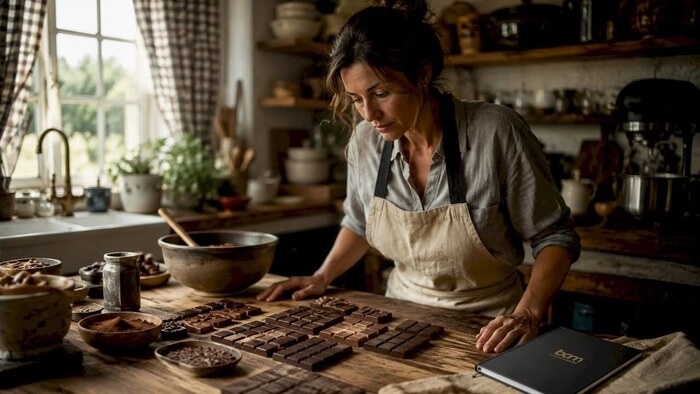
Unlock your baking potential with these 10 expert tips for baking with chocolate. Create rich, delicious desserts every time!
TL;DR:
- Choosing chocolate with 55–70% cocoa solids and cocoa butter as the main fat is essential for successful baking. Proper melting techniques and rescuing seized chocolate with warm liquids help produce reliable and smooth results. Blooming cocoa powder into hot liquids enhances chocolate flavor, while coating chips in flour prevents them from sinking in baked goods.
Baking with chocolate is defined as the practice of using cocoa-based ingredients, including bars, chips, and cocoa powder, to create desserts with rich flavour and consistent texture. The most critical tips for baking with chocolate start with one rule: choose chocolate with 55–70% cocoa solids and real cocoa butter as the main fat. Get that right, and every other technique builds on a solid foundation. Skip it, and even perfect execution produces flat, greasy, or grainy results. Mastering controlled melting methods and understanding how to rescue seized chocolate are the two skills that separate reliable bakers from frustrated ones.
The single most important decision in any chocolate bake is which chocolate you select. Dark chocolate with 55–70% cocoa solids delivers the best balance of bitterness, sweetness, and meltability for most recipes. Below that range, the sugar content dominates. Above 80%, the bitterness can overpower delicate bakes like mousse or brownies.
Cocoa butter is the fat that gives chocolate its smooth melt and glossy finish. Avoid any product that lists vegetable oil or palm fat as a primary ingredient. High-quality dark chocolate contains a short ingredient list: cocoa mass, cocoa butter, sugar, and lecithin only. Anything labelled “chocolatey coating” or “compound chocolate” is a different product entirely.
The form of chocolate matters too:
Pro Tip: Read the ingredient list before you buy. If vegetable oil appears before cocoa butter, put it back.
Melting chocolate incorrectly is the most common cause of ruined batches. Two methods work reliably: the microwave and the double boiler. Both require patience and low heat.
White chocolate melts fastest and burns most easily. Milk chocolate is slightly more forgiving. Dark chocolate tolerates the most heat. Adjust your timing accordingly.
Pro Tip: Never cover melting chocolate with a lid. Condensation drips back in and causes immediate seizing.
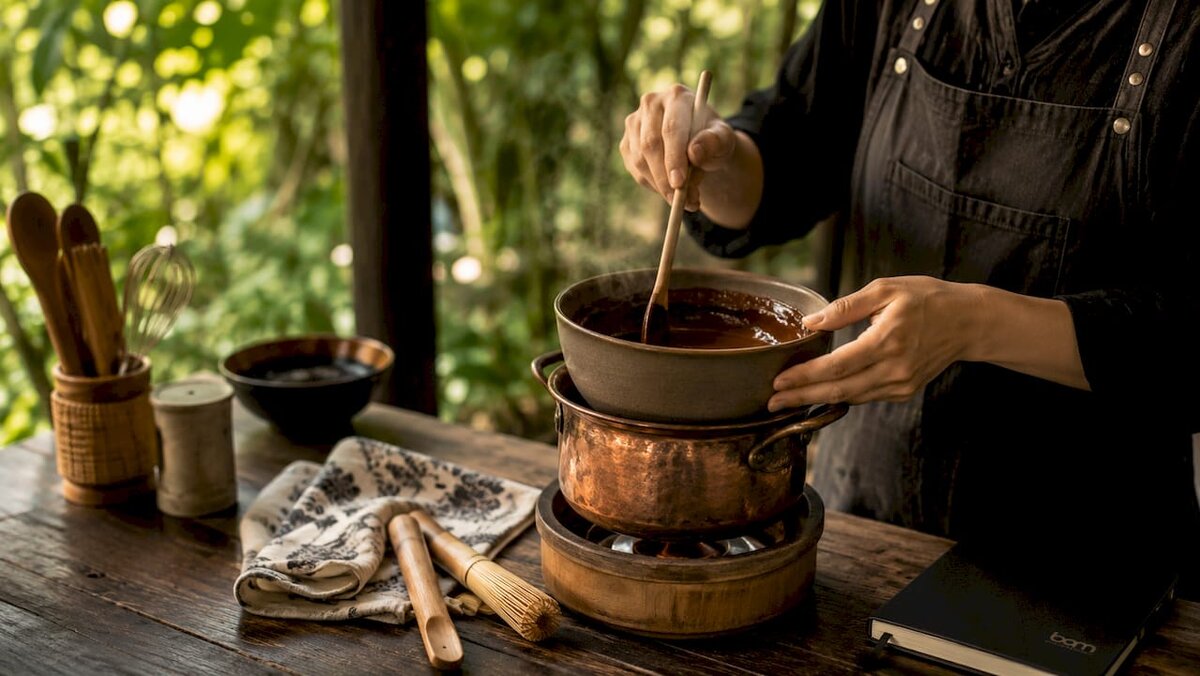
Blooming cocoa powder is the single most underused technique in home baking. It involves whisking cocoa powder into a hot liquid, such as boiling water, hot coffee, or warm butter, before adding it to your batter. The heat releases volatile aromatic compounds trapped in the cocoa, producing a noticeably deeper chocolate flavour.
The process is straightforward:
Natural cocoa powder is acidic and reacts with bicarbonate of soda to create lift. Dutch-process cocoa is neutralised, producing a darker colour and milder flavour without the same leavening reaction. Blooming works with both, but the flavour result differs. Dutch-process bloomed in hot coffee produces an almost fudgy depth that suits brownies and chocolate loaf cakes particularly well. Natural cocoa bloomed in hot water suits lighter sponges where you want brightness alongside richness. The cocoa-to-liquid ratio matters: use enough liquid to fully dissolve the powder without making the batter too wet.
Seized chocolate looks grainy, stiff, and lumpy. It happens when a small amount of moisture, such as a drop of water or steam, contacts melted chocolate and causes the sugar crystals to clump together, pulling the cocoa and fat apart. Overheating produces a similar result.
Seized chocolate is not ruined unless it is burnt. The graininess arises from a breakdown in the sugar-fat-cocoa emulsion, and that emulsion can be rebuilt.
“Seized chocolate that has been rescued with liquid or fat is essentially a simple ganache. Rather than discarding it, pour it over ice cream, use it as a cake filling, or fold it into cookie dough.”
Avoid the myth that adding any liquid ruins chocolate. A tiny amount of moisture causes seizing, but a sufficient amount of liquid restores it. The problem is the middle ground.
Chocolate chips sinking to the bottom of muffins or cakes is a texture and distribution problem, not a flavour one. The fix is simple and takes under a minute. Coating chips in flour creates friction between the chip and the batter, slowing the descent during baking.
Use approximately ¼ teaspoon of plain flour per cup of chips. Toss them together in a small bowl until lightly coated, then fold into your batter as normal. The flour coating does not affect flavour or texture in the finished bake. The same technique works with dried fruit, nuts, and other heavy mix-ins.
This hack is particularly useful in thin batters, such as those for loaf cakes or sheet cakes, where chips sink before the structure sets. Thicker batters, like those for cookies, do not need it.
These lesser-known chocolate baking ideas separate good results from great ones:
Pro Tip: Replacing half the water in a chocolate cake recipe with strong black coffee deepens the cocoa flavour without adding a coffee taste. The coffee amplifies the existing chocolate notes.
Innovative cocoa products, including those explored in this piece on Nukoko, show how ingredient quality directly shapes flavour outcomes in finished bakes.
The most effective approach to chocolate baking combines quality ingredient selection with controlled heat management and a willingness to rescue rather than discard imperfect results.
| Point | Details |
|---|---|
| Choose the right chocolate | Use dark chocolate with 55–70% cocoa solids and cocoa butter as the main fat. |
| Master melting technique | Microwave at 50% power in 5–20 second bursts, or use a dry double boiler. |
| Bloom cocoa powder | Whisk cocoa into hot liquid before adding to batter to unlock deeper flavour. |
| Rescue seized chocolate | Add warm water or fat one teaspoon at a time and stir gently to rebuild the emulsion. |
| Prevent chip sinking | Toss chips in a small amount of flour before folding into thin batters. |
The biggest mistake I see home bakers make is treating chocolate as a forgiving ingredient. It is not. It rewards attention and punishes shortcuts. The second biggest mistake is buying cheap chocolate and expecting professional results. The ingredient list tells you everything. If vegetable oil is in there, the melt will be greasy and the flavour will be flat, regardless of technique.
That said, chocolate is also more recoverable than most bakers realise. Seized chocolate, slightly over-baked brownies, a ganache that splits: all of these have fixes. The fear of ruining a batch stops people from experimenting, and experimentation is exactly how you build real skill.
My honest advice is to practise melting and tempering on a small amount of chocolate before your main bake. Spend ten minutes with a bowl and a microwave, and you will understand how chocolate behaves under heat better than any written guide can teach you. Then try blooming your cocoa powder once. The difference in flavour is immediate and convincing.
Chocolate baking rewards the bakers who pay attention to detail, invest in quality ingredients, and treat mistakes as information rather than failures.
— Andraz
Bamchocolate stocks a curated range of products built for home bakers who take their chocolate work seriously. The baking accessories range includes tools suited to both melting and finishing work, from precise measuring equipment to professional-grade accessories. For bakers who want a structured starting point, the BAM Basic pastry package brings together core confectionery products in one bundle. The 101 BAM pastry recipe collection offers expert-tested chocolate bakes for every skill level, from first-time brownies to layered ganache cakes.
Dark chocolate with 55–70% cocoa solids produces the best balance of flavour and meltability for most baked goods. Below 55%, sugar dominates; above 80%, bitterness can overpower delicate recipes.
Use a dry bowl, melt in short bursts at 50% microwave power, and keep all moisture away from the chocolate. Even a single drop of water can trigger seizing.
Chips contain stabilisers that prevent smooth melting, making them unsuitable for ganache or glazes. Use bars or wafers for any application requiring a fluid, even melt.
Blooming means whisking cocoa powder into a hot liquid before adding it to your batter. The heat releases aromatic compounds and eliminates clumps, producing a noticeably richer chocolate flavour.
Add warm water or cream one teaspoon at a time, stirring gently after each addition, until the chocolate returns to a smooth consistency. The rescued chocolate works well as a ganache or sauce.



 Confectionery tips



 Slovenščina
 Hrvatski
 Deutsch
 Italiano
 Česky
Česky
 Polski
 Magyar
 Français
 Slovák
 Nederlands
 Español