 info@bamchocolate.com
 Login


 en

 BAM Cake converter
 Login
Claudia
Avtorica vsebin


 Reading time:
9 minutes
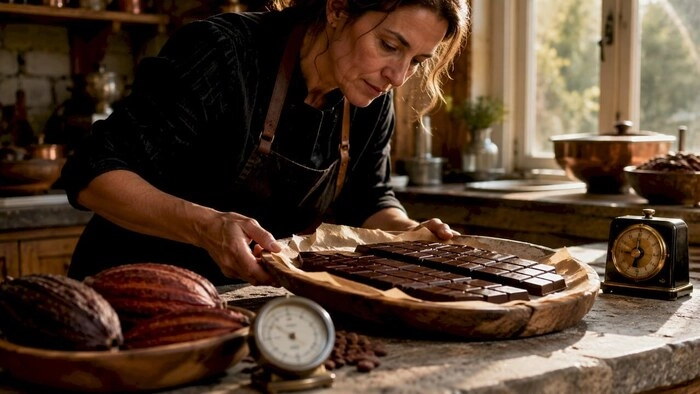
Discover what is chocolate aging and why it enhances flavor and texture. Learn how this process benefits your chocolate experience.
TL;DR:
- Chocolate aging is the intentional resting process that enhances flavor and texture through chemical and physical changes. Most craft chocolate makers allow bars to age for weeks or months, improving smoothness, aroma, and flavor balance. Proper storage conditions and timing are essential to maximize the benefits and avoid deterioration.
Chocolate aging is the deliberate resting and maturation of chocolate after production to develop its flavour and texture over time. Known formally as post-production maturation, this process is practised by 90% of craft chocolate makers who allow their bars to rest for weeks or even months before sale. During aging, chemical reactions reduce harsh acids, cocoa butter crystals stabilise, and aromatic compounds redistribute throughout the chocolate matrix. The result is a noticeably smoother, more complex bar. Understanding what is chocolate aging, and why it matters, gives you a real advantage when buying, storing, or making chocolate at home.
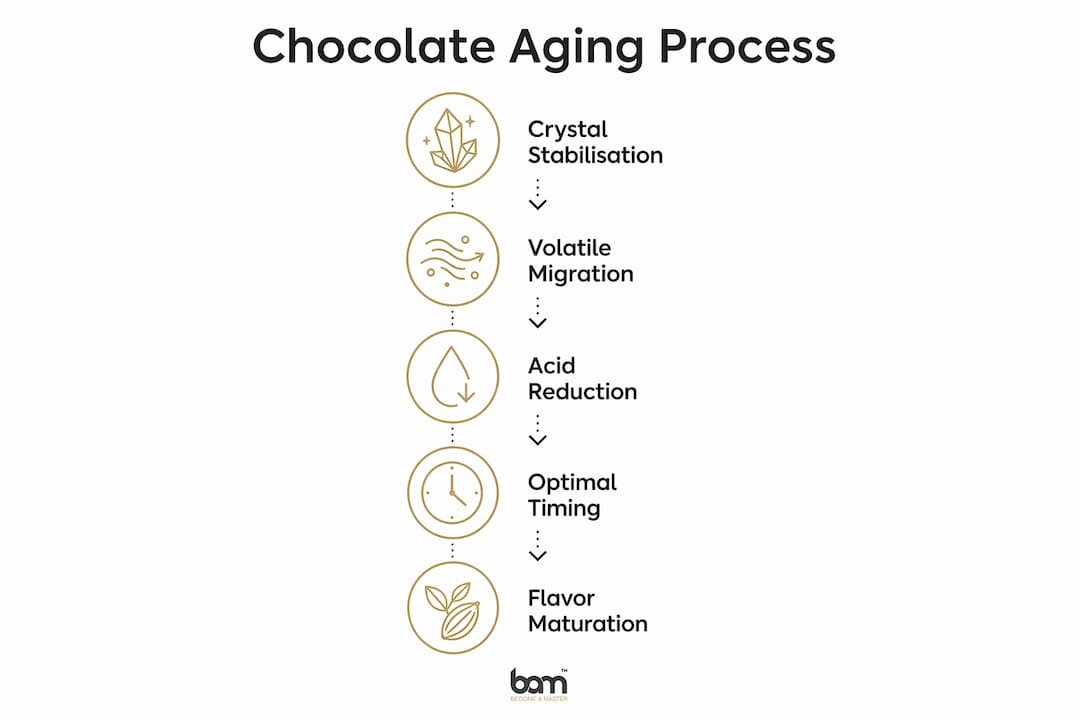
Chocolate aging is a chemical and physical transformation that occurs in the weeks following production. Professional chocolate makers consider it a form of chemical ‘polishing’ that refines both flavour and texture in ways that conching alone cannot achieve.
The first 24–72 hours after moulding are the most critical phase of the aging process. During this window, cocoa butter crystals stabilise into Form V, the structure responsible for the clean snap and glossy surface of a well-made bar. Tasting chocolate during this phase gives a misleadingly sharp or rough impression. The flavour is still settling, and the texture has not yet reached its final state.
After the initial crystallisation phase, a slower process begins. Volatile acids such as acetic acid reduce as aromatic compounds migrate between the fat and solid phases of the chocolate. This migration is what achieves flavour equilibrium. The result is a bar with less astringency, softer acidity, and a more rounded finish.
The key changes that occur during aging include:
Aging is largely empirical knowledge passed between makers rather than a strictly codified science. That does not make it less real. The sensory improvements are consistent and measurable by taste.
Pro Tip: Never judge a freshly made bar within the first three days of production. The flavour you taste at that stage is not the flavour the maker intended.
Timing and environment determine whether aging improves your chocolate or degrades it. Get both right, and the results are significant. Get either wrong, and you risk fat bloom, staleness, or mould.
Peak flavour development in dark chocolate occurs between 2 and 3 weeks of aging at 15–18°C. Improvements continue up to 6–8 weeks, but returns diminish after that point. Beyond 6 months, chocolate risks degradation including fat bloom, staleness, and loss of volatile aromatics. Unlike fine wine, chocolate has a finite peak. Aging it indefinitely does not improve it.
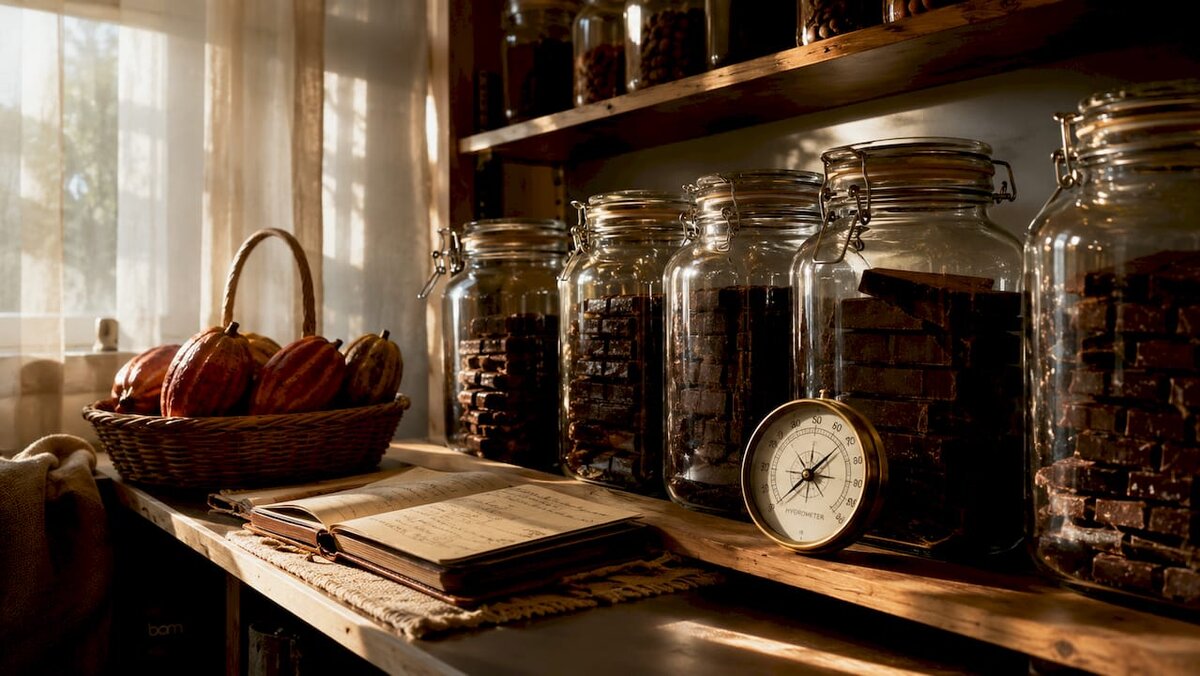
Humidity between 45% and 60% is the recommended range for successful aging. Too much moisture encourages mould. Too little causes the surface to dry out and lose aromatic compounds. Temperature stability matters as much as the figure itself. Fluctuations cause cocoa butter to contract and expand, which leads to fat bloom and a dull, streaky surface.
The table below summarises aging time, optimal conditions, and shelf life by chocolate type:
| Chocolate type | Peak aging window | Optimal temperature | Humidity | Shelf life (unopened) |
|---|---|---|---|---|
| Dark chocolate | 2–3 weeks (up to 6–8 weeks) | 15–18°C | 45–60% | Up to 2 years |
| Milk chocolate | 1–2 weeks | 15–18°C | 45–60% | Up to 1 year |
| White chocolate | 1 week or less | 15–18°C | 45–60% | 6–10 months |
Shelf life figures reflect properly stored, unopened bars. Once opened, shelf life reduces significantly for all types.
Pro Tip: Store aging chocolate in a cool, dark cupboard away from strong odours. Chocolate absorbs surrounding smells readily, and a bar aged near coffee or spices will carry those notes into its flavour profile.
The effects of aging on chocolate vary considerably depending on the type. Dark chocolate benefits most from aging due to its high cocoa content and lower dairy presence. Milk and white chocolates, by contrast, have shorter aging potential because their dairy solids are less stable over time.
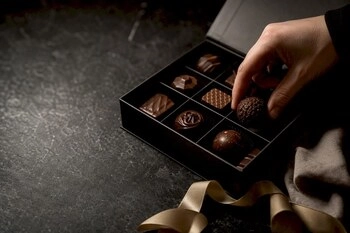
Dark chocolate develops the most complex flavour changes during aging. Fruity, nutty, and floral notes become more pronounced as volatile acids reduce and aromatic compounds settle. A bar that tastes sharp and tannic at day two can taste balanced and layered at week three. The texture also improves. Form V crystal stability produces a firmer snap and a cleaner melt on the palate.
Milk and white chocolates require consumption closer to production for best quality. Their dairy content makes them more susceptible to off-flavours and rancidity over time. Aging them beyond their shorter optimal windows produces staleness rather than complexity.
A comparison of aging benefits and limits by chocolate type:
Aging beyond the optimal timeframe for any type produces the opposite of the intended result. Staleness, fat bloom, and loss of aromatics are the most common signs that chocolate has been aged too long or stored incorrectly. For a deeper understanding of how dark chocolate quality relates to its composition, the cocoa content itself plays a defining role.
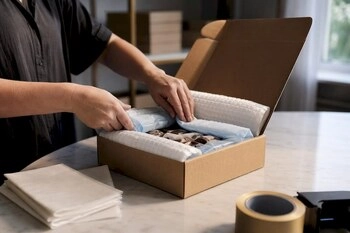
Home chocolate aging follows the same principles as craft production, scaled down to a kitchen or pantry setting. The key variables are environment, packaging, and patience.
Follow these steps to age chocolate at home with consistent results:
For guidance on how to store chocolate correctly at every stage, the principles of temperature and humidity control apply whether you are aging or simply preserving.
Pro Tip: If you make your own chocolate at home, read up on tempering technique before aging. Poorly tempered chocolate will not develop Form V crystals correctly, which means aging will not deliver the texture improvements you expect.
Common mistakes to avoid include storing chocolate in the refrigerator without airtight packaging, placing it near radiators or sunny windowsills, and tasting too early and concluding the flavour is poor. All three errors produce misleading results and waste good chocolate.
Chocolate aging is a deliberate maturation process that improves flavour and texture through crystal stabilisation, acid reduction, and aromatic redistribution, with dark chocolate benefiting most over a 2–8 week window at 15–18°C.
| Point | Details |
|---|---|
| Aging is post-production maturation | Chocolate rests after production to develop flavour through chemical and physical changes. |
| Peak window for dark chocolate | Optimal flavour develops between 2 and 3 weeks, with gains continuing up to 6–8 weeks. |
| Environment controls quality | Store at 15–18°C with 45–60% humidity to prevent bloom, mould, and flavour loss. |
| Dark chocolate ages best | High cocoa content supports complex flavour development; milk and white chocolates have shorter aging potential. |
| Aging has a finite peak | Beyond 6 months, chocolate degrades rather than improves, unlike fine wine. |
I have tasted a lot of chocolate at different stages of its life, and the single most common mistake I see enthusiasts make is eating a bar too soon. A freshly made dark chocolate bar can taste aggressive, acidic, and one-dimensional. The same bar at three weeks is a different experience entirely. The fruitiness opens up, the bitterness softens, and the melt becomes noticeably cleaner.
What strikes me about the chocolate aging process is how little formal science governs it. Most of what makers know comes from accumulated experience and sensory testing rather than laboratory protocols. That is not a weakness. It means there is genuine room for personal discovery. You can taste the same origin bar at one week, two weeks, and four weeks and build your own understanding of how it changes.
The trend among artisan makers towards longer, more controlled aging periods is one of the most interesting developments in craft chocolate right now. Some makers treat aging as a signature part of their process, resting bars for specific durations to achieve a house flavour profile. That level of intentionality is worth borrowing, even at home.
My advice: treat aging as an experiment rather than a rule. Work within the recommended windows, control your environment, and taste regularly. The results will tell you more about chocolate than any article can.
— Andraz
Handling and aging chocolate well requires the right equipment as much as the right knowledge. Bamchocolate stocks a range of baking accessories designed for home bakers and confectionery enthusiasts who want professional-level results. From precise temperature tools to storage solutions, the right kit makes a measurable difference to how your chocolate ages and performs. If you are working through your first batch of home-aged bars or refining an existing process, the Bamchocolate range covers the practical side of chocolate handling from production through to storage. Quality ingredients and proper tools are the two factors most within your control.
Chocolate aging is the deliberate resting of chocolate after production to allow its flavour and texture to develop. Chemical changes, including acid reduction and crystal stabilisation, improve the bar over days and weeks.
Peak flavour in dark chocolate develops between 2 and 3 weeks of aging at 15–18°C. Improvements continue up to 6–8 weeks, after which quality begins to decline.
Milk chocolate has a shorter aging potential than dark chocolate due to its dairy content. A modest texture improvement may occur in the first 1–2 weeks, but aging beyond that risks staleness and off-flavours.
The optimal aging temperature is 15–18°C with relative humidity between 45% and 60%. Fluctuations in either cause fat bloom and flavour loss.
Yes. Store tightly wrapped bars in a cool, dark, odour-free environment at 15–18°C. Taste at weekly intervals and consume dark chocolate within 6 months of production for best quality.


 Confectionery tips


 Slovenščina
 Hrvatski
 Deutsch
 Italiano
 Česky
 Polski
 Magyar
 Français
 Slovák
 Nederlands
 Español