 info@bamchocolate.com
  Login
Login 

 en
en 
 BAM Cake converter
  Login
Login Claudia
Avtorica vsebin


 Reading time:
10 minutes
Reading time:
10 minutes 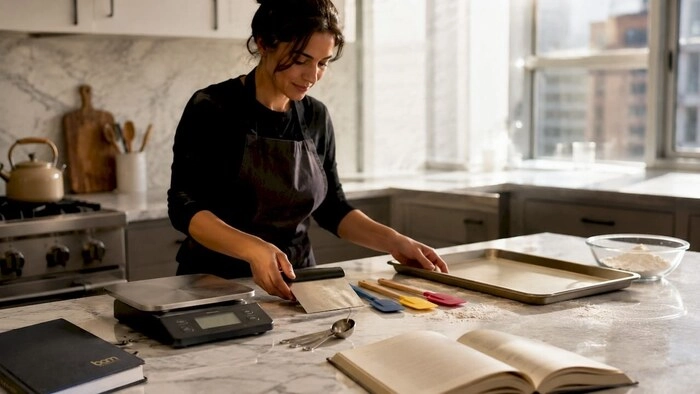
Discover the top 10 baking accessories examples that elevate your home baking. Improve your skills and achieve consistent results with these essential tools!
TL;DR:
- Home bakers improve results most with precision tools like a digital scale and oven thermometer. High-quality, durable bakeware and organized workspaces also enhance baking consistency. Starting with essential tools and gradually adding specialty items leads to better baking outcomes.
Baking accessories are the specialist tools and equipment that give home bakers consistent, repeatable results. The best baking accessories examples include a digital kitchen scale, an oven thermometer, a bench scraper, heavy-gauge sheet pans, and silicone spatulas. These are the tools that separate a reliable bake from a frustrating one. Digital scales typically cost £20–£35, and pairing one with an oven thermometer and an instant-read thermometer brings your total foundational kit to roughly £80–£110. That is a small investment for a measurable improvement in every bake you produce.
The ten tools listed here cover the full range of home baking tasks, from bread to pastry to everyday biscuits. Each one addresses a specific point where baking can go wrong without the right equipment.
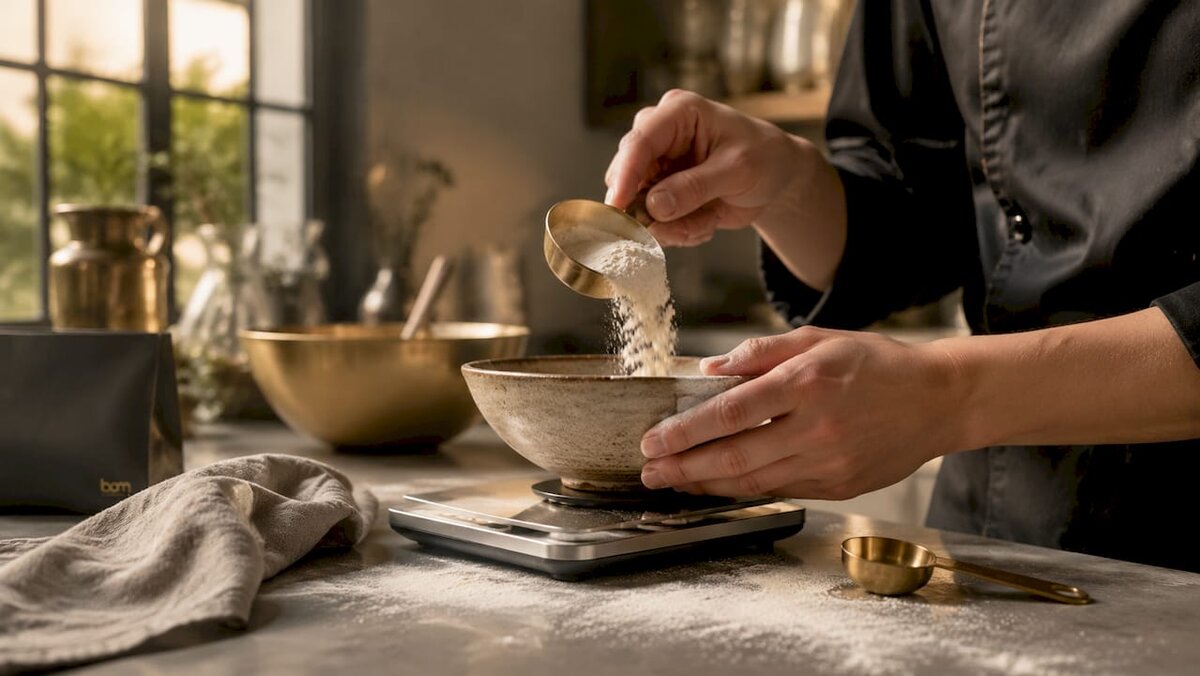
A precision digital scale is the single most impactful tool a home baker can own. Volume measuring varies widely depending on how tightly an ingredient is packed into a cup, which makes weight measurements far more reliable. Scales from OXO and Salter are widely available and accurate to one gram.
Home ovens frequently deviate from their dial settings, often by as much as 25°F in either direction. That gap explains why cakes sink, biscuits burn, and bread stays pale. A basic oven thermometer from Taylor or similar brands costs under £15 and removes all guesswork.
The bench scraper is one of the most underrated tools in any baker’s kit. It cuts dough, transfers chopped ingredients, and cleans a work surface in seconds without mess. Most home bakers discover it late and then wonder how they managed without it.
Pro Tip: Use a bench scraper to portion bread dough into equal pieces by weight. It is faster and cleaner than using a knife.
A set of three or four nesting bowls in stainless steel or glass covers every mixing task from whipping cream to folding cake batter. Stainless steel bowls from brands such as KitchenAid or Pyrex are durable, easy to clean, and do not absorb odours.
Silicone spatulas scrape every last gram of batter from a bowl and fold delicate mixtures without deflating them. They are heat-resistant to around 230°C, which makes them useful at the hob as well. A set of three in different sizes covers most tasks.
Heavy-gauge sheet pans cost £25–£35 per pair and resist warping at high temperatures. Thin, cheap pans buckle in the oven and create hot spots that burn one side of a tray of biscuits. Nordic Ware and USA Pan both produce reliable options at this price point.
Wire cooling racks allow air to circulate beneath baked goods, which prevents the base from becoming soggy as steam escapes. This is a low-cost upgrade that makes a clear difference to the final texture of cakes, biscuits, and bread. A standard double-layer rack fits most baking trays.
A good loaf tin, a round cake tin, and a muffin tray form the core of a practical bakeware collection. Aluminised steel pans from USA Pan conduct heat evenly and release baked goods cleanly. Avoid non-stick coatings that scratch easily, as they degrade quickly with regular use.
A stand mixer from KitchenAid or a hand mixer from Kenwood handles creaming butter, whipping egg whites, and kneading enriched doughs. A stand mixer is the better long-term investment for bakers who bake weekly. A hand mixer is a practical starting point for those with limited worktop space.
Parchment paper prevents sticking without the need for greasing and makes clean-up faster. A wooden or marble rolling pin gives you control over pastry thickness. These two items are inexpensive but appear in almost every baking recipe.
Material choice drives bakeware performance more than brand name or price alone. Understanding what each material does helps you spend money where it genuinely improves your results.
| Material | Best use | Key benefit | Example brand |
|---|---|---|---|
| Copper | Pastries, tarts | Precise, rapid heat response | Mauviel |
| Enamelled cast iron | Bread, casseroles | Excellent heat retention | Le Creuset |
| Aluminised steel | Everyday baking | Even heat, warp-resistant | USA Pan |
| Commercial aluminium | Cakes, sheet baking | Lightweight, consistent results | Nordic Ware |
Copper pans from Mauviel respond to temperature changes almost instantly, which gives you precise control when making delicate pastry shells or caramel. That responsiveness comes at a price: a single Mauviel copper tart tin typically costs upwards of £80. It is worth the investment if you bake pastry regularly. For bread bakers, a Le Creuset enamelled cast iron Dutch oven retains heat long enough to replicate the steam environment of a professional bread oven.
Heavy-gauge metals prevent warping and eliminate the uneven baking that cheaper pans produce. USA Pan uses aluminised steel with a corrugated surface that improves airflow and release. Nordic Ware commercial aluminium pans are a favourite among professional pastry chefs for their consistency across a full oven load.
Pro Tip: When choosing between premium options, buy one excellent pan in the format you use most often rather than a full set of average quality. One great loaf tin outperforms four mediocre ones.
For guidance on choosing chocolate for baking, the same principle applies: material and quality matter more than quantity.
The right tools, placed where you need them, make baking faster and more enjoyable. Keeping frequently used tools within reach reduces clutter and cuts the time you spend searching for equipment mid-recipe.
A well-organised baking station groups tools by task. Spatulas, bench scrapers, and bowl scrapers sit near the mixing area. Scales and measuring spoons stay on the worktop rather than in a drawer. This arrangement means you spend less time moving around the kitchen and more time focused on the bake itself.
Precision tools address the most common causes of baking failure:
The bench scraper deserves particular attention. It transfers dough and cleans work surfaces without the mess that a knife or cloth creates. Many home bakers overlook it entirely, yet it appears in almost every professional baker’s toolkit. For practical advice on organising your baking workflow, small changes to tool placement make a consistent difference.
Different baking styles call for different tools. Matching your accessories to the recipes you actually make is the most direct way to improve your results without overspending.
Bread baking calls for a Dutch oven or enamelled cast iron pot, a bench scraper for shaping, a digital scale for precise hydration ratios, and a lame or sharp blade for scoring. A proving basket, known as a banneton, supports the dough shape during its final rise and is worth adding once you bake sourdough regularly.
Pastry and delicate cakes benefit from copper or heavy-gauge aluminium pans, silicone baking mats instead of parchment for macarons and tuiles, and a fine-mesh sieve for dusting icing sugar evenly. A digital thermometer is non-negotiable for sugar work and tempering chocolate.
Everyday baking: biscuits, muffins, and traybakes requires heavy-gauge sheet pans, a reliable muffin tray, cooling racks, and a good set of cutters. For biscuit preparation tips and cupcake techniques, the right pan and cooling setup makes the difference between a professional finish and a home-baked look.
Build your collection gradually. Start with the tools that appear across multiple recipe types: a scale, an oven thermometer, a bench scraper, and a heavy-gauge sheet pan. Add specialist tools as your baking interests develop. Prioritise tools by impact rather than by how they look on a shelf.
The most effective baking accessories are precision tools and quality materials that directly prevent the most common causes of baking failure.
| Point | Details |
|---|---|
| Start with precision tools | A digital scale and oven thermometer address the two most common causes of baking failure. |
| Material matters more than brand | Heavy-gauge metals like aluminised steel and copper outperform cheap pans regardless of the label. |
| Build gradually by baking type | Match new tools to the recipes you bake most often rather than buying a full kit at once. |
| Organisation improves results | Keeping tools within reach of your mixing area reduces errors and speeds up every bake. |
| Cooling racks are non-negotiable | Wire racks prevent sogginess by allowing air to circulate beneath baked goods after they leave the oven. |
Home bakers tend to buy the tools that look impressive rather than the ones that fix real problems. I have seen this pattern repeatedly: a beautiful stand mixer arrives before the baker owns a decent oven thermometer. The mixer is satisfying to use, but it does not explain why the sponge keeps sinking.
The tools that change your baking the most are rarely the ones that photograph well. A £12 oven thermometer, a bench scraper, and a heavy-gauge sheet pan will improve your results more than a full set of decorative mixing bowls. Buying too many tools at once is also a genuine mistake. A cluttered worktop slows you down and makes baking feel like a chore.
My advice is to spend the first £100 on the five tools that appear in every recipe: a scale, an oven thermometer, a bench scraper, a cooling rack, and one good baking pan. Master those before adding anything else. Once you know what you bake most often, the right specialist tools become obvious. A baker who makes bread every week needs a Dutch oven. A pastry baker needs a copper tart tin. Neither needs both on day one.
— Andraz
Bamchocolate stocks a curated range of baking accessories suited to home bakers at every level, from beginners building their first kit to enthusiasts upgrading to quality tools. The range includes baking gloves, aprons, and specialist bakeware designed for everyday use. The BAM Apron and Baking Glove set is a practical starting point for anyone setting up a home baking station. Every product is selected for function and durability, not just appearance. Browse the full accessories range at Bamchocolate to find tools that match your baking style and recipe needs.
A digital kitchen scale, an oven thermometer, and a heavy-gauge sheet pan are the three most impactful tools for beginners. These address the most common causes of baking failure: inaccurate measurements, incorrect oven temperature, and uneven heat distribution.
A bench scraper cuts and transfers dough without dragging or tearing it, and cleans a work surface in one motion. It is faster and less messy than a knife for most dough-handling tasks.
Choose copper for pastries that need precise heat control, enamelled cast iron for bread that benefits from heat retention, and aluminised steel for everyday baking that requires consistent, warp-free results. Match the material to the recipe type you bake most often.
Wire cooling racks allow air to circulate beneath baked goods, which prevents steam from making the base soggy. The difference in texture is noticeable, particularly with biscuits and loaf cakes.
Five tools cover most home baking needs: a digital scale, an oven thermometer, a bench scraper, a cooling rack, and one quality baking pan. Add specialist tools as your recipe repertoire grows.



 Chocolate novelties


 Slovenščina
 Hrvatski
 Deutsch
 Italiano
 Česky
Česky
 Polski
 Magyar
 Français
 Slovák
 Nederlands
 Español