 info@bamchocolate.com
 Login


 en

 BAM Cake converter
 Login
Claudia
Avtorica vsebin


 Reading time:
7 minutes

Learn how to assess protein claims, cocoa content, and texture, then discover BAM Protein Bar, Double Dark Chocolate, a gourmet pick for chocolate lovers.
Protein chocolate means protein-rich chocolate confectionery, not a flavoured powder you mix with milk. The strongest options pair a clear protein figure per serving with genuine cocoa content and a short, honest ingredient list. The BAM Protein Bar, Double Dark Chocolate meets that brief, and EU labelling rules provide criteria to assess any bar before you buy.
The nutrition panel tells you more than any front-of-pack claim. Start with protein per 100g, then look at protein per serving, since bars range from a small square to a full 40g bar.
Regulation (EC) No 1924/2006 sets the thresholds that matter here: a product can carry a “source of protein” claim once at least 12% of its energy comes from protein, and “high protein” once that share reaches 20%. Divide the protein calories (grams of protein multiplied by 4) by the total energy per 100g to see which claim a bar actually earns, rather than trusting the label on its own.
Protein’s energy share decides the claim, not the gram count on the front of the pack. A bar with 15g of protein sounds generous, but it only earns “high protein” once that protein supplies a fifth of the total energy, under the EU nutrition claims rules.
A few other checks pay off before you commit to a bar:
Formulators reach for a handful of protein sources, and each one leaves its own mark on flavour. Milk proteins and whey isolates blend in cleanly and suit milk or dark chocolate without much adjustment. Soy and legume flours add protein cheaply but can bring a beany note that needs masking. Mushroom powders and microalgae such as spirulina raise protein and sometimes minerals too, though they carry earthy or marine notes that only work in small quantities.
Adding protein isn’t neutral for texture. Extra protein changes how the melted chocolate flows, and a coarse powder can leave a gritty or sandy finish rather than a smooth melt. Formulators manage this with fine milling, careful fat balance and emulsifiers, so the added protein doesn’t disrupt the chocolate’s rheology more than necessary.

Pro Tip: Check the ingredient order on the pack: when a protein source sits ahead of sugar or cocoa butter, the bar is likely built around protein content first, and taste may need extra work from the formulator.
The evidence on fortification levels is encouraging within limits. A peer-reviewed study found that dark chocolate fortified with up to 8% white mushroom (Agaricus bisporus) powder reached around 13.25% protein content while keeping sensory properties within an acceptable range, though the added powder reduced firmness, meaning producers often adjust tempering and fat ratios to restore a proper snap.
Some bars lean on polyols or extra fat rather than protein alone to recreate a familiar chocolate texture, which is worth knowing since that approach shifts the calorie and sugar profile without necessarily lifting the protein share much.
Dark chocolate tends to carry fortification better than milk or white chocolate, since its stronger cocoa flavour and bitterness mask off-notes that a lighter, sweeter base would expose. Sensory research on chocolate formulation backs this up: careful fat balance and higher cocoa percentages preserve hedonic liking even once protein is added, largely because premium fats and strong cocoa notes mask flavours that plant proteins can introduce.
A short tasting routine helps you judge any bar on the shelf:
Packaging claims deserve a sceptical read. A vague “fit” or “wellness” label tells you nothing, while an actual protein-per-serving figure next to a sugar count gives you something to compare across brands.
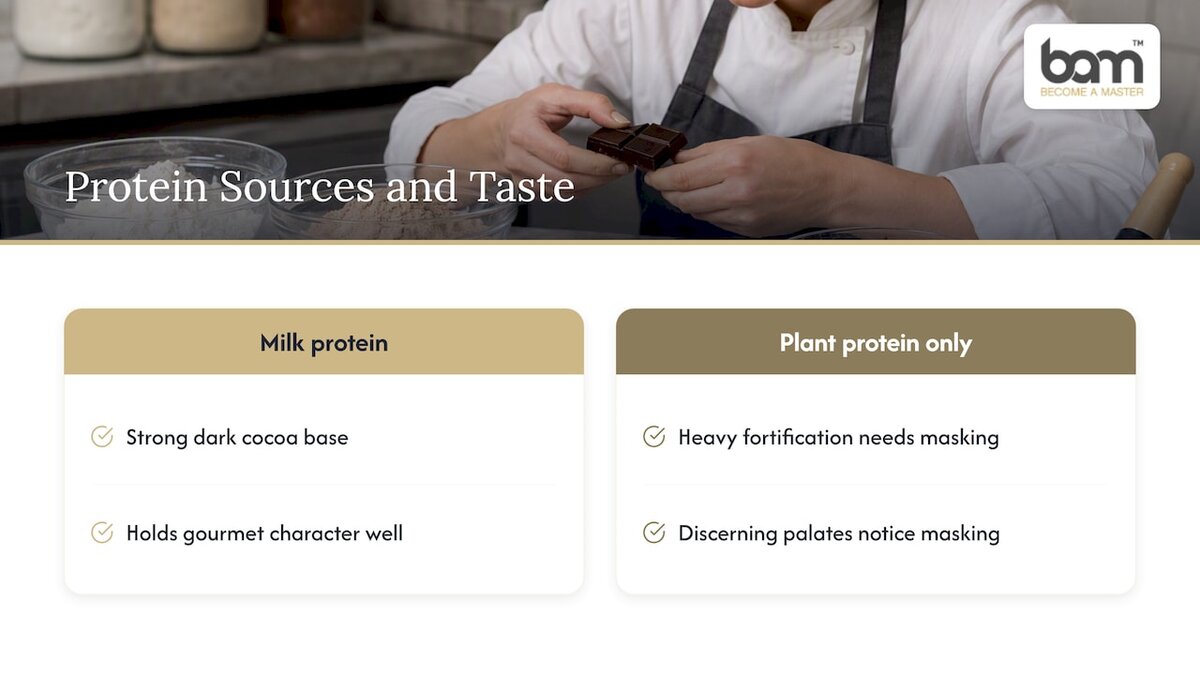
Working close to product development and gourmet retail, the trade-off is rarely protein against taste. It’s about where the protein comes from and how much of it a formulator asks a bar to carry. Milk-protein bars with a strong dark cocoa base tend to hold their gourmet character well, while heavily fortified bars built around plant proteins alone often need masking that a discerning palate will notice.
Protein-enriched bars suit active moments and small, intentional treats: a square after training, or a controlled portion when you want dessert without derailing the day. For a slower, more deliberate chocolate experience, a classic gourmet bar still wins. Bamchocolate keeps that premium ingredient focus across its range, which is worth exploring when you want to compare both styles side by side.
— Andraz
The BAM Protein Bar, Double Dark Chocolate gives us a straightforward answer to the gourmet-plus-function brief: 15g of protein in a 40g bar, built on milk proteins and cashew paste, with a nutrition panel listing 489 kcal per 100g. The dark chocolate base carries the added protein well, and the cashew and buckwheat inclusions give it a texture that holds up against a classic bar rather than feeling like a compromise.
We built it to work in more than one moment:
Browse the full BAM FIT products range for more protein-focused options, or explore the wider BAM Chocolate collection if you want to compare it against our classic gourmet bars.
Protein chocolate refers to chocolate confectionery with added protein, not a protein powder or shake. It still uses cocoa, sugar and fat as a base, with ingredients like milk proteins, legume flours or mushroom powders added to raise the protein content.
Under Regulation (EC) No 1924/2006, a product needs at least 12% of its energy from protein to use a “source of protein” claim, and at least 20% to use “high protein”. Check the energy and protein figures on the panel to see which threshold a bar meets.
Yes, protein can affect texture and sometimes flavour, particularly with plant-based sources that carry a beany or earthy note. Formulators manage this with fine milling, fat balance and higher cocoa percentages, and a peer-reviewed fortification study found that moderate protein additions can keep sensory acceptance within a reasonable range.
The BAM Protein Bar, Double Dark Chocolate provides 15g of protein per 40g bar, built on milk proteins and cashew paste. Its nutrition panel lists 489 kcal per 100g.
Protein chocolate can fit a balanced diet when the protein share is genuine and the sugar and fat content stay reasonable, rather than relying on vague “fit” claims. Reading the full nutrition panel, including sugar and polyol content, gives you a clearer picture than any front-of-pack label.



 Confectionery tips




 Slovenščina
 Hrvatski
 Deutsch
 Italiano
 Česky
 Polski
 Magyar
 Français
 Slovák
 Nederlands
 Español