 info@bamchocolate.com
 Login


 en

 BAM Cake converter
 Login
Claudia
Avtorica vsebin


 Reading time:
7 minutes
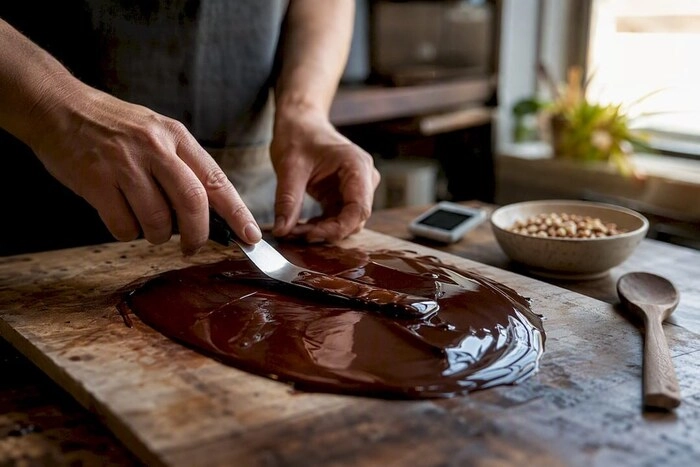
Discover the best book for making pralines at home, featuring step-by-step techniques and recipes that simplify the process.
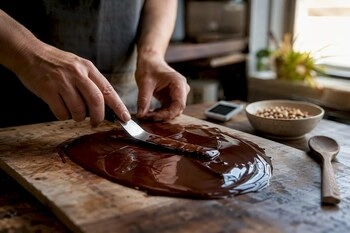
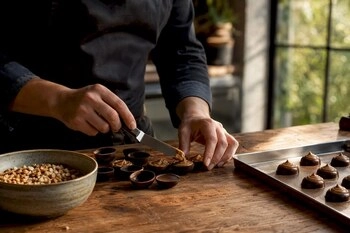
If you want one book to learn pralines at home, choose the hybrid‑style guide led by Angelika Schwalber’s Pralinen, because it pairs step‑by‑step technique with recipes built for a domestic kitchen. It covers tempering, ganache work and moulding without demanding professional kit, and its troubleshooting notes mean fewer wasted batches of couverture.
A hybrid recipe‑and‑technique book gives most home cooks the fastest, most reliable path from first attempt to consistent pralines.
| Point | Details |
|---|---|
| Match book to skill level | Beginner books teach method; hybrid books add theory; textbooks add deep formulas and science. |
| Prioritise step photos | Sequential photography of tempering and moulding measurably improves beginner success rates. |
| Expect 50 to 200 recipes | Scope varies by book type, from 50 to 60 in hybrid guides up to 200 in broad collections. |
| Fix broken ganache with warm cream | Whisking warm cream back in, or re‑emulsifying with an immersion blender, usually saves the batch. |
| Pair your book with a starter kit | Bamchocolate’s confectionery bundles supply the thermometer, moulds and fillings most books assume you own. |
Bamchocolate spends its days sourcing couverture, moulds and fillings for home bakers across Austria, so its recommendations come from watching which techniques actually trip people up in a home kitchen, not a commercial one. This guide draws on established confectionery textbooks and specialist patisserie collections rather than general blog roundups.
Every chocolate confectionery book on the market falls into one of three brackets, and picking the wrong one is the single biggest reason home bakers give up after two failed batches.
Pro Tip: Before buying, flick through a sample chapter and check whether tempering and moulding steps are shown in sequential photographs rather than just described in text. Techniques like these are far easier to learn visually than from paragraphs alone.
For most home cooks wanting one reliable reference, Angelika Schwalber’s Pralinen remains the strongest recommendation. It is built around the hybrid model that Bamchocolate encourages readers towards, and three features stand out:
Beyond that primary pick, two other categories deserve shelf space depending on where your interest sits.
If you have mastered the basics and want to push into modern patisserie, a creative contributor‑led collection built around numerous recipes from leading patissiers opens the door to techniques and flavour pairings well beyond classic pralines. Expect these anthologies to demand more advanced technique and less common ingredients, which is exactly why they work better as a second book rather than a first.
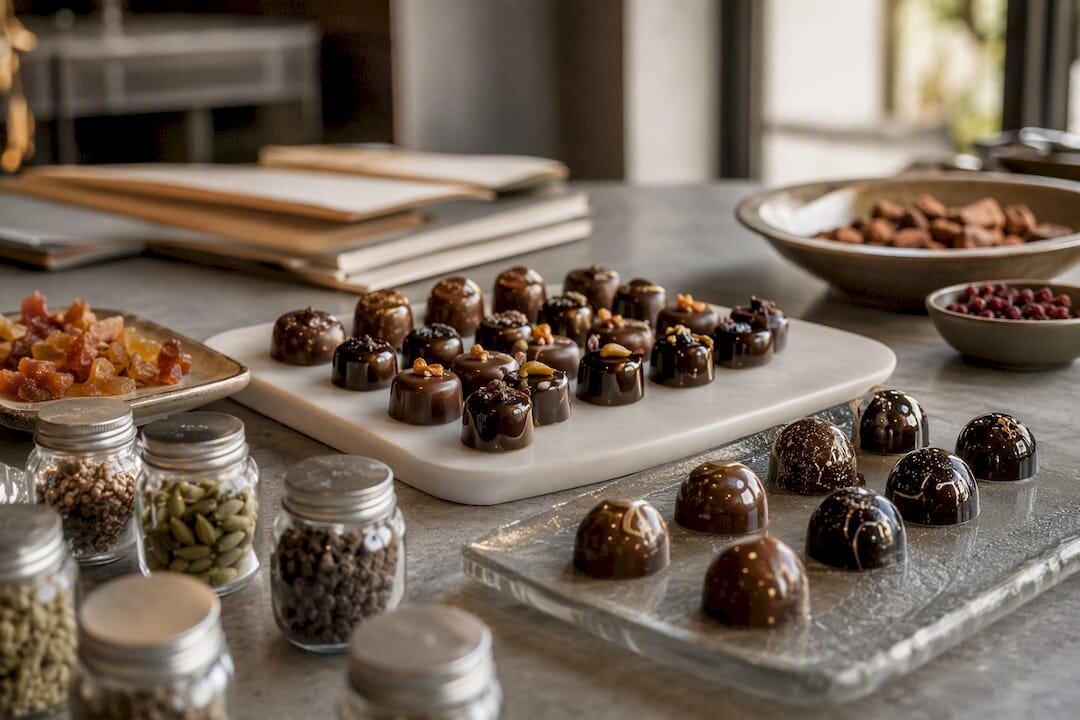
If your interest runs towards the science, a formula‑dense technical textbook offering 200+ tested formulas gives you a reference you will return to for years rather than read once cover to cover. This suits readers who eventually want to formulate their own fillings rather than follow someone else’s ratios.
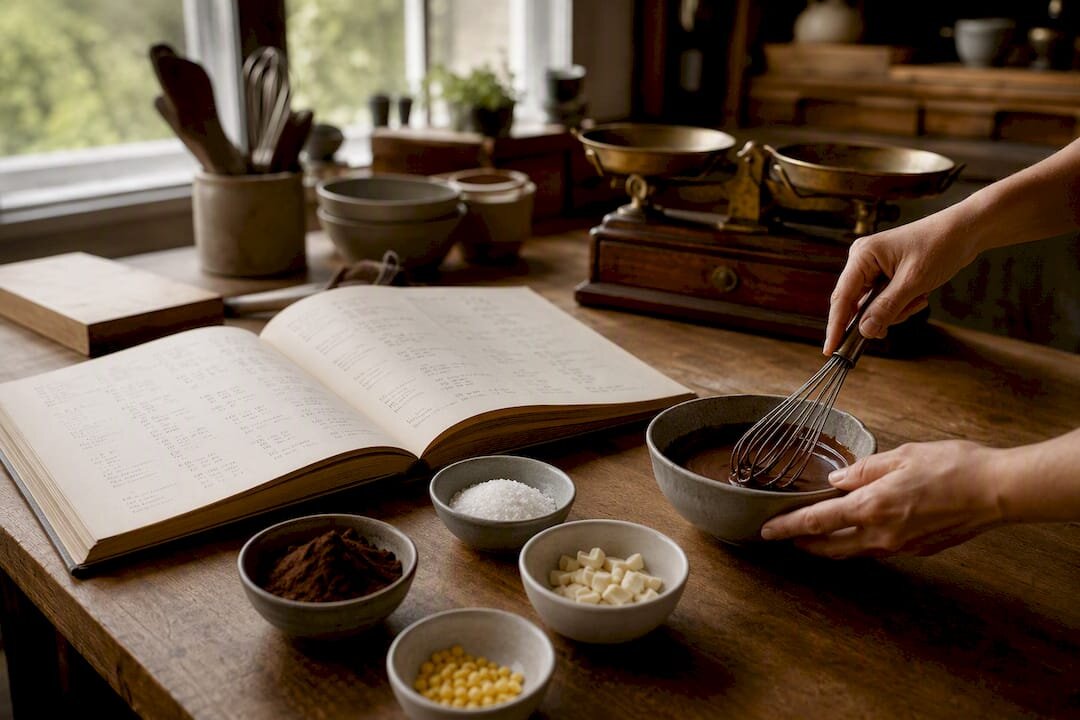
One caution: some readers pick up industrial‑scale confectionery science texts expecting home‑cookable recipes and find only production theory. Specialised production texts are genuinely useful as reference material, but they are not written for a domestic kitchen and rarely include recipe cards at all.
Most of these titles are available in German translation or in English editions through major book retailers, and Bamchocolate’s own ingredient and tool guides fill the practical gap once you have chosen a book to follow.
Buying the right book only gets you halfway. The order you practise techniques in matters just as much as the recipes you pick.
Your pantry checklist stays fairly constant across books: a digital thermometer, polycarbonate moulds, a dipping fork, and good‑quality couverture rather than compound chocolate.
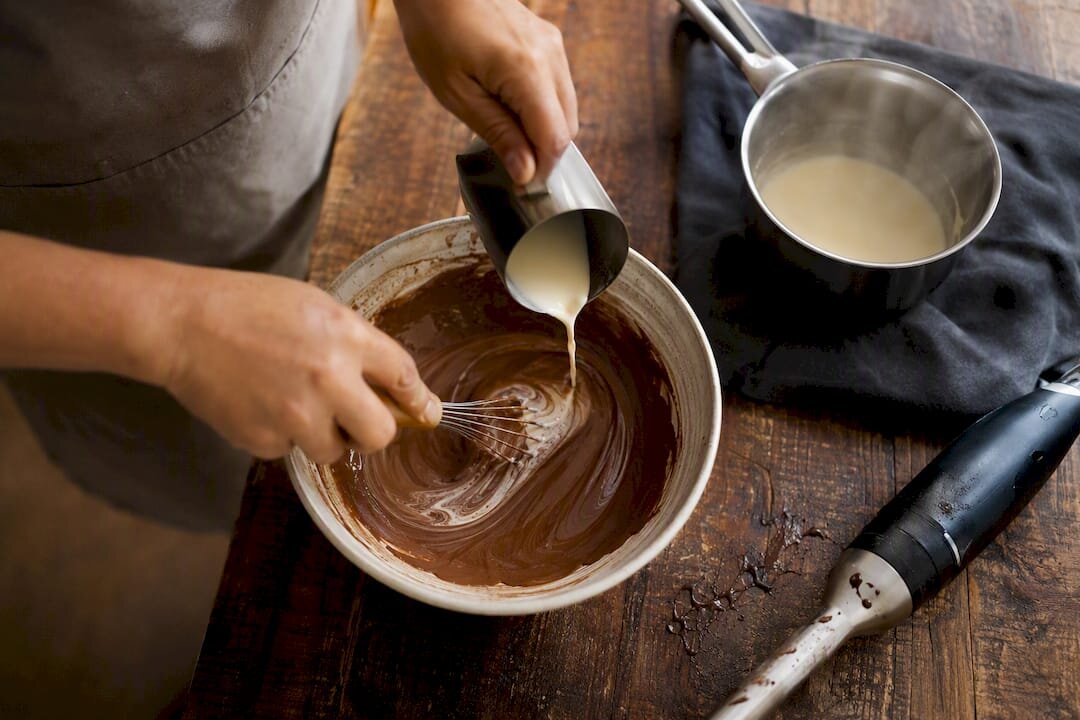
When a ganache emulsion breaks, professional kitchens typically fix it by gradually whisking a small amount of warm cream back into the mixture over low heat, or re‑emulsifying with an immersion blender while streaming in hot cream. If a book you own does not cover this rescue step, that is precisely the gap a technical textbook is built to fill.
Pralines punish impatience more than most kitchen projects; the fifth batch teaches you more than the first. A good hybrid book rewards that patience with fewer wasted batches, and Bamchocolate’s step‑by‑step tutorial is a solid next stop once the theory chapter starts to click.
— Andraz
A book teaches the method, but broken tempering or a flat ganache usually comes down to missing kit, not missing knowledge. The BAM Basic pastry package gives you the thermometer, moulds and dipping tools most hybrid books assume you already own, so you can start on chapter one rather than shopping around first. Pair it with the BAM Confectionery set Creamy fillings if ganache work is where your chosen book focuses, and add a BAM Baking Glove once you move on to tempered chocolate at higher heat. Browse the starter bundle now and have your kit ready before your next reading session.
A hybrid book such as Pralinen by Angelika Schwalber suits beginners best, since it combines 50 to 60 approachable recipes with a genuine theory section and built‑in troubleshooting.
Expect a range of 50 to 200 depending on scope: hybrid books typically sit at 50 to 60 recipes, while broader creative collections and technical textbooks run much higher.
No. A hybrid book covers the technique most home cooks need, but a formula‑dense technical textbook with 200-plus tested formulas is worth adding once you want to formulate your own fillings.
Most books assume a digital thermometer, polycarbonate moulds, a dipping fork and good couverture chocolate, all covered in the BAM Basic pastry package.
Gradually whisk a small amount of warm cream back into the mixture over low heat, or re‑emulsify it with an immersion blender while streaming in hot cream.


 Confectionery tips



 Slovenščina
 Hrvatski
 Deutsch
 Italiano
 Česky
 Polski
 Magyar
 Français
 Slovák
 Nederlands
 Español