 info@bamchocolate.com
 Login


 en

 BAM Cake converter
 Login
Claudia
Avtorica vsebin


 Reading time:
10 minutes
Get a ready-to-use playbook for food brand ambassador programs: three reproducible templates, pay ranges (5–20% commission, £50–£150 events), pitching...
A food brand ambassador programme is a structured partnership where a brand recruits creators, superfans, or industry professionals to promote its products in exchange for free product, cash, commission, or a mix of all three. It works for two very different readers: people who want to become ambassadors and marketers building a programme from scratch. Both need to know how rewards, tiers, and responsibilities actually function before committing.
Most retail food brands run one of four programme models. Gifted-only arrangements trade free product for content, no cash changes hands. Commission and referral programmes pay a percentage of sales driven through a tracked code or link. Hybrid models combine a baseline gift with performance-based bonuses. Street-team sampling pays per event or per hour for in-person demos at stores, festivals, or markets. Retail food brands commonly blend these approaches, mixing free product, swag, and commission depending on the campaign’s goal.
Recruitment rarely hinges on raw follower counts. Brands increasingly favour engagement rate, local reach, and niche credibility, which is why programmes such as Ziggi’s Z-List actively welcome micro and nano creators over accounts with inflated but passive audiences. A food professional with a modest but highly engaged following often outperforms a generalist influencer with ten times the reach.
Onboarding tends to follow a predictable sequence:
Contract lengths vary widely. A single sampling event might run for one afternoon. A full ambassador relationship typically spans six to twelve months, with brands increasingly favouring longer terms because sustained partnerships build more credible trust with an audience than a single sponsored post ever could.
Rewards fall into a handful of recognisable buckets, and most programmes combine two or three of them rather than relying on just one.
Tiered systems are increasingly standard. A brand might start ambassadors at a “gifted” level, promote them to “paid contributor” once they hit an engagement or sales threshold, and reserve a top tier for ambassadors who consistently drive revenue. Programme pages such as Graeter’s Ambassador Program show tiered commission tables tied to sales volume, with evaluation windows run quarterly or annually so brands can promote strong performers and quietly retire inactive ones.
The choice between paid and gifted arrangements usually comes down to legal exposure and campaign intent. Brands running short seasonal pushes often lean gifted-only to keep contracts simple. Brands building a long-term ambassador base tend to introduce commission structures early, because unpaid, ongoing promotional work can trigger disclosure and compensation obligations depending on the jurisdiction.
Pro Tip: If you’re evaluating a programme as an applicant, ask directly how tier promotion is measured. Vague answers (“we’ll see how it goes”) usually mean the brand hasn’t built a real tracking system yet, and you’ll struggle to prove your value later.
Ambassador duties split roughly into two categories: content creation and in-person activity. A typical content ambassador posts two to four times a month, tags the brand, uses a specified hashtag, and submits a short performance report. In-person ambassadors run sampling tables, staff demo booths, or represent the brand at food festivals, often for a flat per-event fee rather than commission.
Brands measure success through a fairly standard set of metrics:
Brands such as Graeter’s use unique promo codes and tracking links with higher attribution rates for first-time buyers, which rewards ambassadors for bringing in new customers rather than repeat ones who might have bought anyway. Reporting requirements such as tagging and hashtag use are now standard across most consumer food ambassador schemes, giving both sides a paper trail when it’s time to renew or terminate the relationship.
Marketers rebuilding a programme rarely need to start from a blank page. Three templates cover most retail food use cases.
Before launching any of these, run a short checklist: define the objective (awareness, launch, or retention), confirm the target audience, agree the KPI you’ll actually track, prepare content assets and a brief, and clarify usage rights for any content the ambassador produces. Aligning campaigns to seasonal or emerging food trends tends to sharpen relevance, particularly for limited-run product launches. A simple six-month planner might open with recruitment and onboarding in month one, run the first content wave in months two and three, evaluate and promote top performers in month four, and layer in a seasonal campaign push across months five and six.
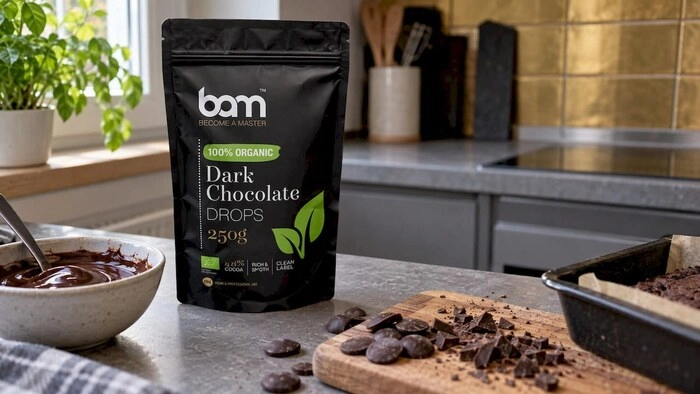
BAM - Become A Master sells premium chocolate, baking accessories, gourmet spreads, and curated gift bundles, alongside corporate gifting and an ambassador programme of its own. That product range gives a concrete blueprint for how a confectionery-focused ambassador kit might be structured.
A sensible mix for a chocolate or baking brand looks like this:
A strong application does the brand’s homework for it. Follow a stepwise approach rather than sending a generic pitch to every programme on a list.
Pro Tip: Build a one-page content calendar before your first post goes live. Brands notice ambassadors who show up organised, and it’s the single easiest way to get bumped into a higher tier early.
Once accepted, early performance often decides whether you’re renewed. Tag the brand correctly, hit the agreed posting cadence, and submit whatever basic report the programme requires, even if it feels like a formality.
Disclosure rules are not optional extras. Any ambassador receiving free product, payment, or commission in exchange for promotion is generally required to disclose that relationship clearly, typically through a hashtag such as #ad or #partner placed where a viewer can’t miss it. Vague or buried disclosures create regulatory risk for the brand and reputational risk for the ambassador.
Contracts matter more than most first-time ambassadors expect. A basic agreement should cover usage rights (can the brand reuse your content in paid ads?), payment terms (when and how commission gets paid), and exclusivity clauses (are you barred from promoting competing products during the term?). Brands that skip written terms in favour of a friendly DM arrangement are usually the ones that also skip paying on time.
Ethically, authenticity has to survive the transaction. An ambassador who only ever posts positive, obviously scripted content erodes their own credibility and, over time, the brand’s too. The strongest programmes give ambassadors room to be honest about a product, because that honesty is precisely what makes the audience trust the endorsement in the first place.
Brands that treat ambassadors as a marketing line item, not a relationship, get shallow, one-off content and little repeat value. The trade-off between scale and authenticity is real. Gifted-only mass recruitment scales fast but produces forgettable posts, while a smaller paid tier tends to produce work people actually trust.
High performers show up prepared, track their own numbers, and ask for clear briefs before they ask for more product. Most failed programmes trace back to vague expectations and tracking links nobody checks.
— Andraz
Brands weighing up nano-influencer seeding, street-team sampling, or commission-based creator deals all face the same practical problem: what actually goes in the box. BAM - Become A Master solves that with ready-made confectionery bundles that double as PR kits, corporate gifts, or event prizes, without needing a separate supplier for each campaign tier. A bundle such as the BAM PREMIUM confectionery bundle works as a top-tier reward for standout ambassadors, while smaller sets suit initial seeding waves. If you’re building or refreshing a food ambassador programme, visit BAM - Become A Master’s baking accessories range or get in touch about corporate and partnership packages to put together a gifting kit that fits your campaign from the first shipment onward.
Strong programmes typically combine free product with either commission or a cash stipend, clear tiers, and consistent reporting, patterns seen across retail food brand programmes and coffee brand schemes such as Ziggi’s Z-List.
A food ambassador creates social content, runs in-person sampling or demos, and reports on performance, typically tagging the brand and using a tracked code or link for referred sales.
Pay varies widely: gifted-only ambassadors receive product with no cash, while paid tiers often earn 5 to 20% commission on referred sales, sometimes alongside a flat monthly stipend or per-event fee.
A common structure starts ambassadors at a gifted tier, promotes strong performers to a paid commission tier after a quarterly review, and reserves event access and merchandise for the top tier, a model reflected in programmes like Graeter’s.


 Confectionery tips


 Slovenščina
 Hrvatski
 Deutsch
 Italiano
 Česky
 Polski
 Magyar
 Français
 Slovák
 Nederlands
 Español