 info@bamchocolate.com
 Login


 en

 BAM Cake converter
 Login
Claudia
Avtorica vsebin


 Reading time:
8 minutes

How to choose the best cocoa butter for chocolate making and baking: natural vs deodorised, what to check on the label, and why BAM cocoa butter 250 g comes first.
For chocolate making and baking, the best cocoa butter is 100% pure, food-grade and neutral in flavour and colour, so the chocolate, ganache or cake tastes of what you put into it. That is the profile of BAM cocoa butter, 250 g: 100% pure cocoa butter with a neutral taste and colour, which may contain traces of milk. Below you will find how the main kinds of cocoa butter differ, what to read on the label, and how to use it so the result is glossy and snaps cleanly.
This guide is for home bakers, chocolate enthusiasts, chefs and anyone buying for a shop or a gift. If you are looking for cocoa butter body lotion, that is a different product and not covered here.
Cocoa butter is the natural fat of the cocoa bean. EU law defines it in just those terms: the fat obtained from cocoa beans or parts of cocoa beans, in the directive that sets the rules for cocoa and chocolate products sold in the European Union, including Slovenia.
In practice, the beans are ground into chocolate liquor, which is pressed to separate the cocoa butter from the dry cocoa solids. The solids become cocoa powder. The fat is what makes chocolate melt in the mouth, because it is solid at room temperature and melts close to body temperature.
That is why a baker reaches for it. Cocoa butter lets you:
Because it carries so much of the eating experience, the quality of the cocoa butter shows in the finished piece. Off-flavours, a greasy feel or a dull surface usually trace back to the fat.
Five points separate a good cocoa butter from an average one when you cook with it.
The label should say cocoa butter and nothing else. A single ingredient, 100% cocoa butter, is what you want for chocolate work. Blends sold as “cocoa butter substitutes” or “cocoa butter alternatives” are other fats, and they do not behave the same way in tempering.
Cocoa butter sold for cosmetics is made and labelled for the skin, not for eating. For the kitchen, buy a product sold as a food ingredient, from the baking and confectionery shelf.
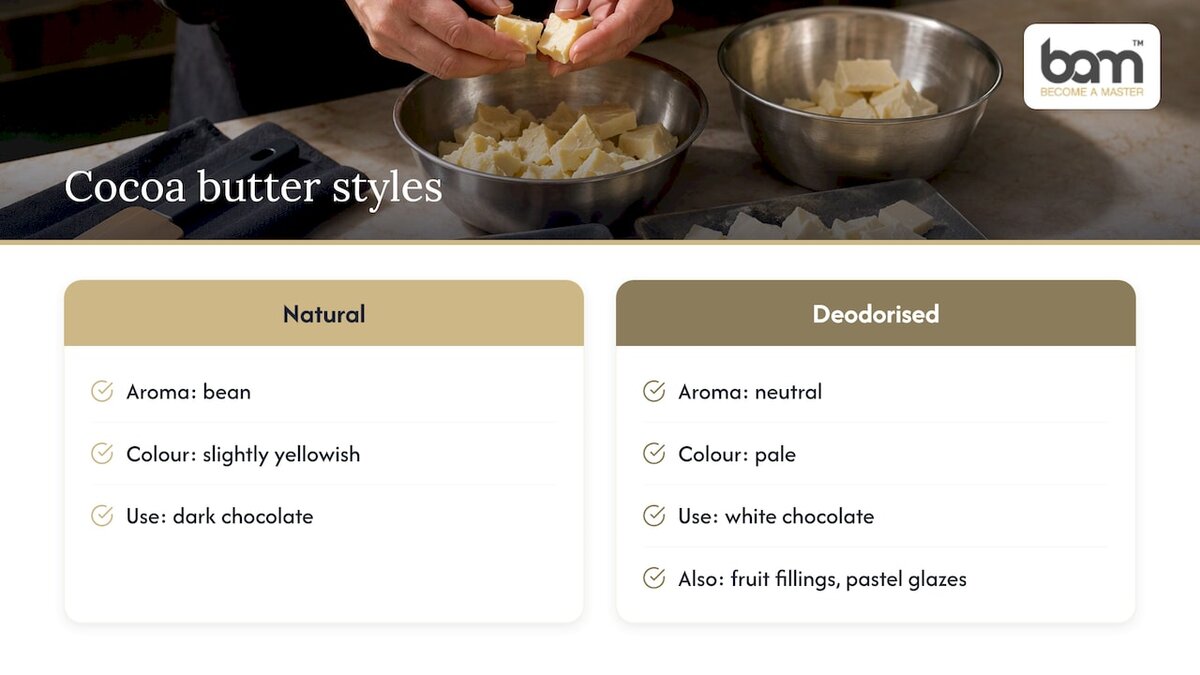
You choose between two styles. Natural (unrefined) cocoa butter keeps the aroma of the bean and a slightly yellowish tint. Deodorised cocoa butter has had steam passed through it to reduce the odour, leaving a pale, neutral fat. For white chocolate, fruit-based fillings, pastel glazes and delicate creams, neutral is the safer choice. For a dark chocolate where you want more cocoa character, a natural one works.
Small packs suit home use and experiments. Larger quantities suit workshops and shops. A 250 g pack covers several batches of truffle shells or one generous batch of white chocolate.
Cocoa butter itself is a plant fat, but production lines can handle milk. If you bake for guests with allergies, read the allergen line. BAM cocoa butter states that it may contain traces of milk.
This table compares the kinds of cocoa butter a baker meets, not individual brands, because brands within one type behave alike on the points that matter in the kitchen.
| Option | Flavour and colour | Best for | Watch for |
|---|---|---|---|
| BAM cocoa butter, 250 g | 100% pure, neutral taste and colour | White chocolate, thinning and enriching chocolate, ganache, glazes, spray finishes | May contain traces of milk |
| Natural (unrefined) cocoa butter | Cocoa aroma, pale yellow to light brown | Dark chocolate with strong cocoa character | The aroma carries into delicate recipes |
| Other deodorised cocoa butter | Neutral, pale | Same uses as above | Check that the label shows 100% cocoa butter and a food-grade use |
| Cosmetic cocoa butter | Made for skin | Skin care | Not for eating |
| Cocoa butter substitutes | Other fats | Cheap coatings | Behave differently when tempered |
BAM comes first because it fits the widest range of kitchen jobs. A neutral, 100% pure fat does not change the flavour of what you add it to, which is why it suits both dark and white chocolate work.
If you make chocolate from scratch, you are combining cocoa butter with cocoa solids, sugar and, for milk or white chocolate, milk powder. Cocoa butter is the part you control.
A neutral cocoa butter gives you room to decide the flavour yourself. You add the cocoa powder, such as BAM cocoa powder, 500 g, and the sweetness and milk you want, and the fat supplies body and mouthfeel without competing. The flavour then comes from the ingredients you choose.
A simple home route for the keen baker:
For the best snap, the chocolate must be tempered. Tempering means heating and cooling melted chocolate in a controlled way so the cocoa butter crystals set in the stable form. Well-tempered chocolate is glossy, breaks cleanly and does not bloom, which is the grey-white film that can appear on the surface. Keep water away from the bowl, since even a drop makes melted chocolate seize.
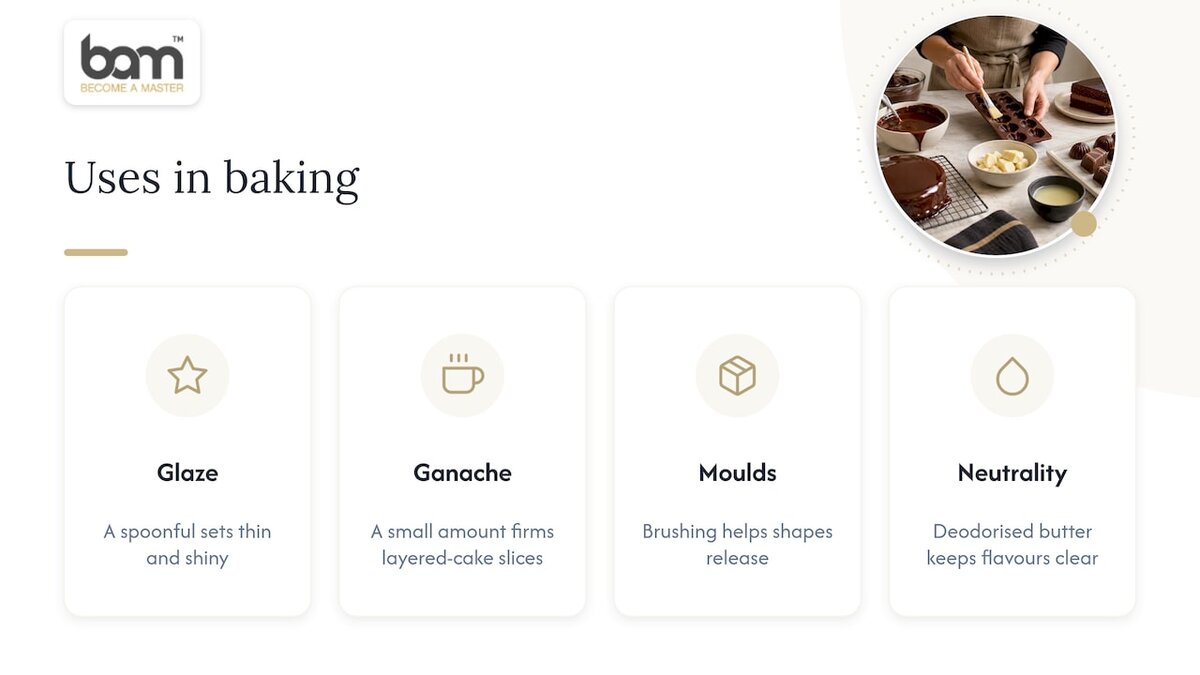
Bakers use cocoa butter differently from chocolatiers. A spoonful stirred into melted chocolate makes a glaze that sets thin and shiny. A small amount blended into ganache gives a firmer slice for layered cakes. Brushed into a mould, it helps shapes release.
Here, neutrality counts even more. A pale lemon tart glaze, a coconut praline or a white chocolate mousse should taste of lemon, coconut and white chocolate. A deodorised, 100% pure cocoa butter keeps those flavours clear.
If you start with ready-made chocolate and only need to adjust it, the BAM range covers that too. BAM Dark Chocolate, 1 kg is made for baking and melting, and adding a little cocoa butter lets you thin it for fine coating work. For events with a fountain, BAM Milk Chocolate for Chocolate Fountains, 500 g is the matching product.
Cocoa butter carries very little flavour by itself when deodorised, and the cocoa taste people love lives in the solids and in the roast. Flavour language overlaps across foods: if you enjoy picking apart chocolate, it helps to know how chocolatey notes in coffee beans are described, because the same vocabulary of cocoa, caramel and nut applies when tasting both.
Treat the original pack’s storage and best-before instructions as the final word.
We built BAM around ingredients for people who bake and make chocolate seriously, so we look at cocoa butter the way a baker does: what does it do to the recipe?
Our answer is that the best cocoa butter is the one that does its job and disappears. 100% pure, neutral in taste and colour, in a pack size you can use up. That is why we offer BAM cocoa butter, 250 g, next to BAM chocolate, cocoa powder and baking accessories: you can build a recipe from one shop, from the fat to the finished piece.
For white chocolate, glazes and ganache, a neutral cocoa butter gives you control. For dark chocolate, you add cocoa powder or BAM dark chocolate to bring in the depth you want. Either way, you decide the flavour and the cocoa butter supports it.
Bake with it, temper it carefully, and share what you make. Our community of bakers and ambassadors does exactly that.
Andraz
BAM cocoa butter, 250 g, sits in the BAM Chocolate range alongside chocolate and cocoa powder. If you want to try a few products at once, BAMBox™ and the gift selection put chocolate ingredients together for bakers, event organisers and corporate gifts. Baking tools for moulds, spatulas and tempering are under baking accessories.
Choose a 100% pure, food-grade cocoa butter. For white chocolate and delicate flavours, a neutral one such as BAM cocoa butter, 250 g, keeps the taste clean. For dark chocolate with strong cocoa character, a natural cocoa butter with its aroma intact is an alternative style.
No. Cosmetic cocoa butter is made and labelled for skin care. For chocolate and baking, use cocoa butter sold as a food ingredient.
Natural cocoa butter has a mild chocolate aroma. Deodorised cocoa butter has been treated to reduce odour, which is why BAM cocoa butter has a neutral taste and colour and lets other ingredients lead.
BAM cocoa butter is 100% cocoa butter and may contain traces of milk. If you cook for someone with a milk allergy, read the pack label before you use it.


 Confectionery tips


 Slovenščina
 Hrvatski
 Deutsch
 Italiano
 Česky
 Polski
 Magyar
 Français
 Slovák
 Nederlands
 Español