 info@bamchocolate.com
  Login
Login 

 en
en 
 BAM Cake converter
  Login
Login Claudia
Avtorica vsebin


 Reading time:
9 minutes
Reading time:
9 minutes 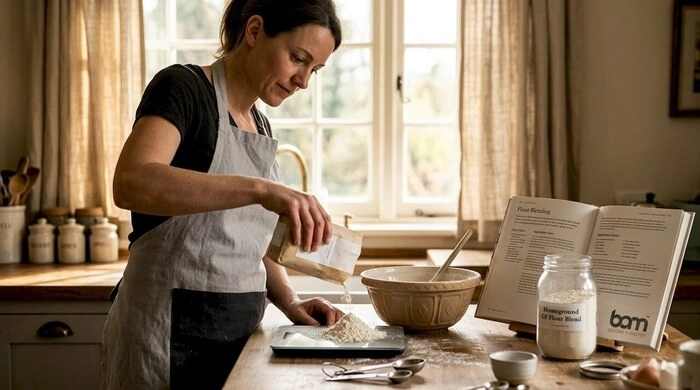
Master gluten-free baking essentials with tips on flour blends, binders, and tools to create perfect baked goods every time!
TL;DR:
- Getting gluten-free baking right is more challenging than many expect, requiring precise ingredient choices and techniques. Proper flour blends, accurate measurements, and correct binders like xanthan gum or psyllium husk are essential for structure and texture. Using dedicated tools, reliable equipment, and understanding recipe-specific needs ensure safe, consistent, and successful gluten-free baked goods.
Getting gluten-free baking right is genuinely harder than most people expect. The gluten-free baking essentials you choose determine whether your loaf holds together or crumbles, whether your cake is tender or gummy. Gluten does a remarkable amount of structural work in traditional baking, and replacing it requires more than swapping one flour for another. This guide covers the best gluten-free flours, the right binders, must-have tools, and practical tips so you can bake with confidence every time.
| Point | Details |
|---|---|
| Flour blends beat single flours | Pre-mixed blends produce more consistent results than single gluten-free flours alone. |
| Binders are not interchangeable | Xanthan gum and psyllium husk serve different purposes; choosing the wrong one affects texture significantly. |
| Weight beats volume | Measuring flour by weight on a digital scale prevents dense or gummy results. |
| Cross-contamination is a real risk | Dedicated tools and storage are necessary to keep gluten-free baking genuinely safe. |
| Match your blend to your recipe | Bread, cakes, and pastries each perform better with different flour blend compositions. |
The single biggest decision in gluten-free baking is which flour or flour blend to use. No single flour replicates all-purpose wheat flour on its own. Rice flour, potato starch, and tapioca starch are the three most common building blocks, and a standard blend ratio follows a 60/20/20 split: 60% rice flour for structure, 20% potato starch for softness, and 20% tapioca starch for chew and binding.
If you are new to gluten-free baking, pre-mixed blends save considerable trial and error. Brands like Bob’s Red Mill 1-to-1 and gfJules are formulated to behave like all-purpose flour in most recipes. Blends with xanthan gum already included allow a true 1:1 substitution, which makes them genuinely beginner-friendly. Blends without added binders give more experienced bakers greater control over texture.
Where flour choice gets more nuanced is across different baked goods. Bread needs a blend that supports chew and structure, so higher starch content helps. Cakes benefit from finer, lighter flours that produce a tender crumb. Pastry blends prioritise tenderness over chew, which is why Cup4Cup performs well for shortcrust and tart cases.
Pro Tip: Always weigh your flour rather than scooping it. Dry scooping can add 20 to 30% more flour than intended, which leads to dense, dry results.
Gluten is what makes dough stretchy and gives baked goods their structure. Without it, you need a binder to hold everything together. This is one of the most misunderstood areas of gluten-free baking, and getting it wrong is the fastest route to a collapsed loaf or a crumbly biscuit.
The two most common binders are xanthan gum and psyllium husk. They are not interchangeable. Xanthan gum thickens and provides structure in cakes, cookies, and muffins. Psyllium husk forms an elastic gel that mimics gluten’s stretch, making it far better suited to yeast breads and anything that needs to hold a shape under pressure.
A practical substitution ratio to know: 2 parts psyllium husk to 1 part xanthan gum when swapping between them in a recipe. Guar gum is another option, derived from guar beans, and it works similarly to xanthan gum in cold applications and some baked goods.
Pro Tip: Use psyllium husk powder rather than whole psyllium husks in bread recipes. The powder disperses more evenly and produces a smoother, more consistent dough.
The right equipment makes a measurable difference in gluten-free baking. Because gluten-free batters and doughs behave differently from wheat-based ones, standard kitchen guesswork does not work as reliably. Precision matters more, not less.
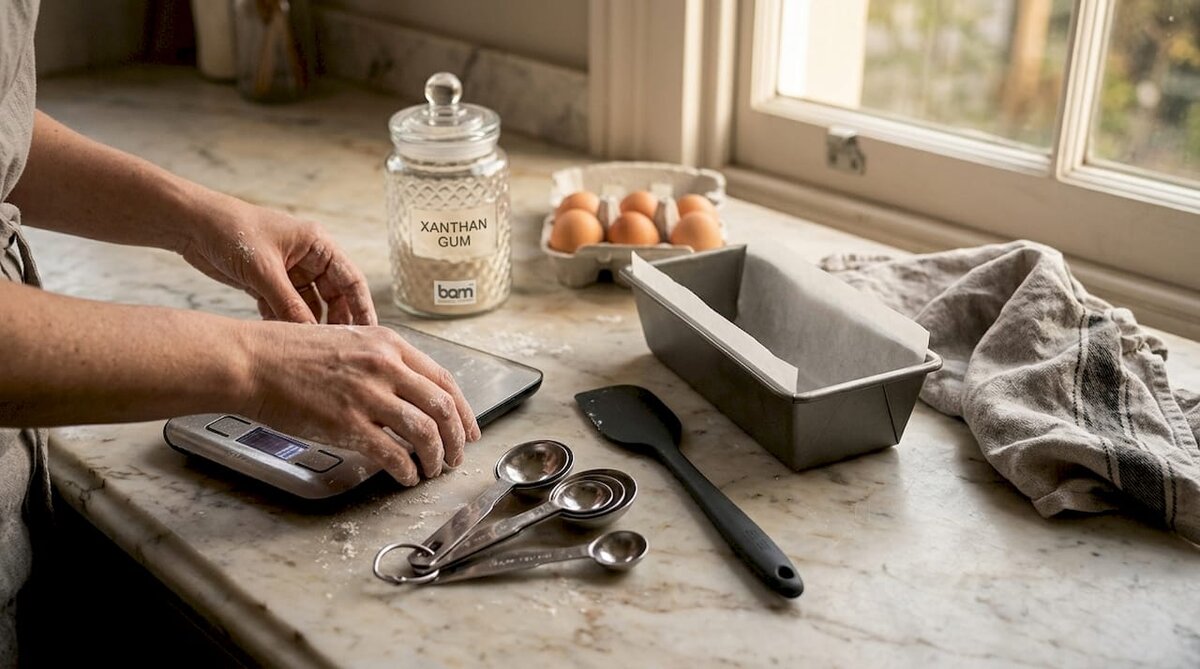
A digital kitchen scale is the single most useful tool you can own. Measuring by weight removes the inconsistency of volume measuring, which is especially problematic with gluten-free flours that vary significantly in density. An instant-read thermometer is equally important for bread. Gluten-free loaves can look done on the outside while remaining underbaked inside. Gluten-free breads need an internal temperature of 96 to 99°C to be fully baked.
Material choice for pans and utensils matters too. Silicone and metal pans release gluten-free baked goods more cleanly than older non-stick pans with scratched surfaces. A non-porous rolling pin, either silicone or stainless steel, prevents sticking without requiring excessive flour dusting. You can browse baking accessories to find tools suited to gluten-free precision work.
Not all flour blends perform equally across different recipes. Here is a direct comparison of widely available options to help you choose the right one for your baking needs.
| Blend | Contains binder | Best for | Notes |
|---|---|---|---|
| Bob’s Red Mill 1-to-1 | Yes (xanthan gum) | Cakes, cookies, muffins | Widely available; reliable 1:1 swap |
| King Arthur Measure for Measure | Yes (xanthan gum) | Cakes, quick breads | Consistent results; finer texture |
| Cup4Cup | Yes (xanthan gum) | Pastries, tarts, biscuits | Contains milk powder; not dairy-free |
| Namaste Perfect Flour Blend | Yes (xanthan gum) | Cakes, pancakes | Allergen-friendly; good value |
| Better Batter | Yes (xanthan gum) | General purpose | Closest texture to all-purpose flour |
A few points worth noting when selecting from the list above. Cup4Cup is preferred for pastries but it is more expensive than most alternatives and contains milk powder, so it is not suitable for dairy-free baking. Better Batter is often praised for producing the most wheat-like texture overall, which makes it a strong choice for converting conventional recipes. If you want full control over binder quantity, choose a blend without xanthan gum and add your own.
For bread specifically, none of the above blends are optimised on their own. Bread benefits from added psyllium husk regardless of which blend you use, as the extra elasticity supports the structure needed for a proper rise.
Cross-contamination is the main reason people with coeliac disease continue to experience symptoms even when they bake with gluten-free ingredients. A shared kitchen introduces risk at every stage, from the worktop to the mixing bowl. The FDA defines gluten-free as containing under 20 ppm gluten, the lowest level that can be reliably detected, and even small amounts of cross-contact can exceed that threshold.
Porous wooden utensils cannot be fully sanitised of gluten and should be replaced with stainless steel or silicone alternatives. The same applies to scratched non-stick pans, which harbour gluten in their damaged surfaces. Dedicated storage, separate from wheat flour and other gluten-containing ingredients, reduces airborne contamination.
Pro Tip: Label your gluten-free tools clearly and store them separately. A simple colour-coding system, such as blue for gluten-free equipment, prevents accidental mix-ups in a shared kitchen.
Beyond safety, a few practical habits improve your results consistently:
For more on getting the texture right in cakes, the practical baking tips at Bamchocolate cover ingredient ratios and mixing techniques in useful detail.
I spent a long time approaching gluten-free baking as though it were regular baking with a different flour. That assumption cost me a lot of failed loaves. The shift that actually changed my results was accepting that gluten-free baking is its own discipline, with its own logic.
Precise measurement transformed everything for me. Once I started weighing every ingredient rather than scooping, my results became reproducible. Before that, I was essentially baking a different recipe every time.
The binder question surprised me most. I had been using xanthan gum in bread for months before I realised psyllium husk was the reason my loaves were dense and tight. Switching made an immediate difference. The right binder for the right recipe is not a minor detail. It is the difference between a loaf that holds together and one that falls apart when sliced.
My honest advice: invest in a digital scale, a good thermometer, and a reliable pre-mixed blend before you do anything else. Those three things will solve most of the problems new gluten-free bakers face. After that, experiment freely. Gluten-free baking rewards curiosity once you have the foundations in place.
— Andraz
Bamchocolate offers a curated selection of baking accessories suited to precise gluten-free work, from measuring tools to specialist baking equipment. If you are ready to expand beyond the basics, the 101 BAM pastry recipe bundle gives you a structured collection of confectionery and pastry recipes designed for home bakers who want to go further. For those building a full gluten-free baking kit, the BAM Basic pastry package brings together a solid set of ingredients to get started. Browse the full range at Bamchocolate to find products that complement your gluten-free baking goals.
The core gluten-free baking essentials are a reliable flour blend, the correct binder (xanthan gum or psyllium husk), a digital kitchen scale, and an instant-read thermometer. These four cover the majority of common gluten-free baking problems.
Pre-mixed blends that contain xanthan gum are designed for 1:1 substitution in most recipes, but results vary by recipe type. Bread recipes almost always need additional psyllium husk for adequate structure regardless of the blend used.
Xanthan gum thickens and adds structure to cakes and cookies, while psyllium husk forms an elastic gel that mimics gluten’s stretch, making it better suited to bread doughs. Using the wrong one for your recipe leads to texture failures.
Use dedicated gluten-free tools made from stainless steel or silicone, store gluten-free ingredients separately, and replace any porous wooden utensils. Dedicated tools and storage are the most reliable way to reduce gluten exposure.
Gluten-free bread requires an internal temperature of 96 to 99°C to be fully baked. Checking with an instant-read thermometer rather than relying on appearance or a skewer gives you a reliable result every time.



 Confectionery tips



 Slovenščina
 Hrvatski
 Deutsch
 Italiano
 Česky
Česky
 Polski
 Magyar
 Français
 Slovák
 Nederlands
 Español