 info@bamchocolate.com
 Login


 en

 BAM Cake converter
 Login
Claudia
Avtorica vsebin


 Reading time:
10 minutes

Explore four delicious recipes using nussnougat creme to elevate your baking. Make muffins, brownies, tarts, and more with ease!
Nussnougat creme is a ready-to-use hazelnut-nougat paste that works as a filling, swirl, mix-in, or glaze in home baking. Use it cold straight from the jar for fillings and piped centres; warm it gently to no more than 38°C when combining with chocolate or cream for ganaches. BAM Nussnougat Creme from Bamchocolate is the recommended in-market option for UK home bakers: consistent fat content, clean flavour, and no added stabilisers that interfere with tempering.
Four tested recipes to choose from:
Pro Tip: Chill the spread for 20 minutes before piping into unbaked dough. Cold nussnougat creme holds its shape during baking and is far less likely to leak through seams.
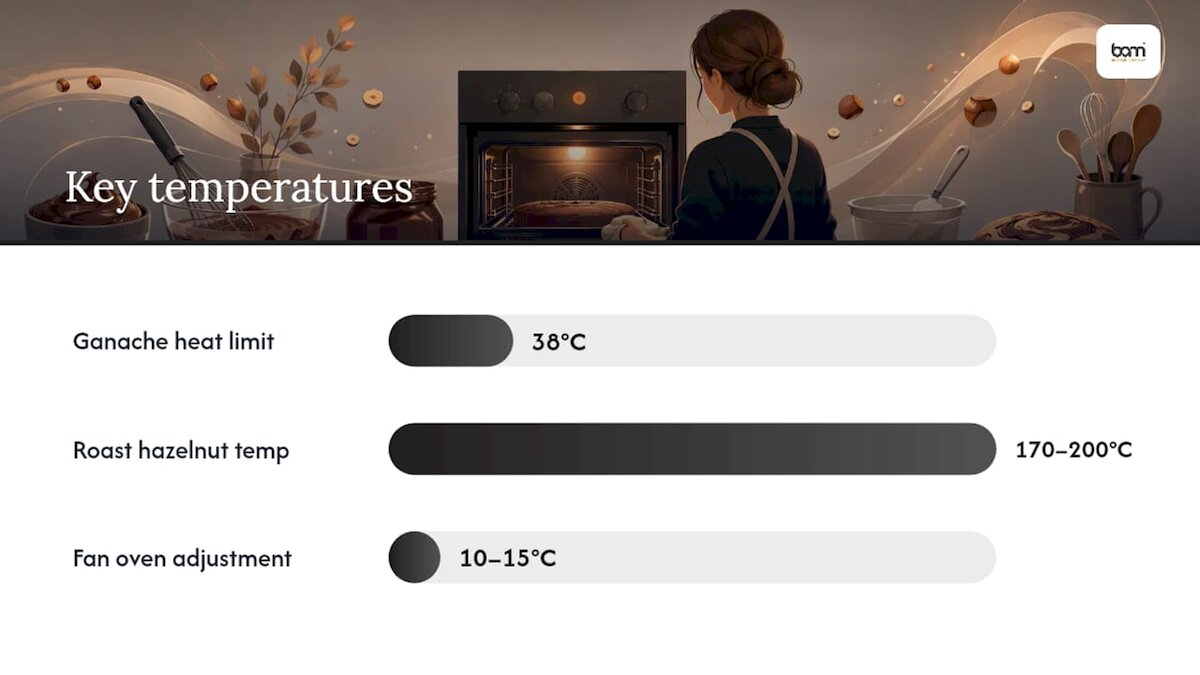
Nussnougat creme works best in baking when kept below 38°C for ganaches and used cold for fillings; consistent fat content in the spread is the single biggest factor in reliable results.
| Point | Details |
|---|---|
| Heat limit for ganache | Keep spread and chocolate below 38°C to prevent splitting or seizing. |
| Cold filling method | Chill spread before piping; add cornflour for high-moisture doughs to prevent leaking. |
| Roasting nuts | Roast hazelnuts 7–10 minutes at 170–200°C to release oil before blending homemade spreads. |
| Oven temperature | Fan ovens run 10–15°C cooler; always verify with an oven thermometer for consistent results. |
| Bamchocolate recommendation | BAM Nussnougat Creme offers stable fat content, making it the reliable choice for all four recipes. |
Nussnougat creme has a high fat content, which means it behaves more like a nut butter than a jam in the oven. That fat content is an asset when you work with it correctly, and a liability when you do not.
Add the spread at the end of mixing, after the dry ingredients are incorporated. Use a moderate amount per 12-muffin batch to avoid fat migration, which causes greasy crumb and sunken tops. Fold with a spatula rather than a mixer; overmixing after adding the spread breaks the emulsion in the batter.
Cold filling is the standard approach for brownies, brioche, and cookies. Spoon or pipe the spread onto one half of the dough, leave a 1 cm border, then seal firmly. For high-moisture bakes such as brioche, add a small amount of cornflour to the spread (roughly 1 tsp per 100 g) to stabilise the filling and prevent run-off during baking.
Drop small dollops of spread onto the surface of the batter, then draw a skewer through once. Two passes collapse the swirl into a muddy brown. Reduce the top-rack temperature by 5°C compared to a plain bake; the exposed spread can catch and darken before the crumb sets.
Warm the spread in a bain-marie to around 35°C, never above 38°C. Overheating melted chocolate above approximately 38°C causes splitting, and the same applies to a spread-based ganache. Add warm cream or a neutral oil gradually, stirring from the centre outward to build a stable emulsion. An emulsion approach combining nut paste, melted chocolate, cocoa, and rapeseed oil produces a smooth, pourable glaze when the oil is added in a thin, steady stream.

Pro Tip: If a ganache splits, remove it from the heat and blend with a stick blender for 20 seconds. The emulsion almost always recovers.
All temperatures are fan-assisted. Add 10–15°C for a conventional oven.
Ingredients: 200 g plain flour, 150 g caster sugar, 2 tsp baking powder, 2 eggs, 120 ml whole milk, 80 ml rapeseed oil, 80 g BAM Nussnougat Creme.
Method: Whisk dry ingredients. Combine eggs, milk, and oil separately, then fold into the dry mix until just combined. Divide into 12 cases. Drop 1 tsp of spread onto each, swirl once with a skewer. Bake at 180°C fan for 20 minutes. Cool in the tin for 5 minutes before transferring.
Troubleshooting: sunken tops usually mean overmixing or too much spread. Keep to 1 tsp per muffin.
Ingredients: 200 g dark chocolate (70%), 150 g unsalted butter, 250 g caster sugar, 3 eggs, 100 g plain flour, 30 g cocoa powder, 120 g BAM Nussnougat Creme (chilled).
Method: Melt chocolate and butter together. Whisk in sugar, then eggs one at a time. Fold in flour and cocoa. Pour half the batter into a lined 20 cm tin. Pipe or spoon the chilled spread in an even layer, leaving a 1 cm border. Cover with remaining batter. Bake at 170°C fan for 25 minutes. Cool completely before cutting. Bamchocolate’s brownie recipe demonstrates how hazelnut elements integrate into the base for clean slices.
Troubleshooting: leaking filling means the border seal was too thin or the spread was too warm. Chill the assembled tin for 10 minutes before baking.
Ingredients (pastry): 200 g plain flour, 100 g cold unsalted butter, 2 tbsp icing sugar, 1 egg yolk, 2 tbsp cold water. Filling: 150 g BAM Nussnougat Creme, 100 ml double cream, 80 g dark chocolate (60%), 20 ml rapeseed oil.
Method: Blind-bake the pastry case at 160°C fan for 15 minutes. Warm cream to 35°C. Melt chocolate separately to 35°C. Combine spread, cream, and chocolate, then add oil gradually, stirring from the centre. Pour into the cooled case. Chill for 2 hours. Bamchocolate’s ganache guide covers finishing techniques for a glossy surface.
Troubleshooting: grainy texture means the chocolate seized. Re-melt gently and blend with a stick blender.
Ingredients: 350 g strong white flour, 7 g fast-action yeast, 40 g caster sugar, 1 tsp salt, 2 eggs, 80 ml warm milk, 80 g softened butter, 160 g BAM Nussnougat Creme (chilled).

Method: Mix and knead dough until smooth (about 10 minutes). Prove 1 hour. Roll to a 30 × 40 cm rectangle. Spread chilled nussnougat creme evenly, leaving a 2 cm border. Roll tightly, slice into 8 pieces, place in a lined tin, prove 30 minutes. Bake at 190°C fan for 18 minutes. Cool 10 minutes before serving.
Troubleshooting: filling leaks out during baking if the roll is too loose. Seal the seam firmly and chill the rolls for 10 minutes before the second prove.
Look for a spread with a fat content of at least 30%, minimal added stabilisers, and a smooth, pourable consistency at room temperature. BAM Nussnougat Creme meets all three criteria. Roasting hazelnuts for 7–10 minutes at 200°C (electric) or 180°C fan before blending is the standard technique for releasing oil and developing flavour in homemade versions. A simple home recipe uses 400 g hazelnuts with coconut and rapeseed oil roasted for 8–10 minutes at 170°C as a reliable base.
For ganaches, use dark chocolate at 60–70% cacao for balance; milk chocolate at 35–40% for a sweeter, softer set. Guidance on cacao percentage helps match the chocolate to the recipe’s sweetness level. Avoid compound chocolate for ganache work; it contains vegetable fat that prevents a clean emulsion.
Rapeseed oil is the standard choice for loosening thick pastes. Adding small amounts of milk or rapeseed oil adjusts consistency when a paste is too firm. Cornflour (1 tsp per 100 g spread) stabilises fillings in high-moisture doughs.
Seizing: chocolate in the ganache has seized from moisture or overheating. Remove from heat, add 1 tsp warm rapeseed oil, and blend with a stick blender.
Runny filling: spread was too warm before baking. Chill assembled bakes for 10 minutes before they go into the oven, and add cornflour to the spread for high-moisture recipes.
Burnt edges: the exposed spread on swirls or rolls caramelises faster than the crumb. Tent loosely with foil after the first 10 minutes of baking.
Grainy ganache: temperature differential between the spread and the cream was too large. Both components should be at approximately 35°C before combining.
| Substitution | Behaviour change | Adjustment needed |
|---|---|---|
| Sugar-free BAM hazelnut spread | Slightly firmer set | Add 1 tsp extra oil to loosen |
| Protein spread (e.g. Proteinella) | Drier, less fluid | Add 2 tsp milk or cream |
| Almond butter + cocoa | Less sweet, more bitter | Add 1 tbsp honey or maple syrup |
| Coconut oil-based spread (vegan) | Firms quickly when cold | Work at room temperature only |
For sugar-free baking, the BAM sugar-free hazelnut spread behaves similarly to the standard version with minor consistency adjustments. For protein-enriched bakes, a protein spread works well in brownies and muffins where the extra dryness is offset by the batter’s moisture.
When substituting a high-fat filling for a lower-fat one, reduce the bake time by 2–3 minutes and check doneness with a skewer; lower-fat fillings release moisture into the crumb and can extend the apparent bake time.
Assembled bakes keep well at room temperature for 2 days in an airtight container, away from direct heat. Refrigerate anything with a ganache filling or glaze; it stays fresh for up to 5 days. Bring refrigerated bakes back to room temperature for 30 minutes before serving; cold ganache loses its gloss and the crumb tightens.
For freezing, wrap individual portions in cling film, then place in a freezer bag. Brownies and muffins freeze well for up to 2 months. Brioche rolls are best frozen before the second prove; bake from frozen by adding 5 minutes to the standard bake time. Ganache tarts do not freeze well; the filling cracks on thawing.
To reheat brownies or brioche, use a low oven at 150°C fan for 8–10 minutes. Avoid the microwave for ganache-filled items; uneven heat causes the filling to bubble and separate.
For gifting, slice brownies into neat squares, wrap individually, and add a label with the storage note. Brioche rolls present well in a kraft box lined with parchment.
Most baking failures with hazelnut-nougat spreads come from one of two mistakes: adding the spread too warm, or not sealing the filling properly. The 38°C ceiling is not a guideline to approximate; it is the point at which the cocoa butter in the spread begins to separate from the sugar and nut solids. Once that happens, no amount of stirring recovers the texture cleanly.
The second thing most guides understate is the value of a good spread to begin with. A spread with inconsistent fat content behaves differently batch to batch, which makes troubleshooting genuinely difficult. BAM Nussnougat Creme produces consistent results across the four recipes above because the fat and sugar ratios are stable. That consistency is what lets you diagnose a problem as technique rather than ingredient variation.
Home bakers who want to go further will find Bamchocolate’s recipe library and the BAM confectionery set for creamy fillings a practical next step.
BAM Nussnougat Creme is the single most direct upgrade for any of the four recipes above. It is available now from Bamchocolate with consistent fat content and no stabilisers that interfere with ganache work. Pick up the BAM Confectionery set Creamy fillings for a complete kit that covers spreads, piping bags, and the accessories needed for filled bakes. For bakers building a full kit from scratch, the BAM Basic pastry package covers scales, tools, and core ingredients in one order. Browse the full range of baking accessories to complete your setup.
Nussnougat creme is a hazelnut-nougat paste with a higher nut content and typically less sugar than mass-market spreads. It behaves more predictably in baking because the fat-to-sugar ratio is more stable.
Yes. Use it cold as a filling sealed inside dough, or fold up to 80–100 g into muffin batter at the end of mixing. Avoid adding it warm; the fat migrates into the crumb and causes sinking.
Grainy texture usually means the chocolate seized from a temperature shock. Both the spread and the cream should be at approximately 35°C before combining, and the oil should be added gradually.
Room temperature: 2 days in an airtight container. Refrigerated: up to 5 days. Brownies and muffins freeze well for up to 2 months; ganache tarts do not freeze cleanly.
BAM Nussnougat Creme is available directly from Bamchocolate, with UK delivery and a sugar-free version also listed on the site.



 Confectionery tips




 Slovenščina
 Hrvatski
 Deutsch
 Italiano
 Česky
 Polski
 Magyar
 Français
 Slovák
 Nederlands
 Español