 info@bamchocolate.com
 Login


 en

 BAM Cake converter
 Login
Claudia
Avtorica vsebin


 Reading time:
8 minutes

Compare Bamchocolate’s hazelnut protein spread (18 g protein/100 g) with three quick DIY recipes and clear label reading tips to help you buy or make the...
The recommended ready-made pick is Bamchocolate’s Kakao Haselnuss Aufstrich mit Proteinen, which delivers around 18 g protein per 100 g with real hazelnut paste. If you’d rather make your own protein schokoaufstrich tonight, blend 50 g roasted nut butter, 30 g protein powder, and 15 g cocoa with a splash of oil. Full recipes and label-reading rules follow below.
TL;DR:
- The best high-protein hazelnut cocoa spread contains about 18 g of protein per 100 g and uses real hazelnut paste for optimal texture and flavor.
- Most supermarket options vary widely, with whey, vegan, sugar-reduced, or nut-butter-based spreads, so label reading must focus on protein content, ingredients, and sugar sources.
- Homemade protein spreads can be quickly prepared with nut butter, protein powder, and cocoa, or adapted to vegan or legume-based versions, with roasting nuts improving texture and flavor.
- Always check the nutrition label for protein, sugar, and fat sources, and avoid spreads with oils listed before nuts or excessive polyols that can cause digestion issues.
- Bamchocolate’s ready-made spread offers a straightforward, honest option with real ingredients, while homemade recipes provide full control over macro content.
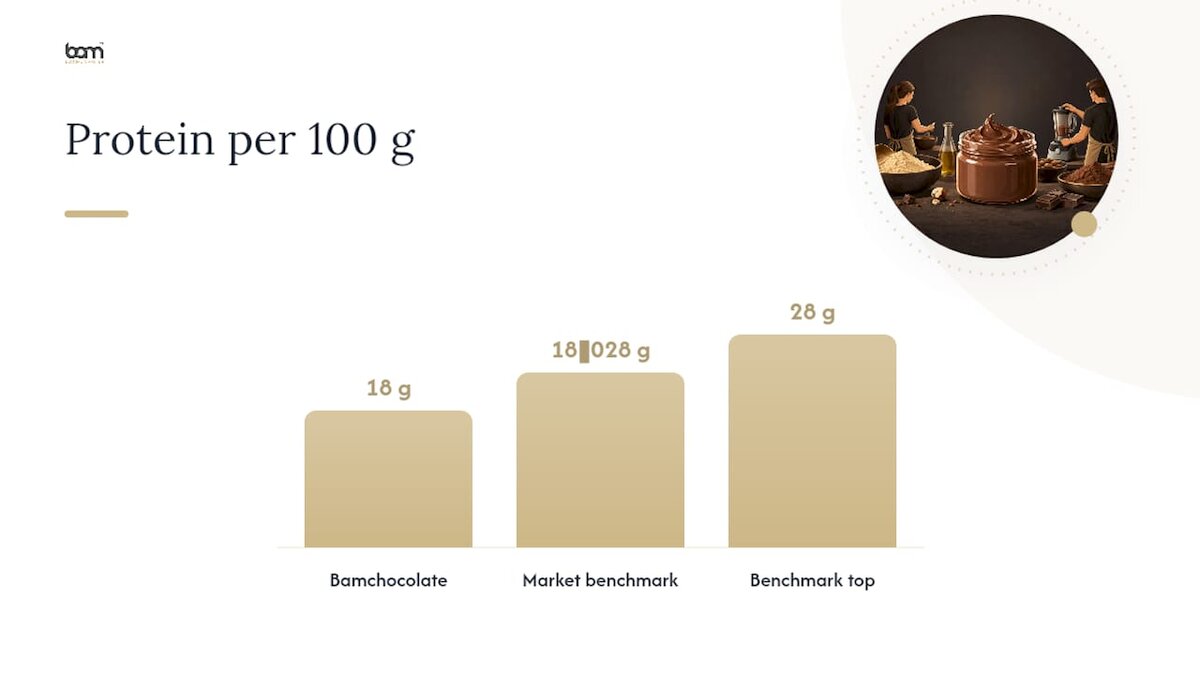
Not every jar labelled “high protein” earns the claim. A a high-protein hazelnut cocoa spread lists roughly 18 g protein per 100 g and keeps real hazelnut paste high on the ingredient list — this is exactly what separates a genuinely creamy spread from one that relies on low-fat fillers.
That matters because texture and taste both depend on it: spreads built around real nut paste stay softer straight from the fridge, whereas cheaper protein spreads using low-fat carriers often turn stiff and grainy once chilled.
What makes it work for daily use:
Protein per 100 g: Some protein hazelnut spreads land at roughly 18 g protein per 100 g, comfortably within the 18 to 28 g range that market comparisons treat as the benchmark for a serious protein schokoaufstrich, rather than a chocolate spread with a token protein dusting.
Walk down any supermarket aisle stocking protein-rich cocoa spread and you’ll find four broad camps: whey or milk-protein based, vegan plant-protein based, sugar-reduced versions using sweeteners, and nut-butter-based spreads that lean on the fat matrix itself for protein and texture.
Each type reads differently on the label, even when the marketing sounds similar.
Two label phrases do a lot of marketing work: “protein %” tells you the headline number, while “no added sugar” only means no sucrose was added, not that the product is sugar-free overall. Check where hazelnut sits in the ingredient list relative to oils. If oil appears before nuts, you’re paying for a thinner, less nutritious spread.
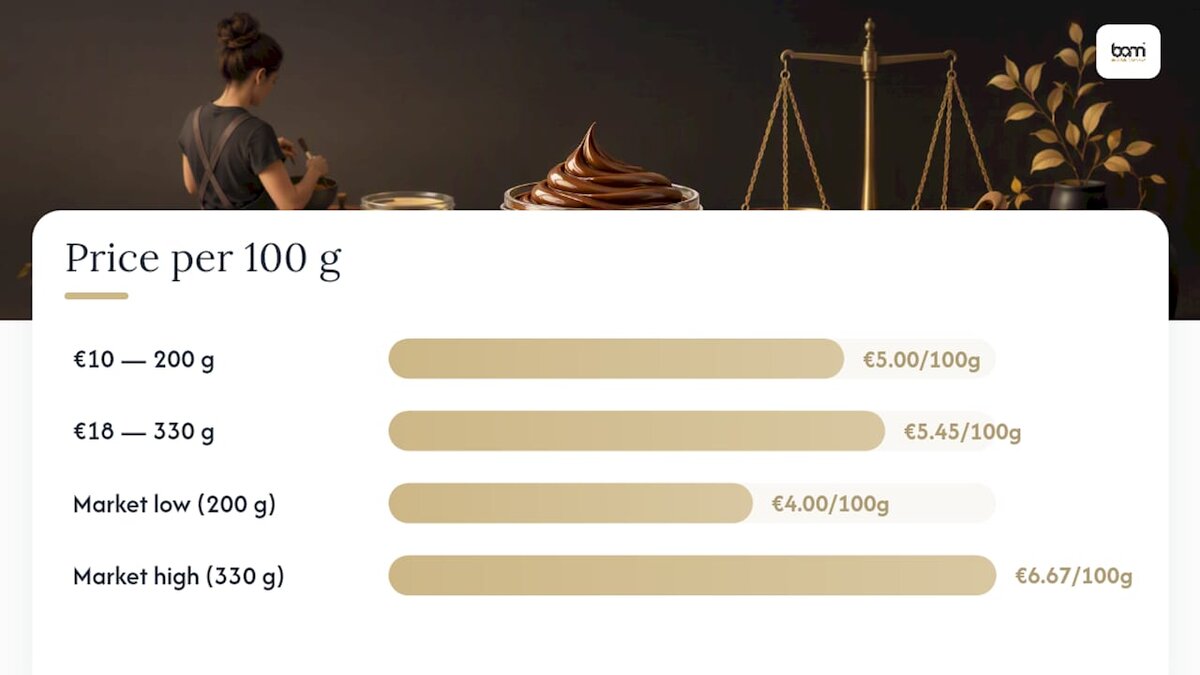
Pro Tip: Divide the price by the jar weight in hundreds of grams before comparing two products. A spread costing €10 for 200 g and one costing €18 for 330 g look different once you’re comparing price per 100 g rather than sticker price. Market listings show typical prices spanning roughly €8 to €22 for jars in the 200 to 330 g range, so it pays to check.
Making your own chocolate protein spread gives you full control over sugar, fat, and protein source, which matters if you’re managing macros closely. Three versions cover most needs.
Texture problems almost always trace back to two things: unroasted nuts and the wrong thinning liquid. Roasting nuts releases their natural oil and makes blending far easier. If the mixture seizes or turns stiff, add a small amount of warm plant milk or melted cocoa butter rather than water, since water can cause the fats to split rather than loosen.
Pro Tip: Toast your hazelnuts or almonds for eight to ten minutes at 160°C before blending. It roughly halves the blending time and deepens the flavour enough that you can often cut back on added sweetener.
Four numbers on the nutrition panel tell you almost everything: protein grams, sugar grams, fat grams, and calories, all measured per 100 g so you can compare jars fairly regardless of size.
What to check on every jar:
That last point deserves attention. Sugar-reduced protein spreads often lean on polyols, and manufacturers commonly add a cautionary note about overconsumption for exactly this reason. A tablespoon or two is fine; eating half a jar in one sitting is where problems start.
Worth remembering: a protein-rich cocoa spread is a supplement to your protein intake, not a primary source. A typical 15 to 20 g serving contributes a useful top-up alongside meals, but it won’t replace meat, dairy, eggs, or legumes in your daily total.
A jar of protein schokoaufstrich earns its place in the fridge when it’s actually used, not just admired. These are the combinations that add protein without piling on unnecessary calories.
Pairing the spread with a protein-dense base such as Skyr or quark does more for satiety than eating it alongside something purely carbohydrate-heavy, since the combined protein total slows digestion and keeps you fuller for longer.
Getting involved with certain product ranges taught me that most “healthy” chocolate spreads fail on texture long before anyone questions the protein number. A spread that sits stiff in the fridge gets used once and then abandoned at the back of a shelf.
My practical tip: store your jar at cool room temperature rather than the fridge door if you’re using it within two to three weeks. It stays spreadable without losing the nut paste’s texture. Whether you reach for a jar or blend your own three-ingredient version tonight, the goal is the same: protein that actually gets eaten, not just bought.
— Andraz
Bamchocolate is the practical alternative to endless supermarket label-reading: instead of comparing five jars to find one with real hazelnut paste and an honest protein count, you get Bamchocolate’s Kakao Haselnuss Aufstrich mit Proteinen already formulated that way, with the nutrition facts stated plainly on the product page. If you’d prefer a version without added sugar, the sugar-free hazelnut spread covers that ground too. And if the homemade route appeals more, that’s a genuinely good option for anyone wanting full control over sweetness and fat, so read the recipes above and decide which suits your kitchen better.
For bakers who want to build their own fillings and spreads regularly, the Confectionery Set for Creamy Fillings bundles the ingredients and tools to experiment beyond a single jar. Order the 200 g jar for everyday use, or check the 1 kg format if you’re baking in volume or buying for a household that goes through spread quickly.
Blend 50 g roasted nut butter, 30 g protein powder, and 15 g cocoa powder with a tablespoon or two of neutral oil until smooth, adjusting sweetness with dates or a natural sweetener if needed.
It adds a modest protein top-up, usually 15 to 20 g worth in a typical serving, alongside your regular meals, but it should support rather than replace primary protein sources like meat, dairy, or legumes.
High-protein products can support satiety and muscle maintenance, but the label alone doesn’t guarantee a healthy choice. Check sugar, fat, and sweetener content per 100 g rather than trusting the protein percentage on its own.
Yes. The fastest version blends roasted nut butter, protein powder, and cocoa, while a chickpea-based version swaps in cooked, drained chickpeas for a denser, powder-free spread. Bamchocolate’s own Kakao Haselnuss Aufstrich mit Proteinen offers a ready-made version built on the same principle of real hazelnut paste plus added protein.



 Chocolate novelties




 Slovenščina
 Hrvatski
 Deutsch
 Italiano
 Česky
 Polski
 Magyar
 Français
 Slovák
 Nederlands
 Español