 info@bamchocolate.com
 Login


 en

 BAM Cake converter
 Login
Claudia
Avtorica vsebin


 Reading time:
11 minutes
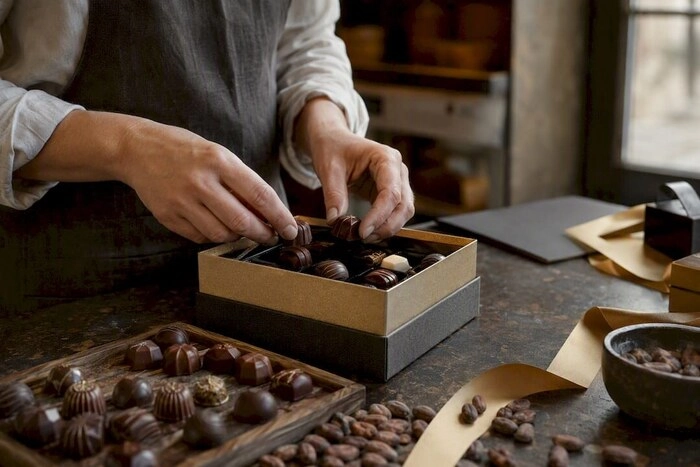
Learn how to create a balanced chocolate assortment that delights every recipient. Discover tips on texture, flavor, and packaging!
Build a balanced 12-piece box by combining three base chocolates, two contrasting textures and one adventurous flavour, then match the packaging to the occasion. That single formula covers most of what goes wrong in a home-built assortment: too much dark chocolate, no textural contrast, or a box that looks like an afterthought.
Before opening any configurator, decide three things:
BAM - Become A Master offers configurable bundles built around exactly this logic, letting you choose bases, fillings and packaging in one pass rather than guessing at proportions.
A balanced chocolate assortment combines multiple base chocolates, contrasting textures, and a small proportion of adventurous flavours, matched to packaging suited for the occasion.
| Point | Details |
|---|---|
| Follow the 40/40/20 rule | Mix classic flavours, textural variants, and adventurous pieces for a balanced box. |
| Choose compartmentalised boxes | Use divided packaging for mixed fillings to prevent smearing or shifting in transit. |
| Order a test box first | Place a small trial order before committing to a large personal or corporate purchase. |
| Check ingredient transparency | Confirm identification cards and allergen labelling before gifting to unfamiliar recipients. |
| Use BAM - Become A Master’s configurable bundles | Build, save, and reorder personalised boxes through the BAM Gift Corner for both personal and corporate gifting. |
Every configurator asks you to decide the same three things, and the order you decide them in matters. Get the base chocolates and fillings right first, and the shapes and packaging almost choose themselves.
Start with base chocolate. A good assortment usually draws from at least two of the three families: dark (for depth and bitterness), milk (for approachability) and white (for sweetness and pairing with fruit or citrus). Leaning entirely on one family, dark chocolate especially, tends to flatten the tasting experience even when the individual pieces are excellent.
Fillings do the heavier lifting for variety. A well-built box mixes:
Shape and portion size affect perceived value more than most people expect. Uniform, neatly sized pieces read as more considered than a mismatched jumble, even when the flavours inside are identical. If you are working from a dark chocolate base, keep pieces slightly smaller. Its intensity means a large format can overwhelm the palate before the second bite.
Pro Tip: If you’re unsure how many pieces to include per base, start with a 12 to 16 piece box. It’s large enough to show range without diluting the impact of any single flavour.
Expert testers reviewing dozens of boxed assortments found that the strongest boxes balance classic and inventive flavours rather than leaning heavily on trend flavours or novelty alone.
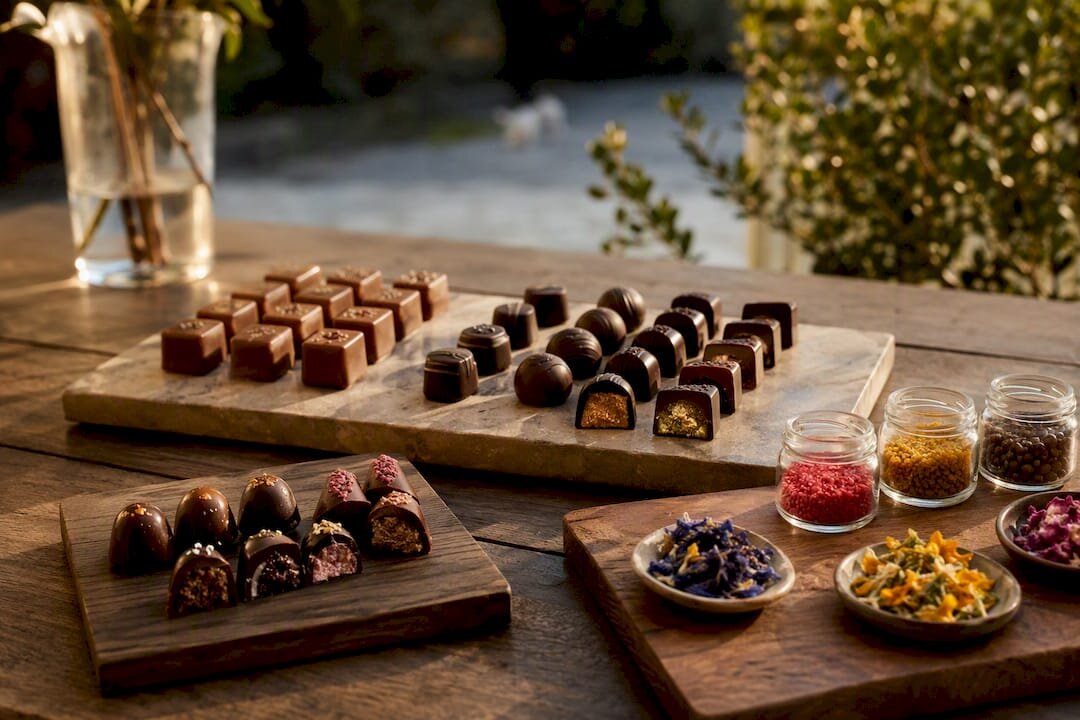
That ratio exists because most recipients, even adventurous ones, want at least half the box to feel familiar. A box that is entirely experimental risks alienating the very people you built it for.
Pairing by base helps too:
The most common mistake is duplication disguised as variety. Three different pralines with slightly different nuts is not variety, it is repetition. Aim for contrast in texture and intensity, not just a different label on the box.
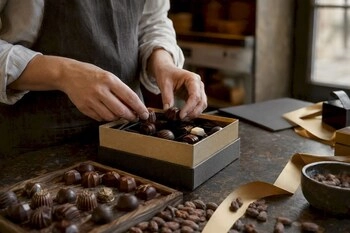
Compartmentalised boxes suit mixed fillings best. Soft ganaches and firmer pralines shift and smear against each other in free-form boxes, especially during transit. Reserve free-form layouts for single-texture assortments, such as a box of uniform truffles.
Personalisation choices that actually add meaning to the gift, rather than just decorating it:
For hot weather, insulated packaging and cooling elements are not optional extras. Reviewers testing multiple chocolate brands consistently found that prompt shipping with adequate insulation kept fillings intact, while boxes without it arrived softened or misshapen.
Customised boxes typically start around a modest minimum piece count, often 8 to 12, with the price per piece falling noticeably as the order grows, a pattern that holds across most confectionery configurators, not just one brand.
Plan your lead time around the occasion:
Freshness is genuinely time-sensitive. Thin shells and delicate ganache textures degrade with storage time and temperature swings, which is exactly why lead time and shipping method are practical constraints, not administrative details, when ordering filled assortments.
Most ordering mistakes happen before checkout, not after. Follow this sequence:
Pro Tip: Order your test box at least a week before you plan the full order. It gives you time to adjust flavour choices without rushing the final decision.
Thin, crisp shells and smooth, evenly tempered ganache are the clearest signs of careful craftsmanship, not marketing language. Testers who evaluated dozens of boxed chocolates found that these traits, not price, separated genuinely well-made bonbons from mediocre ones.
A thin, crisp shell with smooth ganache distinguishes a well-made bonbon from one that merely looks the part. Balanced sweetness, not maximum sweetness, is what testers consistently rewarded across dozens of boxed assortments.
Ingredient transparency backs this up. Reviewers found that boxes with a clear card identifying each piece, its flavour and its allergens made for a noticeably better gifting experience, particularly for recipients with dietary restrictions. BAM - Become A Master applies the same standard across its product descriptions and quality guidance, giving you the same markers to check before you build a box, rather than after you have already opened it.
Not every online chocolate shop sources the same way, and the difference shows up in the finished piece long before it shows up on a label. Look for suppliers who name their cocoa origin, rather than listing “cocoa” as a generic ingredient. Single-origin or clearly sourced dark chocolate tends to carry more consistent flavour from batch to batch, because the supplier is not blending whatever cocoa happens to be cheapest that month.
Check whether the supplier lists real ingredients rather than vague categories. “Cocoa butter, cocoa mass, sugar” tells you far more than “chocolate coating”. The presence of vegetable fats as a cocoa butter substitute is a common shortcut in mass-produced chocolate, and it noticeably changes both the snap and the melt of the finished piece.
Freshness claims are worth scrutinising too. A supplier that discloses production dates or shelf life windows is generally more confident in its process than one that avoids the topic entirely. For fillings specifically, ask whether ganaches are made fresh in small batches or produced in bulk and held in storage. Small-batch ganache production tends to correlate strongly with the smooth texture and balanced sweetness that testers consistently favour.
Look, too, at how a supplier communicates ingredient origin on individual product pages. Detailed sourcing notes, rather than a single blanket statement across the whole catalogue, usually indicate that a business is tracking quality piece by piece rather than treating chocolate as a commodity.
A box built for a colleague should look different from one built for a partner, and both should look different from a box built for yourself. The starting question is always the same: who is eating this, and what do they already like?
For corporate or client gifts, lean conservative. Classic milk and dark combinations with clearly labelled ingredients travel better across unknown palates and dietary needs than anything experimental.
Dietary restrictions deserve direct attention rather than an afterthought. If you are gifting to someone with allergies, prioritise suppliers who provide identification cards for each piece, since guesswork with nuts, dairy or gluten is not something a nice box can compensate for. Sugar-free and protein-enriched chocolate options have also become genuinely viable rather than a compromise category, useful for fitness-focused recipients or anyone managing blood sugar.
Themed assortments give a configurator-built box a reason to exist beyond “an assortment of chocolate”, and recipients notice the difference. A winter box built around cinnamon, orange and dark chocolate reads as considered in a way that a generic mixed box does not, even if the underlying pieces are similar.
Seasonal timing also affects freshness and shipping decisions. Summer orders need insulated packaging and faster delivery windows to protect ganache-based fillings from heat, while winter orders have more flexibility on transit time.
Practical seasonal themes worth building around:
Themed boxes work best when the theme drives the flavour choices, not just the box colour. A “winter box” that is simply a standard assortment in red packaging misses the point entirely.
Building my first assortment, I overloaded it with dark chocolate because I assumed intensity equalled quality. The box that actually worked came later, once I added milk chocolate and one citrus piece for contrast. Try a small configurable bundle from BAM - Become A Master before committing to a large order. It is the fastest way to learn your own ratios.
— Andraz
There are other ways to put a chocolate gift together, from generic supermarket selection boxes to hand-picking loose pieces from a counter, but neither gives you real control over the ratio of bases, textures and flavours discussed throughout this guide. BAM - Become A Master is built specifically to solve that problem: its configurable bundles let you choose base chocolates, fillings and packaging in one pass, save the configuration, and reorder it later without rebuilding from scratch.
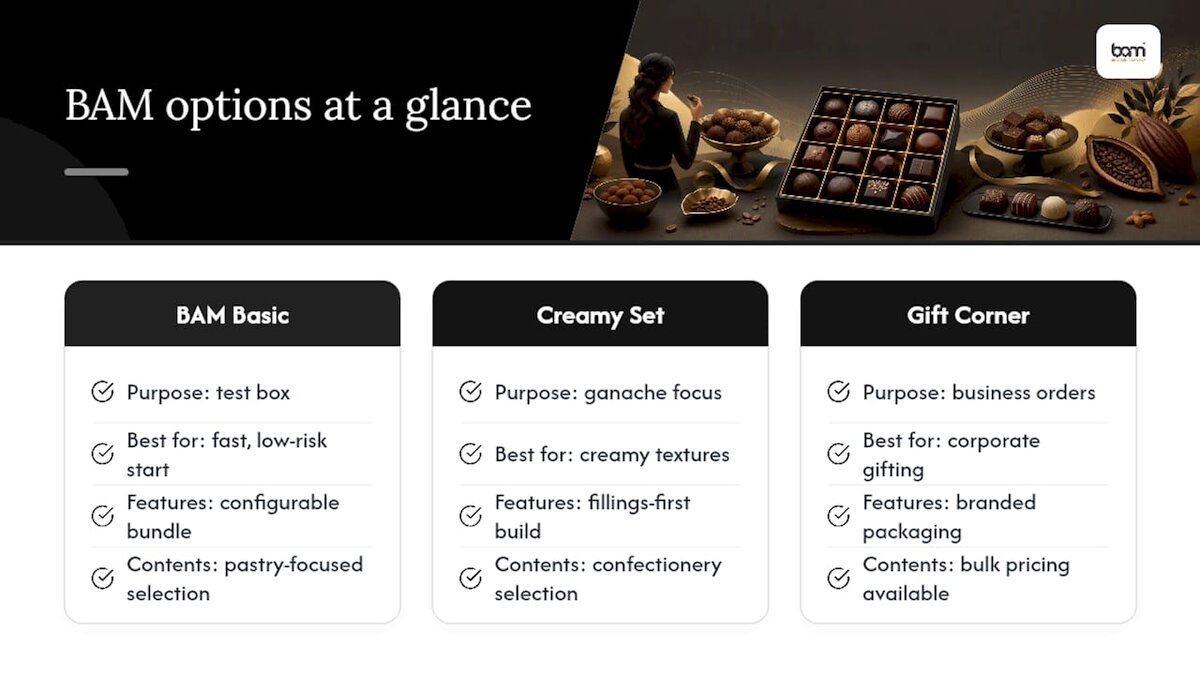
For a fast, low-risk start, the BAM Basic pastry package works well as a test box before a larger purchase, while the BAM Confectionery set Creamy fillings is a practical choice if you want to build around ganache-heavy textures specifically. For businesses, corporate packaging and bulk pricing are available directly through the Gift Corner, with clear steps for requesting branded presentation. Visit the BAM Gift Corner to configure your first box and check current minimum order details before you commit.
There is no single fixed top 10, but expert testers consistently favour boxes with thin, crisp shells and smooth ganache over ones judged purely on flavour novelty.
Citrus and red berries pair particularly well with dark chocolate, while raspberry and pistachio suit white chocolate, and hazelnut and caramel complement milk chocolate.
Adventurous single flavours such as chilli, matcha and unusual fruit pairings are popular as accent pieces, though testers found the strongest boxes still keep these to a smaller share alongside classic flavours.
Common formats include filled bonbons, pralines, truffles, bars and moulded pieces, with shape often chosen to suit portion size and the intensity of the base chocolate.
Most configurable assortments start at around 8 to 12 pieces, with the price per piece dropping as quantity increases, making a 12 to 16 piece box a practical starting point.


 Confectionery tips


 Slovenščina
 Hrvatski
 Deutsch
 Italiano
 Česky
 Polski
 Magyar
 Français
 Slovák
 Nederlands
 Español