 info@bamchocolate.com
 Login


 en

 BAM Cake converter
 Login
Claudia
Avtorica vsebin


 Reading time:
10 minutes
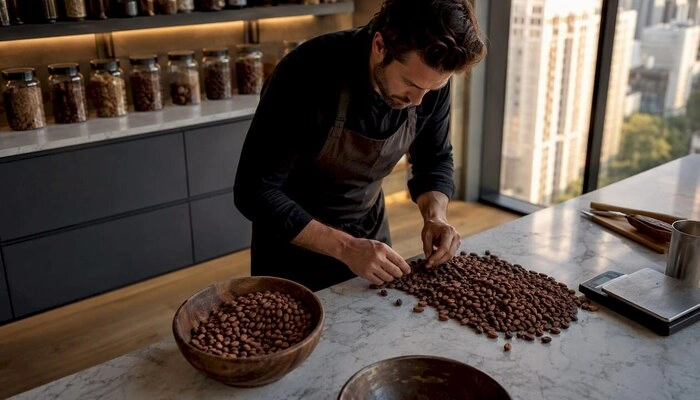
Curious about what is single origin chocolate? Discover its unique flavors, sourcing insights, and what truly defines quality in every bite.
TL;DR:
- Single origin chocolate derives from a single geographic source, but quality and traceability depend on transparency.
- Labels with specific producer, region, or estate details offer more meaningful insight into flavor and origin authenticity.
Single origin chocolate means the cocoa in a bar comes from a single defined geographic source rather than a blend of beans from multiple countries. That source might be a whole country, a specific growing region, a named cooperative, or a single estate. What the label does not automatically promise is superior quality, ethical sourcing, or tight traceability — those depend on the maker’s transparency and process control, not the phrase itself.
Single origin chocolate is made with cocoa beans from one defined geographic source, but “defined” covers a wide range. The level of specificity matters enormously for both flavour expectations and traceability.
Country-level claims are the most common. “Peruvian cacao” or “Ghanaian cacao” tells you something useful about broad flavour tendencies, but a country produces cocoa across hundreds of farms with very different soils and altitudes. It is a starting point, not a guarantee.
Region or valley narrows things considerably. A bar labelled “Piura Valley, Peru” or “Sambirano Valley, Madagascar” points to a defined growing area with consistent climate and altitude. This is where cocoa begins to develop a genuinely distinctive character.
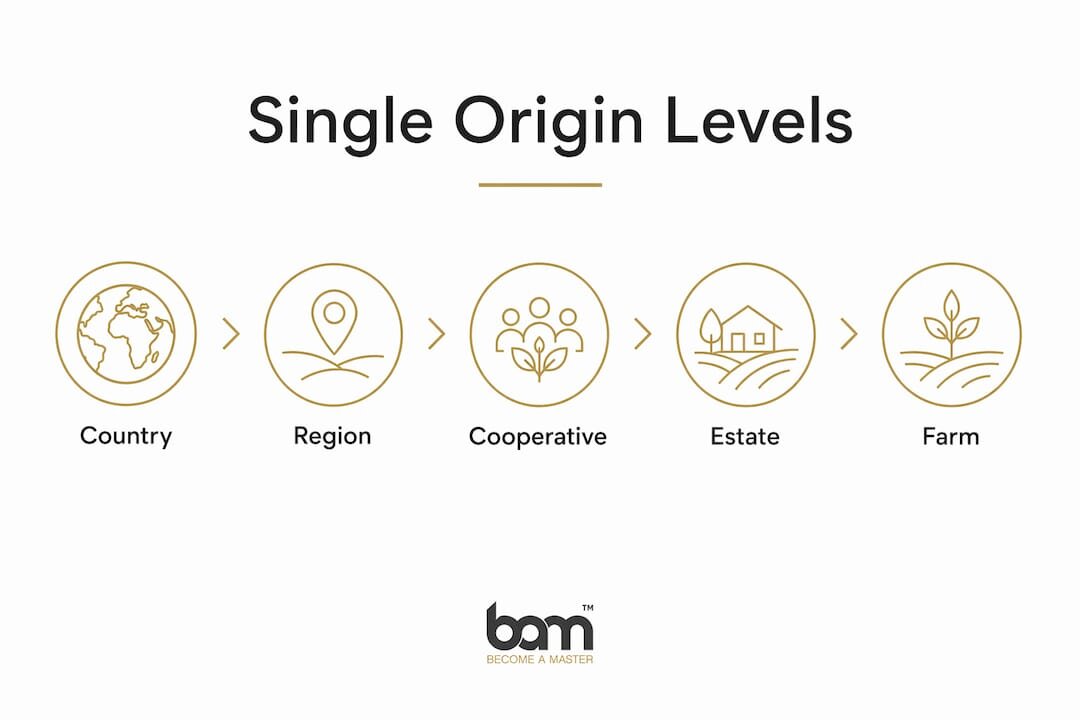
Cooperative or estate is the most meaningful level. Labels that include a cooperative name, a harvest season, or explicit “identity-preserved” language give buyers a way to compare bars across releases and assess consistency. A supplier who can name the cooperative and the harvest year is offering real single origin sourcing. One who can only say “from Peru” is offering single origin marketing.
Single estate or farm sourcing is the narrowest claim of all. Beans are traceable to one property, kept separate through fermentation, drying, and shipping. Rare, usually pricier, and the most likely to show a distinct micro-terroir.
Terroir and post-harvest processing are the two forces that turn beans from a specific place into recognisably different chocolate. Understanding both helps you know what to expect when you open a bar.
Blended chocolate is designed to taste consistent across harvests and suppliers. Single origin bars vary by season and farm practice — that variability is the point, not a flaw.

Different cacao types have characteristic tendencies that serve as useful reference points when tasting single origin bars.
| Cacao type | Typical flavour notes | Character |
|---|---|---|
| Criollo | Floral, delicate, fruity | Low bitterness, complex finish |
| Forastero | Earthy, robust, bitter | Strong cocoa base, less nuance |
| Trinitario | Fruity-tart, balanced | Hybrid of Criollo and Forastero |
Geography adds another layer. Madagascan bars often carry red fruit and citrus notes. Venezuelan origins tend toward nuts and dried fruit. West African Forastero is the backbone of most commercial chocolate — reliable, bold, and earthy.
A simple tasting method for home use:
Cocoa percentage interacts with origin notes. A 70% bar from Madagascar will show more of the fruit character than a 90% bar from the same origin, where bitterness dominates.
Pro Tip: Taste two bars from different origins side by side at room temperature. The contrast makes terroir differences far more obvious than tasting one bar in isolation.
The phrase “single origin” is not universally regulated; its meaning depends entirely on how a maker documents and preserves identity. A label alone is not enough — examine the evidence behind it.
Labels worth favouring:
Red flags to watch for:
Certifications such as organic or Fairtrade address farming practices and price floors. They are valuable but not a substitute for traceability. A bar can be certified organic and still carry a vague, unverifiable origin claim. Conversely, a direct-trade bar with named producers and published harvest data may not carry any certification at all. Check both dimensions separately.
A poorly processed single origin bar can taste worse than a well-made blend. Maker skill — particularly control over fermentation and roasting — is as decisive as the origin itself.
Specialist chocolatiers, bean-to-bar makers, and curated online shops are the most reliable sources in the UK. Look for sellers whose product pages include producer names, harvest information, and roast or fermentation notes. A transparency page on a retailer’s website is a good sign; a page that lists only country names and tasting adjectives is not.
Price shapes vary considerably. Entry-level single origin bars from country-level sourcing are often available at affordable prices. Small-batch estate bars with named producers and documented fermentation protocols usually cost more due to their specialized sourcing and production. The premium reflects the cost of segregated logistics, shorter production runs, and closer sourcing relationships.
Choosing good quality chocolate also means storing it correctly once you have it. Single origin bars are more sensitive to temperature fluctuation than mass-market chocolate because their flavour compounds are less masked by additives.
Single origin chocolate is defined by where its cocoa comes from, but the specificity of that claim and the maker’s process control determine whether it actually delivers on flavour and traceability.
| Point | Details |
|---|---|
| Definition | Cocoa from one identifiable source: country, region, cooperative, or single estate. |
| Label checks | Look for a named producer, harvest season, and bean variety — not just a country name. |
| Quality caveat | Origin alone does not guarantee quality; fermentation and roasting skill are equally decisive. |
| Tasting tip | Melt slowly on the tongue and note the finish; taste two origins side by side for clearest contrast. |
| Bamchocolate | Bamchocolate’s curated selections and beginner bundles are a practical starting point for exploring single origin bars in the UK. |
The conversation around single origin chocolate tends to focus on flavour, which is fair. But the more interesting question is what the label reveals about a maker’s relationship with their supply chain.

Most commercial chocolate is blended precisely to erase origin. Beans from a dozen countries are combined, over-roasted, and heavily conched so the result tastes identical every time. That consistency is a commercial achievement, but it comes at a cost: farmers producing distinctive, carefully fermented beans have no way to command a premium for that work when their beans disappear into a blend.
Single origin sourcing, done properly, changes that equation. When a maker publishes a cooperative name, a harvest year, and a fermentation protocol, they are creating accountability. Transparent sourcing that includes named cooperatives and harvest data gives buyers evidence that premiums are reaching farmers rather than stopping at the trading level.
The caveat worth holding onto: a single origin label without documentation is just a story. The term is unregulated, and plenty of bars use it as marketing shorthand for “premium” without the supply chain rigour to back it up. The checklist in the labelling section above is the practical filter. Use it, and the label becomes genuinely informative rather than decorative.
For chocolate lovers who want to move from reading about origin to actually tasting it, Bamchocolate offers a direct route. The shop’s beginner confectionery bundle is a practical starting point: it pairs well with single origin bars for home baking experiments, giving you the tools to work with distinctive flavour profiles rather than just eat around them.
For bakers ready to go further, the 101 BAM pastry recipe book pairs directly with premium chocolate work, with recipes designed around the kind of nuanced flavour that single origin bars bring to ganaches, mousses, and tarts. Product pages include maker and sourcing information where available, so you can check origin details before buying. Browse the full range at bamchocolate.com and use the product notes to compare origins before you commit.
Not automatically. A well-made blend can outperform a poorly processed single origin bar. Single origin chocolate offers a distinct flavour identity tied to one place; whether that is “better” depends on the maker’s skill and your own taste preferences.
Lindt produces some bars labelled by country of origin, but these are typically country-level claims rather than cooperative or estate-level sourcing. They do not generally publish fermentation protocols or producer names, so the traceability is limited compared to dedicated bean-to-bar makers.
Soil, altitude, rainfall, and local cacao genetics all influence the flavour compounds that develop in the bean. Combined with fermentation and roasting decisions, these factors produce the distinct tasting notes — fruity, floral, earthy, or nutty — that single origin bars highlight.
Look for a named cooperative or estate, a harvest season, and fermentation or roast notes on the packaging or the seller’s website. A country name alone, with no further detail, is a weak claim. The term is not regulated, so the documentation behind it is the only reliable signal.



 Tales of chocolate




 Slovenščina
 Hrvatski
 Deutsch
 Italiano
 Česky
 Polski
 Magyar
 Français
 Slovák
 Nederlands
 Español