 info@bamchocolate.com
 Login


 en

 BAM Cake converter
 Login
Claudia
Avtorica vsebin


 Reading time:
11 minutes
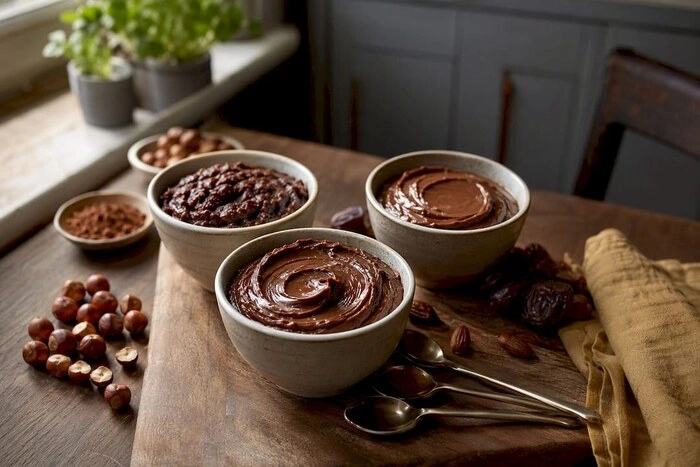
Make three sugar free chocolate spreads in under 15 minutes. Learn which sweeteners, texture fixes and label checks suit Austrian home bakers.
Make a nut-butter chocolate spread sweetened with erythritol if you want a genuinely low-carb result, or blend a date-based Datella if whole-food sweetness matters more than carb count. Both take under 15 minutes with a decent blender. If you’d rather skip the kitchen entirely, BAM’s sugar-free hazelnut spread delivers the same result without the washing up. The three recipes and buying checklist below cover which route suits your goals.
TL;DR:
- Using roasted nuts and proper blending techniques ensures a smooth and dense texture in homemade nut-butter chocolate spreads, whether low-carb or protein-based.
- Erythritol provides a practical, low-impact sweetener for low-carb diets, but combining it with stevia or monk fruit can improve flavor and mouthfeel.
- Date-based spreads offer natural sweetness and rich flavor but contain significant natural sugars, making portion control essential for blood sugar management.
- Shelf life varies: oil-based nut spreads last around two to four weeks when stored properly in sterilized jars, while fruit-based versions spoil faster.
- Buying commercial sugar-free hazelnut spreads from BAM offers convenience and consistent low-sugar results without the need for kitchen preparation.
You don’t need special equipment or rare ingredients for a proper zuckerfreier schokoaufstrich. You need roasted nuts, good cocoa, a sweetener that suits your goals, and about 15 minutes. Here are three versions, each built for a different priority: low-carb, whole-food, or high-protein.
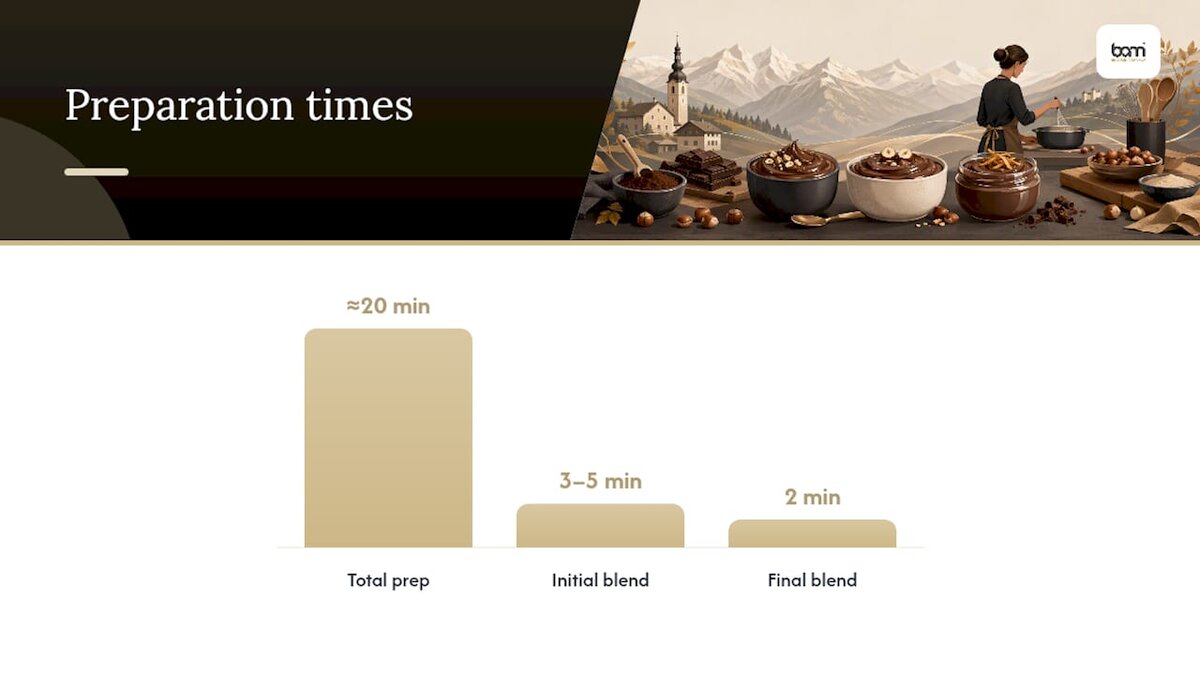
This is the closest homemade version to a classic chocolate-hazelnut spread, minus the sugar and the palm oil.
Ingredients:
Method:
Prep time is around 20 minutes including roasting. The recipe yields a typical quantity for a homemade spread. Texture is dense and spoonable rather than runny, similar to a natural almond butter. The technique of roasting first, then blending to a nut butter before adding cocoa is what separates a smooth spread from a gritty one, and it also helps the finished jar keep longer in the fridge.
If you want something that tastes like dessert rather than a diet product, dates are the better base. A Datella-style spread pairs dates with ground almonds and cocoa for a naturally sweet result with no refined sugar at all.
Ingredients:
Blend the soaked dates first until they form a paste, then add the ground almonds, cocoa and liquid a little at a time until you reach a spreadable consistency. This makes around 300g and keeps its sweetness without a single gram of added sugar.
Here’s the honest caveat: “no added sugar” doesn’t mean zero sugar. Dates are roughly 60 to 70% natural sugar by weight, so this spread carries real carbs even though nothing was added to it. A sensible portion is one to two tablespoons, not a spread thick across an entire slice, particularly if you’re watching blood sugar rather than just avoiding refined sugar.
For a version that supports a fitness or macro-tracking goal, swap some of the nut butter for chocolate protein powder.
Ingredients:
Mix the protein powder into the nut butter first before adding liquid, otherwise it clumps. This gives you a thicker, higher-protein spread that works well straight from the spoon or stirred into porridge. Some recipe developers use cooked chickpeas or banana as a creamy base instead of nut butter, which lowers the fat content and adds a bit more protein bulk, though it changes the flavour noticeably.
A note on tools: a high-power blender (the kind marketed for smoothies and nut butters) turns hazelnuts into a smooth paste in minutes. A standard food processor works too, but expect to blend for longer and scrape the sides down two or three times. If your appliance struggles, start with a store-bought unsweetened nut butter as your base rather than whole nuts. It shortcuts the hardest step without changing the result much.
The sweetener you choose changes texture, aftertaste and how the spread affects your blood sugar, so it’s worth thinking about before you start blending.
Erythritol is the most practical default for a low-carb or diabetic-friendly spread. It has almost no impact on blood glucose, dissolves reasonably well, and its bulk mimics sugar’s texture better than intense sweeteners do. On its own it can leave a faint cooling aftertaste, which is why many recipes use an erythritol-stevia blend instead. Erythritol supplies the bulk and mouthfeel, stevia adds sweetness without extra volume, and the two together mask each other’s rough edges.
Stevia and monk fruit are far sweeter by weight, so a little goes a long way. They add no bulk at all, which means a spread sweetened with stevia alone often feels thinner or looser than one made with erythritol. Combining a small amount of stevia with erythritol usually fixes this.
Dates and other whole fruit sweeten without any processed sweetener, but they bring real carbohydrate and calories with them. They suit a whole-food approach, not a strict low-carb one.
Pro Tip: If a recipe calls for maltitol or mannitol, cut the amount by a third and see how you tolerate it first. Both are polyols that some people digest fine and others find genuinely uncomfortable in larger servings.
One more thing worth knowing before you shop: labels that read “ohne zugesetzten Zucker” (no added sugar) are not the same claim as “zuckerfrei” (sugar-free). A “no added sugar” product can still carry milk sugars or fruit sugars naturally. Always check the ingredients list, not just the front-of-pack claim.
Most disappointing homemade spreads fail for one of two reasons: the nuts weren’t roasted properly, or the ingredients went in in the wrong order. Fix both and the texture problem mostly disappears.
If your spread turns out grainy: keep blending. Grainy usually means it needs another two or three minutes, not a different recipe. A small extra spoonful of neutral oil helps it turn smooth if the blender is struggling.
If it’s too thin or has separated: chill it for 20 minutes, then stir or briefly re-blend. Warmth loosens nut butter considerably, so a spread that looked perfect straight off the blender can seem runny until it’s had time in the fridge.
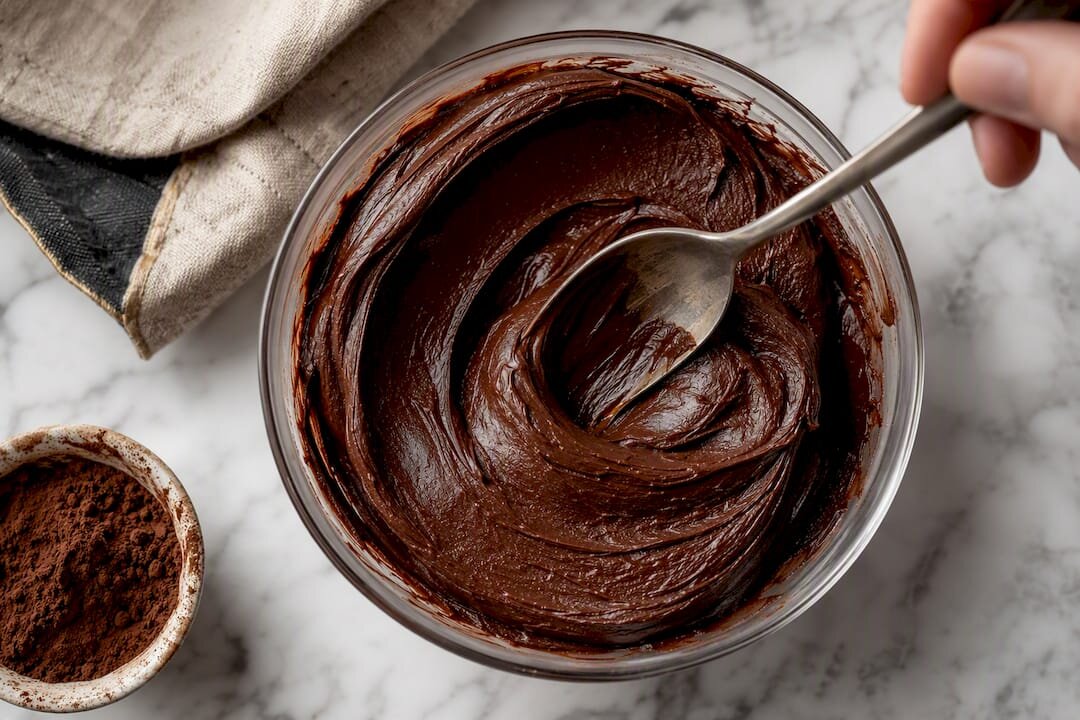
For weaker appliances: a pre-made unsweetened nut mus as your starting point removes the hardest step. Stir in cocoa, sweetener and a little oil by hand or with a hand blender, and you’ll get most of the way to the same result with far less strain on the motor.
Pro Tip: Warm the jar slightly before pouring in the finished spread. A cold jar sets the mixture too fast at the edges, which is often what creates that slightly uneven, lumpy look around the rim.
The base recipes above adapt easily if you’re working around an allergy, a dietary choice, or a stricter carb limit.
Cocoa quality matters here too, not just the sweetener. A higher cocoa percentage with fewer fillers gives a richer flavour, which means you often need less sweetener overall to get a satisfying result.
A homemade spread stored properly in a sterilised jar in the fridge typically keeps for two to four weeks, depending on how much water or fresh fruit it contains. Date-based versions tend to sit at the shorter end of that range because of their moisture content; oil-based nut spreads last longer. Always use a clean spoon, since introducing moisture or contamination from a used utensil shortens shelf life fast.
When buying rather than making, three checks separate a genuinely low-sugar product from one that just sounds healthy:
Bamchocolate’s own guide to checking nutritional value before buying a chocolate spread walks through this in more detail if you want a closer look at a specific product’s label.
Home baking and confectionery are BAM’s daily focus, and sugar-free spreads are one of the categories readers ask about most. The recipes above reflect what actually works at home, not just in a test kitchen: roast properly, blend in the right order, and pick a sweetener that matches your goal rather than whichever one is cheapest on the shelf.
BAM’s own range includes erythritol-sweetened spreads, unsweetened cocoa, and recipe resources built for exactly this kind of home baking. When a reader wants a shortcut rather than a Saturday project, that’s precisely what those products are there for.
— Andraz
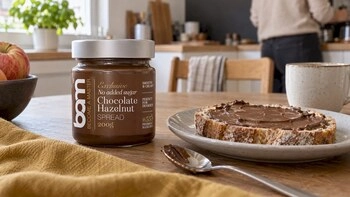
There’s real satisfaction in making your own spread, but not every morning allows for roasting hazelnuts and running a blender twice. For those days, BAM’s sugar-free hazelnut spread gives you the same low-sugar result straight from the jar, whether you’re spreading it on toast or folding it into a low-carb dessert.
If you’re setting up a home baking station rather than buying a single jar, the Basic pastry package bundles baking ingredients and accessories together, so you’re not sourcing erythritol, cocoa and tools from three different shops. Check the product page for current stock and start your own batch of sugar-free spreads this week.
A homemade hazelnut-cocoa spread sweetened with erythritol is the closest low-sugar match, while a date-based Datella suits anyone who prefers whole-food sweetness over a processed sweetener.
Dark chocolate labelled “zuckerfrei” and sweetened with erythritol or stevia contains no added sugar, but always check the ingredients list since cocoa solids alone don’t guarantee a sugar-free product. BAM’s sugar-free range is formulated specifically around this.
Roast hazelnuts, remove the skins, blend them into a nut butter, then mix in 30g unsweetened cocoa, erythritol and a splash of neutral oil until glossy and smooth.
The best choice depends on your priority. Erythritol-sweetened chocolate suits low-carb and diabetic diets, while date-sweetened options suit those wanting whole-food ingredients over processed sweeteners. For a ready-made jar rather than a bar, BAM’s sugar-free hazelnut spread covers both the low-sugar and low-effort goal at once.



 Chocolate novelties



 Slovenščina
 Hrvatski
 Deutsch
 Italiano
 Česky
 Polski
 Magyar
 Français
 Slovák
 Nederlands
 Español