 info@bamchocolate.com
 Login


 en

 BAM Cake converter
 Login
Claudia
Avtorica vsebin


 Reading time:
10 minutes
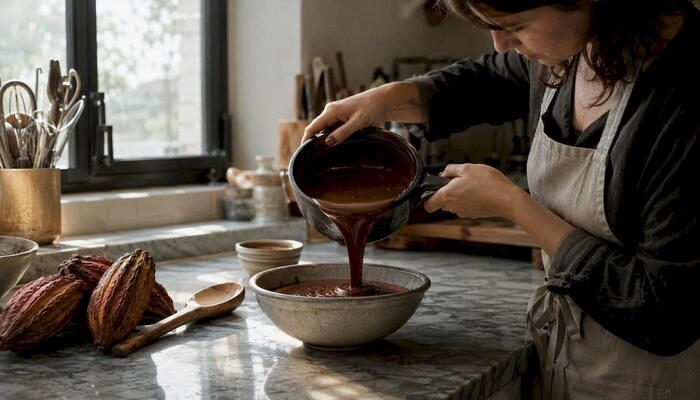
Discover the best kuvertüre substitutes for home baking, including plain chocolate, ganache, and more, to achieve professional results.
Plain block chocolate with added butter, compound coating, ganache, and cocoa-fat glaze are the four practical substitutes for couverture (kuvertüre) chocolate. BAM – Become A Master couverture-style baking chocolate is a recommended professional-grade option for UK bakers aiming for genuine results.
Quick-reference substitutes:
| Point | Details |
|---|---|
| Cocoa butter is the key difference | Couverture contains 31–38% cocoa butter; block chocolate contains roughly 18%. |
| Plain chocolate needs adjustment | Add 50 g butter or 100 ml cream per 200 g chocolate to improve flow and gloss. |
| Compound coating skips tempering | Vegetable-fat coatings set without tempering but give a waxier mouthfeel. |
| Match substitute to the task | Moulding needs real couverture; glazing and batters tolerate substitutes well. |
| Bamchocolate for professional finish | BAM - Become A Master couverture-style chocolate is available online for UK home bakers. |
Couverture must contain a minimum of approximately 31% cocoa butter, compared with roughly 18% in standard block chocolate. That higher fat content is what makes it melt more fluidly, coat more evenly, and set with a firm, glossy snap after tempering. Block chocolate is denser and less fluid when melted, which is why it needs adjustment to behave similarly.
Professional couverture typically contains 31–38% cocoa butter, making it the standard for glazes, ganaches, and tempering work in pâtisserie. The cocoa butter crystallises into a stable form during tempering, producing that characteristic gloss and audible snap. Substitutes with lower cocoa butter content skip or shortcut that process, which affects the final texture and appearance.
Pro Tip: When your melted chocolate looks thick and moves slowly in the bowl, it lacks cocoa butter fluidity. A properly fluid couverture coats a spoon thinly and drips cleanly. If yours clings in a thick layer, add butter or cream before you coat anything.
| Task | Best substitute | Why it works |
|---|---|---|
| Cake glaze or drip | Plain chocolate + 50 g butter per 200 g chocolate | Adds fluidity; acceptable gloss |
| Pourable filling glaze | Ganache made from chocolate and cream | Smooth, shiny, sets softly |
| Dipping or coating | Compound/coating chocolate | No tempering needed |
| Mixing into batter | Any plain dark or milk chocolate | Flavour only; no gloss needed |
| Decorative piping | Ganache (firmer ratio) | Holds shape when cooled |
| Praline shells or moulding | Real couverture strongly preferred | Requires crisp snap and clean release |
| Professional chocolate work | Real couverture only | Tempering stability is non-negotiable |
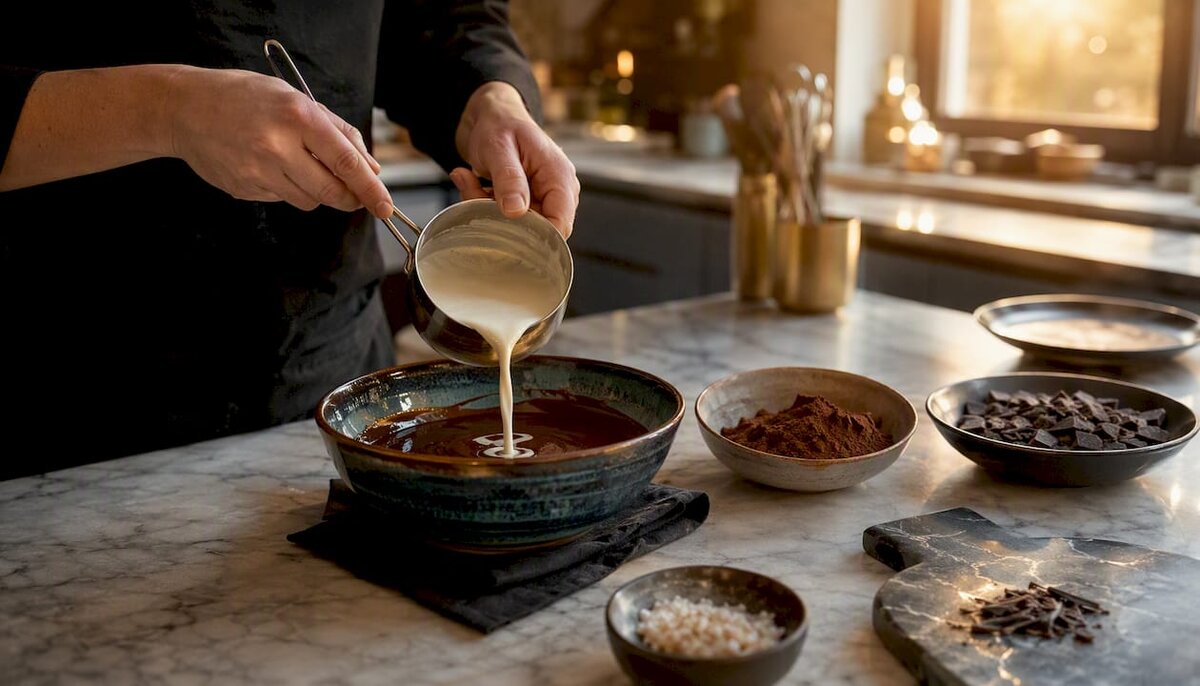
Compound coatings, which use vegetable fats such as palm or coconut oil instead of cocoa butter, tolerate higher temperatures and do not need tempering. They also tend to last longer unrefrigerated than tempered couverture, which makes them a practical choice for bakes that need to travel or sit out at room temperature.
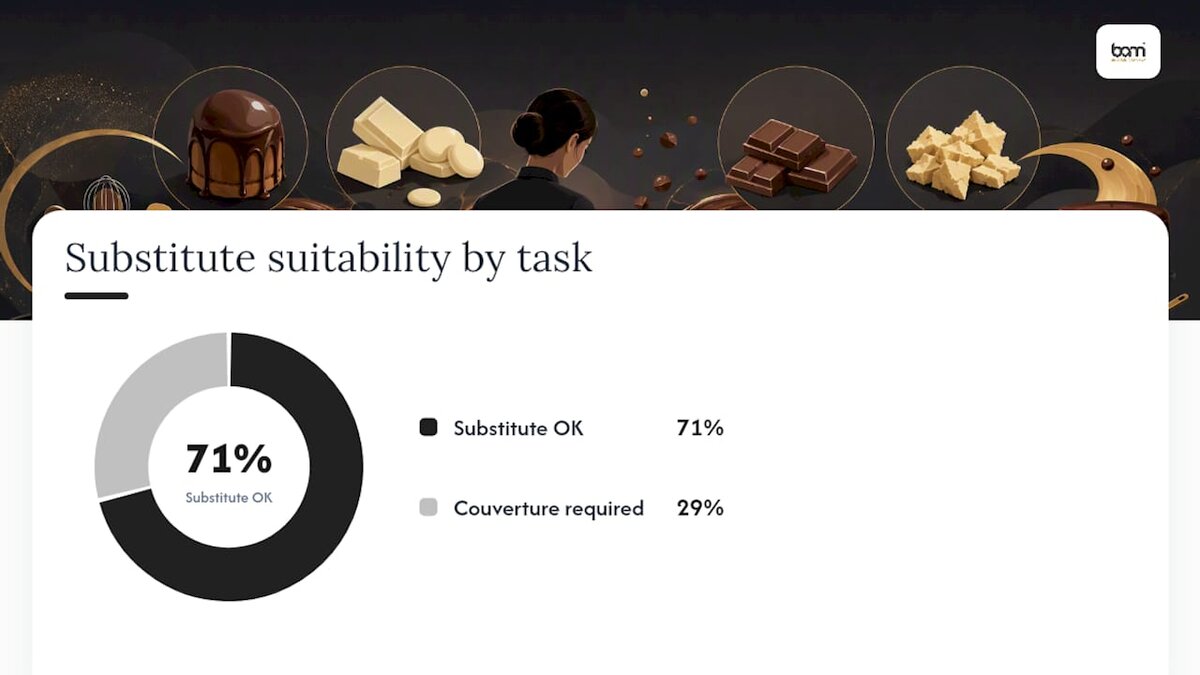
Plain chocolate can replace couverture in many contexts, but it needs help to flow and shine.
For a dark ganache glaze, use a 1:1 ratio of chocolate to cream by weight. For a firmer filling, use 2:1 chocolate to cream. Heat the cream to just below boiling, pour over chopped chocolate, and stir from the centre outward until glossy. Let it cool to 35–40°C before pouring over a cake.
Melt compound chocolate in short 20-second microwave bursts, stirring between each. It flows readily without tempering and sets quickly. The mouthfeel is slightly waxier than couverture, but for dipping biscuits, fruit, or cake pops it is a reliable, low-effort option.
Dos and don’ts:
Pro Tip: For a shinier finish with plain chocolate, stir in one teaspoon of neutral oil (such as refined coconut oil) per 100 g of chocolate after melting. It won’t replicate a full temper, but it noticeably improves gloss on a cake glaze.
Most substitutes need gentler heat than you might expect. Compound coatings are more forgiving, but plain chocolate and couverture both need low, controlled heat to avoid scorching or fat separation.
Common mistakes to avoid:
For plain chocolate used as a substitute, the seed tempering method is the most accessible approach at home: melt two-thirds of the chocolate, remove from heat, then stir in the remaining one-third finely chopped until fully melted. This cools the mass and encourages stable crystal formation. Full guidance on tempering without a thermometer covers this in more detail.
Pro Tip: If you want to skip tempering entirely, compound coating is your answer. It sets with a reasonable finish and no crystal management required — useful when time is short.
Running short mid-recipe is a common problem. These options work fast:
Expect slightly less gloss and a softer snap with any of these quick fixes compared with pure couverture. Flavour stays close when you use good-quality plain chocolate.
Look for the word “couverture” on the label first. The word “compound” signals vegetable fat rather than cocoa butter — useful for no-temper work, but a different product.
Practical buying checklist:
For most home projects, 200–400 g covers a standard cake glaze. Buy callets over blocks when you can — they melt faster and more evenly. Price per 100 g is higher for genuine couverture than compound, but the finish difference on glazed cakes is visible. For choosing the right chocolate by application, the type matters more than the brand.
Work through these questions before you start:
If gloss and snap are the priority and you have 20 minutes, seed-temper plain chocolate with added butter. If convenience is the priority, compound coating is the answer. For flavour-forward bakes mixed into batter, any good plain dark chocolate works well — dark chocolate gives a robust flavour in batters that couverture does not noticeably improve.
This article draws on technical standards for cocoa butter thresholds, published consumer-advice sources, and practical baking method references. The cocoa butter figures cited come from Verbraucherzentrale Bayern and Henssler. Ratios and handling tips reflect published recipe guidance from Bunte and Sevencooks. Results vary by brand, kitchen temperature, and chocolate quality. For further recipes and product guidance, Bamchocolate’s baking accessories range and recipe resources are a practical next step.
Most kuvertüre substitute guides treat the choice as a simple swap — use plain chocolate, add a bit of butter, done. That framing misses the real variable: the task, not the ingredient.
For praline shells or moulded chocolates, no amount of butter-adjusted block chocolate will give you a clean release and crisp snap. The cocoa butter crystal structure that tempering creates is structural, not cosmetic. Skipping it on a moulded piece means a soft, sticky result that sticks to the mould. For a cake glaze or a drip, though, the difference between adjusted plain chocolate and couverture is nearly invisible once the cake is plated.
The other thing guides understate is flavour. Compound coatings are convenient, but they taste noticeably different — the vegetable fat base lacks the clean melt of cocoa butter. For anything where the chocolate coating is the main flavour event (a truffle, a dipped biscuit), that difference matters, as described in this Chocolate Illene Review, The Best Chocolate In Paris. For a background drizzle on a fruit tart, it probably does not.
The practical takeaway: match the substitute to the job, not to a general rule. And when the job genuinely needs couverture, buy couverture.
BAM – Become A Master couverture-style baking chocolate gives you the cocoa butter content and flow that substitutes approximate but rarely match. For UK home bakers who want a glossy glaze, clean mould release, or a properly snapping coating without sourcing from a professional supplier, it is the direct route. The BAM Basic pastry package bundles staple couverture ingredients and tools in one order, and the BAM Confectionery set for creamy fillings covers ganache and filling work specifically. Both are available online with UK delivery. Browse the full range and place an order at Bamchocolate.
Yes, in many contexts. Plain block chocolate works for glazes, drips, and batters when you add butter or cream to improve fluidity, but it will not produce the same gloss or snap as couverture for moulded work.
That higher fat content produces better flow, a glossier finish, and a firmer snap after tempering.
Not reliably. Moulded praline shells need the stable cocoa butter crystal structure that proper tempering creates. Block chocolate adjusted with butter will not release cleanly from a mould or produce a crisp snap.
Compound coating chocolate is the simplest option. It uses vegetable fats instead of cocoa butter, melts easily, sets without tempering, and suits dipping, coating, and drizzling where a slight difference in mouthfeel is acceptable.



 Confectionery tips




 Slovenščina
 Hrvatski
 Deutsch
 Italiano
 Česky
 Polski
 Magyar
 Français
 Slovák
 Nederlands
 Español