 info@bamchocolate.com
 Login


 en

 BAM Cake converter
 Login
Claudia
Avtorica vsebin


 Reading time:
9 minutes

Discover the role of protein in dessert recipes. Learn how it enhances flavor, texture, and nutrition for truly satisfying treats.
TL;DR:
- Protein enhances desserts by slowing digestion, increasing satiety, and supporting muscle growth. Whole-food sources like yogurt, cottage cheese, and eggs outperform powders in texture and flavor, while powders require careful handling to avoid dryness. Adding protein to desserts is most effective when combined with a balanced diet and high-quality ingredients.
Protein is the macronutrient that transforms a standard dessert into something genuinely satisfying and nutritionally worthwhile. Understanding the role of protein in dessert recipes means recognising that it does far more than add grams to a nutrition label. It slows digestion, blunts sugar spikes, improves texture, and keeps you full long after the last bite. Whether you are folding Greek yogurt into a cheesecake or choosing the right protein powder for brownies, the ingredient decisions you make directly affect both the flavour and the physiological impact of what you bake.
Protein changes how your body processes a dessert at a fundamental level. It slows gastric emptying, which means glucose from sugars enters the bloodstream more gradually. That single effect reduces the insulin spike that typically follows a refined sugar hit, leaving you with steadier energy rather than a crash twenty minutes later.
The numbers behind this are striking. High-protein puddings contain 18–22g of protein and 6–8g of fibre per serving. Traditional desserts average just 2–3g of protein. That gap explains why a protein-enriched dessert keeps you satisfied for several hours while a standard slice of cake does not.
Muscle support is another benefit worth noting. A quality protein powder used in baking should deliver at least 25g protein and 2.5g leucine per serving to support muscle protein synthesis effectively. Leucine is the specific amino acid that triggers muscle repair and growth, making it the key criterion when selecting a powder for post-exercise baking.
The metabolic benefits extend to meal timing as well. Eating a protein-enriched dessert after a workout or as an evening snack provides a practical way to meet daily protein targets without relying solely on savoury meals. This positions protein desserts as a functional food choice rather than a guilty indulgence.
Key physiological benefits of protein in desserts:
Not all protein sources behave the same way in a recipe. The distinction between whole-food proteins and powders matters enormously for texture, taste, and structure.
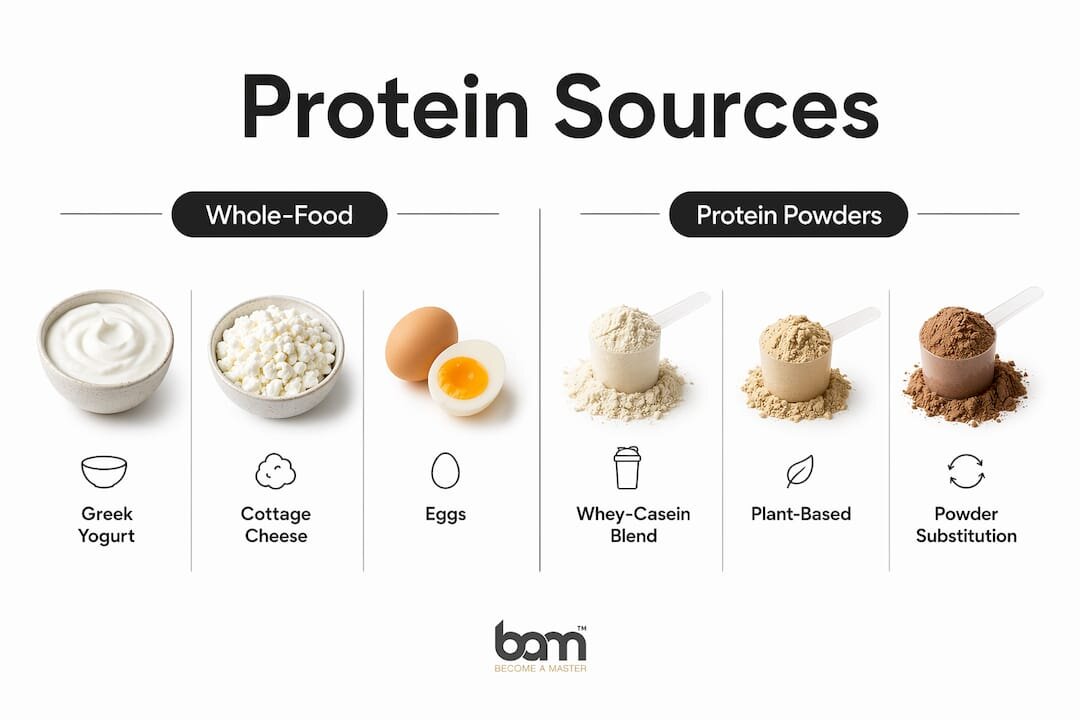
Greek yogurt, cottage cheese, eggs, and nuts are the most reliable whole-food options. Real-food proteins increase protein content by 2 to 4 times compared to standard desserts. A Basque cheesecake made with full-fat Greek yogurt and a nut base can deliver 14–18g of protein per slice, versus roughly 5g in a traditional version. That is a meaningful nutritional upgrade with no compromise to creaminess or flavour.
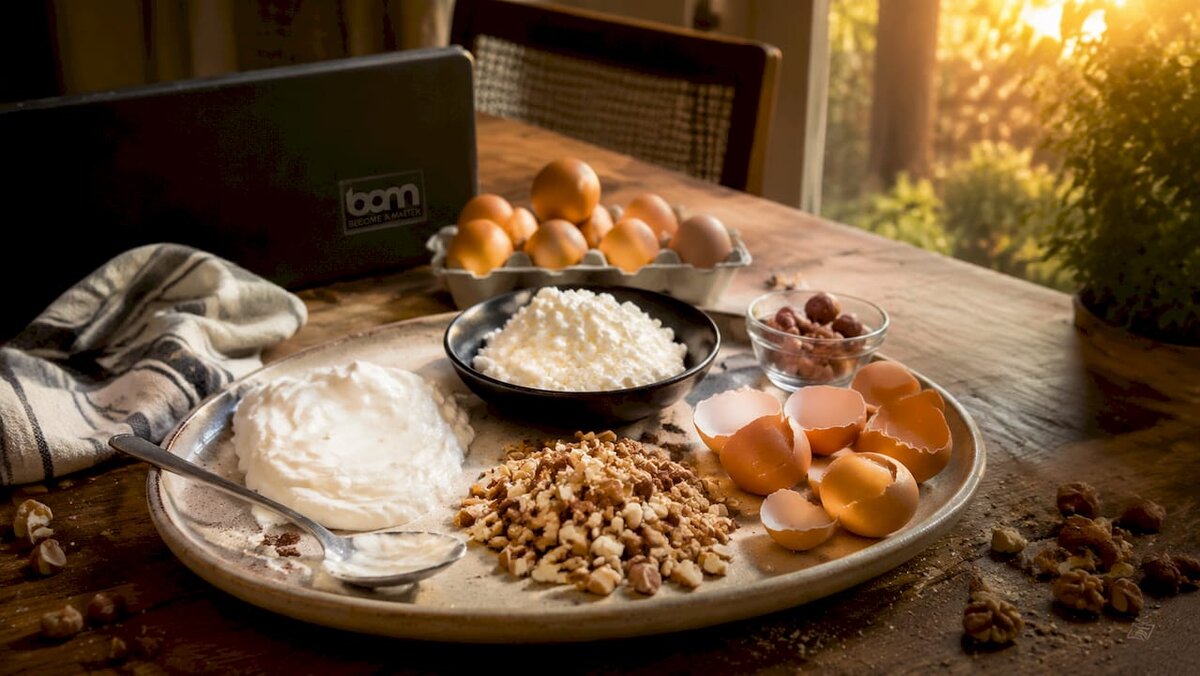
Blended cottage cheese is particularly effective in no-bake cheesecakes and mousse-style desserts. When blended smooth, it becomes virtually indistinguishable from cream cheese in texture, while adding a clean protein hit. Eggs contribute both protein and structural integrity, binding batters and setting custards without any of the textural risks associated with powders.
Protein powder is the most concentrated source, but it requires careful handling. Whey-casein blends maintain structural integrity better than pure whey isolate during baking. Pure whey isolate can produce a rubbery crumb when exposed to heat, whereas the slower-digesting casein fraction helps retain moisture and a more natural bite. For baked goods specifically, a blend is the better choice.
| Protein source | Texture impact | Best application |
|---|---|---|
| Greek yogurt | Creamy, moist | Cheesecakes, mousses, frostings |
| Cottage cheese (blended) | Smooth, neutral | No-bake fillings, pancakes |
| Eggs | Firm, binding | Brownies, custards, cakes |
| Nuts and nut butters | Dense, rich | Crusts, bars, cookies |
| Whey-casein blend | Moist crumb | Baked cakes, muffins |
| Pure whey isolate | Rubbery if overheated | Cold desserts, no-bake recipes |
Pro Tip: When substituting protein powder for flour, replace no more than 25% of the flour weight with powder. Going beyond that threshold is where dryness and chalkiness typically begin.
For guidance on choosing the right chocolate to pair with protein-enriched batters, the principles of fat content and cocoa solids apply just as they do in standard baking.
Adding protein to desserts is not always straightforward. The most common complaint is a chalky, dry, or rubbery result, and in almost every case the cause is the same: too much protein powder, used without compensating adjustments elsewhere in the recipe.
Protein powder absorbs moisture differently from flour, and it does not contain the starch networks that give baked goods their tender crumb. When you swap out too much flour for powder, the batter loses its structural flexibility. The result is a dense, gummy texture that no amount of extra baking time will fix.
Here are the most effective ways to avoid these problems:
Pro Tip: For no-bake cheesecakes, blending cottage cheese until completely smooth before mixing it with cream cheese gives you a filling that is high in protein, genuinely creamy, and stable enough to slice cleanly after chilling.
Practical baking guidance, including tips for baking cakes with ingredient substitutions, can help you apply these principles across a wider range of recipes.
Protein desserts are not automatically healthy. Registered dietitians caution that protein label claims alone do not guarantee overall nutritional benefit. A dessert can be high in protein and simultaneously high in added sugar, saturated fat, and artificial additives. The full nutrition profile is what matters, not a single macro.
The most sensible approach treats protein desserts as a complement to a varied diet, not a replacement for whole-food protein sources. Protein desserts supplement daily intake but cannot substitute for fish, eggs, lean meats, and legumes as primary nutrition sources. They fill a specific role: satisfying a sweet craving while contributing meaningfully to protein targets.
Practical principles for integrating protein desserts wisely:
Common desserts that adapt well to higher protein include cheesecakes (Greek yogurt or cottage cheese base), chocolate mousse (silken tofu or blended cottage cheese), protein brownies (black beans or nut butter), and frozen yogurt bark. Each of these modifications preserves the eating experience while meaningfully improving the nutritional value of dessert proteins. For ideas on making healthier confectionery at home, the same principles of ingredient swapping apply.
Protein improves desserts most effectively when it comes from whole-food sources first, with powders used as a targeted supplement rather than a primary ingredient.
| Point | Details |
|---|---|
| Protein slows digestion | It blunts insulin spikes and extends satiety well beyond what standard desserts offer. |
| Whole-food sources outperform powders | Greek yogurt, cottage cheese, and eggs preserve moisture and texture better than protein powder alone. |
| Leucine content matters for muscle support | Choose a powder with at least 2.5g leucine per serving if muscle recovery is a goal. |
| Evaluate the full nutrition profile | High protein does not offset excess added sugar or saturated fat in the same recipe. |
| No-bake swaps are the easiest upgrade | Replacing biscuit bases with crumbled protein bars adds 5–10g protein per serving instantly. |
The conversation around protein desserts tends to focus almost entirely on macros. Grams of protein per serving, leucine thresholds, whey versus casein. That framing misses something important: a dessert that tastes unpleasant will not be eaten, regardless of its nutritional credentials.
My honest experience is that the best results come when you stop trying to force protein powder into recipes that were never designed for it. A brownie built around black beans and nut butter, with a modest amount of whey-casein blend, will outperform a standard brownie recipe where half the flour has been replaced with isolate. The former works with the recipe’s natural structure. The latter fights it.
Ingredient quality makes a significant difference here. A good-quality cocoa powder or chocolate base, combined with a neutral-tasting protein source, produces a dessert that genuinely tastes like a dessert. Cheap, artificially sweetened powders with a chemical aftertaste will undermine even the most carefully constructed recipe. That is where sourcing matters.
The other thing I would say is that moderation applies to protein additions just as it does to sugar. More protein is not always better. A dessert with 15g of protein from real food ingredients is more satisfying and more enjoyable than one with 35g from a powder-heavy formula that tastes like chalk. Focus on flavour and texture first. The nutrition will follow if you choose your ingredients well.
— Andraz
Bamchocolate stocks a focused range of baking accessories and additives suited to home bakers working with protein-enriched recipes. The range includes tools and ingredients that help you manage texture and flavour balance, which are the two variables most affected when you increase protein content in a dessert. For those starting out, the BAM Basic pastry package provides a practical foundation of quality confectionery ingredients. Bamchocolate also offers protein pudding options that demonstrate how protein and flavour can coexist without compromise. Quality ingredients are the most reliable shortcut to better results.
Protein improves the nutritional value of desserts by slowing digestion, reducing sugar spikes, and increasing satiety. It also affects texture, with whole-food sources like Greek yogurt and cottage cheese contributing creaminess and moisture.
High-protein desserts typically contain 18–22g of protein per serving, compared to 2–3g in traditional versions. That range is sufficient to meaningfully extend fullness and support daily protein targets.
Protein powder can partially replace flour, but substituting more than 25% of the flour weight typically causes dryness or a rubbery crumb. Whey-casein blends perform better than pure whey isolate in baked applications.
Protein desserts can be a healthy addition to a balanced diet, but the full nutrition profile must be assessed. High protein content does not offset excess added sugar or saturated fat in the same recipe.
The simplest methods are using Greek yogurt or blended cottage cheese in place of cream cheese, adding nut butter to brownie batters, and replacing biscuit bases with crumbled protein bars or granola to add 5–10g of protein per serving without extra preparation.



 Confectionery tips




 Slovenščina
 Hrvatski
 Deutsch
 Italiano
 Česky
 Polski
 Magyar
 Français
 Slovák
 Nederlands
 Español