 info@bamchocolate.com
 Login


 en

 BAM Cake converter
 Login
Claudia
Avtorica vsebin


 Reading time:
10 minutes
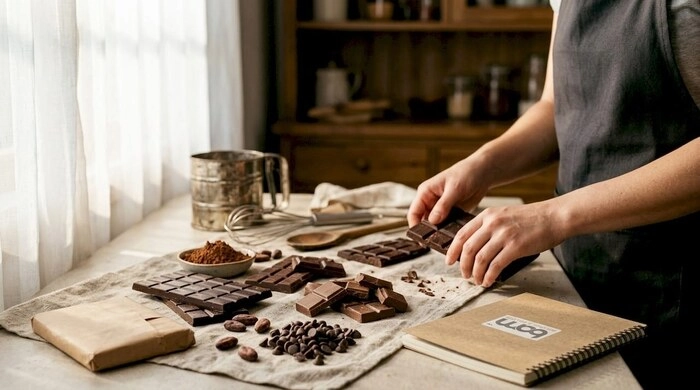
Discover the different types of baking chocolate to elevate your baking. Learn how to choose the right one for delicious results!
TL;DR:
- Choosing the right baking chocolate depends on its cocoa solids, sugar level, and intended use in recipes. Unsweetened chocolate offers full control with its pure, bitter cacao liquor, while bittersweet and semisweet varieties differ mainly in sweetness and cacao content. The physical form, such as bars, chips, or couverture, influences melting behavior, ease of use, and visual finish in baking.
Baking chocolate is defined by its cocoa solids content and sugar level, with five distinct categories used across home and professional kitchens: unsweetened, bittersweet, semisweet, milk, and white chocolate. Each type behaves differently in the oven, affects sweetness, texture, and flavour intensity in measurable ways, and suits specific recipes. Brands such as Valrhona, Callebaut, and Guittard each produce these varieties in multiple forms, including bars, chips, wafers, and couverture callets. Knowing which type to reach for, and why, is the difference between a reliably good bake and a frustrating one.
Unsweetened baking chocolate is pure chocolate liquor with no added sugar, making it 100% cacao solids and the most intense variety available. Its flavour is sharply bitter on its own, but that intensity is precisely what makes it so useful when you control the sweetness yourself through the recipe.
Common uses include brownies, chocolate cakes, and rich sauces where the sugar quantity is specified separately. Because there is no sugar to account for in the chocolate itself, you get exact control over the final sweetness of the bake. This is particularly useful in recipes that call for a deep, complex cocoa flavour rather than a sweet chocolate hit.
Pro Tip: If a recipe calls for unsweetened chocolate and you only have bittersweet, substitute 28g of bittersweet chocolate for every 28g of unsweetened, and reduce the sugar in the recipe by roughly one tablespoon per 28g used.
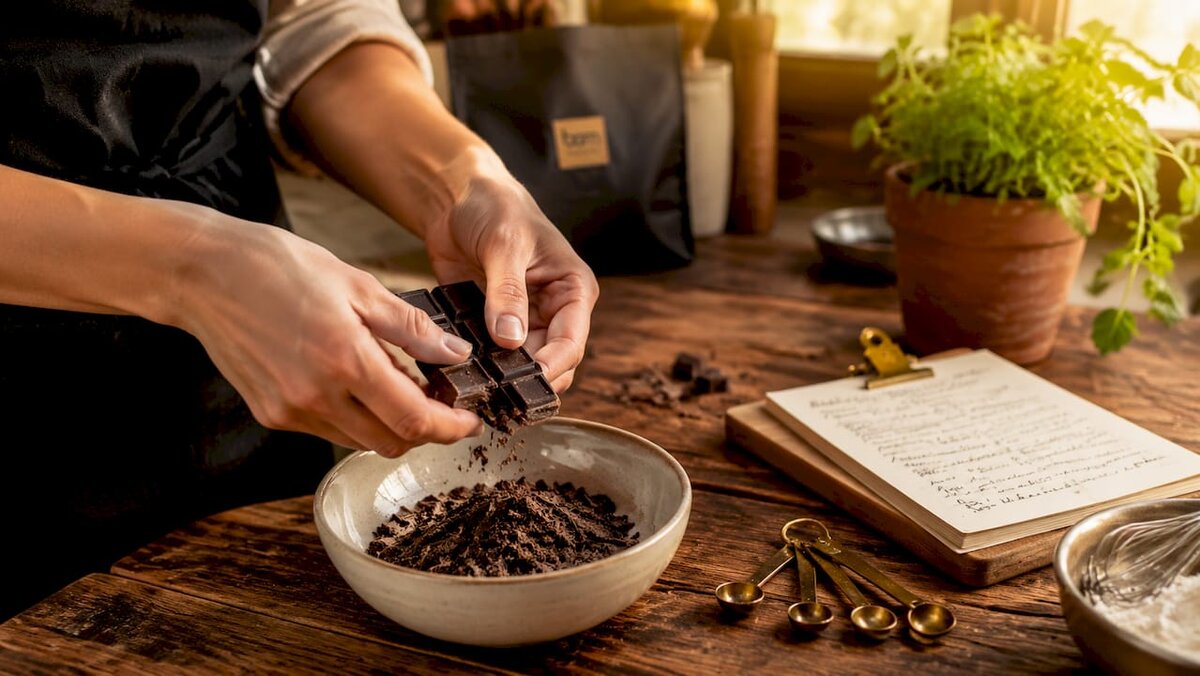
Bittersweet and semisweet are the two most commonly confused baking chocolate varieties, and the confusion is understandable. Both share a minimum of 35% cacao and have no strict legal distinction separating them in most markets. The practical difference is one of sweetness: bittersweet leans darker and less sweet, while semisweet carries more sugar and a softer chocolate flavour.
In practice, these two types are largely interchangeable in baking. A ganache made with 64% bittersweet Valrhona will taste noticeably more intense than one made with a 55% semisweet Callebaut, but both will set correctly and produce a smooth result. The choice depends on how prominent you want the chocolate flavour to be relative to the other ingredients.
| Characteristic | Bittersweet | Semisweet |
|---|---|---|
| Typical cocoa content | 60–75% | 45–60% |
| Sweetness level | Lower | Higher |
| Best uses | Ganache, truffles, tarts | Cookies, brownies, mousse |
| Interchangeable? | Yes, with minor adjustments | Yes, with minor adjustments |
Pro Tip: For ganache or truffles, choose 60–70% cocoa for the best balance of flavour depth and sweetness. Going above 70% produces a noticeably sharper, more adult flavour that can overwhelm delicate fillings.
Milk chocolate and white chocolate occupy the sweeter end of the baking chocolate spectrum, but they behave very differently from each other and from dark varieties. Milk chocolate typically contains between 10% and 40% cocoa solids alongside milk fats and a higher sugar content, which gives baked goods a softer, creamier sweetness. It melts at a lower temperature than dark chocolate, so it requires more careful heat management.
White chocolate contains no cocoa solids at all, but must contain a minimum of 20% cocoa butter to qualify as real white chocolate. That cocoa butter is what gives quality white chocolate its characteristic creaminess and smooth melt. Products that substitute vegetable fats for cocoa butter will seize more easily, taste waxy, and produce inferior results in baking.
Key points on both varieties:
Milk and white chocolates behave differently from dark varieties due to their milk fat content and the absence of cocoa solids, which directly affects melting point and final texture. This is why you cannot simply swap white chocolate for dark in a ganache without adjusting ratios significantly.
The form your chocolate comes in matters as much as the type. Baking chocolate is a functional ingredient engineered for melting and blending predictably, and the format determines how well it performs in specific applications.
Pro Tip: Never use chocolate chips in a recipe that calls for melted chocolate unless the instructions specifically state chips are acceptable. The stabilisers that keep chips intact in cookies will give your ganache or sauce an unpleasant, slightly grainy texture.
Selecting the right chocolate comes down to matching cocoa percentage and form to the specific demands of the recipe. Pastry chefs recommend 55–60% for cakes and brownies, 60–70% for ganache and truffles, and 70% or above for bold dark chocolate profiles where the chocolate is the centrepiece of the dessert.
Brand transparency matters significantly. Valrhona and Callebaut are consistently cited by pastry professionals: Valrhona for its complex, nuanced flavour profiles, and Callebaut for reliable consistency and relative affordability. Guittard is another well-regarded option, particularly for home bakers seeking quality without the premium price point of Valrhona. For quality dark chocolate, always check that the cacao percentage is clearly stated and that cocoa butter is listed rather than vegetable fat.
Budget versus quality is a real consideration. For recipes where chocolate is a background flavour, a mid-range bar works well. When chocolate is the primary flavour, as in a chocolate tart or a truffle box, the quality of ingredients directly determines the result. Spending more on couverture for a ganache that serves twelve people adds only a small cost per portion.
Choosing the right type of baking chocolate requires matching cocoa percentage, sweetness level, and physical form to the specific demands of your recipe.
| Point | Details |
|---|---|
| Cocoa content defines the type | Unsweetened is 100% cacao; bittersweet and semisweet share a 35% minimum; milk chocolate is 10–40%; white chocolate has 0% cocoa solids. |
| Form affects function | Chips hold shape but resist smooth melting; bars and couverture are superior for ganache, coatings, and any fluid application. |
| Match percentage to recipe | Use 55–60% for cakes and brownies, 60–70% for ganache, and 70%+ for intense dark chocolate desserts. |
| White chocolate needs care | Only use white chocolate with at least 20% cocoa butter; vegetable fat substitutes produce waxy, inferior results. |
| Brand transparency matters | Valrhona and Callebaut list cacao percentages clearly; this transparency is a reliable indicator of baking performance. |
By Andraz
The single most useful habit I have developed is reading the ingredient list before buying any chocolate for baking. Cocoa percentage alone does not tell the full story. A 70% bar that lists cocoa butter as the second ingredient will behave completely differently from one that substitutes palm fat, even if the percentage is identical.
I stopped using chips for anything other than cookies years ago. The first time I tried to make a ganache with chips and got a grainy, dull result, I assumed I had done something wrong. I had not. The stabilisers in chips are working exactly as intended, which is the problem. Bars or couverture callets are the correct tool for any recipe requiring fluid chocolate.
White chocolate deserves more respect than it typically receives. Most baking failures with white chocolate come from overheating. It scorches at a lower temperature than dark chocolate, and once it seizes, there is no recovering it. A double boiler on low heat, with constant stirring, is the only reliable method. For anyone wanting to understand what constitutes quality white chocolate, the cocoa butter content is the defining factor.
My honest recommendation for home bakers is to keep three things in stock: a good unsweetened bar for full-control recipes, a 60–65% bittersweet bar or callets for ganache and general dark chocolate baking, and a quality white chocolate with visible cocoa butter on the label. Those three cover the vast majority of recipes you will encounter.
— Andraz
Bamchocolate stocks a curated selection of products designed for home bakers who take their ingredients seriously. The baking accessories range includes precision tools, gloves, and equipment that make working with chocolate cleaner and more controlled. For those looking to build a complete chocolate baking repertoire, the 101 BAM pastry recipe kit provides structured guidance across a wide range of chocolate-based desserts. The basic confectionery bundle is a practical starting point for stocking your kitchen with quality chocolate and baking ingredients in one order. Browse the full range at Bamchocolate to find the right products for your next bake.
Both types share a minimum of 35% cacao and are largely interchangeable in baking. Bittersweet chocolate is generally less sweet with a higher cocoa percentage, while semisweet contains more sugar and a milder chocolate flavour.
Chocolate chips contain stabilisers that prevent full melting, making them unsuitable for smooth ganache or coatings. Use bars or couverture for any recipe requiring fluid, glossy chocolate.
A 55–60% semisweet or bittersweet bar chocolate produces the best balance of richness and sweetness in brownies. Going above 70% will produce a noticeably more intense, less sweet result.
White chocolate qualifies as real chocolate only if it contains at least 20% cocoa butter with no vegetable fat substitutes. Products made with vegetable fats are confectionery coatings, not true white chocolate.
Valrhona is favoured for complex flavour profiles, while Callebaut is widely used for consistent results and affordability. Both brands clearly label cacao percentages, which is a reliable indicator of quality.



 Confectionery tips




 Slovenščina
 Hrvatski
 Deutsch
 Italiano
 Česky
 Polski
 Magyar
 Français
 Slovák
 Nederlands
 Español