 info@bamchocolate.com
 Login


 en

 BAM Cake converter
 Login
Claudia
Avtorica vsebin


 Reading time:
10 minutes
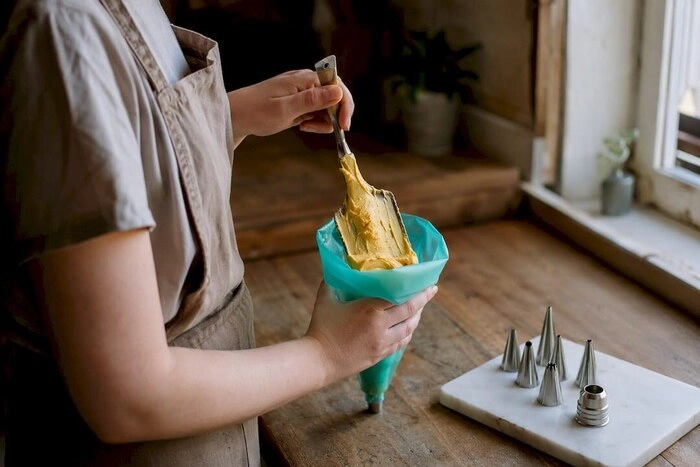
Transform your baking with a reusable piping bag and stainless-steel tips for flawless dessert decorating. Discover must-have tools today!
If you decorate desserts more than once a month, buy one reusable silicone piping bag, a set of three to five stainless-steel tips, and a coupler. That combination handles cake borders, cupcake swirls, and even savoury piping without falling apart after a handful of uses, which is exactly where disposable plastic bags start to let you down — for more practical advice, check out these holiday meal prep tips for busy home cooks.
It works for most hobby bakers because it survives repeated washing, gives you better tactile control over pressure than a flimsy plastic cone, and switches jobs in seconds once the coupler is fitted. Buy a bag around 30 to 35 cm long for home kitchen quantities, and fill it to no more than two thirds of its capacity so you keep full control over the flow rather than fighting a bag that is stretched to bursting.
A reusable silicone piping bag with a small tip set and coupler is the one purchase that covers nearly every home decorating job, from a birthday cake to a batch of cupcakes.
Bamchocolate’s Become A Master reusable set is built around exactly this starter combination, and it is the one we point beginners towards first.
A reusable silicone piping bag with a small stainless-steel tip set and coupler covers nearly every home decorating task, and it outlasts disposable plastic many times over.
| Point | Details |
|---|---|
| Best all-round setup | Silicone bag, three to five stainless-steel tips, and a coupler suits most home bakers. |
| Fill to two-thirds | Overfilling reduces control and causes leaking from the top of the bag. |
| Russian tips save practice time | These tips pipe a full flower shape in one squeeze, ideal for beginners chasing impressive results. |
| Rinse and dry tips promptly | Stops rust on metal tips and keeps silicone bags odour-free between uses. |
| Bamchocolate’s starter set | The Become A Master reusable kit matches the mid-range tier most hobby bakers should buy. |
Three materials dominate the market, and each suits a different kind of baker. Disposable plastic bags are single-use cones, usually sold in packs, designed to be filled, used, and binned. Reusable nylon or cloth bags are fabric-lined and washable but tend to hold onto colour and grease over repeated use. Silicone bags are the newer standard: flexible, non-porous, and built to survive years of washing without staining.
For someone piping desserts once or twice a year, a pack of disposable bags is a sensible, low-commitment choice. Regular home bakers get more value from silicone, since the material holds up to weekly use without degrading. Anyone chasing consistent, professional-looking results, tight rosettes, clean shell borders, should also lean towards silicone paired with metal tips, because the firmer material transmits hand pressure more precisely than nylon or thin plastic ever will.
Picking the right tip matters more than picking the right bag. The main tip families each produce a distinct visual effect, and knowing which does what saves you from buying a 20-piece set you will barely touch.
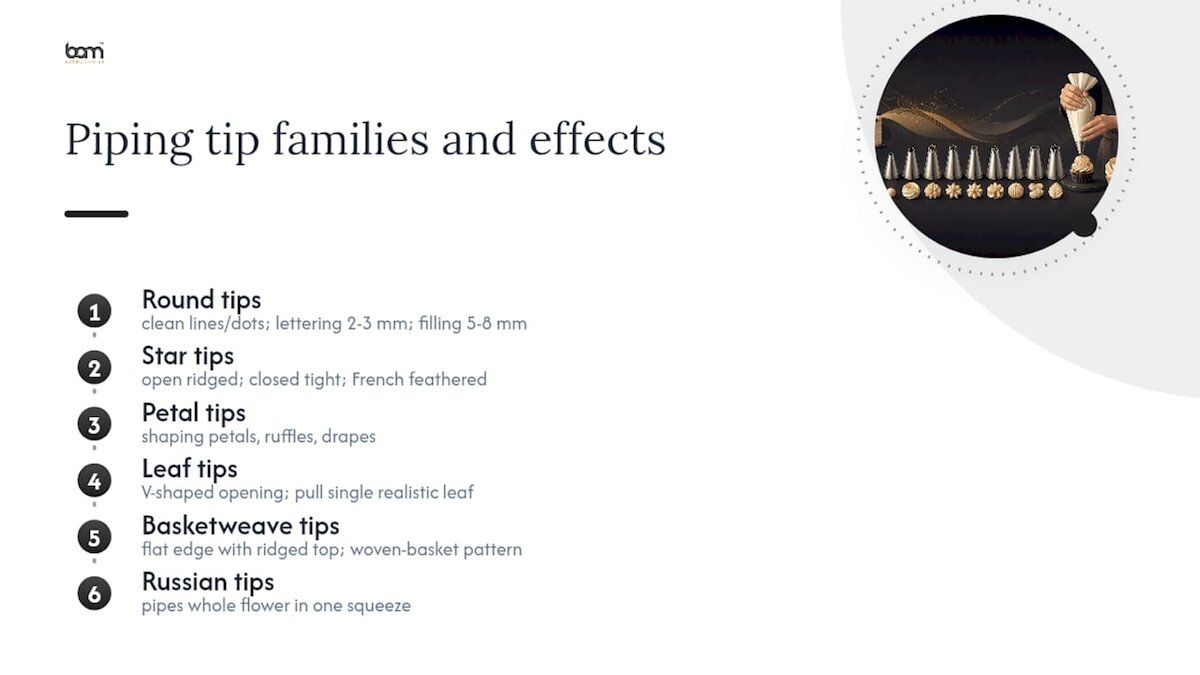
Round tips (Lochtüllen) produce clean lines and dots, and they are the tip of choice for writing messages on a cake or outlining shapes. A size around 2 to 3 mm works for lettering; go up to 5 to 8 mm for thicker lines or filling cupcake centres.
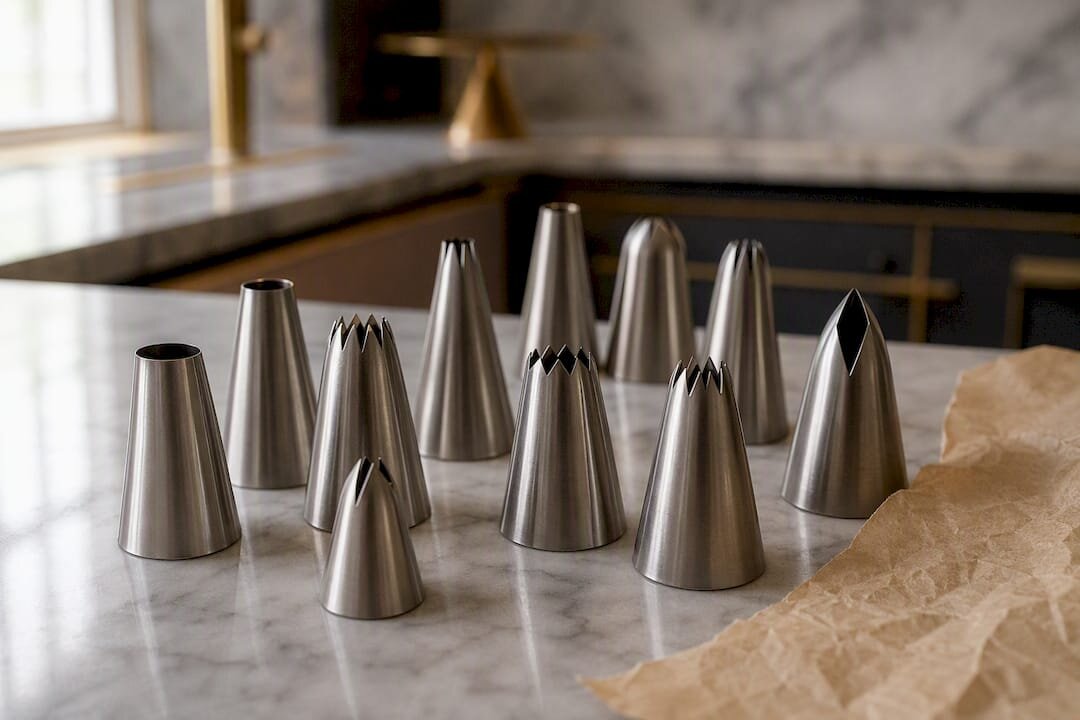
Open star tips create ridged swirls, ideal for cupcake tops and classic rosettes. Closed star tips produce a tighter, more defined ridge, well suited to shell borders along a cake’s base. French star tips, with their fine multiple points, give a softer, feathered texture that works nicely on cupcakes meant to look rustic rather than formal.
Petal tips (Blütentüllen) are angled and flat, built specifically for shaping flower petals, ruffles, and drapes across the side of a cake. Leaf tips (Blatttüllen) have a V-shaped opening that tapers to a point, letting you pull a single stroke into a realistic leaf shape. Basketweave tips (Korbtüllen) have a flat edge with a ridged top, designed for the woven-basket pattern popular on rustic-style cakes.
Russian tips deserve a special mention. These large, sculpted tips let you pipe a complete flower, petals, centre, and all, in one single squeeze and twist, which makes them one of the most rewarding buys for a beginner who wants show-stopping results without years of practice.
For a starter kit, cover the basics with one round tip, one open star, one closed star, and one petal tip, then add a coupler so you can swap between them without emptying the bag. If cupcakes are your main project, our cupcake preparation guide walks through matching tip size to swirl height.
Fold the top of the bag over a tall jug or glass before you add any filling. This is the single habit that separates a clean decorating session from a sticky one, because it keeps both hands free and stops filling from smearing the rim as you spoon it in, a trick borrowed directly from experienced home decorators.
Pro Tip: Keep your piping hand steady and let your other hand guide the bag’s angle. Squeezing from the middle of the bag forces filling upward and back out the top, which is the most common cause of a messy, leaking seal.
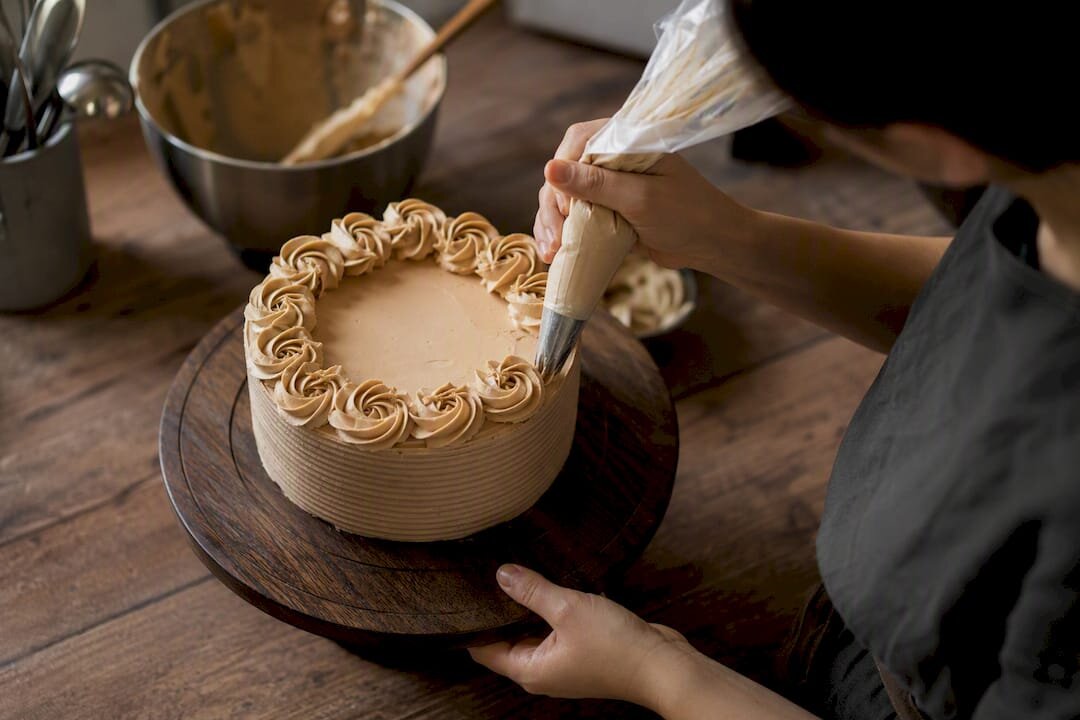
If your rosettes keep sagging, your buttercream is likely too soft; chill it for ten minutes before piping again. A turntable also makes a genuine difference on rosettes and borders, since rotating the cake instead of your wrist keeps pressure and speed consistent all the way round.
Disassemble the coupler and tip straight after use and rinse everything under warm water before any filling dries on. Stainless-steel tips and silicone bags are usually dishwasher-safe, check the product label to confirm, while nylon or cloth bags generally need a gentle handwash to avoid trapping grease in the seams over time.
Dry tips fully before storing them, since damp metal left in a drawer is how rust sets in. Keep tips upright in a divided pouch or a small jar rather than loose in a bag, which prevents the fine points from bending. Silicone bags, unlike disposable plastic, can go through this cycle hundreds of times before they need replacing, which is the real payoff of paying more upfront.
Your budget largely decides how much flexibility you get, and it’s worth mapping that out before you buy.
Whichever tier you land on, check that the set includes a coupler. Without one, changing tips mid-decoration means emptying and refilling the whole bag, which wastes both time and filling.
You can buy piping bags through specialist baking shops, general online marketplaces, supermarket baking aisles, or a dedicated retailer like Bamchocolate. Independent comparison reviews are worth a quick scan before you commit, particularly for judging pack sizes and reusable-set quality against price.
Before adding anything to your basket, check: bag length and volume, tip compatibility and coupler inclusion, the material (silicone, nylon, or plastic), whether it is labelled dishwasher-safe, how many tips are included, and genuine customer ratings. Disposable bags usually come in packs of 30 or 50; reusable sets are sold individually or as a bundled kit.
Most buying guides push readers towards 20 or 30-piece tip sets, as if variety were the goal. It isn’t. The research on technique is consistent: a handful of tips, round, star, petal, used well beats a drawer full of specialty shapes gathering dust. What actually determines whether your piping looks professional is pressure control and bag angle, not how many tips came in the box.
Where conventional advice really falls short is on materials. Plenty of guides treat bag material as an afterthought next to tip selection, but a flimsy bag undermines even the best tip. You cannot apply steady, even pressure through plastic that stretches unevenly under your grip. Silicone’s structural consistency is what lets a beginner’s hand produce a beginner’s-lucky rosette on the first try.
If you take one thing from this guide, prioritise the bag and coupler system before you obsess over tip variety. Get that foundation right, and the decorative flourishes follow far more naturally than any 30-piece set promises.
You’ve seen the criteria: silicone over plastic, a coupler for quick tip changes, and stainless steel for tips that won’t rust after one wash. Bamchocolate’s Become A Master baking accessories range is built to that exact standard, sold as a mid-range starter set rather than a bloated 30-piece kit you’ll never fully use. It suits anyone who read this far because they want to decorate more than once and don’t want to rebuy disposable bags every month.
Pair it with the Basic pastry package if you’re starting from scratch, or add a ready-made filling from the Creamy fillings set if you’d rather skip making buttercream from scratch. Browse the accessories page now and pick the set that matches your budget tier.
For technique demos and tip comparisons, see Bigger Bolder Baking, Deavita’s tip guide, and KitchenKönig’s technique tips.
A reusable silicone bag paired with a coupler and three to five stainless-steel tips is the best starting point, since it handles most cake and cupcake jobs and survives repeated washing without the flimsiness of disposable plastic.
Fill the bag to two-thirds capacity, twist out the air, and hold it near vertical about a centimetre from the surface, applying steady, even pressure while moving at a consistent speed for borders, swirls, or rosettes.
A sturdy freezer bag with a corner snipped off works as a temporary substitute, though it lacks the tip compatibility and grip control of a proper reusable bag with a coupler.
Professionals typically favour reusable nylon or silicone bags fitted with stainless-steel tips and couplers, since these materials offer the pressure control and durability that disposable plastic cones can’t match over repeated use.


 Confectionery tips


 Slovenščina
 Hrvatski
 Deutsch
 Italiano
 Česky
 Polski
 Magyar
 Français
 Slovák
 Nederlands
 Español