 info@bamchocolate.com
  Login
Login 

 en
en 
 BAM Cake converter
  Login
Login Claudia
Avtorica vsebin


 Reading time:
9 minutes
Reading time:
9 minutes 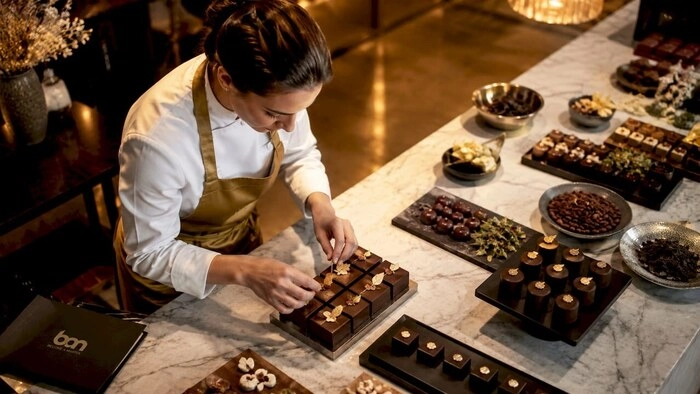
Discover what event catering chocolate is and how it transforms gatherings into unforgettable experiences with unique chocolate treats.
TL;DR:
- Event catering chocolate offers interactive, themed chocolate experiences such as fountains and hot bars to enhance guest engagement at various celebrations. It emphasizes premium ingredients, customization, and precise logistics to create memorable and visually impactful focal points. Proper quality standards and operational discipline distinguish professional chocolate catering from casual or subpar offerings.
Event catering chocolate is a specialised culinary service that delivers premium chocolate experiences at events through interactive stations, bespoke desserts, and curated presentations. Known in the industry as chocolate catering, this service covers everything from mobile hot chocolate bars and chocolate fountains to styled dessert platters built around truffles, mousses, and tarts. Corporate events, weddings, and private celebrations all use it to create memorable focal points that go well beyond standard dessert service. The core attributes are premiumisation, thematic customisation, and guest interaction.
Event catering chocolate is defined as a focused segment of event catering services that provides chocolate-based treats and interactive experiences tailored to the scale and style of an event. The service sits at the intersection of food, theatre, and branding. Clients choose it not just for the flavour, but for the visual impact and the social energy it generates.
Three core formats define the category. Mobile hot chocolate bars use tiered packages with toppings such as whipped cream, caramel, and peppermint, served from barista carts that can be positioned anywhere on a venue floor. Chocolate fountains act as centrepieces, drawing guests in and encouraging them to linger. Curated chocolate dessert catering platters offer menus built from truffles, mousses, tarts, and seasonal specialities, styled to match the event’s aesthetic.
Branding and customisation sit at the heart of what separates good chocolate catering from great chocolate catering. Branded cups, themed garnishes, and custom serveware turn a food station into a marketing moment. A corporate client, for example, can have their logo printed on chocolate discs placed on each dessert plate. A wedding couple can choose a colour palette that runs through every element of the dessert table.
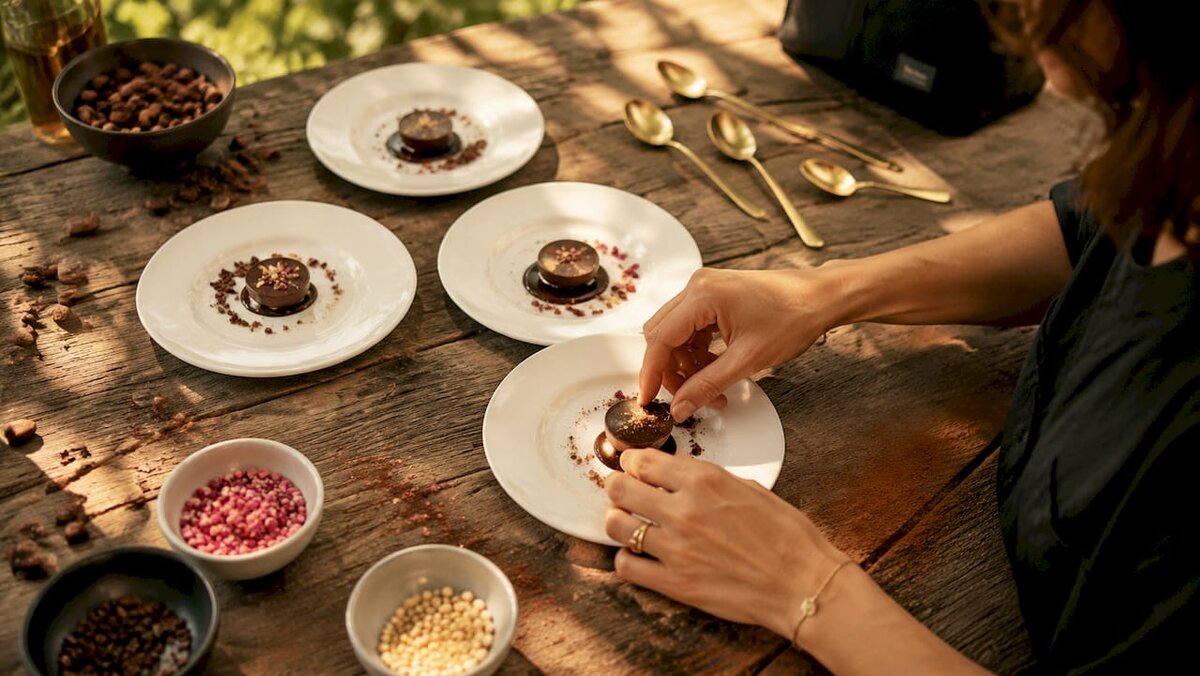
Service scale matters too. A small private dinner might require a single styled platter and one member of staff. A 500-guest corporate gala needs multiple stations, a full barista team, and a logistics plan that covers delivery, setup, and breakdown.
Pro Tip: When scoping a chocolate catering brief, ask the client for the event’s colour palette and brand guidelines before selecting garnishes or serveware. Visual consistency is the detail most clients notice first.
Chocolate serves as a social catalyst and luxury symbol, making it one of the most effective tools for promoting guest interaction at any event type. Guests gravitate towards chocolate stations naturally. The aroma, the visual display, and the act of choosing toppings or dipping items all create conversation and slow people down in the best possible way.
“Chocolate is not merely a dessert. It is a social experience that enhances event atmosphere and reinforces the sense of occasion for every guest present.”
Seasonality plays a significant role in how chocolate catering lands with guests. Hot chocolate bars gain popularity in Q4 and Q1, when warmth and comfort are exactly what guests want from a winter corporate party or a Christmas wedding reception. Dessert bars and chocolate fountains work year-round, adapting to summer garden parties and spring product launches with equal ease.
The psychological dimension is real and measurable. Chocolate carries strong associations with celebration, reward, and indulgence. When guests encounter a well-presented chocolate station, it signals that the host has invested in their experience. That signal raises the perceived value of the entire event. For corporate clients, this translates directly into stronger brand impressions. For couples, it means guests remember the wedding for the right reasons.
Weddings benefit particularly from chocolate’s role in celebrations, where it carries emotional weight that few other foods can match. A chocolate fountain surrounded by fresh strawberries, honeycomb, and salted pretzels becomes a talking point that guests photograph and share. That organic social content has real value for couples who want their day documented authentically.
Couverture chocolate is the professional standard for event catering. It contains at least 31–35% cocoa butter, which gives it a superior melt, a clean snap, and a smooth mouthfeel that commercial compound coatings cannot replicate. Caterers who use compound chocolate in fountains or desserts risk a waxy texture and a flat flavour that guests notice immediately.
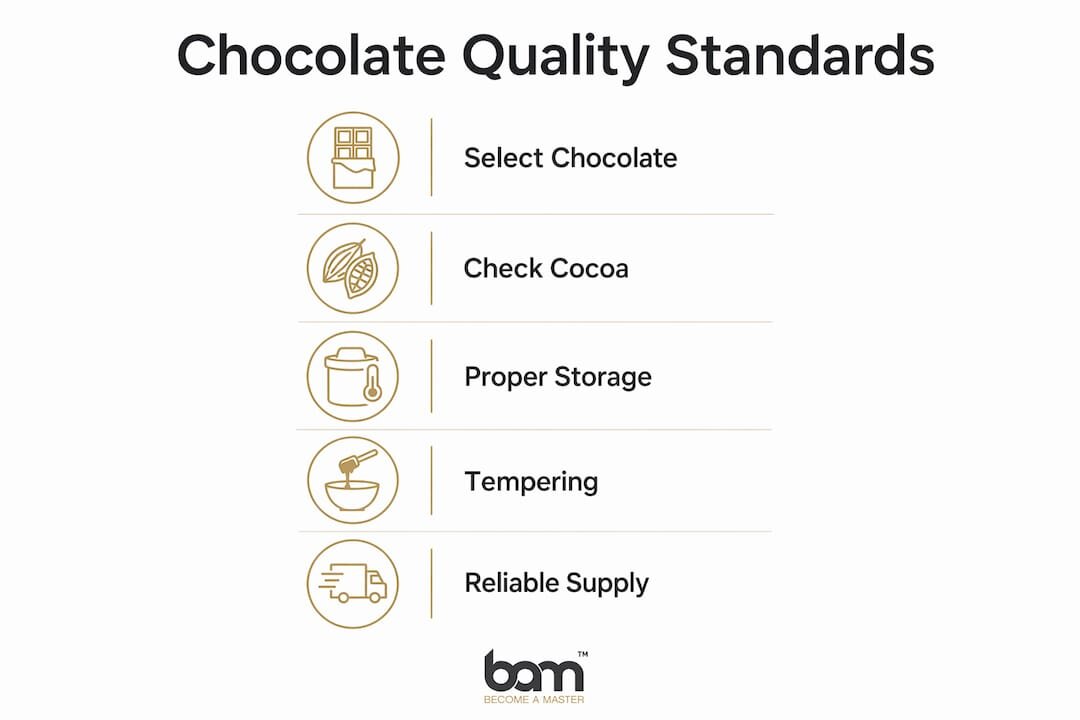
The table below outlines the key quality criteria that professional chocolate caterers apply when selecting products.
| Quality criterion | Professional standard | Why it matters |
|---|---|---|
| Cocoa butter content | Minimum 31–35% | Delivers clean melt and superior mouthfeel |
| Chocolate type | Couverture, not compound | Avoids waxy texture in fountains and desserts |
| Sourcing | Single-origin or traceable blend | Supports consistent flavour and ethical supply |
| Storage temperature | 16–18°C, away from light | Prevents bloom and preserves snap |
| Transportation | Temperature-controlled packaging | Maintains quality from supplier to venue |
Storage and transportation are non-negotiable quality factors. Chocolate that has bloomed (developed a white, dusty surface from temperature fluctuation) is safe to eat but visually unacceptable for a professional setting. Caterers must use temperature-controlled storage and insulated packaging when moving product to venues, particularly in summer months.
Sourcing from reputable suppliers also protects against supply inconsistency. The evolution of chocolate manufacturing in Europe has produced a strong base of premium couverture producers whose products are designed specifically for professional use in fountains, ganaches, and moulded desserts.
Pro Tip: Always temper couverture chocolate before use in fountains. Untempered chocolate will seize or streak, ruining both the texture and the visual presentation.
Adding chocolate catering to an existing event menu requires planning across four areas: logistics, menu design, branding, and staff training. Each area has common pitfalls that experienced caterers learn to avoid early.
Plan the logistics first. Confirm the venue’s power supply for heated fountains and hot chocolate equipment. Identify the setup window and assign a dedicated member of staff to the chocolate station throughout the event. Full-service chocolate catering covers delivery, setup, and breakdown, which is the model to aim for when pitching to corporate clients who expect a managed experience.
Design the menu around the event theme. A winter corporate dinner calls for dark chocolate with warming spices. A summer wedding suits white chocolate with fruit coulis and edible flowers. Use Bamchocolate’s recipe resources to develop seasonal variations that feel considered rather than generic.
Build in branding opportunities. Customisation and thematic integration of chocolate catering raises brand presence and event memorability. Branded cups, custom chocolate discs, and themed garnishes are low-cost additions that clients perceive as high-value touches.
Train your staff on the product. A barista who cannot explain the difference between a dark and a milk hot chocolate, or who cannot describe the toppings confidently, undermines the premium positioning of the service. Brief every team member before the event opens.
Avoid common pitfalls. Do not over-order perishable garnishes. Do not place chocolate fountains near air conditioning vents, as the cold air causes the chocolate to thicken and clog the pump. Do not use compound chocolate in any format where texture is visible to guests.
Pairing chocolate with other elements of the event menu also creates a more cohesive guest experience. A cheese course followed by a dark chocolate truffle platter works well at corporate dinners. A dessert catering table that combines chocolate items with other sweet formats, such as mini doughnuts or macarons, gives guests variety while keeping chocolate as the anchor flavour.
For corporate events specifically, chocolate catering is one of the strongest tools for reinforcing brand identity through food. The combination of premium ingredients, custom presentation, and interactive service creates an impression that standard buffet desserts simply cannot match.
Professional chocolate catering combines premium ingredients, thematic customisation, and interactive service formats to create event experiences that guests remember and hosts value for their brand impact.
| Point | Details |
|---|---|
| Core service formats | Hot chocolate bars, fountains, and dessert platters are the three main formats in chocolate catering. |
| Couverture is the standard | Use chocolate with at least 31–35% cocoa butter for professional quality in all catering formats. |
| Seasonality shapes the menu | Hot chocolate bars suit Q4 and Q1 events; dessert bars and fountains work year-round. |
| Branding multiplies value | Custom garnishes, branded cups, and themed serveware turn food service into a marketing moment. |
| Logistics determine quality | Temperature control, staffing, and setup planning are as important as the chocolate itself. |
I have watched chocolate catering move from a novelty add-on to a genuine differentiator for event professionals over the past several years. The shift is not about trends. It is about what clients actually remember after an event ends.
The caterers I see winning the best briefs are not the ones with the longest menus. They are the ones who have built a signature chocolate offering and can articulate exactly why it works. A well-executed hot chocolate bar at a winter corporate event does more for client retention than a dozen standard canapé rounds. Guests talk about it. They photograph it. They mention it in feedback.
My honest observation is that most catering professionals underestimate the operational side. The chocolate itself is the easy part. The hard part is temperature management, staff confidence, and the visual consistency of the station from the first guest to the last. I have seen beautiful setups fall apart in the final hour because the chocolate thickened in a cold room or the garnishes ran out with 100 guests still to be served.
The caterers who get this right treat chocolate catering as a product line, not a menu item. They source consistently, train specifically, and present professionally. That discipline is what separates a memorable station from a forgettable one.
— Andraz
Bamchocolate supplies the professional-grade ingredients that chocolate catering demands. From baking accessories and additives designed for confectionery work to the BAM Confectionery Set Creamy Fillings built for dessert station menus, every product is selected for quality and consistency. Caterers and event planners can order directly, with product ranges covering everything from couverture-grade chocolate to specialist garnishes and fillings. If you are building or expanding a chocolate catering offering, Bamchocolate’s product catalogue gives you the ingredients to do it to a professional standard.
Chocolate catering is a specialised event service that provides chocolate-based experiences including hot chocolate bars, chocolate fountains, and curated dessert platters. It combines premium ingredients with interactive presentation to create focal points that enhance guest engagement.
Professional caterers use couverture chocolate with a minimum of 31–35% cocoa butter. This grade delivers the clean melt, snap, and mouthfeel that compound coatings cannot provide.
Corporate events, weddings, and private celebrations all benefit from chocolate catering. Hot chocolate bars are particularly effective at cold-weather events in Q4 and Q1, while dessert stations and fountains work across all seasons.
Caterers customise through branded cups, themed garnishes, custom chocolate discs, and colour-matched serveware. Thematic integration of these elements raises both brand presence and event memorability for the client.
Temperature control is the primary challenge. Chocolate must be stored at 16–18°C and transported in insulated packaging. On-site, caterers must manage power supply for heated equipment and position stations away from air conditioning to prevent the chocolate from thickening.


 Confectionery tips


 Slovenščina
 Hrvatski
 Deutsch
 Italiano
 Česky
Česky
 Polski
 Magyar
 Français
 Slovák
 Nederlands
 Español