 info@bamchocolate.com
 Login


 en

 BAM Cake converter
 Login
Claudia
Avtorica vsebin


 Reading time:
9 minutes

Discover what is gluten free chocolate and learn how to choose safe options. This guide empowers you to shop confidently for delicious chocolate!
TL;DR:
- Pure chocolate made from cocoa beans, cocoa butter, and sugar is naturally gluten-free, but added ingredients can introduce gluten during processing. Cross-contamination from shared equipment and unlabeled additives like malt and wheat flour pose significant risks for people with gluten sensitivities. Always verify labels, look for certified gluten-free marks, and contact manufacturers to ensure safety when purchasing chocolate products.
Not all chocolate is safe if you have a gluten sensitivity or coeliac disease. The question of what is gluten free chocolate is more nuanced than most people expect. Pure chocolate, made from cocoa beans, cocoa butter, and sugar, contains no gluten by nature. The problem lies in what gets added during processing, and what happens on the production line. Additives, flavourings, and shared equipment can all introduce gluten into a product that looks perfectly safe on the surface. This guide explains exactly what to look for, what to avoid, and how to shop with confidence.
| Point | Details |
|---|---|
| Pure chocolate is naturally gluten-free | Cocoa beans, cocoa butter, and sugar contain no gluten in their natural form. |
| Additives are the main risk | Ingredients like barley malt, wheat flour, and biscuit pieces can introduce gluten into chocolate. |
| Cross-contamination is a hidden danger | Shared production equipment can contaminate otherwise gluten-free chocolate products. |
| Labels require careful interpretation | A gluten-free claim means less than 20 ppm gluten, but absence of the label does not confirm gluten presence. |
| Verify on every purchase | Recipes and sourcing can change, so checking labels and manufacturer information each time you buy is necessary. |
Understanding the answer starts with the basics. Gluten is a protein found in wheat, barley, rye, and their derivatives. It has no place in a simple chocolate recipe. Pure dark chocolate made from cocoa beans, cocoa butter, and sugar is naturally gluten-free, and so is unsweetened cocoa powder. The issue arises the moment manufacturers move beyond those core ingredients.
Processed and flavoured chocolates frequently include ingredients that carry gluten. The most common offenders are:
Even products that do not list these ingredients directly can still carry a risk. Cross-contamination from shared equipment is often a greater concern than the ingredient list itself. A chocolate bar produced on the same line as a wheat-containing product may pick up trace gluten even if every individual ingredient is technically gluten-free.
Dark chocolate with a high cocoa content tends to have fewer additives and a simpler recipe. Milk and white chocolate are a different matter. They typically include milk solids, additional emulsifiers, and flavourings that create more opportunities for gluten to enter the product. This does not mean all milk or white chocolate contains gluten, but it does mean the ingredient list deserves closer attention.
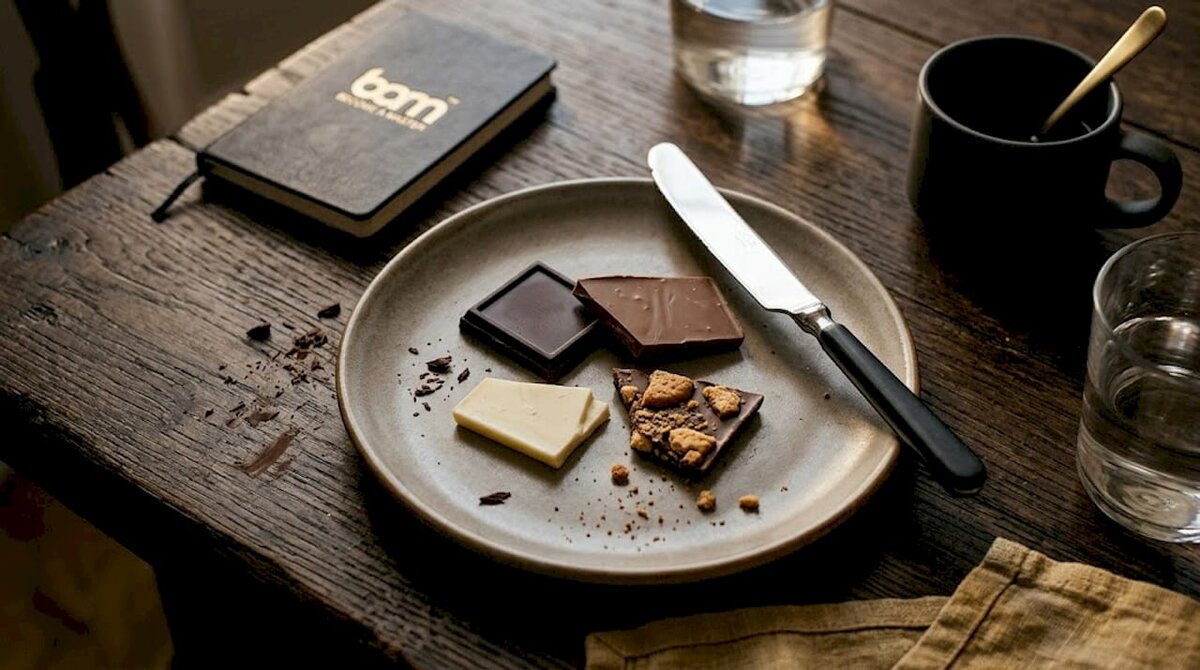
Pro Tip: When buying chocolate for someone with coeliac disease, always choose products with a certified gluten-free mark rather than relying on the ingredient list alone. Certification requires testing, not just declaration.
Label reading is a skill worth developing. The legal standard in many markets, including those following FDA guidelines, defines gluten-free as less than 20 ppm (parts per million) of gluten. This threshold is considered safe for most people with coeliac disease or gluten intolerance.
Here is a practical process for verifying any chocolate product:
One important point: the absence of a gluten-free label does not automatically mean a product contains gluten. Gluten-free labelling is voluntary in many countries. Some products are entirely safe but simply have not been certified. That said, for anyone with coeliac disease, a certified product is always the safer choice.
Pro Tip: Seasonal and limited-edition chocolates are particularly risky. Recipes can change for special runs, and the packaging may not reflect updated ingredients. Always re-check, even for products you have bought safely before.
Knowing which types of chocolate are most reliably gluten-free helps you shop faster and with more confidence.
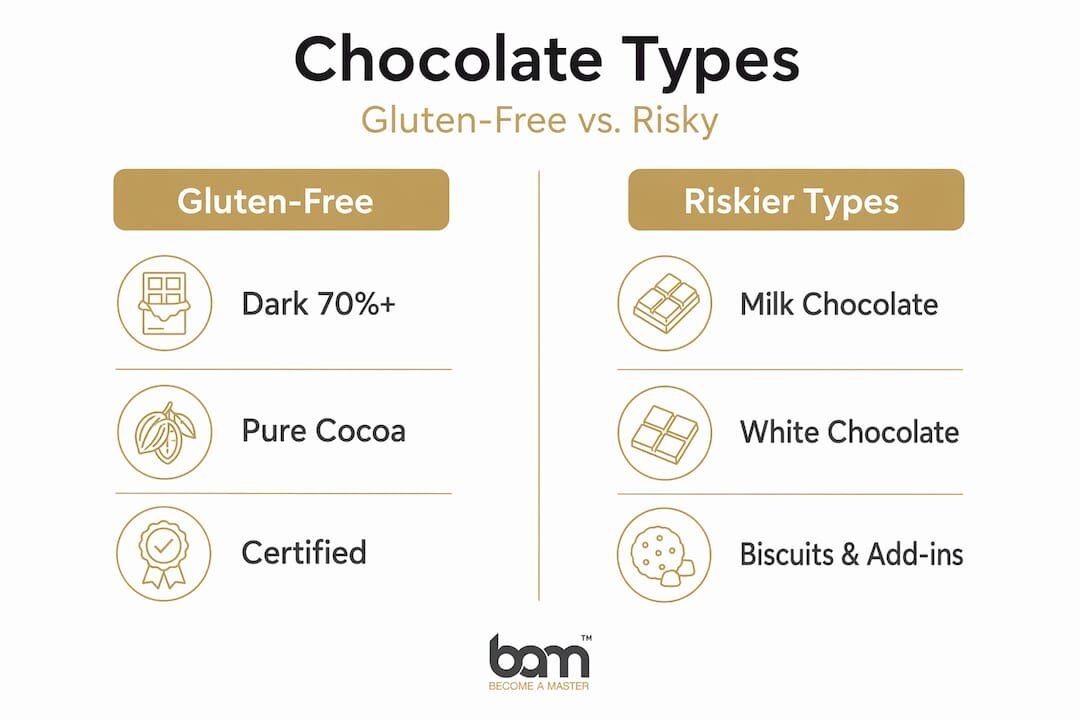
| Chocolate type | Gluten-free likelihood | Key considerations |
|---|---|---|
| Dark chocolate (70%+) | High | Fewest additives; check for malt flavouring |
| Milk chocolate | Moderate | More additives; verify emulsifiers and flavourings |
| White chocolate | Lower | Contains no cocoa solids; often more additives |
| Certified gluten-free bars | Very high | Independently tested; safest for coeliac consumers |
| Cocoa-free alternatives | Very high | Allergen-free by formulation; emerging category |
Pure dark chocolate at 70% cocoa or above represents the safest starting point for most people. The high cocoa content leaves less room for additives, and the flavour profile rarely calls for the malt or wheat-based ingredients that create problems. For baking, unsweetened cocoa powder is similarly reliable, provided it comes from a dedicated gluten-free facility.
Milk chocolate and white chocolate are not off-limits, but they require more scrutiny. The complexities around milk chocolate and its ingredient composition mean you should always verify the full label rather than assuming safety based on category alone. Some reputable brands produce certified gluten-free versions of both milk and white chocolate, which removes the guesswork entirely.
One of the more interesting developments in confectionery is the rise of allergen-free chocolate alternatives. NextCoa, a product launched in North America by Cargill and Voyage Foods, is allergen-free including gluten, dairy, soy, and tree nuts. It is designed for bars, baked goods, and coatings, and it carries a lower carbon footprint than conventional cocoa-based chocolate. For consumers managing multiple dietary restrictions, allergen-free confectionery alternatives like this represent a genuinely useful development. You can also explore plant-based chocolate options that are formulated with allergy-conscious consumers in mind.
Sourcing the right chocolate is only half the work. How you handle it at home matters just as much, particularly if you are baking for someone with coeliac disease.
For home bakers, the safest approach is to build a reliable shortlist of certified gluten-free products and stick to it. Experimentation is worthwhile, but always with a fresh label check first. If you are looking for recipe inspiration, a dedicated gluten-free pastry recipe book can help you work with the right ingredients from the start.
I have spent a considerable amount of time working with premium chocolate products and talking to home bakers who manage dietary restrictions. What I have consistently found is that the ingredient list gives people a false sense of security.
The real risk, in my experience, is cross-contamination on shared production lines. Third-party certification is the only reliable safeguard here, because it requires actual testing rather than a manufacturer’s assurance. I have seen people with coeliac disease react to products with perfectly clean ingredient lists, simply because the facility was not dedicated.
What I find genuinely encouraging is how the market has responded. The growth of certified gluten-free chocolate brands and the emergence of allergen-free alternatives show that the industry is taking this seriously. That said, I would caution against complacency. Even trusted brands can change their sourcing or production processes without a prominent announcement. The “verify every time” approach is not paranoia. It is just good practice.
My advice: build a shortlist of certified products, stay in contact with the brands you rely on, and treat every new purchase as a first purchase. The extra two minutes of label reading is always worth it.
— Andraz
Bamchocolate stocks a range of products suited to gluten-conscious home bakers and confectionery enthusiasts. Whether you are sourcing quality chocolate for a specific recipe or building out a reliable gluten-free baking kit, the range covers the essentials. Browse the baking accessories and additives section for tools and ingredients that support gluten-free confectionery work. For those starting out or looking for a complete setup, the basic confectionery bundle offers a practical starting point. Bamchocolate also carries gluten-free chocolate options specifically formulated for multiple dietary needs, making it straightforward to source reliably safe products in one place.
Pure chocolate made from cocoa beans, cocoa butter, and sugar contains no gluten. However, many processed chocolates include additives such as barley malt or wheat flour that introduce gluten, so checking labels is necessary.
A gluten-free label indicates the product contains less than 20 ppm of gluten, in line with regulatory standards. This threshold is considered safe for most people with coeliac disease or gluten intolerance.
High-cocoa dark chocolate (70% and above) is among the most reliably gluten-free options because it contains fewer additives. Always check for malt-based flavourings and verify the product has not been made on shared equipment.
Yes. Even if every ingredient in a chocolate product is gluten-free, production on shared equipment with wheat-containing products can introduce trace gluten. Certified gluten-free products are tested specifically to rule this out.
Check on every purchase. Manufacturers can change recipes, ingredient suppliers, or production facilities at any time, and these changes may not be prominently advertised on existing packaging.



 Chocolate novelties




 Slovenščina
 Hrvatski
 Deutsch
 Italiano
 Česky
 Polski
 Magyar
 Français
 Slovák
 Nederlands
 Español