 info@bamchocolate.com
 Login


 en

 BAM Cake converter
 Login
Claudia
Avtorica vsebin


 Reading time:
10 minutes

Discover what is lactose-free chocolate and how it differs from regular options. Gain insights on safe choices for baking and eating!
TL;DR:
- Lactose-free chocolate contains milk-derived ingredients with lactose enzymatically removed or reduced, making it suitable for most with lactose intolerance. Not all dark chocolate is automatically safe, as some still contain trace amounts of lactose unless specifically labelled lactose-free. For those with milk allergy, choosing dairy-free chocolate that excludes all milk proteins is essential for safety.
If you have lactose intolerance, you have probably wondered whether you can eat chocolate without consequences. The answer is more complicated than most people expect. What is lactose-free chocolate, exactly, and how does it differ from ordinary dark or milk chocolate? Many people assume that dark chocolate is automatically safe, but that assumption can lead to real discomfort. This guide covers the definition, production methods, health considerations, and practical baking uses of lactose-free chocolate, so you can make confident, informed choices every time you shop or bake.
| Point | Details |
|---|---|
| Not all dark chocolate is safe | Dark chocolate contains less lactose than milk chocolate, but it is not always lactose-free. |
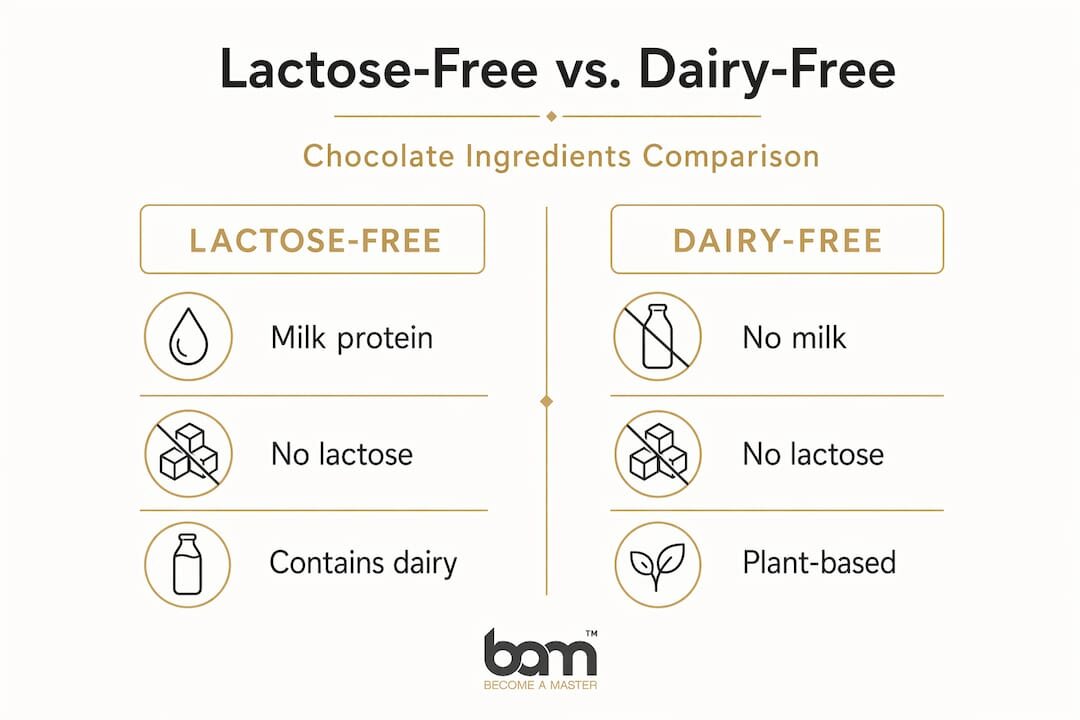
| Lactose-free differs from dairy-free | Lactose-free chocolate may still contain milk proteins, which matters for those with a milk allergy. |
| Labelling standards vary | No universal EU standard exists for lactose-free claims, so reading labels carefully is necessary. |
| Baking requires adjustment | Substituting lactose-free chocolate in recipes may require compensating for fat content differences. |
| Tolerance thresholds are real | Most people with lactose intolerance can manage up to 15g of lactose daily without symptoms. |
Lactose is the natural sugar found in milk. When the body does not produce enough lactase (the enzyme that breaks lactose down), consuming it causes bloating, cramps, and digestive discomfort. Lactose intolerance affects a significant portion of the global population, and for those individuals, understanding exactly how much lactose is in their food matters.
Chocolate gets its lactose from milk-derived ingredients. Pure cocoa mass, cocoa butter, and cocoa powder contain no lactose at all. The lactose enters during manufacturing when milk solids, milk powder, or cream are added. This is why the type of chocolate determines the lactose content.
Here is how the main chocolate types compare:
| Chocolate type | Typical lactose content per 100g |
|---|---|
| Dark chocolate (70%+) | Less than 1.3g |
| Milk chocolate | 4 to 7g |
| White chocolate | 2 to 8g depending on brand |
Dark chocolate contains less than 1.3g of lactose per 100g, while milk chocolate contains 4 to 7g per 100g. White chocolate, which is made almost entirely from milk solids and cocoa butter, can contain up to 8g per 100g depending on the brand.
So what makes chocolate genuinely lactose-free? A product labelled lactose-free has had its lactose removed or broken down through a specific production process. Low lactose content does not automatically qualify. The key distinctions are:
One significant complication is that no universal EU standard exists for lactose-free labelling outside infant formula. Germany, for example, requires lactose levels below 0.1g per 100g, while other national standards allow up to 100ppm. This inconsistency means the same label can mean different things depending on where the product was made.
Understanding how lactose-free chocolate is made helps you assess whether a product genuinely meets your dietary needs.

The most common production method uses the enzyme lactase, added directly to milk or milk solids during chocolate manufacturing. Lactase breaks lactose down into its two component sugars: glucose and galactose. The resulting chocolate retains its creamy texture and flavour from the milk fats and proteins, but without the lactose that causes digestive problems.
Dairy-free chocolate takes a completely different approach. Instead of removing lactose from milk, manufacturers replace milk entirely with plant-based alternatives such as oat milk, rice milk, or coconut milk. The nutritional profile and texture can differ noticeably from traditional chocolate.
When buying lactose-free chocolate, the following points are worth checking:
Pro Tip: If you have a milk allergy rather than lactose intolerance, do not rely on lactose-free labels. Seek out products that are explicitly dairy-free and manufactured in a dedicated facility.
A common misconception is that lactose intolerance requires complete elimination of all dairy. In practice, most people tolerate up to 15g of lactose daily without significant symptoms. A small square of dark chocolate, which contains well under 1g of lactose, is unlikely to cause any issues for most people with intolerance.
This matters because unnecessary dietary restriction can lead to nutritional gaps, particularly in calcium and vitamin D. Dietitians generally recommend managing symptoms through portion control and food choices rather than eliminating entire food groups.
There is also a critical safety distinction that is often overlooked:
Lactose-free chocolate may still contain milk proteins, which means it is not safe for someone with a milk allergy. Dairy-free chocolate, which excludes all milk ingredients, is the correct choice for allergy sufferers. Understanding this difference between lactose-free and dairy-free is not a minor technicality. It is a genuine safety issue.
“Lactose intolerance is manageable, often requiring diet adjustment rather than strict avoidance, with expert dietitian collaboration advised.” — StatPearls, NCBI Bookshelf
From a nutritional standpoint, lactose-free chocolate made with real milk solids retains similar protein and fat content to standard chocolate. It is not inherently healthier, but it allows people with intolerance to enjoy chocolate without digestive consequences. For broader context on chocolate and health, the type of chocolate and the quality of ingredients matter considerably.
Lactase enzyme supplements are another practical option. Taking a lactase tablet before eating milk chocolate can reduce or eliminate symptoms for many people, offering flexibility when lactose-free alternatives are not available.
With the market growing steadily, finding good lactose-free chocolate is more straightforward than it used to be. Here is a practical approach to selecting products that suit your needs:
The taste difference between a well-made lactose-free chocolate and standard chocolate is minimal. The enzymatic removal of lactose does not significantly alter flavour, though some people notice a very slight sweetness because glucose and galactose taste marginally sweeter than lactose.
Lactose-free chocolate performs very well in baking. For most recipes, you can substitute it directly for standard chocolate with no adjustment needed. Ganaches, brownies, mousses, and chocolate sauces all work reliably with lactose-free chocolate.
The situation becomes more complex when substituting milk chocolate or white chocolate, which contain higher levels of milk fat. That fat contributes to texture, creaminess, and mouthfeel. When you switch to a dairy-free alternative in a recipe that relies on milk chocolate, adding coconut oil can compensate for the missing milk fats and restore the expected texture.
Practical tips for baking with lactose-free chocolate:
Pro Tip: When making ganache with dairy-free chocolate, replace dairy cream with full-fat coconut cream in equal quantities. The result is rich, stable, and suitable for piping or pouring.
For guidance on which chocolate suits baking, including lactose-free options, Bamchocolate has a detailed resource worth reading before you start a new recipe.
I have seen a lot of confusion around this topic, and most of it comes from one place: people treating “dark chocolate” and “lactose-free chocolate” as synonyms. They are not. I have tested plenty of dark chocolates that carry no lactose-free claim and contain milk-derived ingredients in the recipe. Assuming safety based on colour alone is a mistake I would not recommend making.
What I have learned from working with lactose-free chocolates is that the quality gap between lactose-free and standard chocolate has closed considerably. A few years ago, the options were limited and the taste was noticeably different. Now, well-formulated lactose-free couverture chocolates perform beautifully in baking and taste excellent on their own.
My practical advice: do not over-restrict. If you have lactose intolerance rather than a milk allergy, a small amount of high-quality dark chocolate is almost certainly within your tolerance threshold. Reserve lactose-free or dairy-free products for situations where you are eating larger quantities or baking something where the lactose content will be concentrated. Work with a dietitian if you are unsure where your personal threshold sits. Enjoyment and dietary management are not mutually exclusive.
— Andraz
Bamchocolate stocks a focused range of premium chocolate products and baking ingredients suited to lactose-free and dairy-free baking. Whether you are looking for high-quality couverture chocolate, cocoa powder, or specialist baking accessories, the product range is built for home bakers who care about ingredients.
Browse the baking accessories range for tools and ingredients that complement lactose-free chocolate work. If you want structured recipe guidance, the 101 BAM pastry recipe book covers a wide range of techniques and formulations that work with premium chocolate. For a complete starter kit, the basic confectionery bundle is a practical starting point for anyone building out their lactose-free baking pantry.
Lactose-free chocolate is chocolate that has had its lactose removed or broken down through enzymatic processing. It typically still contains milk-derived ingredients, unlike dairy-free chocolate, which excludes all milk.
Dark chocolate is naturally low in lactose, containing less than 1.3g per 100g, but it is not automatically lactose-free unless specifically labelled. Always check the ingredient list and any lactose-free certification.
Lactose-free chocolate removes the lactose sugar but may still contain milk proteins. Dairy-free chocolate excludes all milk ingredients entirely, making it the safer choice for those with a milk allergy.
Yes. Lactose-free chocolate performs similarly to standard chocolate in baking. When substituting milk or white chocolate, you may need to adjust fat content to maintain the correct texture, for example by adding a small amount of coconut oil.
Lactose-free chocolate is available in larger supermarkets, health food shops, and specialist online retailers. Bamchocolate offers a curated selection of premium lactose-free and dairy-free chocolate products suited to both snacking and baking.



 Chocolate novelties



 Slovenščina
 Hrvatski
 Deutsch
 Italiano
 Česky
 Polski
 Magyar
 Français
 Slovák
 Nederlands
 Español