 info@bamchocolate.com
  Login
Login 

 en
en 
 BAM Cake converter
  Login
Login Claudia
Avtorica vsebin


 Reading time:
10 minutes
Reading time:
10 minutes 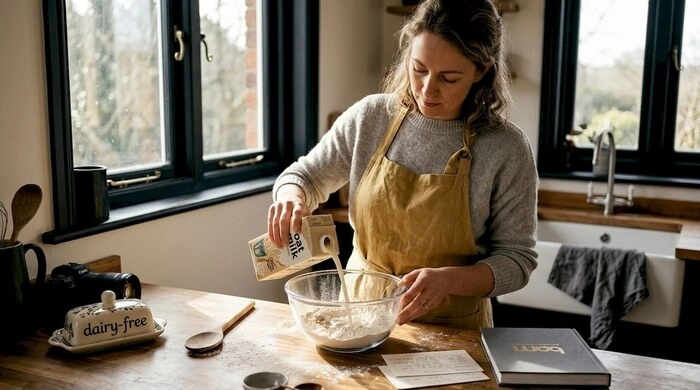
Discover what non-dairy baking is and learn practical tips for delicious alternatives. Bake confidently without dairy and enjoy fantastic results!
TL;DR:
- Non-dairy baking involves intentionally replacing dairy ingredients with plant-based alternatives that serve the same functional roles. Understanding how dairy contributes moisture, fat, protein, emulsification, and browning helps in selecting suitable substitutes and achieving comparable results. Practicing precise ingredient function, temperature, and technique ensures successful dairy-free baked goods that match traditional qualities.
Non-dairy baking is not simply a matter of leaving out butter and milk. It is a deliberate approach to baking where every dairy ingredient is replaced with something that performs the same job. Whether you are avoiding dairy for health reasons, dietary preferences, or ethical choices, understanding what is non-dairy baking means understanding why dairy exists in recipes in the first place. This guide covers the ingredients, techniques, and practical tips you need to bake confidently without dairy, producing results that are genuinely good rather than merely acceptable.
| Point | Details |
|---|---|
| Dairy has functional roles | Fat, protein, moisture, and emulsification all need replacing, not just the ingredient itself. |
| Match milk to recipe type | Soy milk suits structure-heavy bakes; oat milk works better for cakes and muffins. |
| Brand variability matters | Different brands of non-dairy butter and milk affect results, so test small batches first. |
| Acid improves texture | Combining vinegar or lemon juice with baking soda replicates the lift of buttermilk. |
| Experimentation is part of the process | Adjusting flour, fat, and liquid ratios is normal and expected in dairy-free baking. |
Non-dairy baking means producing baked goods without any ingredients derived from animal milk, including butter, cream, milk, yoghurt, and cheese. The reasons people choose this approach vary widely. Some bakers have lactose intolerance or a dairy allergy. Others follow a vegan lifestyle. Many are simply curious about plant-based alternatives after noticing how much the category has grown. The vegan desserts market was valued at $4.88 billion in 2025 and is projected to reach $6.91 billion by 2030, reflecting genuine mainstream demand rather than a passing trend.
The critical point most beginners miss is that non-dairy baking is not about subtraction. It is about substitution with purpose. Dairy ingredients each perform specific technical functions in a recipe. Remove them without understanding those functions and you will end up with flat cakes, crumbly biscuits, or dense loaves. Approach it correctly and the results are indistinguishable from conventional baking.
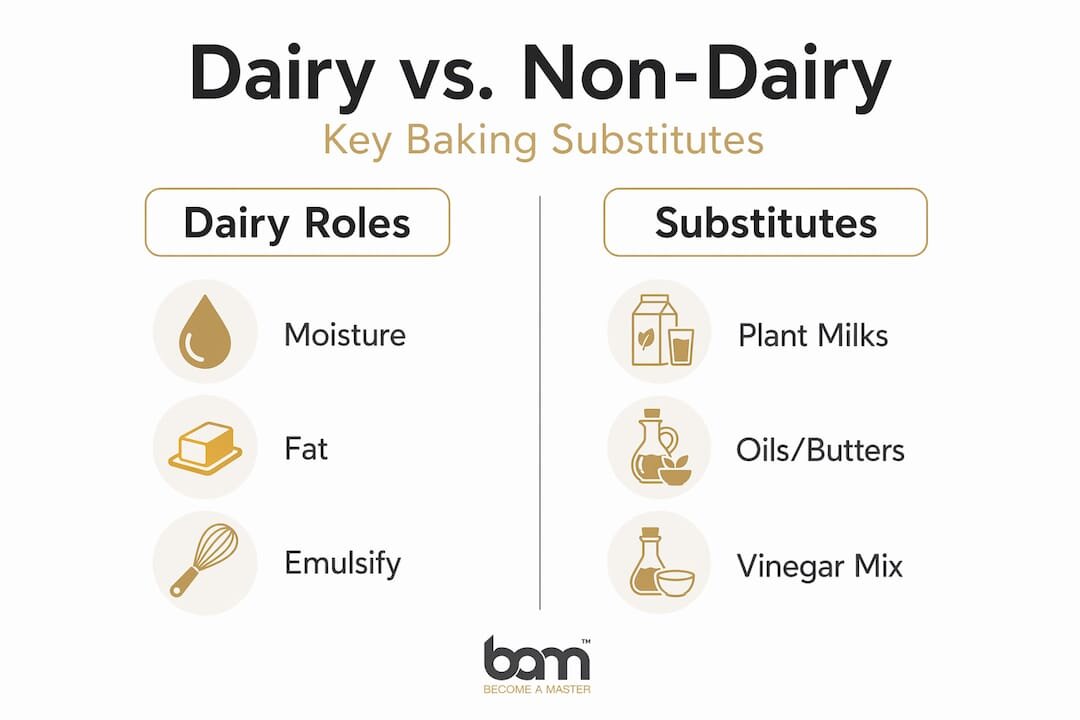
Before choosing any non-dairy baking ingredient, you need to know what you are replacing and why it matters. Dairy does several distinct jobs in a recipe, and each one affects the final result differently.
As functional substitution research confirms, successful dairy-free baking requires rebuilding these roles rather than simply swapping one ingredient for another. A 1:1 swap of oat milk for whole milk in a bread recipe, for example, will likely produce a paler, denser loaf because oat milk carries far less protein and fat than dairy milk.
Understanding these roles also helps you troubleshoot. If your dairy-free cake is coming out dry, the issue is probably moisture or fat, not flavour. If it is not browning properly, you may need to adjust sugar content or switch to a higher-protein plant milk.
Pro Tip: Add a teaspoon of apple cider vinegar to your non-dairy milk before mixing. It curdles slightly, mimicking the acidity of buttermilk and improving both rise and tenderness in cakes and muffins.
Choosing the right non-dairy baking alternatives is where most bakers spend the most time. The options are genuinely varied, and each ingredient has a functional profile that suits certain recipes better than others.
The differences between plant milks matter more than most bakers realise. Protein content and fat levels determine how well a milk performs in structure-dependent recipes.
| Plant milk | Protein (per 240ml) | Fat content | Best used for |
|---|---|---|---|
| Soy milk | 7–8g | Moderate | Breads, custards, structure-heavy cakes |
| Oat milk | 2–3g | Low to moderate | Muffins, sponge cakes, pancakes |
| Almond milk | 1g | Low | Light batters, biscuits, glazes |
| Coconut milk (full fat) | 2–3g | High | Rich cakes, ganaches, cream-based fillings |
| Coconut milk (light) | 1–2g | Low | Lighter batters where coconut flavour is welcome |
Soy milk’s protein content of approximately 8g per 240ml matches dairy milk closely, making it the most reliable choice for recipes where structure matters. Oat milk, with its neutral flavour and natural body, suits cakes and muffins well despite its lower protein level. Almond milk is quite thin and works best in recipes that do not depend on milk for structure or richness.
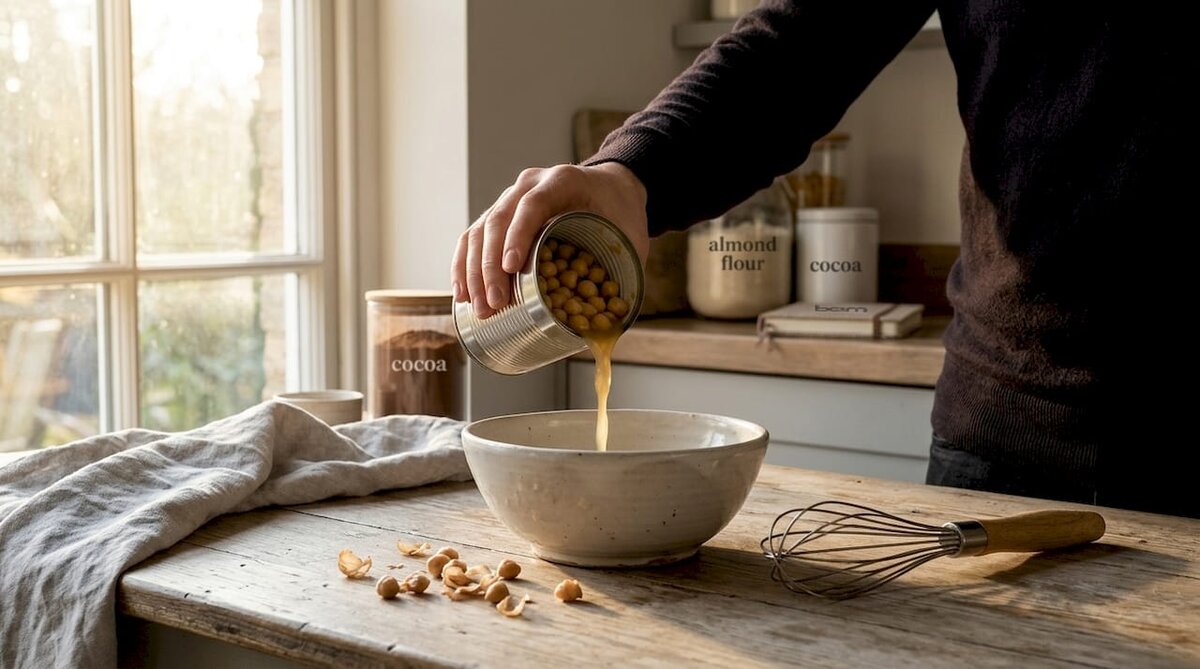
Aquafaba, the liquid from a tin of chickpeas, whips into stiff peaks and works as a direct replacement for egg whites in meringues and mousses. Ground flaxseed or chia seeds mixed with water form a gel that binds batters in the same way a whole egg does. Non-dairy yoghurt adds moisture, fat, and a slight acidity that improves tenderness in cakes and quick breads.
Pro Tip: When switching non-dairy butter brands, bake a small test batch first. Brand variability in vegan butters affects hydration, browning, and texture in ways that can significantly alter your results.
Knowing your ingredients is only part of the picture. How you work with them determines whether your bake succeeds.
Adjust your liquid ratios. Non-dairy ingredients often carry less water than their dairy counterparts, which can lead to dryness. Reduce flour by one to two tablespoons per cup, or add an extra tablespoon of oil to restore moisture and crumb quality.
Make a dairy-free buttermilk. Combine one tablespoon of white wine vinegar or lemon juice with 240ml of plant milk and leave it to sit for five minutes. The mixture will curdle slightly. Baking soda reacts with this acid to create lift and tenderise the crumb, replicating what buttermilk does in conventional recipes.
Read your batter, not just the clock. Cookie dough that is too soft will spread too much in the oven. Cake batter that looks too thick will bake dense. Batter consistency guides success more reliably than strict timings, particularly when you are working with unfamiliar plant-based ingredients.
Chill doughs when needed. Plant-based butters can be softer than dairy butter at room temperature. If your biscuit or pastry dough feels greasy or hard to handle, refrigerate it for 30 minutes before rolling or shaping.
Test small batches. When trying a new brand of non-dairy butter or a different plant milk, scale your recipe down to a quarter or a third. This saves ingredients and gives you useful information before committing to a full bake.
Boost browning deliberately. Because plant milks contain fewer sugars and proteins than dairy milk, browning can be slower. Brush the surface of breads and pastries with a thin layer of plant milk or maple syrup before baking to encourage colour development.
Pro Tip: For practical cake baking tips that translate well to dairy-free recipes, focus on batter texture and visual cues at each stage rather than relying solely on timing.
Understanding the theory becomes useful when you apply it to specific recipe types. Different bakes have different priorities, and your ingredient choices should reflect that.
When adapting a conventional recipe, work through each dairy ingredient one at a time. Identify its function, choose a substitute that matches that function, and adjust surrounding ingredients as needed. Trying to change everything at once makes it very difficult to identify what is working and what is not.
I came to non-dairy baking assuming it would be straightforward. Swap the butter, swap the milk, done. What I actually found was that the first several attempts produced results that were technically edible but noticeably off. Cakes that were slightly rubbery. Biscuits that spread too thin. Frostings that would not hold.
What changed things for me was stopping to think about what each dairy ingredient was doing before I replaced it. Once I started choosing substitutes based on function rather than convenience, the results improved quickly. Soy milk for anything structural. Oat milk when I wanted a neutral, soft crumb. Coconut cream for richness in fillings and ganaches.
The most surprising lesson was how much brand variation matters. Two different plant-based butters from the same shop can behave completely differently in the oven. I now always test a small batch when I switch products, which has saved more than a few full-scale baking disasters.
Dairy-free baking rewards patience and attention. The plant-based dairy products available today are genuinely good, and the results you can achieve with them are worth the learning curve.
— Andraz
Bamchocolate offers a range of products well suited to non-dairy and vegan baking. The baking accessories range includes additives and tools that work across both conventional and dairy-free recipes, covering everything from leavening agents to decorating supplies. For bakers who want a ready-made starting point, the BAM Basic pastry package brings together core confectionery ingredients in one bundle, including options that adapt easily to dairy-free applications. The BAM Confectionery set Creamy fillings is worth exploring for dairy-free fillings and ganaches, and the full BAM recipe collection includes dessert recipes that support plant-based and vegan baking methods. Quality ingredients make a measurable difference in dairy-free baking, where small variations in fat and protein content affect every bake.
Non-dairy baking means producing baked goods without any ingredients derived from animal milk, replacing dairy with plant-based alternatives that perform the same functional roles in a recipe.
Soy milk is the best all-round substitute because its protein content matches dairy milk closely, making it reliable for structure-dependent recipes. Oat milk suits cakes and muffins where a neutral flavour and soft crumb are the priority.
In most recipes, yes, but results depend on the brand. Fat and water content varies between products, so test a small batch when using a new brand before committing to a full recipe.
Add one tablespoon of white wine vinegar or lemon juice to 240ml of plant milk and leave it for five minutes. The acid reacts with baking soda during baking to replicate the lift and tenderness that buttermilk provides.
Yes. Dairy-free baking uses no animal milk products, so it contains no lactose. Always check labels on packaged non-dairy baking ingredients to confirm they are produced without dairy cross-contamination if sensitivity is severe.



 Tales of chocolate


 Slovenščina
 Hrvatski
 Deutsch
 Italiano
 Česky
Česky
 Polski
 Magyar
 Français
 Slovák
 Nederlands
 Español