 info@bamchocolate.com
  Login
Login 

 en
en 
 BAM Cake converter
  Login
Login Claudia
Avtorica vsebin


 Reading time:
9 minutes
Reading time:
9 minutes 
Discover why use organic baking ingredients to enhance health, flavor, and freshness in your baked goods. Elevate your baking today!
TL;DR:
- Using organic baking ingredients reduces chemical residues, enhances flavour, and improves fermentation quality. Prioritizing organic flour, spices, and vanilla provides the greatest health, flavour, and environmental benefits for home bakers. Organic ingredients support sustainable farming practices, promoting healthier soil, water, and pollinator ecosystems.
Organic baking ingredients are defined as those produced without synthetic pesticides, herbicides, chemical fertilisers, or genetically modified organisms, making them a cleaner and more nutritious foundation for everything you bake. Whether you reach for organic flour, butter, eggs, or spices, the absence of synthetic inputs changes what ends up in your finished loaf, cake, or pastry. The advantages of organic baking ingredients extend beyond health alone. They affect flavour depth, dough behaviour, and even how long your bread stays fresh. This guide explains why use organic baking ingredients matters, which swaps deliver the most value, and how to prioritise your upgrades wisely.
Organic baking ingredients reduce your exposure to synthetic chemical residues that accumulate in conventional crops. Glyphosate, the world’s most widely used herbicide, is routinely applied to conventional grain crops as a pre-harvest desiccant, meaning residues transfer directly into flour, oats, and other grain-based staples. Choosing organic eliminates this route of exposure entirely.
The health benefits of organic baking ingredients go further than residue avoidance. Organic whole wheat flour contains higher fibre and protein levels compared to its conventional counterpart, and organic production methods enhance phytonutrient concentration by excluding GMOs and synthetic fertilisers. This means every slice of bread or muffin carries more nutritional value per gram.
Residue risks are especially concentrated in whole grain products. Because the bran and germ layers remain intact in whole wheat flour, pesticide residues accumulate at higher levels than in refined white flour. If you bake with whole grains regularly, organic certification matters most here.
Consuming organic baking ingredients also reduces chemical burden on the body by limiting systemic absorption of herbicides and pesticides. Research indicates this supports liver and immune system function over time. For home bakers who bake several times a week, that cumulative reduction is meaningful.
Key health advantages at a glance:
Organic ingredients produce cleaner, more nuanced flavours because they contain no chemical bleaching agents, synthetic preservatives, or artificial enzymes. Commercial conventional flours often include additives that speed up processing but suppress the natural microbial activity responsible for complex flavour development. Synthetic additives in conventional flours suppress fermentation microbes and add enzymes for speed. Organic flours lack these, yielding slower but more flavourful sourdoughs.
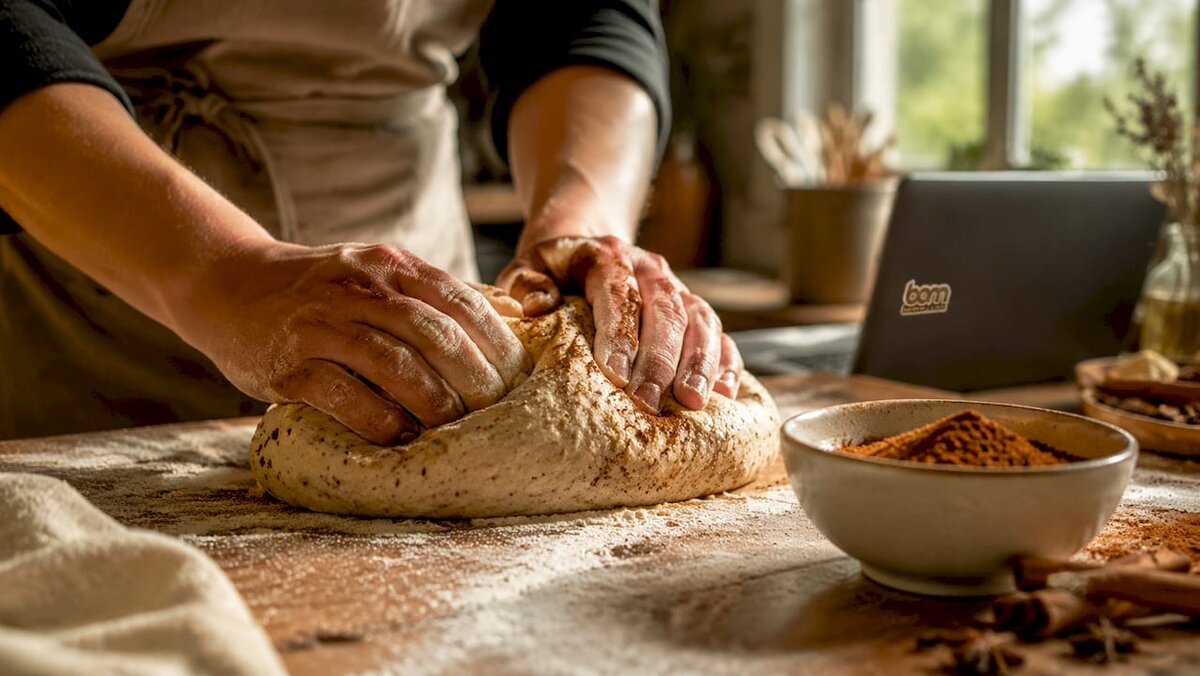
Dough behaviour also improves with organic grains. Organic grains mature naturally without synthetic fertilisers, which improves starch and protein development for better dough elasticity and fermentation control. Bakers who switch to organic flour consistently report more predictable dough handling and a more open crumb structure in bread.
Fermentation is where the difference becomes most obvious. Sourdough made with organic flour and wild yeast produces natural acids that extend shelf life without preservatives, lasting five to seven days at room temperature. That is a direct result of organic flour’s richer microbial environment, not a coincidence.
Pro Tip: If you are new to organic flour, start with a 50/50 blend of organic and conventional flour in your usual recipe. You will notice the flavour difference without disrupting your familiar dough handling.
Organic spices deliver a measurable flavour improvement too. Conventional spices commonly undergo ethylene oxide fumigation, a classified human carcinogen, which organic certification prohibits. Beyond the safety concern, fumigation degrades the volatile aromatic compounds that give cinnamon, nutmeg, and ginger their intensity. Organic spices simply smell and taste stronger.
Organic butter from pasture-raised cows contains more conjugated linoleic acid and omega-3 fatty acids, and its richer fatty acid profile contributes noticeably to richer, more satisfying pastries and shortbreads. The deeper yellow colour of quality organic butter reflects higher beta-carotene content from a natural pasture diet, and that richness translates directly into flavour.
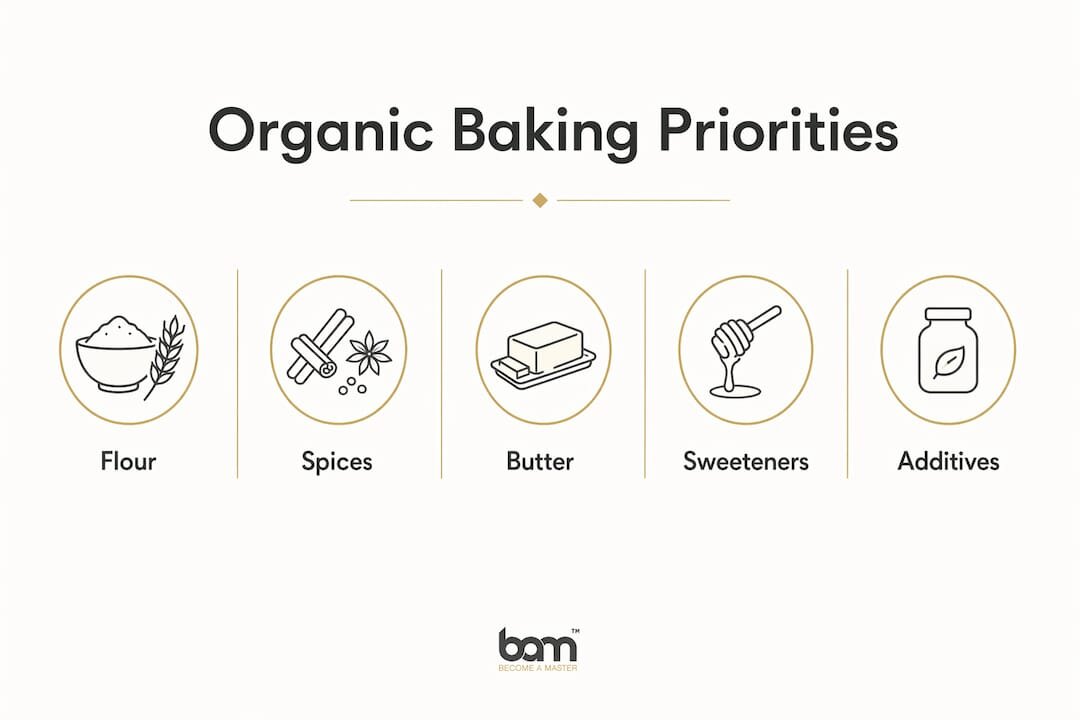
Not every ingredient swap carries equal weight. Prioritising by residue risk, flavour impact, and cost-effectiveness helps you get the most from your organic budget. For home bakers, prioritising organic flour and spices offers the best flavour and health return for the investment.
Here is a prioritised order for upgrading your baking pantry:
| Ingredient | Priority | Reason |
|---|---|---|
| Whole wheat flour | Highest | Greatest residue concentration; direct impact on dough and flavour |
| Baking spices | High | Fumigation risk; significant flavour improvement |
| Vanilla extract | High | Noticeable flavour difference over synthetic alternatives |
| Butter and eggs | Medium | Nutritional and flavour benefits in pastry and sponge work |
| Sweeteners and cocoa | Lower | Worthwhile upgrade once staples are covered |
If you are also reassessing your natural sweetener choices, organic options align well with a broader move toward cleaner baking ingredients.
Choosing organic baking ingredients connects your kitchen directly to farming practices that protect soil, water, and wildlife. Organic farming supports soil microbial life, which enhances nutrient cycling and promotes greater nutrient density and crop resilience. Healthier soil produces more nutritious crops, which is why the environmental and nutritional benefits of organic farming are inseparable.
The environmental case for organic sourcing includes several interconnected benefits:
“The quality of what grows in the soil is inseparable from the health of the soil itself. Organic farming treats both as one system.”
This connection matters for home bakers because ingredient quality and environmental stewardship are not separate concerns. When organic flour performs better in your sourdough, it is partly because the grain grew in healthier, more biologically active soil. The flavour you taste reflects the farming system behind it.
Organic baking ingredients reduce pesticide exposure, improve flavour and fermentation performance, and support sustainable farming, making flour and spices the highest-priority swaps for home bakers.
| Point | Details |
|---|---|
| Pesticide residue reduction | Organic grains eliminate glyphosate and synthetic herbicide residues that concentrate in conventional flour. |
| Flavour and fermentation gains | Organic flour produces more complex flavours and longer shelf life through natural microbial fermentation. |
| Spice safety and quality | Organic spices avoid ethylene oxide fumigation, preserving both safety and aromatic intensity. |
| Smart prioritisation | Flour, spices, and vanilla extract deliver the greatest health and flavour return per pound spent. |
| Environmental connection | Organic farming builds soil health and protects pollinators, directly influencing ingredient quality. |
I started using organic flour consistently about three years ago, initially out of curiosity rather than conviction. The first thing I noticed was not flavour. It was fermentation. My sourdough starter became more active within two weeks of switching, and the dough developed a noticeably more complex aroma during bulk fermentation. That was not placebo. Organic flour ferments differently because natural microbial activity is not suppressed by synthetic additives.
The flavour shift in spices surprised me more. I replaced conventional ground cinnamon with an organic version in a batch of cinnamon rolls, and the difference was stark. The organic cinnamon was warmer, more aromatic, and the rolls smelled better out of the oven. I have not gone back.
My honest advice for anyone transitioning: do not try to replace everything at once. Start with flour and one or two spices. Live with those for a month. You will bake more confidently with ingredients you understand, and the cost increase feels manageable when it is gradual. Organic butter is worth the upgrade once you are comfortable, particularly for shortcrust pastry where fat quality is everything.
The cost argument against organic baking is real but overstated. Flour is cheap relative to the total cost of a bake. Upgrading to organic flour adds pennies per loaf. The spices you use in a cake recipe cost less than the eggs. Prioritise where residue risk and flavour impact are highest, and the economics work in your favour.
— Andraz
Bamchocolate stocks a carefully selected range of baking accessories and additives suited to home bakers who want quality ingredients without compromise. Whether you are building a cleaner pantry from scratch or adding specific organic staples to an existing setup, the product range covers the essentials. The BAM Basic pastry package offers a practical starting point for bakers upgrading their ingredient quality, combining trusted products in one straightforward bundle. For guidance on selecting the right chocolate for your recipes, the Bamchocolate chocolate baking guide is a useful companion resource.
Organic baking ingredients are those produced without synthetic pesticides, herbicides, chemical fertilisers, or GMOs, and certified to meet national or EU organic standards. Common examples include organic flour, butter, eggs, vanilla extract, spices, and cocoa.
Organic flour ferments more actively due to natural microbial life and the absence of synthetic additives that suppress fermentation. Bakers report better dough elasticity, more complex flavour, and longer shelf life in sourdough made with organic flour.
Flour is the highest priority because it is used in the largest quantities and carries the greatest pesticide residue concentration, particularly in whole wheat varieties. Spices are a close second due to fumigation risks in conventional products.
Organic spices retain more of their natural volatile aromatic compounds because they are not treated with ethylene oxide fumigation, which degrades flavour and aroma. The difference is most noticeable in cinnamon, nutmeg, and ginger used in baked goods.
For staples like flour and spices, the cost difference is small relative to the total cost of a recipe and the health and flavour benefits are measurable. Prioritising organic flour, spices, and vanilla extract delivers the strongest return on the additional spend.



 Confectionery tips



 Slovenščina
 Hrvatski
 Deutsch
 Italiano
 Česky
Česky
 Polski
 Magyar
 Français
 Slovák
 Nederlands
 Español