 info@bamchocolate.com
 Login


 en

 BAM Cake converter
 Login
Claudia
Avtorica vsebin


 Reading time:
17 minutes
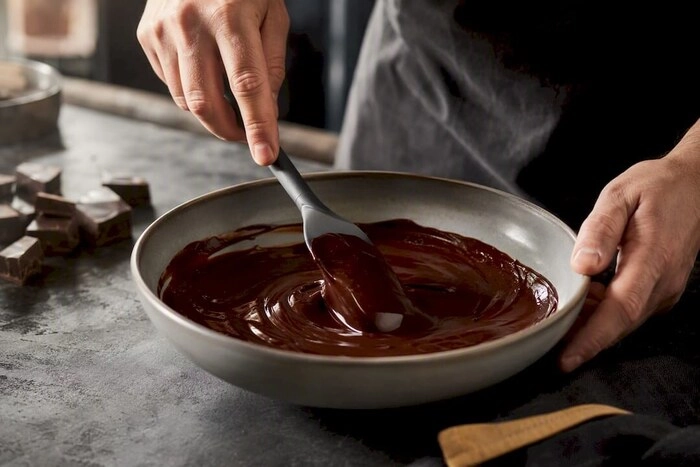
Slovenian bakers: choose couverture bars, avoid compound chocolate, and use exact 1:1–4:1 chocolate:cream ratios for drip, filling and truffles.
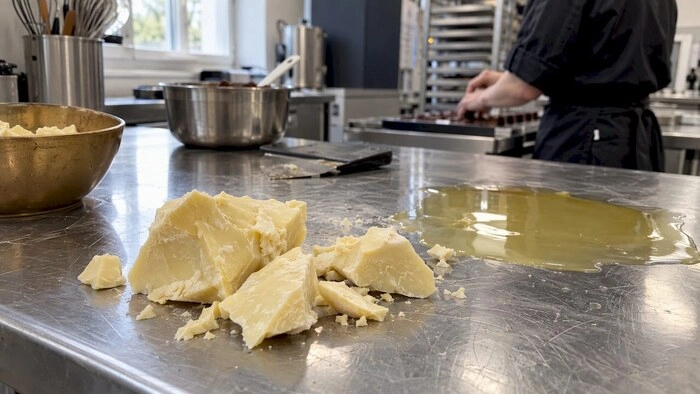
High-quality dark or couverture chocolate, chopped from a bar or bought as pistoles, typically makes excellent ganache for various uses. Avoid compound chocolate entirely; its vegetable fat never sets or melts like real cocoa butter. Cocoa percentage then decides sweetness and firmness, and bars or pistoles melt far more reliably than cheap chocolate chips loaded with stabilisers.
Ganache is not one recipe. It is a ratio that shifts depending on what you are making, and the chocolate you reach for should shift with it.
A thin drip cake topping needs a pourable, glossy ganache that flows over an edge without pooling into a puddle at the base. A mirror glaze needs similar fluidity but even more shine, so fat content and temperature control matter more than usual. A tart or cake filling needs something spreadable that holds its shape once cooled but still yields under a knife. A rolled truffle centre needs a ganache firm enough to scoop and roll by hand once chilled. A whipped ganache, piped onto cupcakes or used as a mousse-like filling, needs enough structure to hold air once beaten but enough softness to stay light.
The through-line is simple: more chocolate relative to cream gives you structure; more cream gives you flow. Once you understand that lever, choosing between BAM’s 70% extra dark chocolate for a truffle batch or a milder bar for a drip becomes a matter of taste rather than guesswork.
Dark chocolate is the default for good reason. Its higher cocoa solids give ganache backbone, it tolerates a wide range of cream ratios, and it pairs with almost any flavouring. Semi-sweet and bittersweet bars, the kind most traditional ganache recipes call for, sit in a sweet spot: rich enough to taste like proper chocolate, forgiving enough for a first attempt.
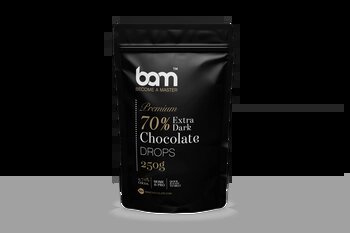
Milk chocolate brings extra sugar and milk solids, which soften both flavour and set. It needs less cream proportionally, because its own fat and sugar content already loosens the mixture. White chocolate is the outlier. It contains no cocoa solids at all, only cocoa butter, sugar, and milk solids, so it behaves more like a fat-heavy custard than a true chocolate ganache. It needs far more chocolate relative to cream to set at all.
Couverture is where the real quality gap appears. Couverture chocolate carries a higher percentage of cocoa butter than standard baking bars, which gives it superior fluidity and a cleaner set. Compound chocolate, by contrast, replaces some or all of that cocoa butter with palm oil or other vegetable fats. It is cheaper, more heat-stable for decorating, and completely wrong for ganache: it never achieves the same glossy emulsion, and it can leave a waxy film on the palate.
Shopping cues matter more than brand loyalty here:
Pro Tip: Buy a little more chocolate than the recipe calls for and taste a square before you start. If it tastes chalky or waxy on its own, it will taste chalky and waxy in the ganache too. There is no fixing bad chocolate with good cream.
Cocoa percentage is the single biggest lever you have over both flavour and structure, and it is worth understanding before you touch a ratio chart.
Chocolate with a moderate cacao percentage gives a mild, approachable ganache: sweeter, softer at room temperature, and forgiving for beginners. Move into 60–72%, and you get what most bakers consider the balanced zone: rich without being bitter, and firm enough to hold shape in a filling or truffle. A 70–72% bar produces a noticeably richer, firmer, less sweet ganache than a 55% one made with the same cream ratio, and it sets faster in the fridge. Using very high cacao percentage chocolate can produce an intense ganache that may become brittle or grainy if the chocolate-to-cream ratio is not adjusted properly.
Here is the number worth remembering: a ganache made with 70% chocolate typically needs slightly more cream than one made with 55% chocolate to reach the same soft, spreadable consistency, because the higher percentage bar contains more cocoa solids and less sugar to soften the set.
If a ganache tastes too bitter once cooled, you have two fixes rather than one. You can blend in a milder bar, cutting a 70% chocolate with a 55% one at whatever ratio balances your palate. Or you can dissolve a small amount of sugar into the warm cream before pouring it over the chocolate, which softens sweetness without diluting the fat structure.
Cream’s own fat content interacts with this. A richer, higher-fat cream will always produce a softer set than a lighter one, whatever percentage chocolate you use, so cocoa percentage and cream fat are two dials on the same machine, not separate decisions. Home bakers who start with a mid-range bar, between 60% and 72%, and adjust after tasting tend to land on a workable result faster than those who guess at extremes first.
Weight, not volume, is the only measurement that gives consistent results. A cup of chopped chocolate varies wildly depending on how finely it is cut; a gram scale does not.
Here are the working ratios, expressed as chocolate to cream by weight:
Scaling is straightforward as long as you keep the ratio constant. Doubling a 1:1 drip ganache from 200g and 200g to 400g and 400g changes nothing about consistency, only about batch size. Where bakers go wrong is scaling the chocolate but eyeballing the cream, or vice versa. Weigh both sides every time, even on a repeat recipe.
Cream substitutions carry their own small adjustments. Double cream (higher fat) sets firmer than single cream at the same ratio, so if you swap toward a lighter cream, lean slightly toward more chocolate to compensate. Non-dairy cream alternatives can work but often set softer, since most contain less fat than dairy cream, so treat the first batch as a test rather than a certainty. For flavoured cream infusions, strain before weighing; a few extra grams of spent vanilla pod or coffee grounds will throw off your ratio more than you would expect.
Technique decides whether your ratio actually works. Get the mechanics wrong and even the correct ratio with the correct chocolate will split, seize, or set unevenly.
Pro Tip: Keep a kitchen thermometer nearby the first few times you make ganache. Cream at around 80 to 85°C, well below boiling, gives you the melting power you need without the risk of scorching. Once you have made it a handful of times, you will judge it by eye.
Most ganache disasters trace back to heat or ratio, not bad luck, and nearly all of them are fixable if caught early.
| Symptom | Likely cause | Quick fix |
|---|---|---|
| Grainy texture | Chocolate overheated | Gentle bain-marie reheat, stir slowly |
| Split, oily sheen | Emulsion broken | Add warm cream, blend to recombine |
| Too thin | Excess cream or under-chilled | Chill longer, or melt in more chocolate |
| Too firm | Excess chocolate or over-chilled | Warm in short bursts, stir between |
| Seized on contact | Water contamination | Dry all equipment before starting |
If a batch has separated more than once despite these fixes, restarting is usually faster than rescuing it a third time. A prevention checklist saves more ganache than any cure: dry bowls, a thermometer, weighed ingredients, and chocolate chopped to a consistent size before the cream ever touches the pan.
Flavour additions fall into two safe categories: things you infuse into the cream before heating, and things you dissolve or stir in once the ganache has emulsified.
Coffee, tea, and spices like cinnamon or chilli work best infused directly into the warm cream, then strained out before pouring over the chocolate. This keeps the fat structure intact. Liqueurs such as rum, Grand Marnier, or coffee liqueur are best stirred in gently after the ganache has come together, in small amounts, since alcohol can thin the set if you overdo it.
White chocolate ganache needs its own compensation: because it already sets softer at any given ratio, added liquid flavourings should be reduced slightly or the ratio nudged toward more chocolate to hold structure.
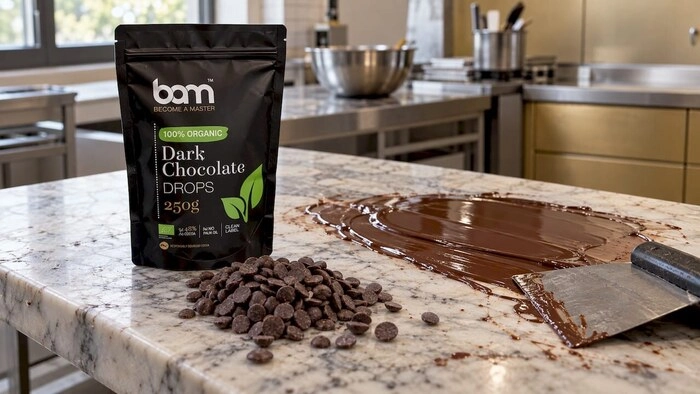
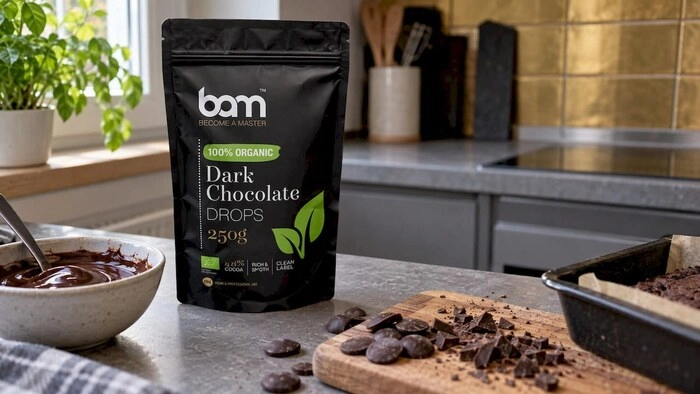
BAM - Become A Master sells the chocolate this guide recommends buying: real bars and pistoles with cocoa butter as the primary fat, not compound blocks with vegetable oil substitutes. That distinction runs through every section above, from shopping cues to ratio charts.
Full-fat dairy cream, usually labelled double or whipping cream depending on where you shop, is the standard choice for ganache. Its fat content, typically above 35%, is what gives ganache its silky mouthfeel and helps it set with structure rather than turning icy or watery. Single cream or half-fat alternatives contain too little fat to emulsify properly with chocolate; the result is often thin and prone to splitting no matter how carefully you heat it.
Temperature control matters as much as the cream itself. Cream heated to a full boil scorches its milk proteins, which can introduce a faintly burnt taste and destabilise the fat structure before it ever meets the chocolate. The right point is just below boiling, when small bubbles form at the edge of the pan but the surface has not broken into a rolling boil. Pouring cream at this temperature gives the chocolate enough heat to melt fully without shocking it into seizing.
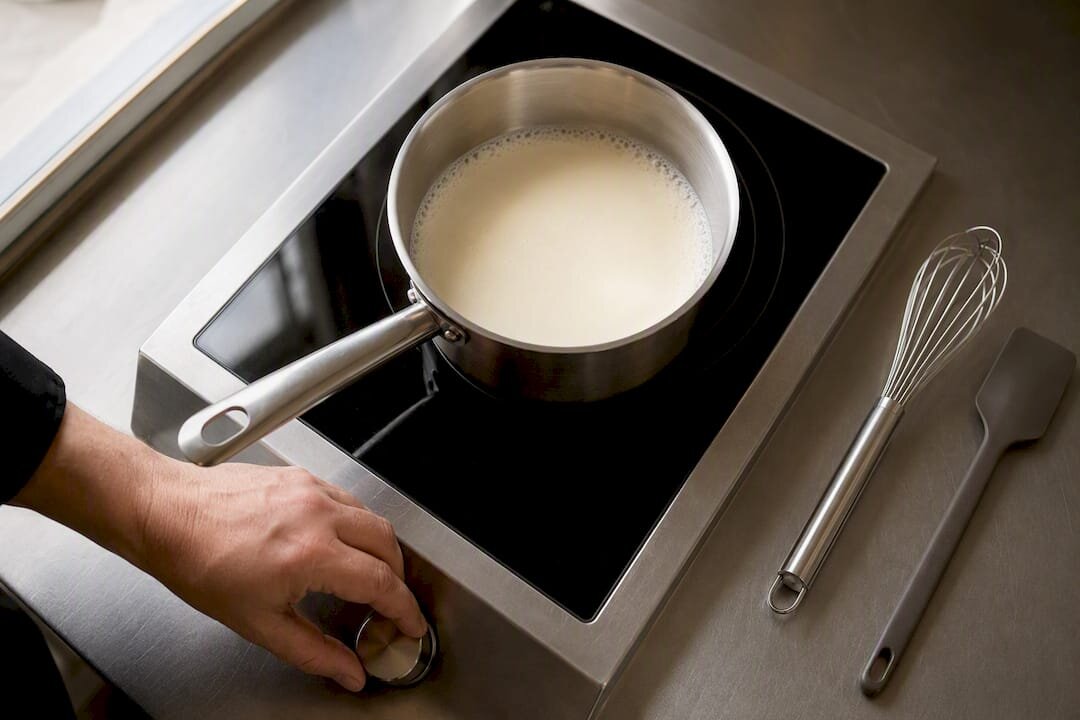
Cold cream, by contrast, will not melt chocolate evenly, no matter how long you stir. If you find yourself adding heat halfway through because the mixture has stalled, you have likely started with cream that was too cool. Bringing cream to temperature gently, in a small saucepan over medium heat rather than blasted on high, gives you more control over that critical just-below-boiling moment. Non-dairy creams behave differently again, often needing extra time and a lower target temperature since their fat content and stability vary far more between brands than dairy cream does.
Ganache shelf life depends heavily on which chocolate went into it, because cocoa percentage and added dairy both affect how quickly bacteria can take hold.
Dark chocolate ganache, thanks to its lower dairy content relative to chocolate solids and higher cocoa percentage, tends to keep longest: typically around one to two weeks refrigerated in an airtight container. Milk and white chocolate ganache carry more dairy and sugar relative to cocoa solids, which shortens safe storage to roughly five to seven days refrigerated, since these bars provide less natural preservation from cocoa solids.
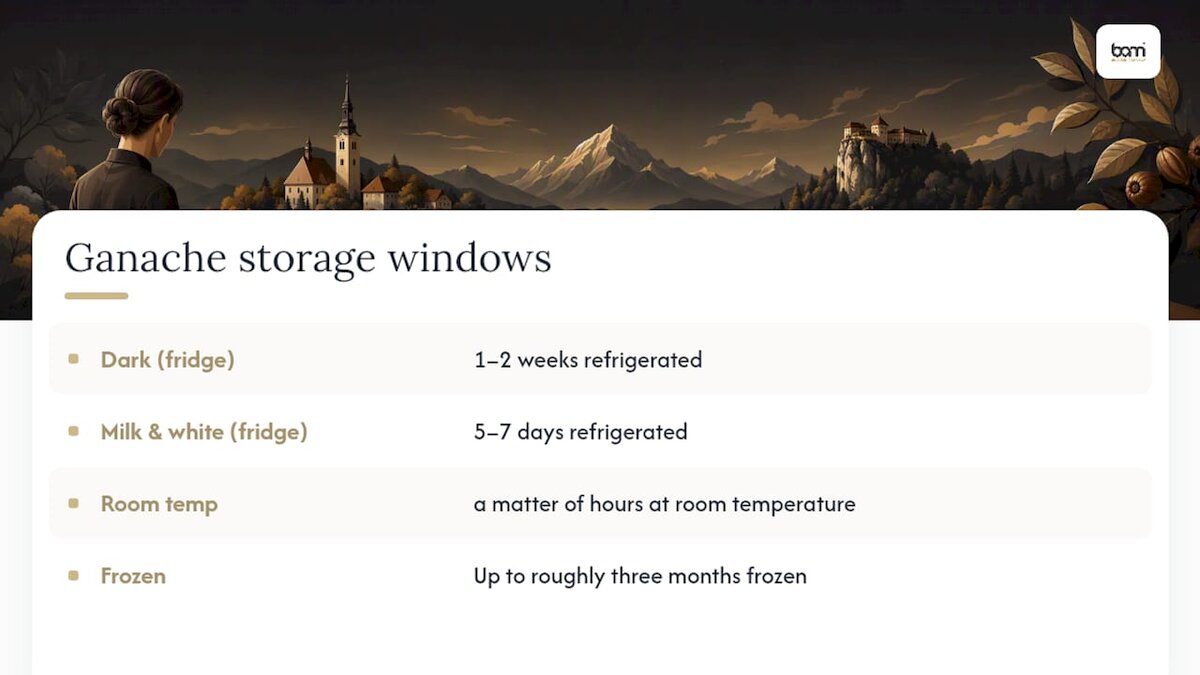
Room temperature storage is only safe for a matter of hours for any ganache, since cream is a dairy product regardless of the chocolate mixed into it. If a finished cake or tart needs to sit out for a party or display, treat that window as short and plan refrigeration either side of it.
Freezing extends life considerably, up to roughly three months for most ganache types, provided it is wrapped tightly to prevent ice crystals and freezer odours from affecting texture. Thaw frozen ganache slowly in the refrigerator rather than at room temperature, then bring it back to a workable consistency with gentle, brief warming rather than a hard reheat, which risks splitting a ganache that has already been through one temperature cycle.
Whatever the chocolate, always store ganache in an airtight container. Cream absorbs other flavours in the fridge readily, and a ganache that has picked up the taste of last night’s onions is not salvageable by any technique in this guide.
Most ganache guides lead with ratios and treat chocolate choice as an afterthought, a line near the bottom about “using good quality chocolate.” That order is backwards. The ratio only works if the chocolate behaves the way the recipe assumes it will, and cheap chips or compound blocks simply do not melt, emulsify, or set the way a proper cocoa butter chocolate does. Get the chocolate right first, and the ratio becomes arithmetic rather than guesswork.
The other overrated piece of advice is treating cocoa percentage as a fixed rule rather than a taste decision. A 70% bar is not automatically “better” than a 55% one; it is firmer and less sweet, which suits a truffle far more than it suits a mild filling for a children’s birthday cake. Match the percentage to the dessert, not to whichever number sounds more impressive on the label.
If there is one thing worth prioritising above all else, it is buying chocolate with cocoa butter listed plainly on the ingredients, from a supplier that sells bars or pistoles rather than pre-shredded chips. Everything else in this guide, ratios included, assumes you have already got that right.
— Andraz
Getting the ratios and technique right only helps if the chocolate in your bowl actually has the cocoa butter to back it up. BAM - Become A Master stocks the bars, pistoles, and higher-percentage dark chocolates this guide recommends, rather than the compound blocks that quietly undermine a good ganache recipe.
A few starting points worth bookmarking: the BAM 70% extra dark chocolate sits right in the balanced range recommended for fillings and truffles. The BAM Basic pastry package bundles chocolate with the basic tools a ganache session needs, useful if you are stocking a kitchen from scratch. For bakers building out a wider filling repertoire, the BAM Confectionery set Creamy fillings covers several ganache-adjacent recipes in one purchase, and the baking accessories range covers thermometers, scales, and other tools referenced throughout this guide.
Browse the range, pick the bar or bundle that matches your next bake, and let the ratios in this guide do the rest.
High-quality dark or semi-sweet bars with cocoa butter as the main fat give the most reliable results. Couverture pistoles from a specialist chocolate supplier are the professional standard because they melt evenly and hold a stable emulsion.
Dark chocolate gives a firmer, richer ganache with more flavour flexibility, while milk chocolate produces a softer, sweeter result that needs less cream in the ratio. Neither is universally “better”; the choice depends on whether you want a firm truffle centre or a soft, mild filling.
Look for white chocolate that lists cocoa butter, not vegetable fat, among its first ingredients, since white chocolate has no cocoa solids and relies entirely on cocoa butter for structure. A specialist bar or pistole, rather than a supermarket baking bar, generally gives a smoother, more stable set at the 4:1 ratio white chocolate typically needs.
Standard baking bars work well for ganache, provided they contain real cocoa butter rather than vegetable fat substitutes. Avoid pre-shredded baking chips where possible, since many are formulated with stabilisers that resist melting as smoothly as a chopped bar or pistole.


 Confectionery tips


 Slovenščina
 Hrvatski
 Deutsch
 Italiano
 Česky
 Polski
 Magyar
 Français
 Slovák
 Nederlands
 Español