 info@bamchocolate.com
  Login
Login 

 en
en 
 BAM Cake converter
  Login
Login Claudia
Avtorica vsebin


 Reading time:
10 minutes
Reading time:
10 minutes 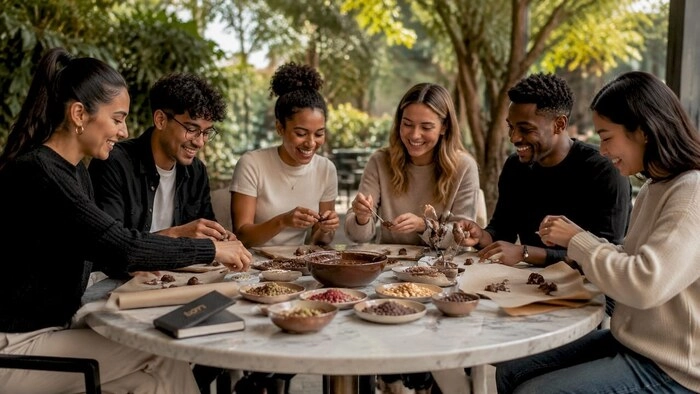
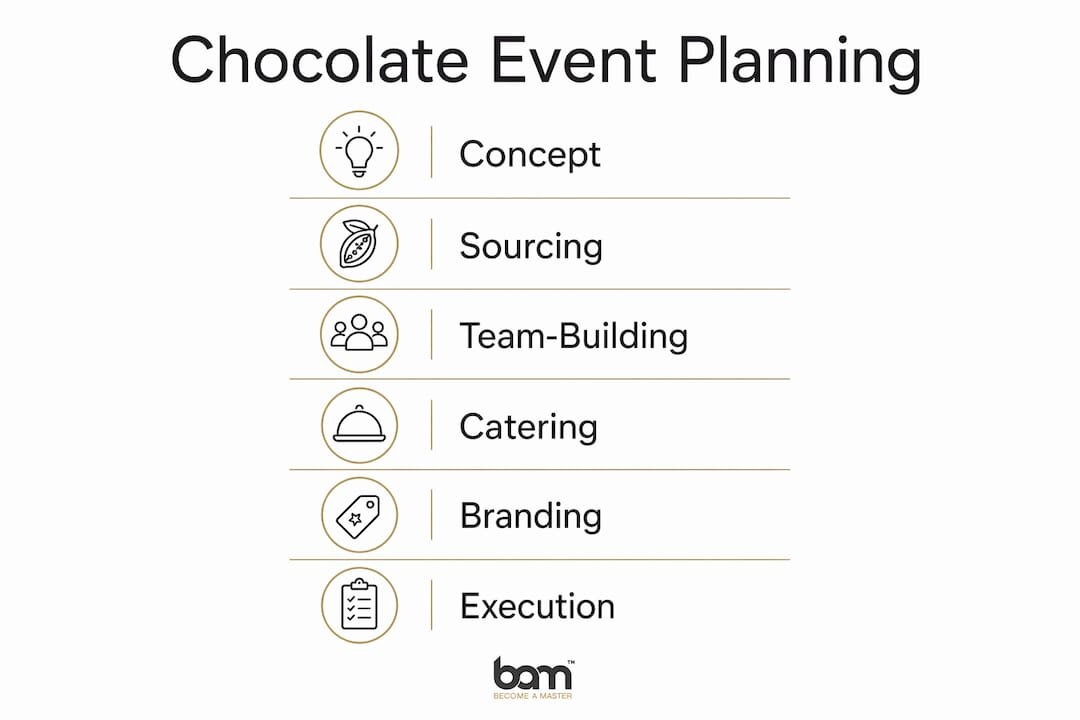
Discover the vital role of chocolate in event planning. Explore creative ideas for 2026 that boost engagement and enhance your event's impact!
TL;DR:
- Chocolate is a versatile tool in event planning, serving as a team-building activity, catering feature, and branded gift that enhances guest engagement and brand recall. Structured workshops promote skills like communication and creativity, while mobile stations and premium packaging elevate catering and gifting experiences. Early booking, proper logistics, and thoughtful customization are key to maximizing chocolate’s impact at corporate events.
Chocolate is the single most versatile ingredient an event planner can deploy, serving simultaneously as a team-building tool, a catering centrepiece, and a branded gift. The role of chocolate in event planning has expanded well beyond dessert tables. Today it drives guest engagement, reinforces corporate identity, and creates the kind of sensory memory that attendees associate with your brand long after the event ends. From Succulent Chocolates workshop formats in Canada to Bamchocolate confectionery bundles used by European corporate buyers, the applications are specific, scalable, and measurable.
Chocolate is the most socially neutral medium available for structured team activities. Chocolate’s universal appeal dissolves hierarchical barriers and encourages natural leadership, creativity, and commercial decision-making in a relaxed context. That matters for event planners because it means you do not need to pre-screen participants for skill level or confidence.
Structured chocolate workshops typically run 60–150 minutes and accommodate 12–100 participants. Basic sessions last around 75 minutes and cover tempering and simple moulding. Advanced formats run to 150 minutes and include ganache-making, truffle rolling, and flavour pairing. Succulent Chocolates, a Canadian specialist, runs Chocolate Sculpture Challenges and Chocolate Bar Masterclasses as competitive formats that mirror real project pressures.
The role of chocolate in team building is not purely social. Naboo, a corporate experience platform, documents workshops lasting 2–3 hours that teach participants about cacao origins, tempering science, and truffle construction. Those three elements map directly onto communication, precision, and creative problem-solving, which are the same competencies most L&D managers are trying to develop.
Key formats to consider for your programme:
Surprise challenges mid-session keep participants engaged and push rapid adaptation. Adding an unexpected constraint, such as a last-minute flavour swap or a structural rule change, prevents teams from settling into comfortable routines. This mirrors real-world project pressure and improves learning transfer back to the workplace.
Pro Tip: Book your chocolate team-building session at least eight weeks in advance if you are targeting Q4. Specialist facilitators fill their calendars quickly from october onwards, and the best operators will not hold a date without a deposit.
Mobile chocolate stations are the fastest-growing catering format at corporate and social events. Mobile hot chocolate carts require early booking with deposits, as demand peaks sharply in autumn and winter. The best operators handle toppings, staffing, and full presentation logistics, which reduces the burden on your in-house team considerably.
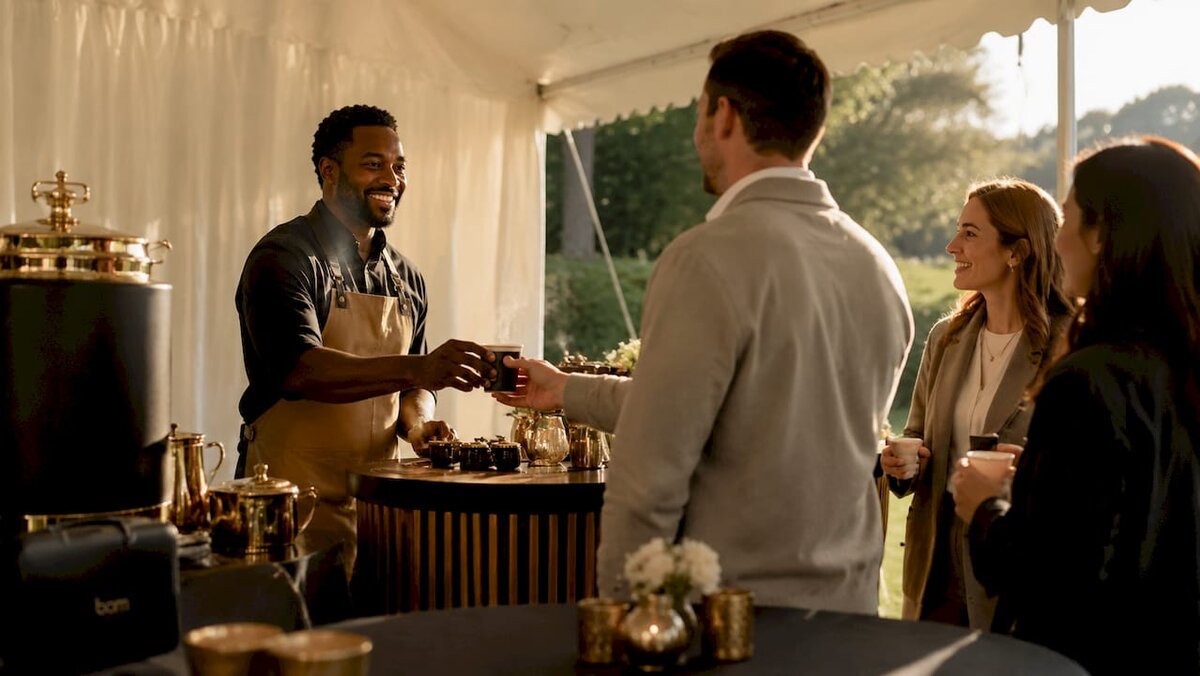
The options extend well beyond hot chocolate. A chocolate café station, for instance, can serve drinking chocolate, chocolate-dipped fruit, and paired biscuits from a single branded counter. This format works particularly well at product launches, award ceremonies, and networking receptions where guests need something to hold and consume while standing.
Site assessments for mobile chocolate catering must include power capacity checks and climate control evaluation. Chocolate degrades quickly above 20°C, and a venue with poor air conditioning or insufficient power sockets will compromise product quality regardless of supplier skill. Always confirm amperage requirements with your caterer before signing the venue contract.
Practical considerations for chocolate catering logistics:
Pro Tip: For outdoor or marquee events, request a dedicated power generator for your chocolate station. Shared power supplies with lighting rigs and AV equipment create voltage fluctuations that affect tempering equipment and ruin product consistency.
The DIY versus professional catering question comes down to scale and risk. For groups under 30, a skilled in-house team using quality ingredients can produce a credible chocolate station. For groups above 50, or for any event where the chocolate element is a primary attraction, professional catering is the lower-risk choice. The event catering planning process for chocolate-focused menus follows the same brief-to-delivery structure as any other catering category, but with tighter temperature controls at every stage.
Custom chocolate packaging is a branding tool, not a wrapping choice. The shift toward luxury custom chocolate boxes aligns with expectations for sophisticated corporate gifts, with branded boxes featuring logos and curated contents that create polished impressions and improve brand recall. That means your chocolate favour is doing marketing work long after the guest leaves the room.
Corporate gifting trends show increased use of personalised chocolate gifts to create memorable client experiences. Data-driven gifting, where recipient preferences inform flavour selection, improves both targeting and client satisfaction. This is now standard practice among premium gifting agencies in London and Amsterdam.
The comparison below shows why presentation tier matters when you are using chocolate favours for events:
| Feature | Standard Chocolate Gift | Premium Branded Box |
|---|---|---|
| Packaging | Generic wrapper or bag | Custom printed rigid box with logo |
| Contents | Single product, fixed flavour | Curated selection, personalised flavours |
| Brand recall | Low | High |
| Perceived value | Low to moderate | High |
| Shelf life consideration | Minimal | Requires temperature guidance insert |
| Suitable for | Casual giveaways | Client gifts, award ceremonies, product launches |
The logistics of perishable gifting add a layer of complexity that standard merchandise does not carry. Chocolate gifts sent by post require insulated packaging between october and march, and temperature-controlled storage at the venue if distributed on the day. Work with your supplier to confirm shelf life and storage requirements before committing to a quantity. Bamchocolate covers chocolate storage guidance in detail, which is worth reviewing before you finalise your gifting brief.
Personalisation at scale is now achievable without prohibitive minimum order quantities. Many premium suppliers accept orders from 50 units upwards for custom-printed boxes. For larger events, consider tiering your gifts: a standard branded bar for general attendees and a curated premium chocolate gift set for VIP guests or speakers.
Supplier evaluation is the most consequential decision in the entire chocolate sourcing process. The right supplier delivers consistent quality, meets your customisation requirements, and communicates clearly on lead times. The wrong one leaves you with a product that does not match your brief or arrives two days late.
A structured sourcing checklist covers the following:
Balancing variety with coherence is a common challenge. A chocolate station with twelve flavour options sounds impressive but creates decision paralysis for guests. Three to five well-chosen flavours, clearly labelled with origin and tasting notes, deliver a better guest experience and a cleaner presentation. The same principle applies to gifting: a curated box of four complementary chocolates outperforms a random assortment of twelve.
Pro Tip: When planning a chocolate-themed event, align your flavour selection with your event theme. A product launch for a brand with Latin American heritage, for instance, pairs naturally with single-origin Colombian or Peruvian cacao.
Seasonal booking is a real constraint. Chocolate suppliers and workshop facilitators experience peak demand from october through december and again in february around Valentine’s Day. If your event falls in these windows, begin supplier conversations at least ten weeks out and secure your booking with a deposit immediately.
Chocolate delivers measurable value across every stage of event planning, from team-building workshops to branded gifting and catering, when sourced and deployed with clear intent.
| Point | Details |
|---|---|
| Team-building formats | Workshops run 60–150 minutes and cover tempering, ganache, and competitive challenges that build real workplace skills. |
| Catering logistics | Site power and temperature checks are non-negotiable before committing to mobile chocolate stations. |
| Premium packaging | Custom branded boxes outperform standard gifts on brand recall and perceived value at corporate events. |
| Sourcing timeline | Custom chocolate orders require 3–4 weeks from artwork approval; book peak-season suppliers ten weeks ahead. |
| Dietary inclusion | Vegan, gluten-free, and sugar-free options are now standard expectations at professional events. |
I have watched event planners treat chocolate as an afterthought for years, and I have watched the same planners regret it when a competitor’s event is the one guests remember. Chocolate is not decoration. It is a participation mechanism.
What I find most underused is the competitive workshop format. Most planners default to collaborative truffle-making because it feels safe. The Chocolate Sculpture Challenge, where teams are judged and a winner is declared, creates a completely different energy in the room. It is the format I recommend to any planner who needs to generate genuine conversation between people who do not know each other.
The other mistake I see consistently is treating gifting as a last-minute line item. A well-chosen chocolate gift with thoughtful packaging and a personalised note costs marginally more than a generic branded pen set and delivers ten times the impression. The trend toward data-driven gifting, where you match flavour profiles to recipient preferences, is not a gimmick. It signals that you paid attention, and that is what clients remember.
The one area I think is genuinely underexplored is pairing. Chocolate with a well-matched drink, whether that is a single-malt Scotch, a natural wine, or a cold-brew coffee, transforms a standard catering moment into a tasting experience. It requires almost no additional budget and gives guests something specific to talk about. That conversation is the event planner’s real product.
— Andraz
Bamchocolate supplies everything event planners need to build a credible chocolate programme, from individual baking accessories to large-scale confectionery bundles. The BAM Large Confectionery Bundle covers diverse product formats suited to catering at scale, while the BAM Basic pastry package gives smaller events a clean, professional starting point. For planners building a workshop or tasting station, the baking accessories range includes the tools needed for tempering and presentation work. All products are available for direct order with clear lead times, making procurement straightforward for both one-off events and recurring programmes.
Chocolate functions as a team-building tool, catering centrepiece, and branded gift at corporate and social events. Its universal appeal makes it effective across audience types and event formats.
Workshops run 60–150 minutes, with basic sessions at 75 minutes and advanced formats reaching 150 minutes. Group sizes typically range from 12 to 100 participants.
Power capacity and ambient temperature are the two critical factors. Temperature and equipment checks must be completed during the site assessment to prevent product degradation on the day.
Book specialist chocolate suppliers and workshop facilitators at least eight to ten weeks before your event. Peak demand runs from october through december, and most operators require a deposit to hold a date.
Yes. Custom chocolate packaging with branded boxes and curated contents delivers higher brand recall and perceived value than standard gifts, making the additional spend justifiable for client-facing events.


 Confectionery tips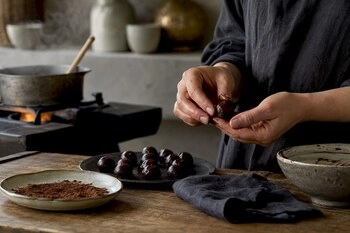


 Slovenščina
 Hrvatski
 Deutsch
 Italiano
 Česky
Česky
 Polski
 Magyar
 Français
 Slovák
 Nederlands
 Español