 info@bamchocolate.com
 Login


 en

 BAM Cake converter
 Login
Claudia
Avtorica vsebin


 Reading time:
10 minutes
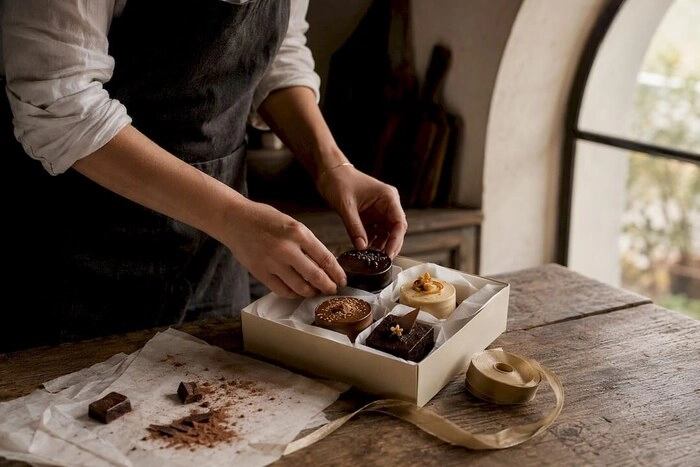
Learn to personalize dessert boxes for any event! Follow our simple guide on guest profiles, dietary needs, and logistics for perfect treats.
Personalise event dessert boxes by working through five layers in order: guest profile, dietary needs, flavour mix, presentation, and finally logistics. Get the first two right and the rest becomes straightforward, whether you’re assembling forty boxes on a Saturday morning or briefing BAM – Become A Master for a corporate order of five hundred.
Before you touch a single ribbon or truffle, settle these:
Pro Tip: If you can’t answer all three within five minutes, stop planning contents and fix your guest list data first. Everything downstream depends on it.
Personalising event dessert boxes works best when guest profile and dietary needs are settled before flavours or packaging are chosen.
| Point | Details |
|---|---|
| Decide route early | Choose DIY under 50 guests with two weeks’ notice; use a supplier for larger or dietary-complex events. |
| Limit box types | Stick to 3 to 5 distinct box variants to balance variety against packing complexity. |
| Portion by role | Use one box per guest as the main dessert, or 3 to 4 pieces per guest for a buffet spread. |
| Label allergens clearly | Mark boxes with V, VG, GF, or NF icons placed on top, not buried under tissue. |
| Order through Bamchocolate | Bamchocolate’s confectionery sets and corporate bundles simplify sourcing dietary-friendly, gourmet-grade contents. |
The DIY versus supplier decision usually comes down to three numbers: guest count, lead time, and the complexity of your dietary requirements. Under fifty guests with two weeks’ notice and no severe allergies, a small assembly team can manage it comfortably. Above that, or with a corporate deadline that can’t slip, supplier ordering removes the risk.
Lock these basics before choosing a route:
As a rule of thumb, corporate events with strict dietary controls, guest counts over 150, or delivery windows under 48 hours are better handed to a supplier than assembled in-house.
Flavour balance matters more than variety. Four items per box tends to outperform eight, because guests notice contrast, not quantity: one classic (a dark chocolate truffle), one bright or fruit-forward piece, one textural item with crunch, and one signature chocolate that anchors the box. Glint Events recommends offering petit, individual portions to increase variety while keeping waste low, which is exactly what a well-balanced box achieves without needing ten different desserts.
Portioning follows two simple rules depending on the box’s role. If the box is the primary dessert, plan on one box per guest with 2 to 3 bite-sized items or 1 to 2 larger portions inside. If it’s part of a wider buffet or favour table, 3 to 4 pieces per guest works well, rising to five for a more indulgent event.
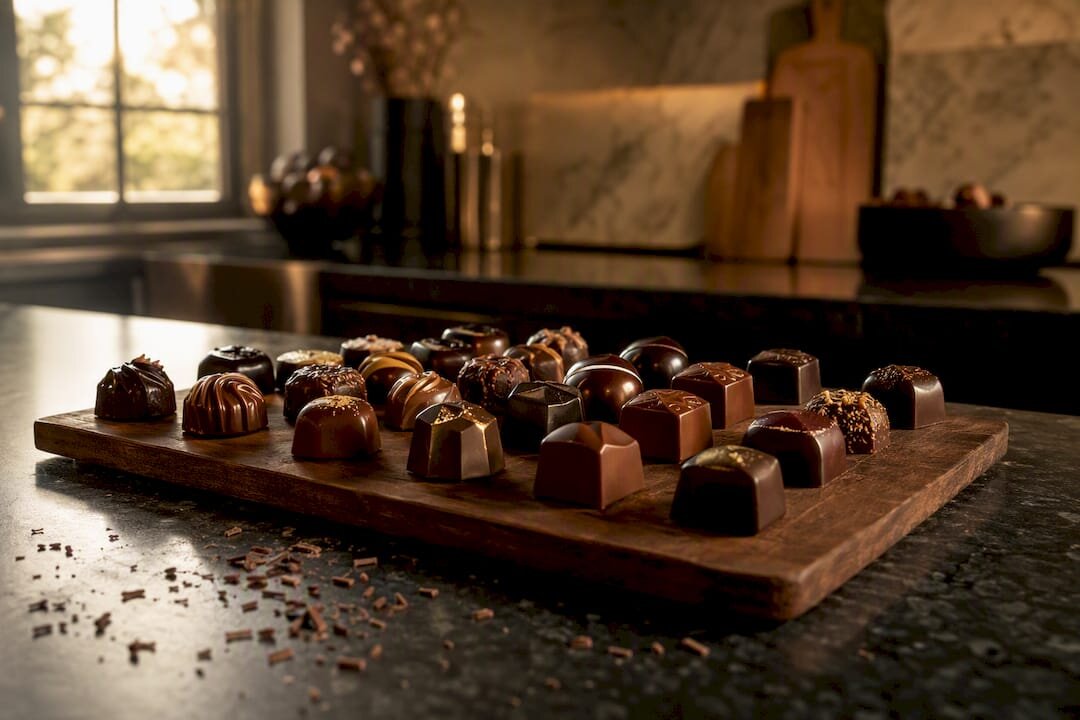
On dietary alternatives, resist the urge to create a bespoke box for every restriction. Build a base box that’s naturally vegan or gluten-free where the recipe allows, then swap one or two components rather than redesigning the whole set. Limiting yourself to 3 to 5 distinct box types keeps packing manageable while guests still perceive plenty of choice.
Sample structures that work well in practice:
Pro Tip: Order slightly more boxes than your headcount to account for extras. It covers last-minute guests and gives you a spare to check quality on the morning of the event.
You don’t need custom-printed packaging to make a box feel personal. A short printed name tag, a folded message card, or a small allergen icon tucked inside does the work, and it’s far cheaper than structural redesign.
What fits comfortably inside a standard box:
Keep wording restrained. A corporate box with “Thank you for a great year” reads warmer than a logo-heavy insert, and it costs nothing extra to print. Simpler in-box messaging paired with high-quality product choices tends to deliver better return than heavy branding, particularly at scale where every added element multiplies across hundreds of units.
For temperature-sensitive fillings, add a thin parchment layer between items and consider a small cold pack if the box will sit in transit for more than an hour. Dietary labelling should follow the same clarity rule caterers use: mark allergens with icons and short text so staff and guests can identify safe items instantly.
Pro Tip: Place the allergen card on top, not buried under the tissue paper. Nobody checks for nut warnings after they’ve already opened the box.
Whichever route you choose, the accuracy of your brief or your assembly plan determines whether the event day goes smoothly.
A supplier brief should include:
For DIY assembly, plan backwards from the event:
Costs shift most with custom inserts, dietary substitutions, and cold-chain delivery. Bulk orders through a supplier like BAM’s large confectionery bundle usually bring the per-box price down compared with piecing together small retail purchases. Whichever route you take, run a small pilot batch first. Tasting and a written sign-off before the full run catches problems while they’re still cheap to fix.
Pro Tip: Never approve a full corporate order without tasting the pilot batch yourself. Photos don’t tell you if the ganache has set properly.
Shelf life depends entirely on filling type. Ganache-based chocolates typically hold at room temperature for a few days if kept away from heat and direct sunlight, while cream-filled or fresh fruit items need refrigeration and should ideally be consumed within 24 to 48 hours of assembly.
Practical transport and labelling rules:
BAM’s own guidance on extending the shelf life of homemade cakes is a useful reference point if you’re baking components yourself rather than sourcing pre-made confections. As a rule of thumb, if any item contains fresh cream or cut fruit, ask your supplier to ship on the event day itself rather than the day before.
Pro Tip: Chocolate that’s been stored below 18°C can develop a dull, greyish “bloom” on the surface. It’s harmless to eat but looks unappealing, so let boxes return to room temperature before final presentation.
Presentation is where a well-made box either looks like an afterthought or looks considered, as shown by these vibrant food presentations that can inspire your styling choices. Matching your dessert style and colour palette to the event theme, and keeping items easy to lift without smearing, does more for perceived value than expensive packaging ever will.
Quick wins that cost almost nothing extra:
Before sealing any box, run through a five-point check: correct portion count, allergen label visible, no melted or shifted items, consistent arrangement across all boxes, and lid closes without crushing contents.
Pro Tip: Take a photo of your first perfectly finished box and pin it at the packing station. It keeps everyone assembling to the same standard when you’re doing dozens.
Run through this sequence from planning to delivery:
Supplier brief template:Event: [date, time, venue] · Guest count: [total, broken down by dietary need] · Contents: [flavour brief or “supplier’s seasonal selection”] · Packing: [messaging, labelling, protective requirements] · Delivery window: [time] · Contact: [name, phone]
DIY assembly schedule template:Day minus 2: confirm numbers · Day minus 1: bake/receive and stage · Morning of: pack, label, inspect · Two hours before: transport or set up
Working alongside home bakers and corporate buyers day to day shows a consistent pattern: the boxes that go wrong aren’t the ones with ambitious flavours, they’re the ones where dietary counts arrived too late or labelling got skipped under time pressure. Following clear allergen labelling and confirming counts early with your supplier removes most of the risk before it starts.
There are DIY routes and there are generic party-supply shops, but neither gives you gourmet-grade confectionery with dietary-friendly options built in from the start. Bamchocolate supplies curated confectionery sets, sugar-free and protein-rich alternatives, and corporate packages designed specifically for events like yours, so you’re not stitching together components from three different retailers under deadline pressure.
For smaller runs or sample tastings, the Basic pastry package gives you a manageable starting bundle to test flavours before committing to a full corporate order. For larger events, the large confectionery bundle is built for volume without sacrificing consistency across boxes. If your box calls for something indulgent, the creamy fillings set works well for VIP tables, and the Gift Corner has curated combinations ready to adapt.
Request a corporate brief or order a sample box directly through Bamchocolate to see how the flavour balance and dietary options work before your event date locks in.
Order one box per guest if it’s the primary dessert, or plan for 3 to 4 pieces per guest if boxes are part of a wider buffet spread.
Build a base box that’s naturally compliant where possible, then swap one or two components for vegan or gluten-free versions rather than designing a separate box for each restriction.
A printed name tag, a short message card, and a clear allergen icon achieve most of the personal touch that structural box printing would, at a fraction of the cost.
Assemble DIY for smaller, simpler events with enough lead time; use a supplier like Bamchocolate for large corporate orders, tight deadlines, or strict dietary controls.
Confirm guest numbers and dietary counts at least two days before assembly or delivery, and always run a pilot batch before committing to the full order.


 Confectionery tips


 Slovenščina
 Hrvatski
 Deutsch
 Italiano
 Česky
 Polski
 Magyar
 Français
 Slovák
 Nederlands
 Español