 info@bamchocolate.com
  Login
Login 

 en
en 
 BAM Cake converter
  Login
Login Claudia
Avtorica vsebin


 Reading time:
10 minutes
Reading time:
10 minutes 
Discover what is keto-friendly chocolate and how to choose delicious, low-carb options that fit your ketogenic diet without sacrificing taste.
Keto-friendly chocolate is chocolate formulated to contain minimal net carbohydrates, achieved through a high cocoa content and the use of low-glycaemic sweeteners instead of sugar. The ketogenic diet restricts daily carbohydrate intake to roughly 20–25g of net carbs, so standard milk or white chocolate, loaded with sugar, is off the table entirely.
The defining characteristics are straightforward:
Bamchocolate stocks a curated range of gourmet and keto-specialist chocolates that meet these criteria, making it a practical starting point for UK shoppers navigating this category.
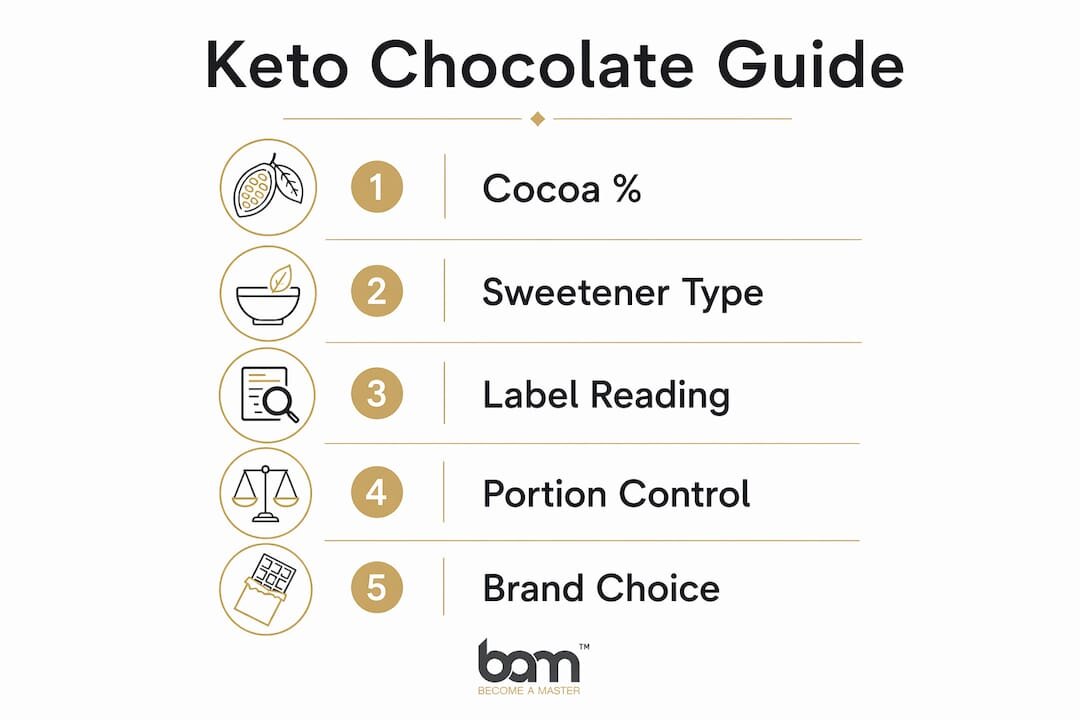
Choosing the right chocolate for a ketogenic diet comes down to three things: cocoa percentage, sweetener type, and label literacy.
A minimum of 70% cocoa solids is the widely accepted threshold, but the higher the percentage, the lower the sugar content tends to be. At 70–85%, dark chocolate contains around 10g of net carbs per 28g serving. That single serving can account for up to 40% of a strict daily 25g carb allowance, so portion discipline is not optional.

Not all sugar-free labels are equal. Maltitol causes blood sugar spikes and digestive upset comparable to regular sugar, yet it appears in many products marketed as sugar-free. The sweeteners that genuinely suit keto are erythritol, monk fruit, allulose, and stevia, all of which have minimal impact on blood glucose and insulin.

| Sweetener | Glycaemic impact | Suitable for keto? |
|---|---|---|
| Erythritol | Negligible | Yes |
| Monk fruit | Negligible | Yes |
| Allulose | Very low | Yes |
| Stevia | Negligible | Yes |
| Maltitol | Moderate to high | No |
| Maltodextrin | High | No |
| Sucralose | Low to moderate | Use with caution |
Total carbohydrates on a UK nutrition label include fibre and sugar alcohols. To calculate net carbs from labels, subtract dietary fibre and any erythritol listed. The resulting figure is what actually matters for ketosis. A bar showing 20g total carbs but 12g fibre and 6g erythritol has just 2g net carbs per serving.
Pro Tip: Pre-portion your chocolate as soon as you open a bar. Breaking off a single square and resealing the rest removes the temptation to keep going, keeping your net carb count accurate.
Several distinct formats of keto-compatible chocolate are available to UK shoppers, each suited to different uses.
Bamchocolate offers baking chips, squares, and gourmet bars suited to keto baking, with clear ingredient information to help you verify net carb counts before buying. For those who enjoy the craft side of chocolate making, a quality truffle knife and brush is a useful tool when working with high-cocoa couverture at home.
For guidance on choosing quality chocolate beyond just the keto angle, cocoa origin, processing method, and conching time all affect flavour in ways that matter once your palate adjusts to less sweetness.
Pro Tip: When shopping in UK supermarkets, flip the bar over and check the sugar alcohol section. If maltitol appears before erythritol in the ingredients list, put it back.
Confusion around keto chocolate tends to cluster around the same few topics: which brands work, how much is safe, and how to spot misleading labels.
Dark chocolate with 70% cocoa or above is generally compatible, provided the sugar content is low. Dedicated keto bars sweetened with erythritol or monk fruit are the safest choice because their net carb counts are formulated specifically for low-carb diets.
Standard milk chocolate is not suitable. It contains high levels of added sugar and milk solids that push net carbs well beyond what a ketogenic diet allows per serving. Some specialist brands produce milk-style keto chocolate using erythritol and added cocoa butter, but these are the exception rather than the rule.
One small serving of 20–28g of a genuinely keto-compatible bar is typically manageable within daily carb limits, but this depends on your total daily intake. With standard 70–85% dark chocolate sitting at around 10g net carbs per 28g, most people on strict keto keep portions to 10–15g.
Fat adaptation, the metabolic state reached after several weeks on a ketogenic diet, does more than shift your body’s fuel source. It recalibrates your palate. Sweetness receptors become more sensitive, so foods that once tasted pleasantly sweet can start to feel cloying, while the deep, slightly bitter complexity of high-cocoa chocolate becomes genuinely satisfying rather than austere.
Long-term keto followers consistently report preferring 90%+ dark chocolate once fully fat-adapted, often finding that bars they initially found too bitter become their preferred option within a few months. This shift has a practical upside: 90%+ bars typically contain the fewest net carbs of any commercially available chocolate.
Artisanal, minimally processed bars reward this adapted palate most. Single-origin cacao from regions such as Ecuador or Madagascar carries distinct flavour notes, from fruity to earthy, that only become apparent when sweetness is not masking them. Homemade keto chocolate, made from raw cacao butter and powdered monk fruit or allulose, can yield bars with as little as 2g net carbs and full ingredient control.
Pro Tip: A small pinch of flaked sea salt on a square of 90% dark chocolate amplifies the cacao flavour and softens perceived bitterness without adding any carbs.
High-cocoa keto chocolate carries a genuinely useful nutritional profile. Cocoa is a source of flavanols, compounds studied for their association with cardiovascular health markers including blood pressure and endothelial function. It also provides magnesium, iron, and zinc, minerals that keto dieters sometimes under-consume when cutting out grains and legumes. The high fat content from cocoa butter aligns well with ketogenic macros, contributing to satiety without a carbohydrate cost.
The drawbacks are real, though. Even keto-formulated bars are calorie-dense, and the fat content means that overconsumption adds up quickly. Some people experience digestive discomfort from sugar alcohols, particularly erythritol in large quantities, though it is generally better tolerated than maltitol. Caffeine and theobromine in cocoa can also affect sleep if consumed late in the day.
Keto chocolate works best as a planned inclusion rather than an impulse snack. A few practical approaches:
The LCHF (low-carb, high-fat) approach to chocolate consumption is covered in more depth in Bamchocolate’s LCHF diet and chocolate guide, which outlines which ingredients to seek and which to avoid.
The sweetener used in a keto chocolate product determines its actual suitability for ketosis, regardless of what the front of the packet claims.
Erythritol is the most common choice. It provides about 70% of the sweetness of sugar, has a negligible glycaemic index, and is largely excreted unchanged by the body. At high doses it can cause a cooling sensation and mild digestive discomfort in sensitive individuals.
Monk fruit extract contributes intense sweetness from mogrosides rather than carbohydrates. It has no known glycaemic impact and is often blended with erythritol to balance flavour. Products using this combination typically achieve 1–4g net carbs per serving.
Allulose behaves similarly to sugar in cooking, making it particularly useful in baked keto chocolate recipes. It has a very low caloric value and does not raise blood glucose.
Stevia is derived from the Stevia rebaudiana plant and carries zero carbohydrates. Its slightly bitter aftertaste means it is usually blended with erythritol in chocolate rather than used alone.
For a deeper look at how these options compare, Bamchocolate’s guide to healthy sugar substitutes covers the practical differences in flavour, baking behaviour, and digestive tolerance.
Bamchocolate (BAM, Become A Master) stocks a focused range of gourmet chocolates and baking ingredients suited to ketogenic eating, with clear product information so you can verify net carb counts without guesswork. The range covers high-cocoa bars, sugar-free baking chips, and specialist baking accessories, all available from a single UK-accessible platform.
For those ready to bake, the BAM baking accessories range includes everything needed to work with high-cocoa couverture at home. The 101 BAM pastry recipe book offers a practical collection of dessert recipes built around BAM’s chocolate products, including options suited to low-carb diets. Browse the full range at bamchocolate.com to find the products that fit your keto plan.
Keto-friendly chocolate must contain 70% or more cocoa solids, use low-glycaemic sweeteners such as erythritol or monk fruit, and deliver low net carbs per serving to support ketosis.
| Point | Details |
|---|---|
| Cocoa percentage matters | Choose bars with 70% cocoa or above; 85–100% delivers the lowest net carb counts. |
| Sweetener choice is critical | Erythritol, monk fruit, allulose, and stevia are keto-safe; maltitol and maltodextrin are not. |
| Portion control is non-negotiable | A serving of high cocoa dark chocolate contains a net carb amount that can be a considerable part of a strict daily limit. |
| Label reading is a skill | Subtract fibre and erythritol from total carbs to find the net carb figure that affects ketosis. |
| Bamchocolate for UK shoppers | Bamchocolate offers gourmet keto-compatible chocolates and baking ingredients with clear nutritional information. |
Dark chocolate with at least 70% cocoa solids is generally suitable, particularly bars sweetened with erythritol or monk fruit that deliver 1–4g net carbs per serving. Avoid anything containing maltitol or added sugar.
Standard Cadbury products contain high levels of added sugar and are not keto-compatible. No mainstream Cadbury bar currently meets the low net carb threshold required for a ketogenic diet.
Lindt 90% Excellence is one of the more accessible high-street options for keto dieters in the UK, with a low sugar content per serving. Check the label for net carbs and keep portions to 10–15g to stay within daily limits.
Yes, provided it is a genuinely keto-compatible bar and the serving is small (roughly 10–15g). One square of 85–90% dark chocolate or a dedicated keto bar sweetened with erythritol fits within most daily carb budgets without disrupting ketosis.



 Confectionery tips



 Slovenščina
 Hrvatski
 Deutsch
 Italiano
 Česky
Česky
 Polski
 Magyar
 Français
 Slovák
 Nederlands
 Español