 info@bamchocolate.com
 Login


 en

 BAM Cake converter
 Login
Claudia
Avtorica vsebin


 Reading time:
10 minutes
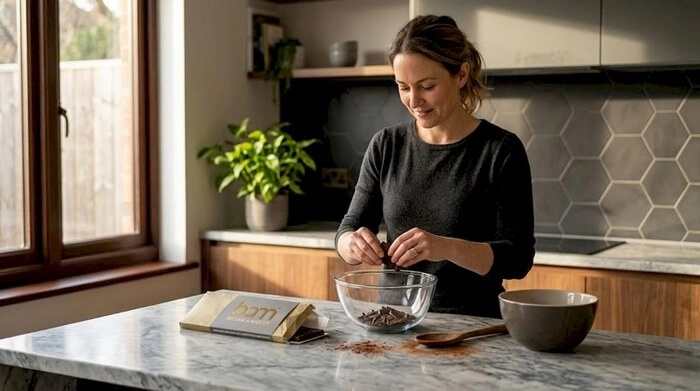
Discover the art of baking with sugar-free chocolate! Our complete guide reveals tips, recipes, and techniques for delicious low-sugar desserts.
TL;DR:
- Baking with high-quality sugar-free chocolate provides rich flavor and good structure without added sugar. Proper adjustments in leavening, baking temperature, and melting techniques ensure successful low-sugar chocolate desserts. Accepting the unique qualities of sugar substitutes and choosing the right ingredients can produce delicious, foolproof treats.
Craving rich, fudgy chocolate desserts but watching your sugar intake? Baking with sugar-free chocolate gives you both. This guide covers everything you need: which chocolates to choose, how to adjust your techniques, and how to troubleshoot the most common problems. Whether you are making a sugar-free chocolate cake for a special occasion or just want a batch of sugar-free cookie recipes to keep in the tin, the same core principles apply. Get these right, and nobody will guess your bakes are low in sugar.
| Point | Details |
|---|---|
| Choose quality chocolate | High-quality sugar-free chocolate is the single biggest factor in flavour and structure. |
| Adjust your leavening | Sugar-free sweeteners do not aerate like sugar, so you need to compensate with extra raising agents or eggs. |
| Bake low and slow | Lower oven temperatures retain moisture and prevent the dry edges common in sugar-free bakes. |
| Judge doneness by texture | Sugar-free bakes lack caramelisation, so rely on set edges and cooling time rather than colour. |
| Melt with care | Use short 30-second bursts when melting to avoid graininess or seizing in your chocolate. |
Getting the right ingredients on your worktop before you start is half the battle. Sugar-free chocolate comes in several forms, and understanding the differences matters.
Types of sugar-free chocolate to know:
Not all sugar substitutes behave the same in a recipe. Granulated monk fruit blends best replicate sugar’s physical properties for baking, making them the preferred choice when a recipe calls for added sweetener alongside your chocolate. For a deeper look at sugar alternatives, Bamchocolate’s article on SugarSweet is worth reading before you shop.
Supporting ingredients you will need:
Useful tools:
| Ingredient | Role in sugar-free baking |
|---|---|
| Almond flour | Adds structure and moisture without sugar |
| Erythritol or monk fruit | Sweetness without affecting blood sugar |
| Extra eggs | Replaces bulk and binding lost without sugar |
| Coconut oil | Improves mouthfeel and moisture retention |
| Baking powder | Compensates for reduced aeration from sweetener |
Pro Tip: When choosing your chocolate, check the label for cocoa content and sweetener type before buying. A bar sweetened with erythritol and containing at least 60% cocoa will give you the most consistent results across different sugar-free baking recipes.
A standard sugar-free chocolate cake takes under an hour from start to finish. Typical bake times run 20 to 25 minutes for a standard round tin at 170°C fan.
Sugar-free cookie recipes follow a reliable pattern once you understand the ratio. Successful batches use a 3:1 dry to wet ratio and bake for 9 to 11 minutes at 180°C (equivalent to 350°F).
No-bake options are the quickest way into sugar-free chocolate desserts. For a truffle or fridge cake to set properly, chocolate with approximately 60% cocoa content is the minimum you should use. Lower cocoa content means more added fat to compensate for the lack of cocoa butter, which affects both texture and flavour.
A simple no-bake base: melt sugar-free dark chocolate with coconut cream, stir in crushed nuts or oat biscuits, press into a tin, and refrigerate for at least two hours. The result is dense, rich, and genuinely satisfying.
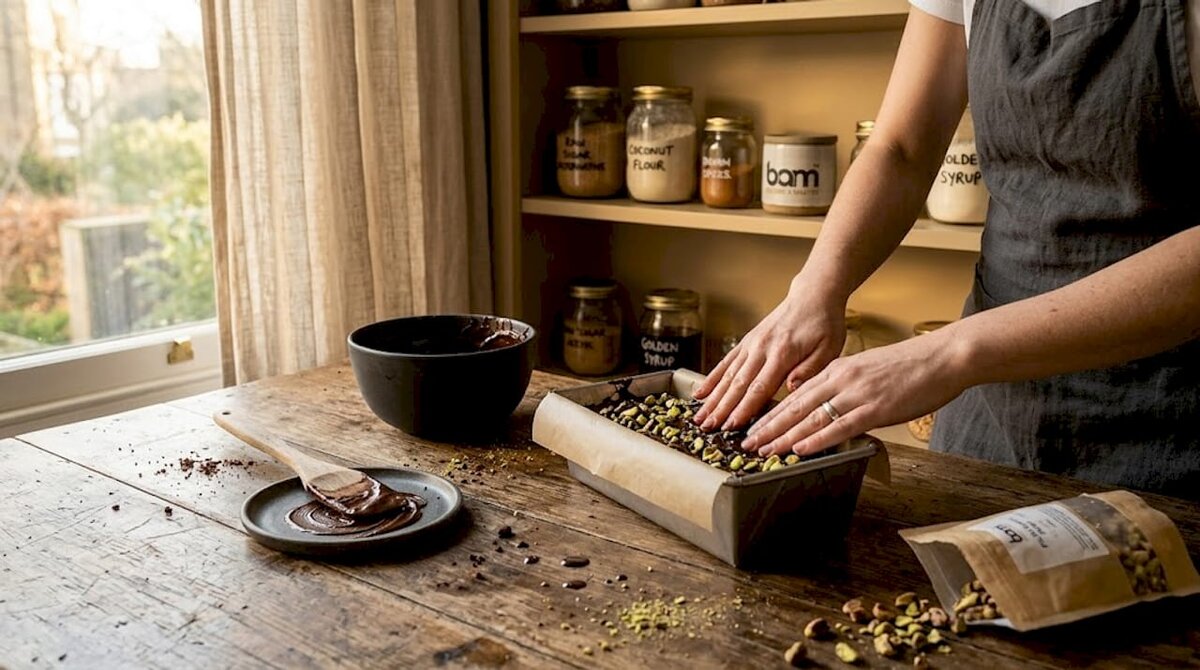
Most problems in sugar-free baking trace back to one root cause: sugar-free sweeteners do not provide structural lightness or aeration the way sugar does. Once you accept that, the fixes become logical.
Common issues and solutions:
| Problem | Likely cause | Fix |
|---|---|---|
| Dry, crumbly texture | Insufficient fat or eggs | Add extra egg yolk or one tbsp coconut oil |
| Gritty sweetener finish | Coarse granulated erythritol | Switch to powdered erythritol or monk fruit |
| Seized chocolate | Overheating during melting | Use 30-second bursts, stir between each |
| Flat cookies | Dough too warm | Chill dough for at least 20 minutes |
| Pale, soft appearance | No caramelisation from sugar | Test with skewer; cool fully before cutting |
Pro Tip: Always rest your sugar-free cakes and cookies for at least 15 minutes after baking before cutting. Sugar provides bulk and moisture that sugar-free bakes compensate for through fats and eggs, and those ingredients need time to set properly.
For more on temperature control when working with chocolate, the Bamchocolate guide on tempering chocolate covers the principles clearly.
Getting the texture right is step one. Getting the flavour right is what makes people ask for seconds. Sugar does more than sweeten. It carries and amplifies flavour. Without it, you need to work a little harder to build depth.
Flavour additions that work well:
Combining high-quality sugar-free chocolate with natural fats like coconut cream improves mouthfeel significantly. This is the technique behind most good sugar-free ganaches and frostings. Use full-fat coconut cream, warm it gently, and pour it over chopped sugar-free chocolate. Stir until smooth. The result is a glossy, rich ganache that sets beautifully and works as a cake topping, cookie sandwich filling, or truffle coating.
For coatings and decorations, look at which chocolate to choose for baking to match cocoa percentages to your intended use. A 70% bar works well for ganache. A 60% chip is better for folding into cookie dough. Knowing the difference saves you a failed batch.
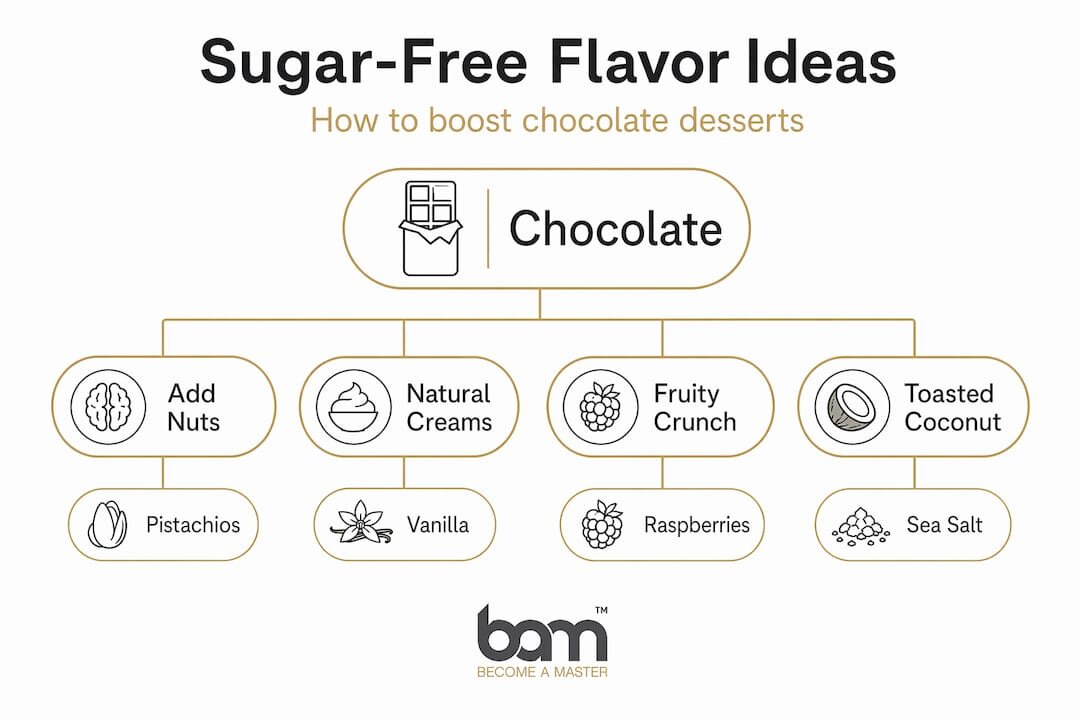
You can also add texture through toppings: crushed freeze-dried raspberries, toasted coconut flakes, or chopped pistachios all complement sugar-free chocolate without adding refined sugar.
I spent a long time assuming sugar-free baking was a compromise. You would get something that tasted “almost” like the real thing but never quite landed. I was wrong, and the reason I was wrong is that I was using mediocre chocolate.
The first time I used a genuinely high-quality sugar-free dark chocolate in a cake batter, the result was noticeably different. Richer, more complex, and with a proper fudgy texture. The chocolate itself was doing the heavy lifting that I had been trying to achieve through technique adjustments alone.
What I have learned is that the rules of good baking still apply. Do not rush the melting. Do not skip the cooling time. Do not assume a pale top means an underbaked centre. These are the same principles that apply to any good chocolate bake, just with slightly more attention to fat content and sweetener choice.
My personal favourite is a simple sugar-free chocolate truffle cake: dark chocolate, coconut cream, eggs, and a small amount of almond flour. No fuss. The antioxidant profile of sugar-free dark chocolate is a genuine bonus, but honestly, the flavour is reason enough.
If you are just starting out, do not try to replicate a standard recipe by swapping sugar for sweetener and hoping for the best. Start with a recipe written specifically for sugar-free baking. Get comfortable with how the dough and batter feel. Then start experimenting. The learning curve is short, and the results are worth it.
— Andraz
Bamchocolate stocks a focused range of products designed for exactly this kind of baking. The baking accessories range includes additives and tools that make sugar-free chocolate baking more consistent and less guesswork. If you want a structured starting point, the 101 BAM pastry recipe collection includes sugar-free chocolate recipes with clear instructions and ingredient guidance for home bakers at every level.
For those who want to go further, the BAM Confectionery set Sinless desserts brings together the key ingredients for guilt-free chocolate baking in one package. Quality ingredients make a measurable difference in sugar-free baking. Starting with the right products removes the most common source of failure before you even switch the oven on.
Dark sugar-free chocolate with at least 60 to 70% cocoa content, sweetened with erythritol or monk fruit, gives the most consistent results. High cocoa content provides structure, flavour depth, and reliable melting behaviour.
Sugar-free baked goods do not caramelise, so they stay pale even when fully cooked. Test with a skewer and allow cookies to cool completely on the tray before judging doneness.
Yes, in most recipes you can substitute directly by weight. You may need to adjust sweetener levels and add a small amount of extra fat to compensate for the difference in mouthfeel.
Melt in 30-second microwave bursts and stir between each one. Avoid any contact with water, and do not overheat. Sugar-free chocolate containing erythritol or maltitol is particularly sensitive to high temperatures.
Not necessarily longer, but at a lower temperature. Baking at 160 to 170°C rather than the standard 180°C retains moisture and prevents the dry edges that are common in sugar-free cakes. Typical bake times remain around 20 to 25 minutes for a standard round tin.


 Chocolate novelties


 Slovenščina
 Hrvatski
 Deutsch
 Italiano
 Česky
 Polski
 Magyar
 Français
 Slovák
 Nederlands
 Español