 info@bamchocolate.com
  Login
Login 

 en
en 
 BAM Cake converter
  Login
Login Claudia
Avtorica vsebin


 Reading time:
11 minutes
Reading time:
11 minutes 
Discover the ultimate healthy baking alternatives list! Find easy swaps to reduce calories and boost nutrition in your favorite recipes.
TL;DR:
- Healthy baking alternatives involve ingredient substitutions that lower calories, saturated fats, and refined sugars while increasing beneficial nutrients. Using options like applesauce, Greek yogurt, or flax eggs can improve treats’ healthfulness without sacrificing taste, especially when combined thoughtfully with adjustments in ratios and baking conditions. Partial ingredient swaps and careful recipe modifications often yield better results than full replacements, making healthier baking both feasible and enjoyable.
Healthy baking alternatives are ingredient substitutions that reduce calories, saturated fat, or refined sugar while boosting nutrients like fibre, protein, and healthy fats. Swaps such as unsweetened applesauce, flax eggs, and coconut sugar are not fringe ideas. They are well-tested techniques used by nutritionists and home bakers alike to produce treats that taste good and do more for your body. This article covers the best substitutes for healthy baking across four key ingredient categories: fats, sugars, eggs, and flours, with exact ratios and practical tips for each.
Fat is the ingredient home bakers most often want to reduce, and the options here are genuinely good. Unsweetened applesauce replaces butter or oil at a 1:1 ratio, cutting saturated fat and calories while keeping your bake moist. The trade-off is a denser crumb, which suits muffins and quick breads far better than a delicate sponge cake.
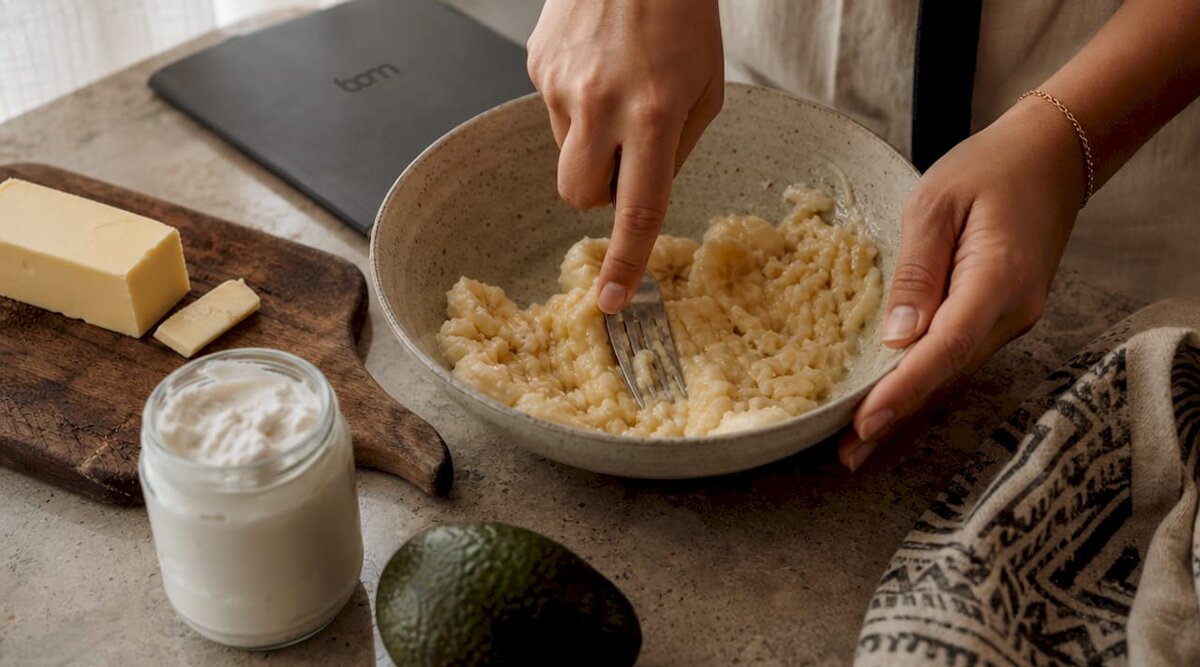
Mashed ripe banana works in a similar way, adding natural sweetness that lets you reduce the sugar in a recipe at the same time. One medium banana replaces roughly a quarter cup of fat. The banana flavour does come through, so use it where that works in your favour, such as in banana bread, pancakes, or oat-based cookies.
Greek yogurt substitutes butter or oil at a 1:1 ratio and adds protein to muffins, cakes, and brownies. Full-fat Greek yogurt gives the richest result, but low-fat versions work well too. Avocado is another option worth knowing: it provides monounsaturated fats and a creamy texture, though it can tint light-coloured batters slightly green.
When using avocado or fruit purées as fat substitutes, reduce oven temperature by 25% and extend baking time. The extra moisture in these substitutes changes how heat moves through the batter, and a lower, slower bake prevents a wet centre with a dry crust.
Pro Tip: Replace only half the fat on your first attempt. A 50:50 split of butter and applesauce, for example, preserves more of the original texture while still cutting calories. You can read more about adapting techniques in these practical tips for baking cakes.
Refined white sugar does more than sweeten. It affects texture, colour, and moisture retention, which is why sugar alternatives require a little more attention than a straight swap. The good news is that several natural options perform well once you know the ratios.
Coconut sugar and date sugar are two of the most reliable alternatives. Both have a lower glycaemic index than white sugar and can replace it at a near 1:1 ratio in most recipes. Coconut sugar adds a mild caramel note; date sugar, made from dried blended dates, adds fibre and a slightly denser texture. Neither dissolves as smoothly as white sugar, so they suit rustic bakes better than fine pastries.
Liquid sweeteners like maple syrup and honey are popular choices, but they need a ratio adjustment. Use ¾ cup of honey or maple syrup per 1 cup of sugar, and reduce other liquids in the recipe by 2 to 3 tablespoons per cup of sweetener used. Skipping that liquid reduction is the most common mistake bakers make, and it results in a flat, overly wet bake.
One of the most underused techniques in sugar reduction is spicing. Cinnamon and nutmeg can reduce added sugar by 10 to 15% in baked goods by enhancing perceived sweetness. That means a recipe calling for 200g of sugar can work with as little as 170g when spices are used generously. This is not a compromise on flavour. It is a genuine improvement for most spiced cakes, biscuits, and crumbles.
Fruit purées such as sweet potato or butternut squash add moisture, beta-carotene, and a gentle natural sweetness. They work particularly well in dense, moist bakes like brownies or carrot cake. For more on natural sweetener options, Bamchocolate has a useful overview of how these compare to refined sugar in baking applications.
Eggs bind, leaven, and add moisture. Replacing them requires understanding which function matters most in a given recipe. For binding in cookies, bars, and dense cakes, these alternatives perform well:
The binding strength ranking from strongest to weakest runs: flax egg, chia egg, Greek yogurt, applesauce, mashed banana. For recipes that rely heavily on eggs for structure, such as soufflés or choux pastry, none of these substitutes will replicate the result. They are best suited to recipes where eggs play a supporting role. You can also find context on how farm eggs function as binders, which helps clarify what exactly you are replacing.
Pro Tip: Test egg substitutes with a partial swap first. Replace one egg out of three with a flax egg before committing to a full substitution. This approach, recommended across multiple nutrition sources, gives you a reliable read on texture and flavour before you change the whole recipe.
| Flour type | Best use | Substitution ratio | Key benefit |
|---|---|---|---|
| Oat flour | Muffins, cookies, pancakes | Replace up to 50% of plain flour | Added fibre, mild flavour |
| Whole wheat pastry flour | Cakes, biscuits | Replace up to 50% of plain flour | More nutrients, slightly denser |
| Almond flour | Grain-free cakes, tarts | Requires full recipe adjustment | High protein, healthy fats |
| Gluten-free blend | Any recipe | 1:1 in most blends | Suitable for gluten intolerance |
Oat flour and whole wheat pastry flour add fibre and nutrients most effectively when used in a 50:50 blend with plain flour. Going beyond 50% with either tends to produce a noticeably dense or gummy result. Oat flour is easy to make at home by blending rolled oats in a food processor, which makes it one of the most accessible alternative baking ingredients available.
Almond flour behaves very differently from grain-based flours. It contains no gluten, which means it cannot form the same structure. Recipes using almond flour need additional binding agents, such as eggs or flax eggs, and often require a lower baking temperature to prevent over-browning. The result is a moist, rich crumb with a slightly nutty flavour that works beautifully in financiers, frangipane tarts, and dense chocolate cakes.
Gluten-free flour blends, such as those based on rice flour, tapioca starch, and potato starch, are formulated to behave like plain flour in most recipes. They are the most straightforward swap for bakers with coeliac disease or gluten sensitivity. The texture is generally slightly more crumbly than standard flour, so adding a small amount of xanthan gum (if not already included in the blend) helps with structure.
Choosing the right combination of substitutes is where most home bakers see the biggest improvement in their results. A few clear principles make this much easier.
Start with partial swaps rather than full replacements. Replacing half the ingredient first gives you a reliable baseline for judging texture and flavour changes before you go further. This is especially true when working with moist substitutes like fruit purées or avocado, where the impact on baking time and structure is significant.
Combining substitutes thoughtfully produces better results than using any single alternative in isolation. Applesauce paired with a flax egg, for example, gives you moisture from the applesauce and binding from the flax, which together replicate the dual function of butter and egg in a standard muffin recipe. Similarly, using coconut sugar alongside cinnamon and nutmeg means you get a lower-sugar bake without any loss of perceived sweetness.
Be cautious with commercial reduced-fat substitutes. Many contain added sugars or sodium to compensate for flavour loss. Whole-food alternatives like Greek yogurt, ripe bananas, and ground flaxseed are generally the cleaner choice. For guidance on how leavening agents interact with these substitutes, Bamchocolate’s article on baking powder and baking soda is worth reading before you adjust a recipe significantly.
Adjusting baking time and temperature is non-negotiable when using moist substitutes. Reduce oven temperature by approximately 25°F (around 14°C) and check for doneness a few minutes earlier than the original recipe suggests. Knowing when a cake is properly baked becomes more important when you are working with ingredients that retain moisture differently from butter or white sugar.
The most effective approach to healthier baking is combining partial ingredient swaps with adjusted ratios and baking conditions, rather than making single full replacements.
| Point | Details |
|---|---|
| Fat substitutes | Applesauce and Greek yogurt replace butter or oil 1:1; reduce oven temperature by 25% for fruit purées. |
| Sugar reduction | Use ¾ cup maple syrup or honey per 1 cup sugar; spices like cinnamon cut perceived sugar need by 10 to 15%. |
| Egg alternatives | Flax eggs (1 tbsp ground flaxseed plus 2.5 tbsp water) are the most cost-effective and reliable binder. |
| Flour swaps | Replace up to 50% of plain flour with oat or whole wheat pastry flour to add fibre without losing texture. |
| Combining substitutes | Pair applesauce with a flax egg for moisture and binding; always start with partial swaps before full replacement. |
I have tested most of these swaps across dozens of recipes, and the honest truth is that the failures taught me more than the successes. The biggest mistake I see home bakers make is treating substitutes as exact equivalents and expecting identical results. They are not identical. They are often better in different ways, but you have to be willing to adjust.
The swap I recommend starting with is Greek yogurt for butter in muffins. The texture difference is minimal, the protein boost is real, and it is a change most people eating the finished product will not notice at all. Flax eggs are my second recommendation. They are inexpensive, genuinely effective as binders, and add nutritional value that eggs do not.
Where I urge caution is with full flour replacements. Switching entirely to almond flour or oat flour in a recipe designed for plain flour rarely works without significant restructuring. A 50:50 blend is almost always the better starting point. The same logic applies to sugar: cutting by 25% and adding cinnamon is a smarter move than switching entirely to date sugar on the first attempt.
The goal is not a perfect replica of the original. The goal is a bake you are proud of that happens to be better for you. That shift in expectation makes the whole process more enjoyable and far more successful.
— Andraz
Getting the most from alternative baking ingredients is easier with quality equipment and a reliable recipe source. Bamchocolate’s baking accessories range includes everything from baking gloves to specialist tools that make working with stickier, moister batters far more manageable. If you are building your recipe repertoire alongside your ingredient swaps, the 101 BAM pastry recipe book gives you a structured starting point with recipes already designed for the kind of creative adaptation this article covers. Pair good ingredients with the right tools, and the results speak for themselves.
Unsweetened applesauce and Greek yogurt both replace butter at a 1:1 ratio. Greek yogurt adds protein; applesauce reduces calories and fat while keeping bakes moist.
Mix 1 tablespoon of ground flaxseed with 2.5 to 3 tablespoons of water and leave for five minutes until it gels. This replaces one egg and costs less than 10p per use.
Yes, but use ¾ cup of honey or maple syrup per 1 cup of sugar, and reduce other liquids in the recipe by 2 to 3 tablespoons per cup of sweetener to avoid a wet, flat result.
A pre-mixed gluten-free flour blend based on rice flour and tapioca starch is the most straightforward swap, as most blends are formulated to behave like plain flour at a 1:1 ratio.
Cinnamon and nutmeg enhance perceived sweetness and can reduce added sugar by 10 to 15% in baked goods without changing the flavour profile negatively.



 Confectionery tips



 Slovenščina
 Hrvatski
 Deutsch
 Italiano
 Česky
Česky
 Polski
 Magyar
 Français
 Slovák
 Nederlands
 Español