 info@bamchocolate.com
  Login
Login 

 en
en 
 BAM Cake converter
  Login
Login Claudia
Avtorica vsebin


 Reading time:
10 minutes
Reading time:
10 minutes 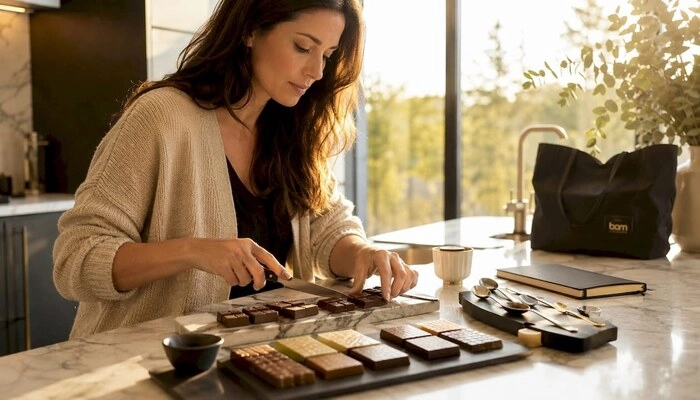
Learn how to host a chocolate tasting at home with a complete checklist and expert tips to Delight your guests. Enjoy the experience!
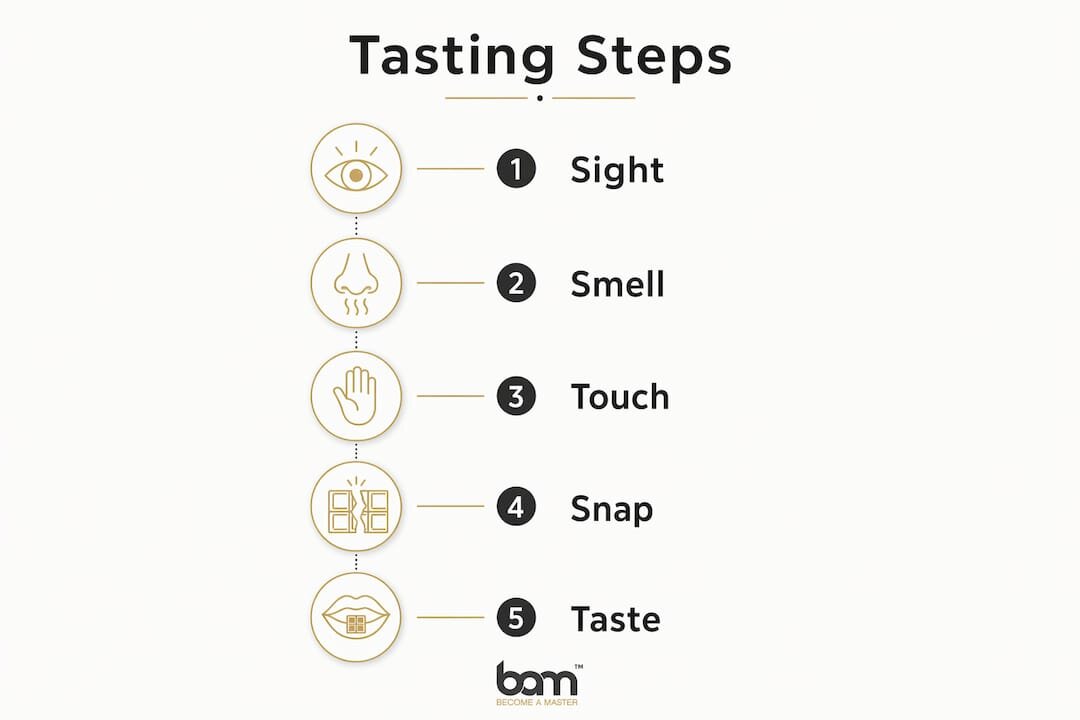
Host a confident chocolate tasting by selecting a few bars, setting a neutral room at a moderate temperature, and guiding guests through the five-step sensory method: sight, smell, touch, sound, and taste. Buy your chocolates a day or two ahead, portion into small tiles, print score sheets, and you are ready to run the session.
Gather these before event day:
Prep timeline: Order or buy chocolates 1–2 days before the event. On the morning of the tasting, portion bars into tiles (one or two per person per sample), cover plates with cling film, and store at room temperature away from strong odours. Remove cling film 20 minutes before guests arrive so aromas can open.
The goal is contrast, not quantity. A four to six sample flight sequenced from mild to intense protects the palate and makes differences obvious. A useful structure for home bakers:
| Position | Style | Cacao % | Why it’s here |
|---|---|---|---|
| 1 | Milk chocolate | a moderate cacao percentage | Accessible entry point; sweet baseline |
| 2 | White chocolate | — | Highlights cocoa butter and vanilla notes |
| 3 | Light dark | a mid-range cacao percentage | First bitter note; fruit and caramel tones |
| 4 | Single-origin dark | a higher cacao percentage | Origin character; earthy, floral, or fruity |
| 5 | Intense dark | a very high cacao percentage | Tannin and roast; tests palate resilience |
| 6 | Couverture (baking) | high cacao percentage | Shows how chocolate behaves in recipes |
Limit inclusions (nuts, fruit, spice) to one bar maximum. They skew aroma perception and make fair comparison harder. Keep the rest plain so guests focus on the chocolate itself.
Pro Tip: Include one baking couverture in position 6. Couverture has a higher cocoa-butter content than standard bars, which changes how it melts on the tongue. Tasting it alongside eating chocolate is one of the clearest demonstrations of why quality chocolate matters in baking.
One bar divides into multiple tiles; one or two tiles per sample per person is sufficient. For six guests tasting six samples, two bars of each style covers you comfortably with a little spare.
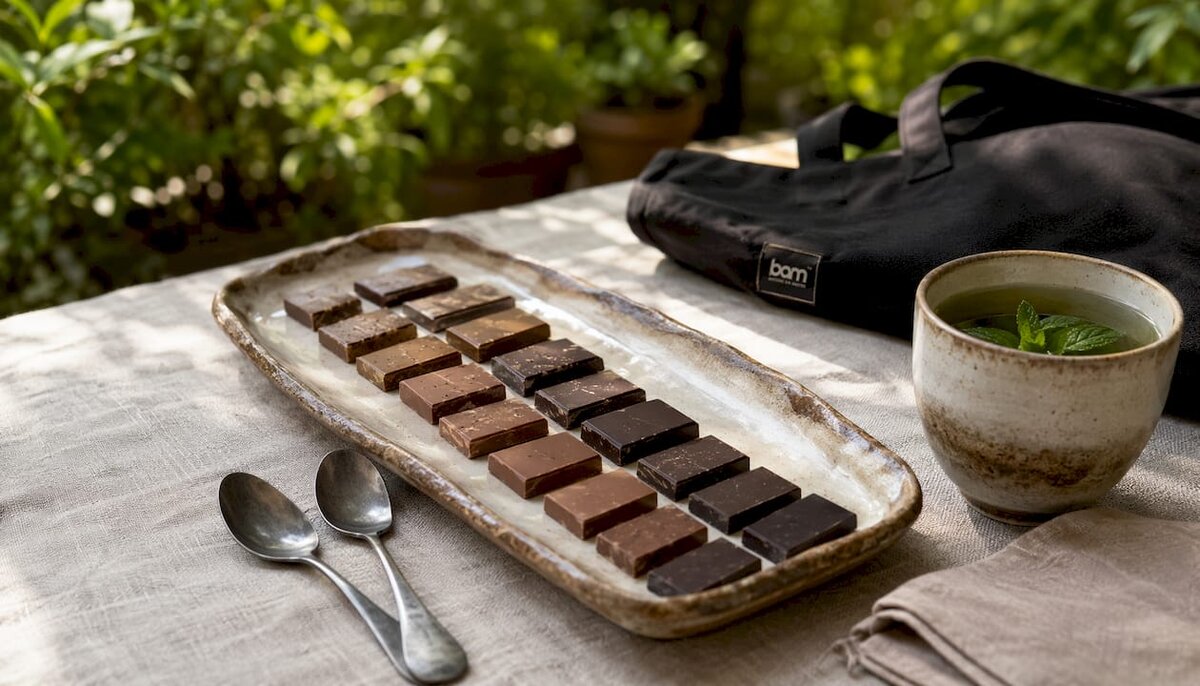
Serve samples in the mild-to-intense order described above. Starting with an intense dark first numbs the palate to subtler notes in lighter bars. Temperature matters too: keep the room at 20–22°C and avoid cooking smells or floral candles, both of which interfere with volatile aroma compounds.
| Stage | Time per sample | Notes |
|---|---|---|
| Present and observe | 1 min | Guests examine colour and sheen |
| Nose | 1 min | Hold near nose; breathe slowly |
| Snap and touch | — | Break tile; feel texture between fingers |
| Taste and finish | 2–3 min | Let chocolate melt; note aftertaste |
| Palate cleanse | 1 min | Water, cracker, or apple slice |
| Total per sample | ~6 min | Six samples = approx. 36–40 min tasting |
This sequence, recommended by gourmet chocolate educators, gives guests a consistent framework and makes note-taking meaningful.
Host prompts to encourage descriptive language:
Quick sensory vocabulary:
Open the session with a two-minute briefing: explain the five-step method, show guests the score sheet, and mention any allergens present. Keep the tone light. Guests who feel tested go quiet; guests who feel curious talk freely.
Invite comment after the taste stage of each sample with an open question rather than a leading one. “What did you notice?” works better than “Did you get the raspberry note?” Strong opinions are fine; redirect them by asking others what they found. The host’s role is to guide, not to adjudicate.
Three common mistakes to avoid: serving too many samples (more than six causes palate fatigue), rushing through samples without a palate cleanser, and hosting in a kitchen where cooking odours are still present. Move to a separate room if possible.
Palate cleansers between samples should be neutral. Room-temperature water, plain crackers, and mild apple slices all work well. Avoid sparkling water (carbonation can dull the palate) and strongly flavoured crackers.
For a pairing round at the end of the tasting, consider:
Keep pairing portions small and introduce them after the main tasting flight, not during it. Mixing beverages mid-flight skews perception of subsequent samples. For more ideas, Bamchocolate’s guide to drinks that pair with chocolate is a practical reference. If you are planning a combined wine-and-chocolate evening, structured wine tasting guidance offers a useful parallel framework.
Label every sample clearly with its full ingredient list and allergens. Common allergens in chocolate include milk, soya, nuts, and gluten (from shared production lines). Place allergen cards next to each plate, not just on the packaging.
For guests with dietary restrictions:
Pro Tip: Print score sheets in a larger font (14pt minimum) for guests with visual impairments, and keep seating arrangements flexible so wheelchair users can reach the tasting mat comfortably. If any guest has scent sensitivities, ask all attendees to avoid wearing perfume.
Good sourcing makes the difference between a flat tasting and a genuinely educational one. Options in the UK:
Storage before the event: keep bars in a cool, dry place at 16–18°C, away from light and strong odours. Never refrigerate chocolate intended for tasting; condensation causes bloom and dulls aroma. Transport bars in an insulated bag if the weather is warm.
| # | Style | Descriptor |
|---|---|---|
| 1 | Milk | Creamy, sweet, gentle cocoa |
| 2 | White | Vanilla, cocoa butter, milky |
| 3 | Light dark | Caramel, light fruit, mild bitter |
| 4 | Single-origin dark | Fruity or floral; origin-driven |
| 5 | Intense dark | Roasted, tannic, long finish |
| 6 | Couverture (70%+) | Fast melt; clean cocoa; baking reference |
| Time | Activity |
|---|---|
| Start | Welcome, briefing, allergen check |
| Main tasting | Six tasting rounds (~6 min each) |
| Discussion | Group discussion; compare score sheets |
| Pairing round | Optional pairing round (tea, coffee, or port) |
| Wrap-up | Wrap-up; share favourite picks |
Each guest’s sheet should have six rows (one per sample) with columns for: Appearance, Aroma, Texture, Flavour, Finish, and Score (1–10). Labelled score sheets help guests track impressions and compare notes at the discussion stage.
A successful at-home chocolate tasting needs a four to six bar flight ordered mild to intense, a neutral room at 20–22°C, and the five-step sensory method taught clearly to every guest.
| Point | Details |
|---|---|
| Flight size and order | Choose four to six bars, sequence from mild to intense to protect the palate. |
| Room conditions | Keep the space at 20–22°C and free from strong cooking or floral odours. |
| Five-step method | Teach sight, smell, touch, snap, and taste for every sample consistently. |
| Palate cleansers | Use room-temperature water, plain crackers, or apple slices between samples. |
| Bamchocolate supplies | Source couverture, baking accessories, and pastry bundles from Bamchocolate for a tasting with a baking focus. |
The most common anxiety a first-time host has is saying the wrong thing about a chocolate. It is worth setting that aside entirely. Sensory impressions are subjective, and encouraging guests to vocalise what they detect builds shared understanding far more effectively than any single correct reading. The host’s job is to create the conditions for that conversation, not to deliver a lecture.
What actually makes a tasting memorable is the moment a guest says “I get something almost smoky” and two others immediately agree. That shared recognition is the point. Use short storytelling prompts about origin or production to spark it: a sentence about where the cacao was grown, or how fermentation affects flavour, opens more discussion than a technical flavour note ever will. Bamchocolate’s piece on the story of fine chocolate has quick origin facts you can read aloud between samples.
For home bakers who want to run a tasting with a practical baking angle, Bamchocolate stocks the specific products that make it straightforward. The BAM Basic pastry package includes couverture and core accessories in one order. The baking accessories category covers tongs, thermometers, and moulds. If you want to extend the session into a hands-on demonstration, the recipe collection at Bamchocolate gives you post-tasting ideas using the same chocolates your guests just evaluated. Browse the full range at bamchocolate.com and order 1–2 days before your event.
Four to six bars is the practical range. Fewer than four limits contrast; more than six risks palate fatigue.
A six-sample session with discussion and an optional pairing round runs about an hour to an hour and a quarter at a comfortable pace.
The sequence is sight, smell, touch, snap, and taste. Each step is applied to every sample before moving to the next bar.
Room-temperature water, plain crackers, or mild apple slices all reset the palate without introducing flavours that mask the next sample.
Specialist retailers such as Hotel Chocolat, Cocoa Runners, and Montezuma carry single-origin and artisan bars. Bamchocolate stocks couverture and baking-focused accessories suited to a tasting with a practical baking element.


 Confectionery tips



 Slovenščina
 Hrvatski
 Deutsch
 Italiano
 Česky
Česky
 Polski
 Magyar
 Français
 Slovák
 Nederlands
 Español