 info@bamchocolate.com
 Login


 en

 BAM Cake converter
 Login
Claudia
Avtorica vsebin


 Reading time:
10 minutes
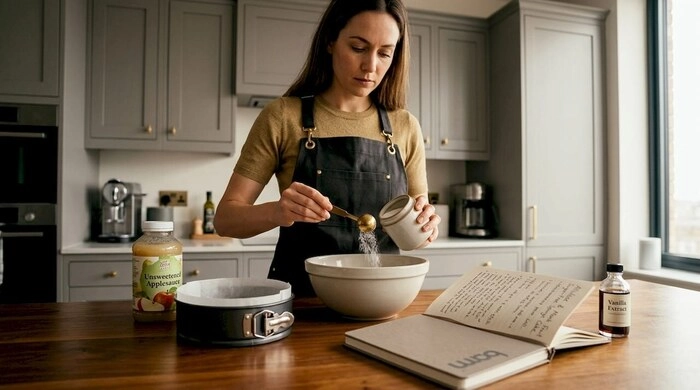
Discover how to make sugar free desserts that are delicious and satisfying. Enjoy sweet treats without compromising your health!
TL;DR:
- Learning how to make sugar-free desserts allows you to enjoy sweet treats without health drawbacks, especially when most people exceed recommended added sugar levels.
- Choosing the right sweetener, adjusting baking methods, and incorporating moisture sources can produce satisfying sugar-free desserts suitable for various dietary needs.
If you want to enjoy sweet treats without the health drawbacks, learning how to make sugar free desserts is one of the most practical skills you can develop in the kitchen. Added sugars should stay below 10% of daily calories, yet most people far exceed that threshold. The good news is that sugar-free baking has moved well beyond chalky, flavourless results. With the right ingredients and techniques, you can produce desserts that are genuinely satisfying, whether you are managing diabetes, cutting carbs, or simply eating more consciously.
| Point | Details |
|---|---|
| Choose the right sweetener | Match your sugar substitute to the dessert type for the best texture and flavour. |
| Adjust your baking method | Lower oven temperature and modify liquids when using sugar alternatives. |
| Combine sweeteners | Blending erythritol with stevia or monk fruit reduces aftertaste and improves texture. |
| Add moisture sources | Use applesauce, yogurt, or extra egg yolks to prevent dryness in baked goods. |
| Start gradually | Reducing sugar in stages retrains your palate and makes the transition sustainable. |
Getting this right starts before you switch on the oven. Sugar does far more than sweeten. It retains moisture, adds bulk, helps browning, and contributes to structure. When you remove it, you need to replace those functions, not just the sweetness.
| Sweetener | Sweetness vs sugar | Best used for | Notes |
|---|---|---|---|
| Erythritol | 70% | Crispy cookies, icings | Can feel gritty in cold desserts |
| Allulose | 70% | Fudgy brownies, caramel | Browns well, stays soft |
| Monk fruit blend | 150–200% | Cakes, muffins | Use blends, not pure extract |
| Stevia blend | 200–300% | Drinks, light desserts | Bitter alone; blend with erythritol |
| Coconut sugar | 1:1 | Chewy cookies, crumbles | Contains some nutrients, not zero-calorie |
| Fruit purée | Variable | Muffins, loaf cakes | Adds moisture and natural sweetness |
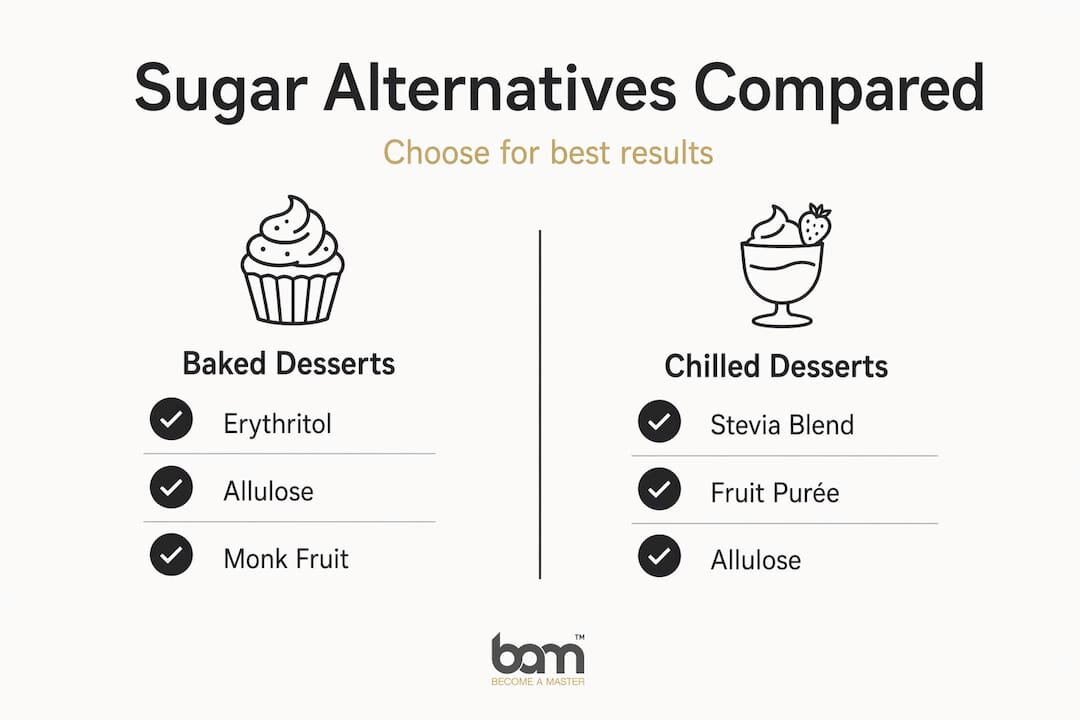
Pure stevia or monk fruit is far too potent to use alone in baking. A teaspoon where you need a cup simply does not work structurally. Baking blends that combine these with erythritol or allulose are formulated for 1:1 substitution and produce far more reliable results.
Understanding how natural sweeteners differ from sugar helps you make smarter choices for each recipe. Coconut sugar, for instance, behaves similarly to brown sugar in terms of moisture and chewiness. Allulose browns beautifully under heat, which makes it ideal for anything fudgy or caramelised.
Beyond sweeteners, you will want a few supporting ingredients on hand:
For tools, a springform pan is worth having for no-bake cheesecakes and tarts. Parchment paper prevents sticking without added fat. A stand or hand mixer helps incorporate air into batters that lack sugar’s creaming properties.
Pro Tip: When using erythritol in a chilled dessert like mousse or cheesecake, dissolve it in a warm liquid first. This prevents the gritty, crystalline texture that puts people off.
The techniques for sugar-free baking differ from standard baking in a few specific ways. Follow these steps and you will avoid the most common failures.
Choose your sweetener blend first. Before you adapt any recipe, decide which sweetener suits the texture you want. Coconut sugar works for chewy cookies, erythritol suits crispy textures, and monk fruit blends perform well in cakes. Getting this decision right shapes everything else.
Lower your oven temperature. Baking with sugar alternatives generally requires reducing the oven temperature by around 15°C compared to the original recipe. Many sweeteners brown faster than sugar, and a slightly lower temperature prevents over-browning or a burnt exterior with an underbaked centre.
Adjust your liquids. If you are using a syrup-based substitute like agave or a liquid monk fruit blend, reduce other liquids in the recipe by roughly 60ml per 240ml of syrup used. This keeps the batter at the right consistency.
Add a moisture booster. Because sugar naturally holds onto water during baking, removing it can make your baked goods dry. Add a tablespoon or two of unsweetened yogurt, sour cream, or applesauce to compensate. Moisture-rich additions like yogurt are one of the most effective fixes for dry sugar-free cakes and muffins.
Check your leavening. Some sugar substitutes are slightly acidic. If your recipe uses baking powder alone, consider adding a small pinch of bicarbonate of soda to neutralise acidity and improve the rise.
Mix carefully. Without sugar’s creaming function, overmixing can make batters dense. Mix until just combined, particularly for muffins and cakes.
Test for doneness earlier. Because sugar-free baked goods can brown faster, start checking five to ten minutes before the original recipe suggests. A skewer inserted in the centre should come out clean.
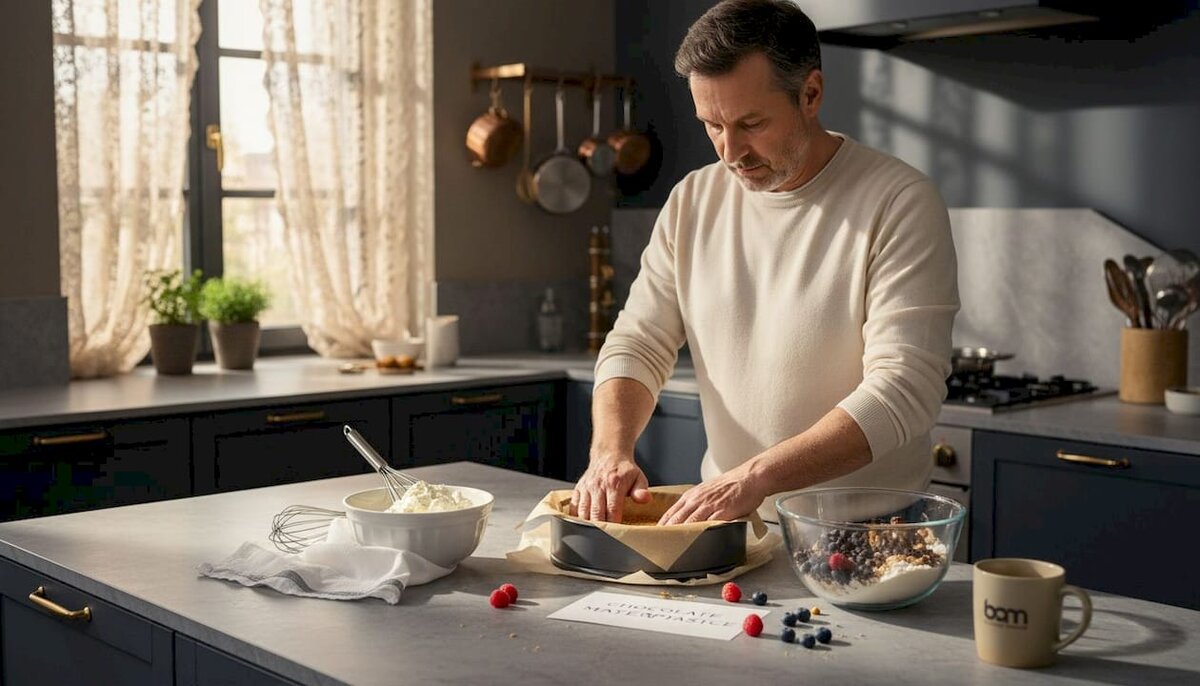
For no-bake desserts, the process is more forgiving. Combine your base ingredients, press into a lined springform pan, and pour over your filling. No-bake cheesecakes need at least four hours of refrigeration to set properly. Rushing this step leaves you with a filling that is too soft to slice cleanly.
Pro Tip: For no-bake recipes, use full-fat cream cheese and chill your mixing bowl beforehand. Both steps help the filling hold its shape without any added stabilisers.
Even experienced bakers run into issues when switching to sugar-free recipes. Here is what typically goes wrong and how to fix it.
Dry or crumbly texture. This is the most common complaint. Sugar retains moisture during and after baking, so removing it without compensation leads to dry results. The fix is straightforward: add a moisture source such as applesauce, an extra egg yolk, or a tablespoon of Greek yogurt. You can also slightly underbake the item and allow carryover cooking to finish the job.
Gritty or crystalline texture. This usually comes from erythritol, particularly in cold or chilled desserts. Erythritol recrystallises at low temperatures. Switching to allulose in chilled recipes, or dissolving erythritol in warm liquid before adding it, solves this reliably.
Flat or dense baked goods. Sugar contributes to lift by trapping air during creaming and by interacting with leavening agents. Without it, your cake or muffin may not rise as expected. Adding an extra half teaspoon of baking powder, or incorporating a small amount of bicarbonate of soda, usually restores the lift.
Bitter or chemical aftertaste. This is almost always a sweetener issue. Matching the sweetener to the dessert type is the single most important factor in avoiding aftertaste. Pure stevia is notorious for bitterness in baked goods. Blending it with erythritol or allulose cuts the aftertaste significantly.
The best sugar-free desserts come from selecting sweeteners matched to the dessert’s texture needs rather than using a single substitute across every recipe.
Excessive browning. Many sweeteners, especially allulose, brown more quickly than sugar. If your cookies or cakes are darkening too fast, lower the oven temperature by an additional 10°C and use a light-coloured baking tray rather than a dark one.
Once you understand the principles, the range of sugar free dessert recipes you can make at home is genuinely wide. Here are some of the best starting points, organised by method.
| Dessert type | Key sweetener | Prep time | Notes |
|---|---|---|---|
| No-bake cheesecake | Erythritol blend | 20 min + chilling | Use full-fat cream cheese |
| Fudgy brownies | Allulose | 35 min | Allulose gives authentic fudgy texture |
| Coconut sugar cookies | Coconut sugar | 25 min | Chewy, caramel-like flavour |
| Banana nice cream | Ripe banana | 5 min + freezing | No added sweetener needed |
| Chia seed pudding | Monk fruit drops | 5 min + chilling | High fibre, naturally thick |
| Berry sorbet | Fruit only | 10 min + freezing | Blend frozen berries with lemon juice |
These easy sugar free treats cover a range of textures and occasions. A few practical notes worth keeping in mind:
For anyone managing blood sugar or following low carb desserts, the frozen and no-bake options are particularly useful. They tend to use fewer processed ingredients and come together quickly. If you are looking for inspiration on making healthier confectionery at home, there are plenty of approaches that do not require a complete overhaul of your usual recipes.
I will be direct with you: the first few batches you make will probably not be perfect. That is not a failure of the method. It is how sugar-free baking works. I spent months testing different sweetener combinations before I found the blends that consistently delivered results I was actually happy with.
What I have learned is that reducing sugar gradually works far better than going cold turkey. Your palate adjusts over time. A dessert that tastes slightly less sweet in week one will taste perfectly satisfying by week four, because your reference point shifts. This is not wishful thinking. It is how taste adaptation actually works.
The sweetener combination I return to most often is an erythritol and monk fruit blend for baked goods, and allulose for anything fudgy or chilled. These two cover the majority of recipes without the aftertaste problems that put many people off sugar-free baking entirely.
I also think people underestimate how much spice, vanilla, and high-quality cocoa contribute. When I use a genuinely good unsweetened cocoa in a brownie recipe, I need far less sweetener overall. The flavour does the work. That is why sourcing quality ingredients matters more in sugar-free baking than in standard baking. There is nowhere to hide.
My advice to sceptics: do not judge sugar-free desserts by the first recipe you try. Start with a no-bake cheesecake or a banana nice cream. These are forgiving, genuinely delicious, and will give you the confidence to tackle more complex bakes.
— Andraz
Bamchocolate stocks the baking ingredients and accessories that make sugar-free dessert making significantly more straightforward. The BAM baking accessories range includes specialist tools suited to both no-bake and oven-baked sugar-free recipes, from springform pans to piping sets. If you want structured guidance alongside your ingredients, the 101 BAM pastry recipe book covers pastry techniques including adaptations for sugar-free preparation. For those who want to explore creamy fillings without added sugar, the BAM Confectionery set for creamy fillings provides everything needed to create smooth, flavourful centres and toppings. Browse the full range at Bamchocolate to find the right products for your next sugar-free bake.
Yes. You can make desserts without added sugar by using natural sweeteners like fruit purée, ripe banana, or Medjool dates, or by using sugar substitutes such as erythritol, allulose, or monk fruit blends.
There is no single best option. Allulose suits fudgy baked goods and chilled desserts, erythritol works well in crispy cookies, and monk fruit blends perform reliably in cakes and muffins.
Sugar retains moisture during baking, so removing it without compensation causes dryness. Adding unsweetened applesauce, yogurt, or an extra egg yolk restores the moisture balance.
Many are, particularly those using erythritol, allulose, or monk fruit, which have minimal impact on blood glucose. Always check the glycaemic index of your chosen sweetener and consult a healthcare professional if you are managing diabetes medically.
Bitterness usually comes from using pure stevia or monk fruit extract without blending. Combining sweeteners with erythritol or allulose significantly reduces aftertaste and produces a cleaner, more balanced sweetness.


 Confectionery tips


 Slovenščina
 Hrvatski
 Deutsch
 Italiano
 Česky
 Polski
 Magyar
 Français
 Slovák
 Nederlands
 Español