 info@bamchocolate.com
  Login
Login 

 en
en 
 BAM Cake converter
  Login
Login Claudia
Avtorica vsebin


 Reading time:
11 minutes
Reading time:
11 minutes 
Master the organic baking process with our comprehensive guide. Unlock better flavor, nutrition, and techniques for baking at home!
TL;DR:
- Organic baking involves careful ingredient sourcing, fermentation, and waste reduction to improve flavor and nutrition. Prioritizing organic flour, spices, and fats enhances health benefits and flavor, while techniques like sourdough fermentation extend shelf life naturally. Proper troubleshooting and assessment help build a sustainable, responsive baking process that minimizes waste and maximizes quality.
Most home bakers switch to organic ingredients expecting better flavour and leave it at that. The organic baking process goes much further. It covers how you source your flour, how you ferment your dough, how you handle your fats, and how you reduce waste in your kitchen. Every decision, from the spice jar to the proofing temperature, shapes the final result. This guide covers the full picture: ingredient prioritisation, sourdough fermentation, practical baking techniques, common troubleshooting, and how to assess what you have made. You will come away with a clear, workable approach to baking organically at home.
| Point | Details |
|---|---|
| Prioritise flour first | Switch to organic flour before any other ingredient to reduce pesticide residue exposure most effectively. |
| Fermentation adds nutrition | Sourdough fermentation improves mineral availability and lowers the glycaemic response of organic bread. |
| Fat handling determines texture | Cold fat creates flaky pastry; creamed room-temperature butter produces lighter cakes. |
| Troubleshoot by ingredient | Organic flour absorbs water differently, so adjust hydration before changing other variables. |
| Waste reduction is part of the process | Repurposing stale bread and freezing unfrosted dough are practical eco-friendly habits worth building. |
Understanding what makes an ingredient worth upgrading is the foundation of a sound organic baking process. Not every swap delivers equal benefit, and budget matters. The good news is that a clear order of priority exists.
Organic whole wheat flour retains both the bran and the germ, which are precisely the parts of the grain where pesticide residues concentrate. Conventional white flour strips these layers away, so the residue risk drops, but so does the nutritional value. Organic certification also prohibits synthetic herbicides such as glyphosate and chemical bleaching agents, meaning your flour is cleaner from field to bag.
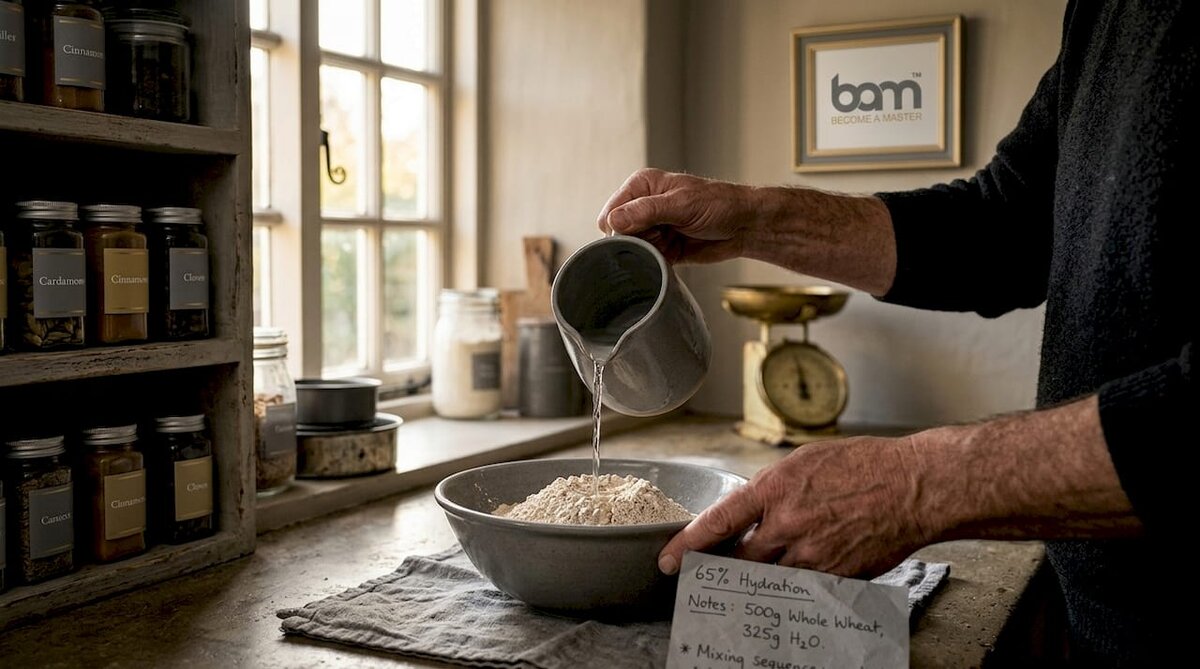
Whole wheat flour absorbs more water than white flour. Plan for a hydration increase of around five to ten per cent when you substitute it into a recipe. The flavour payoff, a nuttier, more complex crumb, is worth the adjustment.
Organic cane sugar behaves almost identically to conventional sugar in most recipes. Organic honey and maple syrup, however, add moisture and acidity that affect both structure and browning. Reduce your liquid content slightly when using them, and lower your oven temperature by about ten degrees Celsius to prevent over-browning. If you want to understand the broader health case for these alternatives, the comparison of natural sweeteners versus sugar is worth reading before you commit to a substitution.
Organic butter carries a noticeably richer flavour because organic dairy herds tend to graze on more diverse pasture. The functional role of fat in baking depends entirely on its temperature and how you handle it. Cold rubbed fat creates flaky pastry; creamed room-temperature butter traps air for a lighter cake crumb. Neither technique is more “organic” than the other, but both benefit from higher-quality fat.
Spices are a category many bakers overlook, yet they carry a specific risk. Conventional spices are frequently treated with chemical fumigants, some of which are classified as carcinogenic. Organic spice certification prohibits these treatments. Given that spices are used in small quantities, the cost difference is minimal relative to the benefit.
Pro Tip: Follow this upgrade order to get the most from your budget: flour first, then spices and vanilla, then butter and eggs. Organic sugar and liquids can follow once the higher-impact swaps are in place.
The table below summarises the key functional differences between conventional and organic versions of common baking ingredients.
| Ingredient | Conventional version | Organic version |
|---|---|---|
| Flour | May contain glyphosate residues; bleached | No synthetic pesticides; unbleached |
| Butter | Standard dairy fat content | Richer flavour from pasture-fed herds |
| Vanilla | Often synthetic vanillin | Pure extract; no artificial carriers |
| Spices | May be fumigated with chemical agents | Certified free from chemical fumigants |
| Sugar | Refined; may contain processing chemicals | Minimally processed; clean label |
A sourdough starter is the most direct way to introduce natural fermentation into your organic baking process. It requires only two ingredients, organic flour and filtered or unchlorinated water, and a clean glass jar.
Here is a straightforward seven-day starter routine:
Once active, feed your starter every 24 hours at room temperature, or refrigerate it and feed once a week if you bake less frequently.
Sourdough fermentation produces organic acids and enzymes that improve mineral bioavailability and reduce anti-nutritional factors such as phytic acid. Research also indicates that fermented sourdough bread produces a lower glycaemic response than conventionally leavened bread. This makes sourdough far more than a flavour preference. It is a meaningful nutritional upgrade.
Pro Tip: If your starter smells of nail varnish remover rather than vinegar or yoghurt, it has gone too acidic. Discard all but a tablespoon, feed with fresh flour and water, and leave it at a slightly warmer temperature for 12 hours.
Knowing your ingredients is half the work. Applying the right technique to those ingredients is the other half.
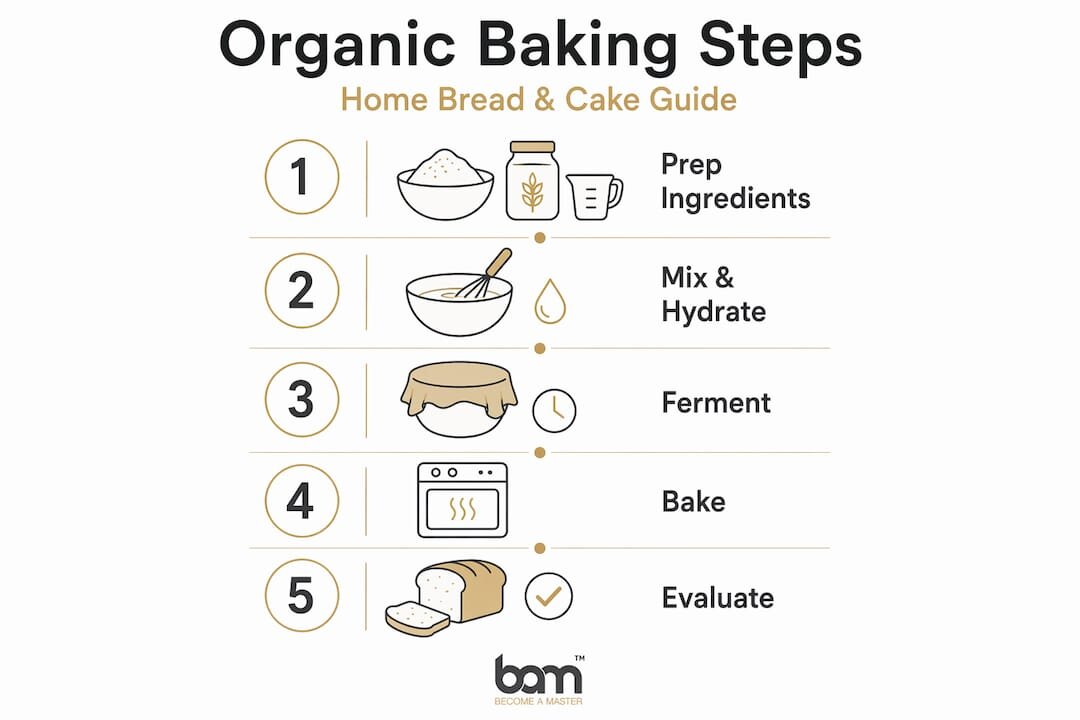
Organic whole wheat flour absorbs more water than refined flour. Start with a hydration level of 70 to 75 per cent for a basic organic loaf and adjust from there. Temperature matters as much as ratios. Dough ferments faster in warm kitchens and slower in cool ones, so learn to read your dough rather than rely solely on timing.
Long fermentation methods such as an overnight cold proof at around four degrees Celsius develop flavour through Maillard reactions and naturally extend shelf life. This is one of the most practical eco-friendly baking tips you can apply at home, because bread that stays fresh longer means less waste.
When you swap refined sugar for organic honey or maple syrup in a cake recipe, three things change: moisture increases, acidity increases, and browning happens faster. Reduce the oven temperature by ten degrees, shorten the baking time by five minutes, and reduce other liquids in the recipe by about three tablespoons per 240ml of syrup used. For practical guidance on adapting cake recipes to these variables, the cake baking tips at Bamchocolate cover several useful adjustments.
Pro Tip: Stale sourdough makes exceptional breadcrumbs. Toast slices in the oven at 160 degrees Celsius, blitz in a food processor, and store in an airtight jar for up to three months.
Even experienced bakers run into problems when they first switch to organic ingredients. Most issues trace back to a handful of predictable causes.
“Organic baking is not about perfection on the first attempt. It is about learning how your specific ingredients behave and adjusting your process to match them.”
Regenerative organic certified baking mixes now offer short ingredient lists designed around soil health and farmer fairness, and they are increasingly available at mainstream retailers. They can serve as a useful reference point for what a clean-label organic bake actually looks like.
Once your loaf or cake comes out of the oven, take a few minutes to evaluate it properly. This is not about being critical. It is about building a reliable feedback loop.
Aroma is your first indicator. A well-fermented organic sourdough should smell complex and slightly tangy. A cake made with organic vanilla and butter should smell rich without any artificial sweetness. Off notes, such as a harsh chemical smell, often point to over-fermentation or an ingredient issue.
Crumb and crust tell you about hydration and temperature. An open, irregular crumb in sourdough indicates good fermentation and adequate hydration. A tight, dense crumb suggests either under-proofing or too little water. A pale crust on a loaf means the oven was not hot enough or the bake was too short.
Flavour in organic bakes tends to deepen over 12 to 24 hours after baking as the crumb stabilises. Slice your sourdough the following day if possible. The flavour will be noticeably more developed.
On the nutritional side, sourdough fermentation genuinely improves mineral bioavailability by breaking down phytic acid, which would otherwise block absorption of iron, zinc, and magnesium. This is not a marginal benefit. It is a meaningful difference between organic sourdough and a standard supermarket loaf.
Pro Tip: Keep a simple baking log. Note the flour brand, hydration level, fermentation time, and oven temperature for each bake. After five or six loaves, patterns emerge and troubleshooting becomes much faster.
I have been baking with organic ingredients for several years now, and the shift changed more than I expected. The flavour improvement was obvious within the first few bakes. What surprised me was how much the process itself changed.
When you bake with sourdough and organic whole wheat flour, you stop following a recipe mechanically. You start reading the dough. You notice when fermentation is moving faster than usual because the kitchen is warm. You adjust. That responsiveness, I think, is the real advantage of natural baking methods. It makes you a more attentive baker.
I also underestimated the sustainability side. Slow fermentation means longer shelf life. Longer shelf life means less waste. Zero-waste baking is not a separate discipline. It is a natural consequence of doing the organic baking process properly.
My one honest caution: do not try to swap every ingredient at once. The variables multiply and troubleshooting becomes difficult. Start with flour. Get comfortable. Then move to spices and vanilla. The case for organic chocolate follows the same logic: quality ingredients, minimal processing, and a cleaner flavour profile that speaks for itself.
— Andraz
Bamchocolate stocks a focused range of baking accessories and additives suited to both organic and natural baking methods. Whether you are setting up a sourdough routine or refining your cake technique, the right tools make a measurable difference. The 101 BAM pastry recipe book is a practical resource for home bakers wanting structured guidance across a wide range of baked goods, with recipes that work well alongside organic and clean-label ingredients. For those starting out or building a home baking kit, the BAM Basic pastry package brings together quality ingredients and tools in one bundle. All products align with the principle of using fewer, better ingredients to produce results worth repeating.
The organic baking process refers to baking using certified organic ingredients, natural leavening methods such as sourdough, and techniques that avoid synthetic additives. It covers ingredient selection, fermentation, and waste reduction as a connected set of practices.
Start with flour. Organic whole wheat flour reduces exposure to pesticide residues most significantly, since the bran and germ retain the highest concentration of residues in conventional grain.
Yes. Organic sourdough fermentation produces organic acids that create a more complex, tangy flavour. The crumb also tends to have a better texture and the loaf stays fresh longer than commercially leavened bread.
Reduce your oven temperature by ten degrees Celsius when using natural sweeteners such as honey or maple syrup. These caramelise faster than refined sugar, so a lower temperature and a slightly shorter bake time prevent over-browning.
The initial cost is higher, but prioritising your swaps (flour, spices, and vanilla first) keeps the budget manageable. Reduced food waste through longer shelf life and zero-waste practices offsets a significant portion of the additional ingredient cost over time.



 Confectionery tips



 Slovenščina
 Hrvatski
 Deutsch
 Italiano
 Česky
Česky
 Polski
 Magyar
 Français
 Slovák
 Nederlands
 Español