 info@bamchocolate.com
  Login
Login 

 en
en 
 BAM Cake converter
  Login
Login Claudia
Avtorica vsebin


 Reading time:
9 minutes
Reading time:
9 minutes 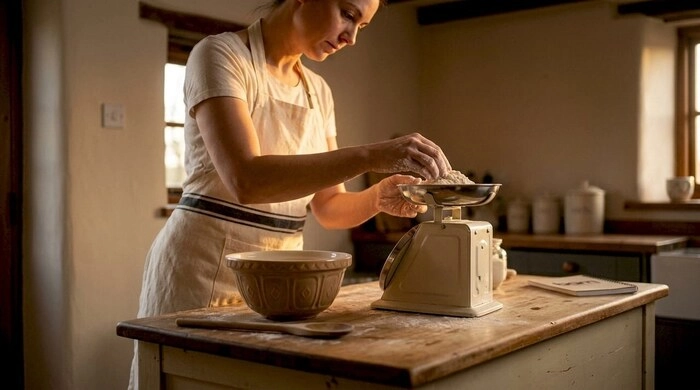
Discover why baking accuracy matters for home bakers. Master precise measurements for perfect texture, rise, and flavor every time!
TL;DR:
- Precise measurement and accurate temperature control are essential for successful baking because chemistry reactions proceed rapidly and cannot be corrected once baking begins.
- Using a digital scale and profiling your oven help remove common errors caused by inconsistent measurements and oven temperature deviations, leading to more reliable results.
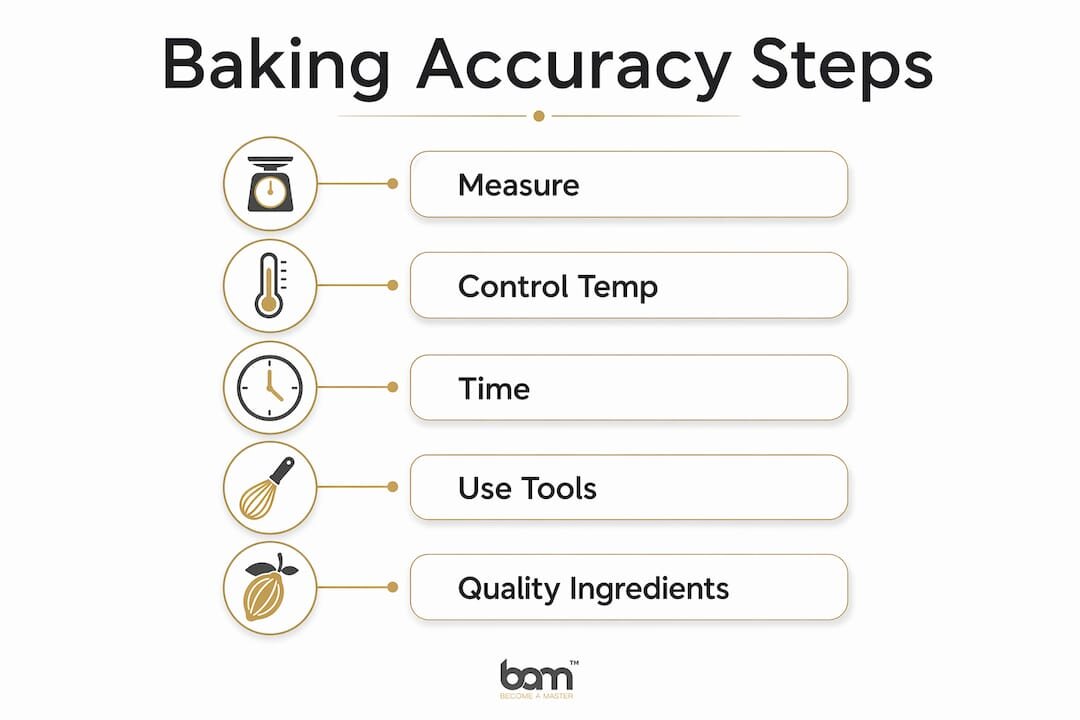
Baking accuracy is defined as the practice of precisely measuring ingredients and controlling baking conditions to achieve consistent texture, rise, and flavour every time you bake. Unlike cooking, where you can taste and adjust as you go, baking chemistry proceeds rapidly and cannot be corrected once the tin is in the oven. Proteins set, gases expand, and caramelisation occurs in a fixed sequence. Understanding why baking accuracy matters gives you the tools to stop guessing and start producing reliable results, whether you are making a simple sponge or a laminated pastry.
Measurement errors are the leading cause of baking failures at home. The most common culprit is flour. Flour measurement variability is the largest single source of inconsistency in home baking because flour is compressible and cup measures shift dramatically depending on how tightly the flour is packed.
A single cup of flour can vary by approximately 22g, which represents around an 18% difference in weight. In a recipe calling for three cups, that error compounds to over 60g of extra or missing flour. That shift changes dough hydration, proof time, crumb structure, and final texture in ways that no amount of extra baking time can fix.
Sugar is equally misunderstood. Most home bakers treat it as a flavouring agent, but sugar’s structural roles extend to browning through Maillard reactions, moisture retention, and gluten interaction. Too little sugar produces a pale, dry crumb. Too much causes excessive spread in cookies and a sticky, dense interior in cakes. A single tablespoon’s error in sugar can mean the difference between a perfect cookie and one that spreads flat across the tray.
Baking ratios make this concrete. A standard bread dough uses flour at 100% and water at 60–65% by weight. Small hydration changes shift the loaf from an open, airy crumb to a tight, dense one. These are not dramatic errors. They are the kind of small, compounding mistakes that volume measuring cups produce every single time.
Pro Tip: Spoon flour into your measuring cup and level it with a straight edge if you do not own a scale. This single habit reduces over-measurement significantly, though a digital scale removes the variable entirely.
Yes, and more than most home bakers realise. Home ovens deviate by 15°F to 50°F from the temperature shown on the dial, and they fluctuate further during baking cycles as the heating element switches on and off. That is a swing of roughly 8–28°C from what you think you are baking at.
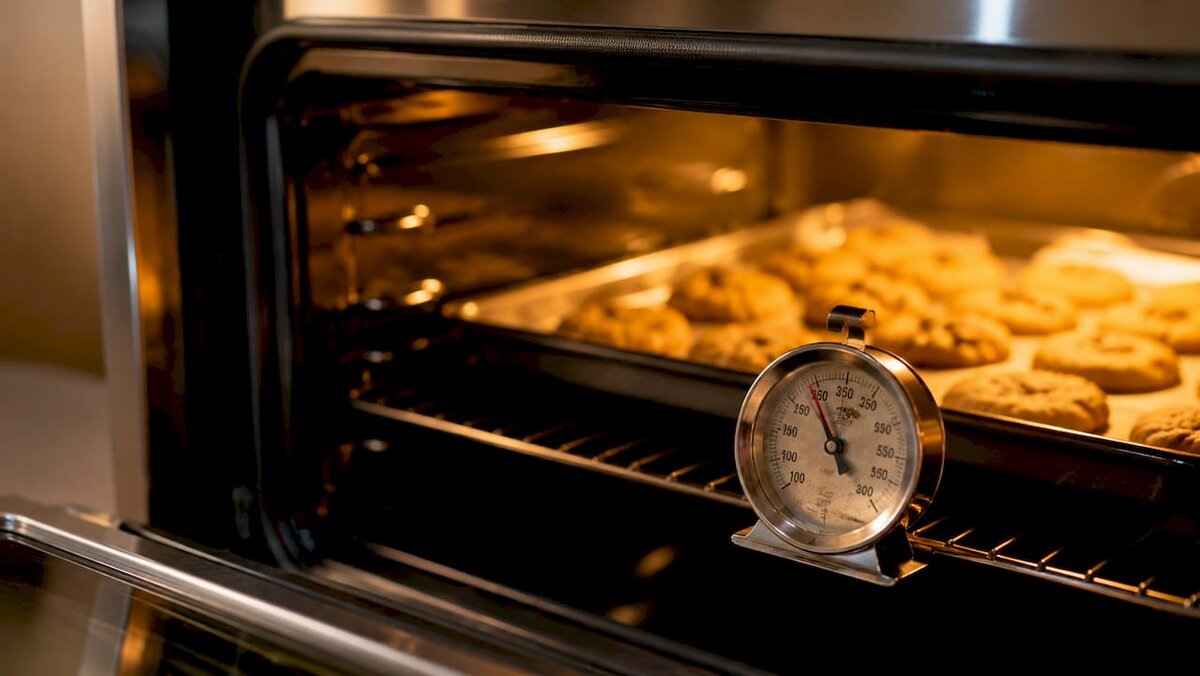
Temperature errors affect baking in three distinct ways. First, they alter rise. The initial minutes in the oven are when oven spring occurs, gases expand, and structure sets. Early bake accuracy is critical because this window determines final volume, crumb, and crust. A cold oven delays this reaction; an overly hot oven sets the crust before the interior has risen fully. Second, temperature controls browning. The Maillard reaction and caramelisation both accelerate sharply above specific thresholds, so a 15°C error can mean the difference between a golden crust and a burnt one. Third, temperature governs moisture loss. A higher-than-intended temperature drives out moisture faster, leaving cakes dry and crumbly.
The solution is oven profiling. Building an oven profile means placing an oven thermometer at different rack positions and dial settings, then recording the actual temperatures. This takes about 30 minutes and produces a reference you can use for every future bake.
Pro Tip: Never open the oven door in the first 15 minutes of baking a cake or bread. Each opening drops the internal temperature by 10–15°C and disrupts the critical oven spring phase.
Timing is the third pillar of baking precision, and it is the one most home bakers overlook entirely. Chemical leaveners like baking soda and baking powder react the moment they contact moisture and acid. CO₂ release begins immediately after mixing, which means every minute your batter sits on the worktop is a minute of leavening power lost.
For quick breads, muffins, and pancakes, the practical rule is to get the batter into the oven within 3–5 minutes of mixing. Longer delays reduce rise and produce a denser, tighter crumb. You can read more about baking powder and baking soda timing to understand exactly how each leavener behaves under different conditions.
The workflow fix is simple:
This sequence keeps the leavening reaction working for you rather than wasting it on the worktop.
The right tools remove the guesswork from baking. A digital kitchen scale is the single most effective upgrade a home baker can make. Weighing dry ingredients removes the largest common source of baking failure: inconsistent flour measurement. Scales cost very little and last for years.
Understanding weight-based measurement for chocolate and other dense ingredients also matters, because volume measures for these ingredients are even less reliable than for flour.
| Tool | What It Does | Why It Matters |
|---|---|---|
| Digital kitchen scale | Measures ingredients by weight | Removes cup-measurement variability entirely |
| Oven thermometer | Reads actual oven temperature | Reveals dial inaccuracy and hot spots |
| Kitchen timer | Tracks bake time precisely | Prevents over or under-baking |
| Instant-read thermometer | Checks internal bake temperature | Confirms doneness without guessing |
| Measuring spoons (calibrated) | Measures small quantities of leaveners | Prevents over or under-leavening |
Knowing when biscuits and cakes are ideally baked is itself a skill that combines timing, temperature awareness, and visual cues. An instant-read thermometer takes the uncertainty out of this entirely. A fully baked sponge reads around 96–98°C at the centre. A loaf of bread is done at approximately 93–96°C internally.
For flour quality, the ingredient itself matters as much as how you measure it. Flour quality directly affects hydration absorption and gluten development, which means two bags of flour measured identically can still behave differently. Choosing consistent, quality flour reduces one more variable from your baking.
Pro Tip: Tare your scale between each ingredient when baking. This lets you add everything to a single bowl without washing multiple cups, and it is faster and more accurate than any other method.
Precise measurement and temperature control are the two factors that determine whether a bake succeeds or fails, and both are fully within your control as a home baker.
| Point | Details |
|---|---|
| Flour measurement is the top failure point | A single cup can vary by 22g; use a digital scale to remove this variable. |
| Sugar does more than sweeten | It controls browning, moisture retention, and spread, so measure it accurately. |
| Your oven dial is not reliable | Profile your oven with a thermometer to find the true temperature at each setting. |
| Timing matters with chemical leaveners | Get batter into the oven within 3–5 minutes of mixing to retain full rise. |
| A digital scale is your best investment | Weighing ingredients costs less than a failed bake and removes the most common error. |
I baked with volume cups for years and blamed my recipes when things went wrong. The sponge was too dense. The cookies spread too much. The loaf had a tight crumb. I assumed I was choosing the wrong recipes.
The shift happened when I started weighing everything. My first properly weighed batch of scones was noticeably lighter and more even than anything I had produced before. The recipe had not changed. The flour had not changed. Only the measurement method had.
Oven profiling was the second turning point. My oven runs 18°C hotter than the dial suggests at 180°C. Every recipe I had ever followed was actually baking at close to 200°C. Once I adjusted for that, my baking times became predictable for the first time.
The honest truth is that baking precision is not about perfectionism. It is about removing the variables that sit between you and a good result. You do not need professional equipment. You need a scale, a thermometer, and the habit of using them. These are accessible skills, and the improvement they produce is immediate. For practical guidance on technique, cake baking tips from Bamchocolate are a solid starting point.
— Andraz
Accurate baking starts with the right tools and quality ingredients. Bamchocolate stocks a full range of baking accessories designed to support precise measurement and consistent results at home. From calibrated measuring sets to specialist baking accessories, the range covers what you need to remove guesswork from your baking. If you are starting out or refreshing your kit, the BAM Basic pastry package includes core tools and ingredients in one straightforward bundle. Quality ingredients and reliable tools work together. When both are right, your results follow.
Baking accuracy is the practice of measuring ingredients precisely by weight and controlling oven temperature and timing. It matters because baking chemistry is fixed once the tin enters the oven, so errors in measurement or temperature cannot be corrected mid-bake.
A single cup of flour can vary by approximately 22g depending on how it is packed, which represents an 18% difference in weight. A digital scale removes this variable and is the most reliable way to measure dry ingredients consistently.
Home ovens commonly deviate by 15°F to 50°F from the dial temperature. Using an oven thermometer to profile your oven reveals the true temperature at each setting and allows you to adjust recipes accordingly.
Batters made with baking soda or baking powder should go into a preheated oven within 3–5 minutes of mixing. Chemical leaveners begin releasing CO₂ immediately on contact with moisture, so delays reduce rise and produce a denser result.
Yes. Sugar controls Maillard browning, moisture retention, and gluten interaction, not just sweetness. Even small measurement errors alter spread in cookies, crust colour, and the moisture level of the finished crumb.



 Confectionery tips



 Slovenščina
 Hrvatski
 Deutsch
 Italiano
 Česky
Česky
 Polski
 Magyar
 Français
 Slovák
 Nederlands
 Español