 info@bamchocolate.com
  Login
Login 
 en
en 
 BAM Cake converter
  Login
Login Claudia
Avtorica vsebin


 Reading time:
10 minutes
Reading time:
10 minutes 
Discover why use dark chocolate for baking to enhance flavor, improve melting, and elevate your recipes. Unlock baking secrets now!
TL;DR:
- Dark chocolate with 55–70% cacao offers optimal flavor balance and melting stability for baking purposes. Its higher cocoa content provides richer taste, better structure, and health benefits, making it preferable over milk or white varieties in most recipes. Proper melting, tempering, and careful selection of quality brands ensure best results and consistent textures in baked goods.
Not all chocolate performs the same way in the oven, and if you have ever swapped milk chocolate for dark in a brownie recipe and wondered why the result tasted flat or too sweet, you already know this. Understanding why use dark chocolate for baking goes well beyond personal taste. It comes down to cacao percentage, fat composition, melting behaviour, and how bitterness interacts with sugar and other ingredients. This guide covers all of it, from choosing the right percentage to tempering basics and the health considerations worth knowing about.
| Point | Details |
|---|---|
| Cacao percentage matters | Choose 55–70% dark chocolate to match your recipe’s required balance of bitterness and sweetness. |
| Dark chocolate melts better | Higher cocoa solids and lower sugar make dark chocolate more stable and forgiving during melting. |
| Flavour depth is the main advantage | Bitterness in dark chocolate balances sweetness and produces richer, more complex results in baked goods. |
| Health benefits are real | High-cacao dark chocolate contains flavonoids linked to heart health and lower diabetes risk. |
| Quality indicators matter | Look for real cocoa butter on the label and choose independently tested brands to avoid contaminants. |
Dark chocolate is defined by what it does not contain as much as by what it does. Unlike milk chocolate, it contains no added milk solids, and unlike white chocolate, it is built on actual cocoa solids. The three core components are cocoa solids, cocoa butter, and sugar. The ratio of these three determines everything: flavour intensity, sweetness level, melting point, and how the chocolate behaves in a batter or ganache.
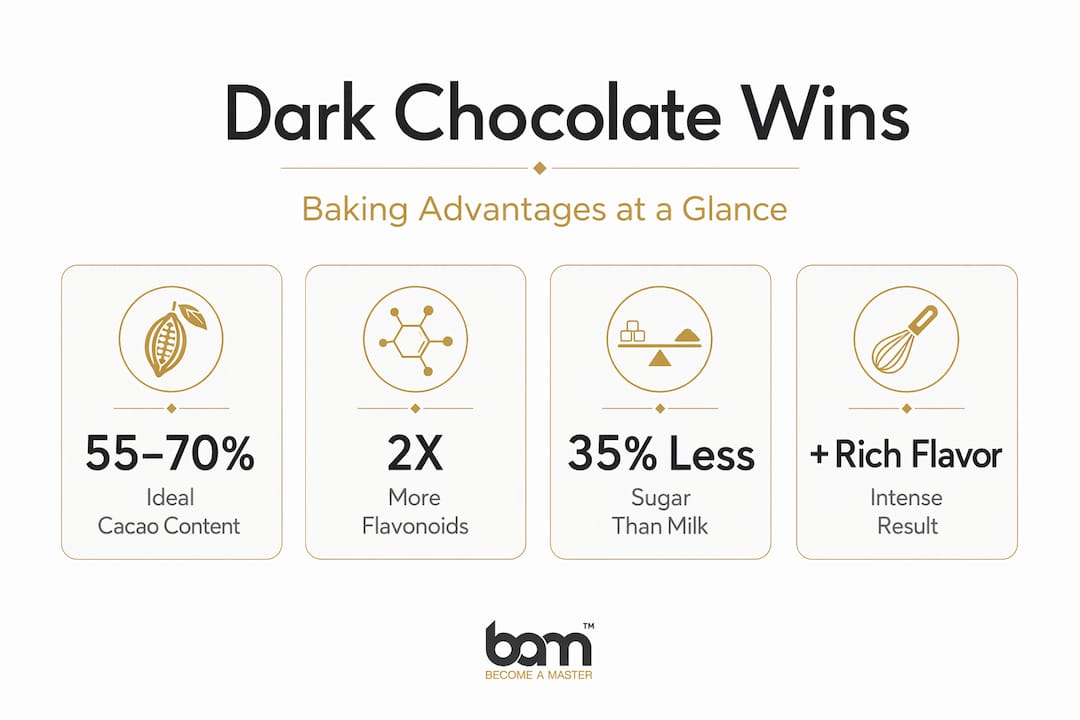
Cacao percentage is the number printed on every bar, and it tells you the combined proportion of cocoa solids and cocoa butter. The rest is primarily sugar. So a 70% bar contains 70% cacao-derived ingredients and roughly 30% sugar. A 50% bar flips closer to half and half. This distinction has a direct impact on your baking results.
Cacao percentage ranges work as follows in practice:
The table below summarises the key differences between chocolate types and where each one fits in baking.
| Chocolate type | Cacao content | Sugar level | Best baking uses |
|---|---|---|---|
| Dark (55–70%) | High | Moderate | Brownies, cakes, ganache, truffles |
| Dark (70%+) | Very high | Low | Flourless cakes, intense glazes |
| Milk chocolate | Low to medium | High | Cookies, light mousses, coatings |
| White chocolate | None (cocoa butter only) | Very high | Blondies, decorative drizzles |
Understanding this table helps you choose the right chocolate before you even preheat the oven.
Dark chocolate’s behaviour during melting and mixing is one of the strongest arguments for using it. Dark chocolate handles higher temperatures more reliably than milk or white chocolate because its higher cocoa mass and lower dairy and sugar content give it greater thermal stability. In practical terms, this means less risk of scorching and a smoother melt with better consistency.
Milk chocolate, by contrast, contains milk solids that burn at lower temperatures and a higher sugar content that causes it to seize more easily if even a small amount of moisture gets into the bowl. Sticking to the chocolate type specified in your recipe is not just a suggestion. Substituting one for another changes fat content, sugar levels, and melting temperature, which alters both texture and structure in the finished bake.
Here are the best practices for melting dark chocolate at home:
Pro Tip: If your melted dark chocolate looks grainy or thick, add a teaspoon of neutral oil or warm cream and stir gently. This usually rescues a seized batch without affecting the final flavour.
Tempering is a separate process from simple melting and becomes relevant when you need a glossy finish and firm snap, such as for chocolate-coated truffles or decorative shards. Tempering dark chocolate at home works best with the seeding method: melt two thirds of your chocolate, then stir in finely chopped reserved chocolate until the temperature drops to the correct working range. Use at least 300g and avoid glass or ceramic bowls, which retain heat unevenly. You can find a full walkthrough on tempering chocolate properly for reference.
The flavour case for dark chocolate in baking is straightforward: bitterness balances sweetness. When you add dark chocolate to a brownie batter that already contains sugar, butter, and vanilla, the slight bitterness cuts through the richness and prevents the result from tasting one-dimensional. This is why professional pastry chefs reach for dark chocolate by default.
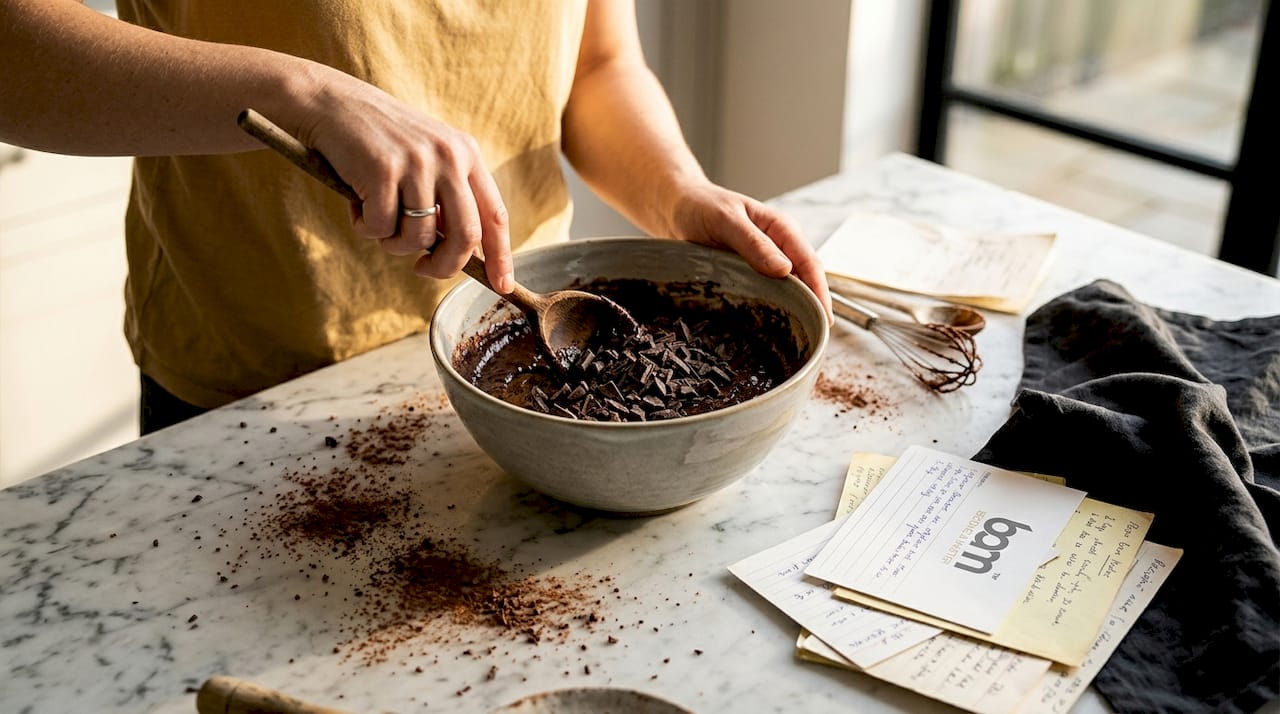
Dark chocolate with real cocoa butter also produces a noticeably different texture compared to compound chocolate made with vegetable fats. Cocoa butter melts at body temperature, which creates that characteristic melt-in-the-mouth sensation. Compound chocolates melt at a higher temperature and leave a waxy coating on the palate. For ganache, truffles, or any recipe where texture is central, this difference is significant.
The specific culinary benefits of using dark chocolate in baking include:
Recipes that particularly benefit from dark chocolate include classic brownies, chocolate ganache tarts, dark chocolate truffles, and flourless chocolate cakes. These are all recipes where the chocolate is not just a flavouring but a structural and textural component. Using a low-quality or high-sugar chocolate in any of these will produce a noticeably inferior result.
Dark chocolate is not a health food in the conventional sense, but the nutritional profile of high-cacao varieties is meaningfully different from milk or white chocolate. Flavanols in dark chocolate improve blood flow and are linked to reduced risk of stroke and heart disease. These compounds are found in cocoa solids, which is why higher cacao percentages carry more of them.
The research on diabetes risk is particularly striking. Eating dark chocolate frequently at least five servings per week is associated with a 21% lower risk of developing type 2 diabetes, with daily consumption potentially reducing that risk by up to 27%. These figures come from observational data and reflect moderate, regular intake rather than large amounts.
“Higher cacao percentages in dark chocolate reduce sugar content, improving suitability for blood sugar management when used in moderation.” — Northwestern Medicine
For home bakers, this matters in a practical way. When you bake with 70% dark chocolate instead of a milk chocolate alternative, you are reducing the total sugar load of the recipe without sacrificing flavour. You can read more about these advantages in Bamchocolate’s overview of dark chocolate and health. Moderation still applies. Dark chocolate is calorie-dense, and baked goods contain other ingredients that add to the overall nutritional picture.
Selecting the right dark chocolate starts with reading the label carefully. Look for cocoa butter listed as an ingredient rather than palm oil or other vegetable fats. This single indicator separates quality chocolate from compound alternatives and will directly affect your results.
One concern worth raising: some dark chocolate brands contain measurable levels of cadmium and lead due to soil contamination in cacao-growing regions. Choosing brands that publish independent safety testing is a sensible precaution, particularly if you bake frequently. This is not a reason to avoid dark chocolate, but it is a reason to be selective about the brand.
Practical guidance for working with dark chocolate in your baking:
Pro Tip: When a recipe calls for dark chocolate and you want a slightly less intense result without switching to milk chocolate, blend a 70% bar with a small amount of 55% chocolate. You get control over the final flavour without changing the fat or sugar ratios significantly.
For further guidance on identifying quality, Bamchocolate’s article on cocoa quality indicators is a useful reference.
I switched to using dark chocolate exclusively in my baking about four years ago, initially because a recipe demanded it. What I did not expect was how much it changed the way I thought about chocolate as an ingredient rather than a flavouring.
The first thing I noticed was the flavour. Brownies made with 70% dark chocolate tasted like brownies. The ones I had been making with milk chocolate tasted like sweet baked goods with a hint of cocoa. That distinction sounds small, but once you notice it, you cannot go back.
The melting process took me longer to get right. I burned two batches before I understood that dark chocolate, despite being more stable than milk chocolate, still needs patience. Low heat and constant attention are not optional. The bain-marie method felt fussy at first, but it is genuinely more reliable than the microwave if you are melting a large quantity.
What changed my results most was understanding that chocolate quality is not a luxury consideration. It is the difference between a ganache that sets with a glossy, smooth finish and one that looks dull and tastes waxy. Spending a little more on a bar with real cocoa butter is not indulgence. It is just good baking practice.
I also think the health angle, while real, should not be the primary reason you choose dark chocolate for baking. Choose it because it tastes better and behaves better. The lower sugar content and antioxidant profile are a reasonable bonus, not the main argument.
— Andraz
If you are ready to put these principles into practice, Bamchocolate has a range of products designed specifically for home bakers working with chocolate. The baking accessories range includes tools and additives that complement chocolate-based recipes, from tempering aids to finishing ingredients. For those who want a complete starting point, the BAM Large Confectionery Bundle brings together a comprehensive selection of baking ingredients suited to everything from ganache to filled chocolates. If you are looking for recipe inspiration alongside your ingredients, the 101 BAM pastry recipe collection covers a wide range of chocolate-focused bakes with clear, tested instructions.
For most baking recipes, 55–70% cacao gives the best balance of flavour and sweetness. Use 55–60% for cakes and brownies, and 60–70% for ganache and truffles.
Substituting milk for dark chocolate changes the fat content, sugar levels, and melting temperature, which alters both texture and structure. It is best to use the chocolate type the recipe specifies.
Dark chocolate contains more flavonoids and less sugar than milk chocolate. Higher cacao percentages are linked to cardiovascular benefits and better blood sugar management when consumed in moderation.
Dark chocolate has higher cocoa mass and lower dairy and sugar content, which gives it greater thermal stability. This makes it less prone to burning or seizing during the melting process.
Store dark chocolate in a cool, dry place away from strong odours and out of the refrigerator. Moisture and temperature fluctuations cause bloom, which affects both appearance and texture in the finished bake.



 Confectionery tips



 Slovenščina
 Hrvatski
 Deutsch
 Italiano
 Česky
Česky
 Polski
 Magyar
 Français
 Slovák
 Nederlands
 Español