 info@bamchocolate.com
 Login


 en

 BAM Cake converter
 Login
Claudia
Avtorica vsebin


 Reading time:
10 minutes
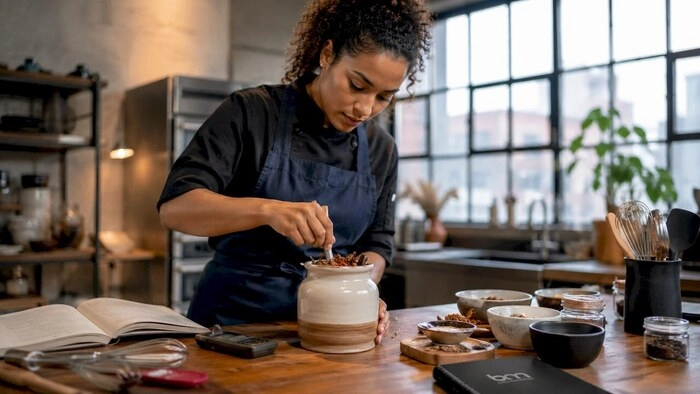
Master the baking with exotic ingredients process with our step-by-step guide. Unlock unique flavors and elevate your baking at home!
TL;DR:
- Baking with exotic ingredients requires precise temperature control, recipe adjustments, and understanding each ingredient’s role. Proper infusion, stabilizer ratios, and functional layering are essential for achieving complex flavors and stable textures. Small trial batches and disciplined techniques ensure consistent, professional results at home.
Baking with exotic ingredients process is defined as the precise infusion, preparation, and structural integration of non-traditional flavours, botanicals, and rare spices into baked goods. Unlike swapping one flour for another, working with exotic ingredients demands temperature control, recipe rebalancing, and an understanding of how each component behaves chemically. Get these steps right and you unlock flavour depth that standard pantry staples simply cannot deliver. This guide covers every stage, from selecting the right tools to troubleshooting texture collapse, so you can bake with rare flavours at a professional level from your own kitchen.
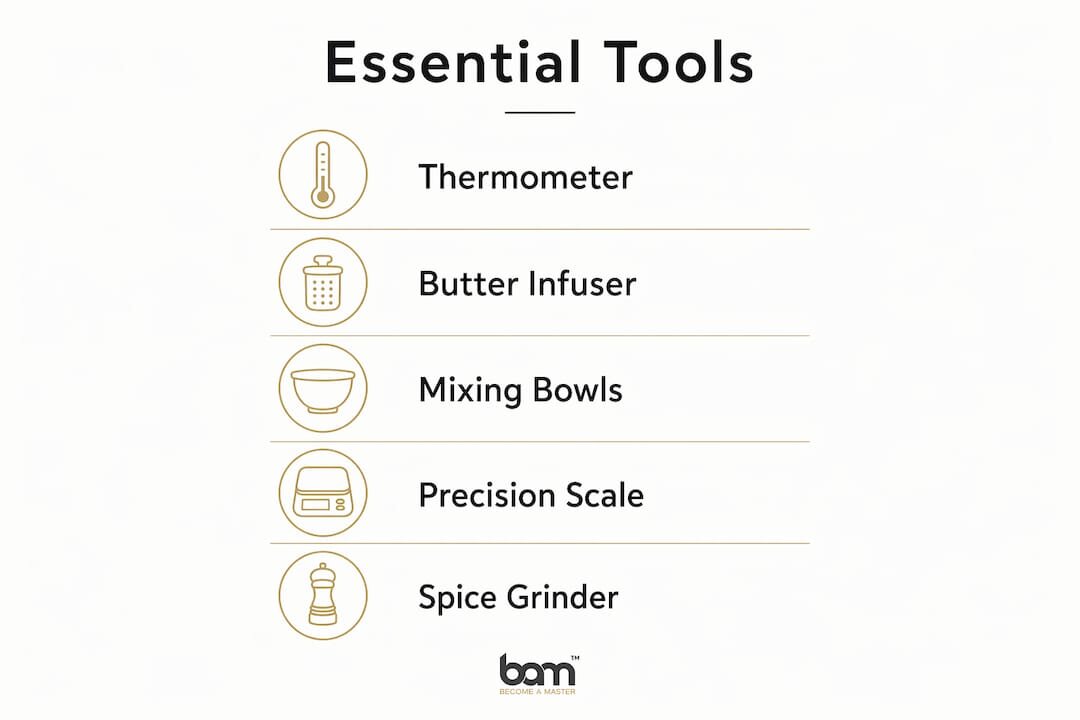
The right equipment makes the difference between a fragrant, well-structured bake and a flat, flavourless one. Before you begin any exotic baking recipe, you need a short-probe digital thermometer, a heat-safe infusion vessel, a precision scale, and an emulsifying tool such as a hand blender or stand mixer with a whisk attachment. These are not optional extras. Temperature accuracy and emulsification are the two technical pillars of working with delicate ingredients.
Exotic ingredients in baking fall into four broad categories, each with distinct handling requirements:
Pro Tip: When working with fat-soluble spices like tonka bean or mastic, infuse them directly into your butter or cream rather than adding them dry to the batter. You extract far more flavour this way.
The table below summarises the key tools and their specific roles in the process.
| Tool | Role in exotic baking |
|---|---|
| Short-probe digital thermometer | Monitors infusion temperature to stay below 70°C |
| Heat-safe infusion vessel | Holds cream or butter during controlled infusion |
| Precision scale | Measures stabilisers and exotic additives to the gram |
| Hand blender or stand mixer | Emulsifies plant-based fats and exotic extracts into batter |
| Fine-mesh sieve | Strains botanical solids after infusion |
Sourcing quality ingredients matters as much as the tools. Bamchocolate stocks a range of baking accessories and additives suited to this kind of precision work, including emulsifiers and confectionery sets designed for exotic filling integration.
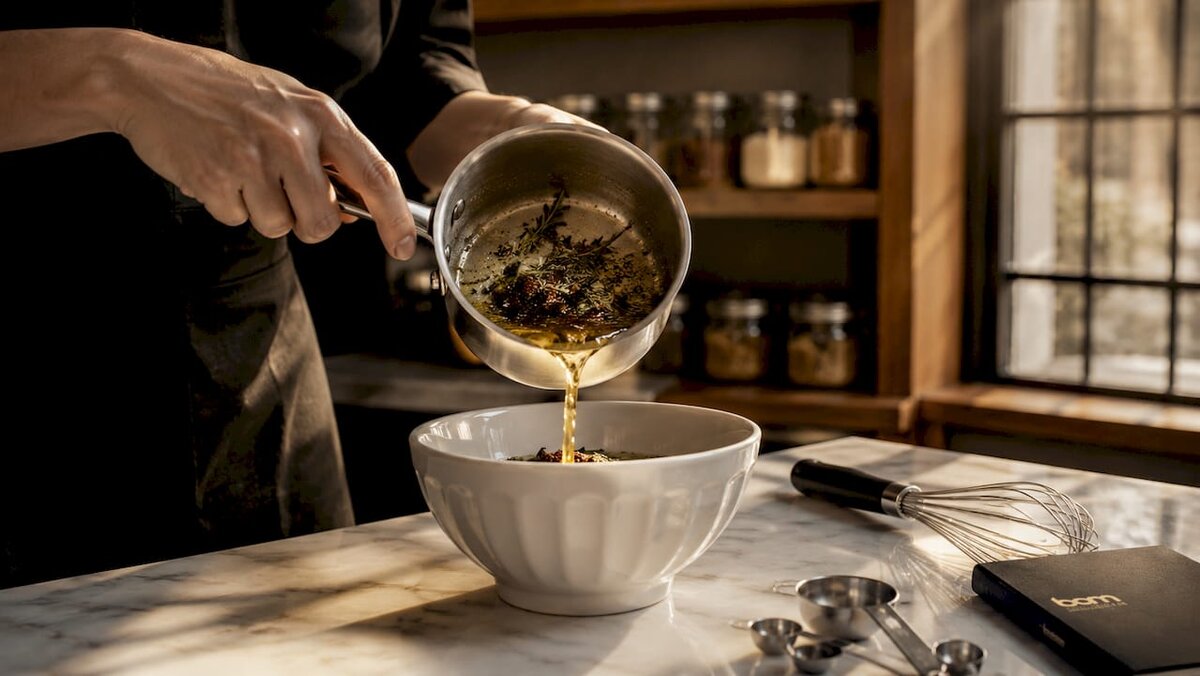
Infusion is the most critical stage in the entire process. Infusing exotic botanicals below 70°C preserves the bioactive and volatile aromatic compounds that give these ingredients their character. Go above that threshold and you destroy the very compounds you are trying to capture.
The standard infusion process follows three stages and adds 15–30 minutes to your total prep time. That is a small investment for a significant gain in flavour quality.
Professional pastry chefs also use enzyme-assisted extraction and pressurised butter infusion to maximise flavour potency without adding excess moisture. These methods are achievable at home with a vacuum-seal bag and a water bath set to a precise temperature.
Pro Tip: Cover your infusion vessel with cling film during the heating stage. This traps volatile aromatic compounds that would otherwise escape as steam, keeping the flavour in the liquid rather than in the air.
Home bakers often treat exotic ingredients as direct swaps for standard flavourings. This is the most common mistake in exotic baking. Exotic ingredients alter batter chemistry in ways that vanilla extract or cocoa powder do not.
Tropical fruits high in natural acids lower the pH of your batter. This affects how eggs coagulate and how leavening agents react. For practical guidance on adjusting leavening when modifying recipes, the baking powder and soda tips from Bamchocolate are a useful reference point. Botanical extracts can interfere with protein binding, and functional additives like inulin change moisture retention significantly.
Industry guidelines recommend adjusting stabiliser levels by 10–15% when exotic ingredients interfere with standard pH and binding properties. That adjustment prevents the two most common structural failures: syneresis (the weeping of liquid from a set mixture) and batter collapse.
The table below shows standard versus adjusted ratios for typical exotic ingredient additions.
| Ingredient type | Standard ratio | Adjusted ratio | Reason for change |
|---|---|---|---|
| Egg yolks (per 500g batter) | 80g | 90–95g | Compensates for reduced binding from acidic fruit |
| Stabiliser (gelatine or agar) | 2% | 2.2–2.3% | Offsets pH interference from botanicals |
| Emulsifier (soy lecithin) | 0.5% | 0.6–0.7% | Maintains fat-water stability with exotic extracts |
| Sugar | 100% | 85–90% | Accounts for natural sugars in tropical fruit additions |
Always trial a small batch first. A 200g test batch tells you whether your adjusted ratios hold before you commit to a full recipe. For broader cake baking performance tips, Bamchocolate’s guide covers structural adjustments that apply directly to exotic ingredient work.
Most problems in exotic baking trace back to two root causes: incorrect temperature and imprecise stabiliser ratios. Knowing how to identify each issue saves you from repeating the same failed batch.
Common problems and their solutions:
High heat destroys thermolabile compounds in exotic ingredients. This is not a guideline. It is a chemical fact. Every degree above 70°C costs you measurable flavour.
Pro Tip: When you want a strong exotic flavour without overpowering the dessert, use a layered approach. Add a small amount to the base batter and a slightly higher concentration to a glaze or filling. The contrast reads as complexity rather than intensity.
Flavour layering is the technique that separates a good exotic bake from a memorable one. The goal is not to add as many unusual ingredients as possible. The goal is to build a flavour arc, where one ingredient introduces the taste, a second deepens it, and a third provides contrast.
Pastry chef Jordi Bordas advocates treating every ingredient by its mechanical function, not just its flavour. Fibre provides body, starch provides structure, and lipid provides mouthfeel. When you select exotic ingredients with these roles in mind, you can reduce sugar and fat while actually increasing flavour complexity. This functional approach also applies to premium ingredients for unique flavour profiles across culinary disciplines beyond baking.
Strong exotic pairings to try:
Plant-based emulsions using soy lecithin and gums achieve dairy-like mouthfeel and maintain stability at 2–4°C serving temperatures. This makes them ideal for exotic fillings and chilled desserts where texture must hold from fridge to plate. For advanced pastry decoration techniques that complement exotic fillings, the Bamchocolate guide on modelling chocolate for pastry is worth reading alongside this process.
Successful baking with exotic ingredients requires precise temperature control during infusion, structural recipe adjustment, and a functional understanding of each ingredient’s role in the batter.
| Point | Details |
|---|---|
| Temperature is non-negotiable | Keep all infusions below 70°C to preserve volatile aromatic compounds. |
| Adjust stabilisers before adding flavour | Increase stabiliser levels by 10–15% to compensate for pH and binding changes. |
| Never treat exotic as a direct swap | Rebalance egg, fat, and stabiliser ratios before incorporating any exotic ingredient. |
| Layer flavours by function | Assign each ingredient a mechanical role (fibre, starch, lipid) as well as a flavour role. |
| Test small batches first | A 200g trial batch reveals structural failures before you commit to a full recipe. |
Most bakers focus on sourcing the unusual ingredient. They track down freeze-dried jabuticaba or fresh honeysuckle, and then they drop it straight into a recipe designed for vanilla extract. The result is almost always disappointing, and the ingredient gets blamed rather than the method.
What I have found, after years of working with rare flavours, is that the process matters more than the ingredient itself. A well-executed infusion of something as simple as dried lavender will outperform a carelessly added exotic fruit paste every time. Patience during the infusion stage is not optional. It is where the flavour actually gets built.
The other thing I would stress is temperature discipline. I keep a thermometer clipped to every infusion vessel. Not because I distrust myself, but because the difference between 65°C and 75°C is the difference between a fragrant cream and a flat one. Once you make temperature control a habit, your results become consistent rather than lucky. Knowing when a bake is properly done is the final piece of that discipline.
— Andraz
Bamchocolate offers a focused selection of products built for the kind of precision baking covered in this guide. The BAM Pastry set Exotic fillings is a practical starting point, with confectionery components designed specifically for exotic filling integration. For bakers who want to build a fuller toolkit, the BAM Basic pastry package covers foundational ingredients and accessories suited to recipe experimentation with unusual flavours. Both sets pair well with the infusion and adjustment techniques in this guide. Bamchocolate also stocks a full range of baking accessories including emulsifiers and stabilisers that support the ratio adjustments described above.
Infuse exotic botanicals at 60–65°C and never exceed 70°C. Higher temperatures destroy the volatile aromatic compounds that give these ingredients their flavour.
Structural collapse and syneresis both result from incorrect stabiliser ratios. Increase your stabiliser concentration by 10–15% and recalibrate exotic additives like inulin or albuwhip to the gram.
No. Exotic fruits alter batter pH and binding capacity. Adjust your egg yolk ratio upward and reduce sugar to account for the fruit’s natural sweetness before adding it.
A standard low-temperature infusion takes 15–30 minutes. This includes heating the liquid to 60–65°C, holding it with the exotic ingredient, and straining before use.
The functional approach means assigning each ingredient a mechanical role, such as fibre for body, starch for structure, or lipid for mouthfeel, rather than selecting ingredients by flavour alone. This method reduces sugar and fat while increasing flavour complexity.


 Confectionery tips



 Slovenščina
 Hrvatski
 Deutsch
 Italiano
 Česky
 Polski
 Magyar
 Français
 Slovák
 Nederlands
 Español