 info@bamchocolate.com
 Login


 en

 BAM Cake converter
 Login
Claudia
Avtorica vsebin


 Reading time:
9 minutes

Discover delicious examples of protein-rich desserts that satisfy cravings while supporting muscle health and a balanced diet. Indulge smartly!
TL;DR:
- Protein-rich desserts use whole-food ingredients like cottage cheese, eggs, and Greek yogurt to support muscle health and satiety. These recipes offer flavor and texture without relying heavily on protein powders, making them satisfying and natural options. They help manage blood sugar levels and extend fullness, ideal for various dietary needs and health goals.
Protein-rich desserts are sweet treats made with high-protein whole-food ingredients that support muscle health, satiety, and blood sugar stability. The best examples of protein-rich desserts use staples like cottage cheese, eggs, Greek yogurt, and nut butters to deliver genuine nutritional value alongside real indulgence. These are not diet-food compromises. They are properly constructed recipes that happen to contain far more protein than a standard pudding or cake. Whether you are managing your weight, supporting an active lifestyle, or simply want a smarter sweet, high-protein desserts belong in your repertoire.
The most popular high-protein desserts share one quality: they use whole-food protein sources as core ingredients rather than afterthoughts. Cottage cheese, eggs, Greek yogurt, nut butters, and protein powder each serve a structural role in these recipes, not just a nutritional one.
Here are the standout varieties worth knowing:
Each of these fits a different occasion, skill level, and dietary preference. That range is precisely what makes high-protein desserts practical rather than niche.
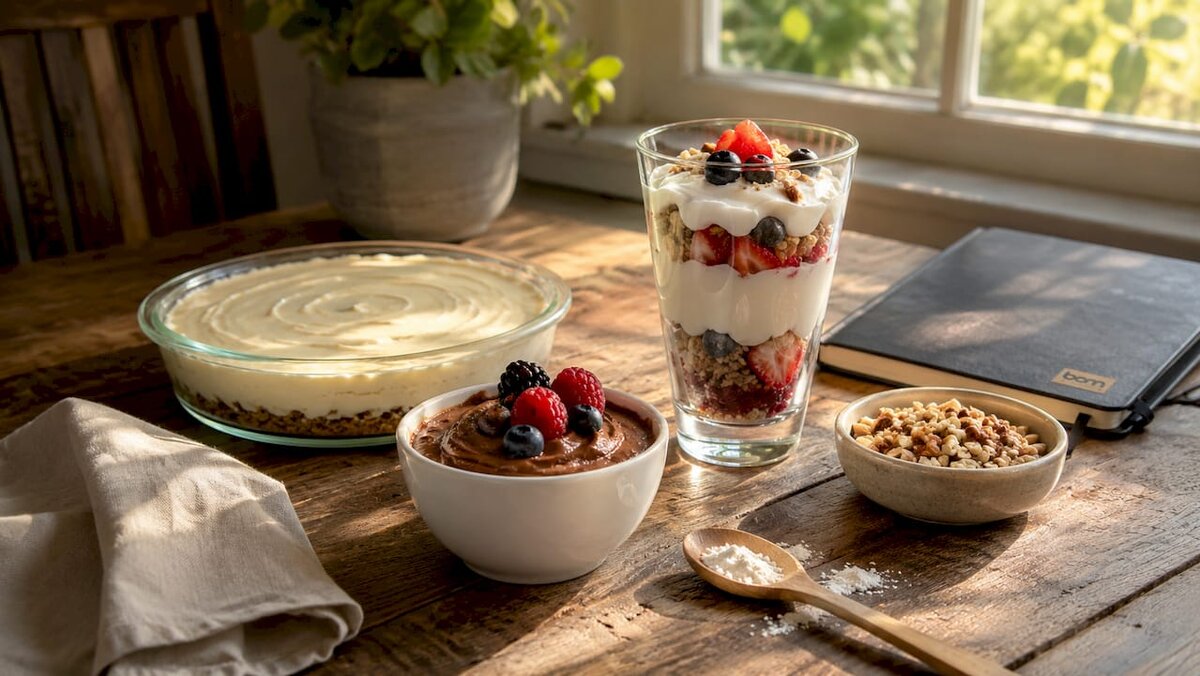
Preparation technique separates a genuinely good protein dessert from a dry, chalky disappointment. The ingredient choices matter, but so does how you handle them.
Blend cottage cheese until completely smooth. Cottage cheese is the most versatile protein base for creamy desserts, but it must be blended thoroughly before use. Any residual curd texture will carry through to the finished mousse or cheesecake. A high-speed blender or food processor for 60–90 seconds produces the silky result you need.
Use a crumbled protein bar as a no-bake crust. A protein bar crust adds both texture and protein to no-bake cheesecakes and tarts without requiring an oven. Press the crumbled bar into the base of your tin and chill for 10 minutes before adding the filling. It is simpler than a biscuit base and nutritionally superior.
Balance protein powder with moisture-rich ingredients. Excessive protein powder dries out baked goods. The fix is straightforward: combine powder with Greek yogurt, mashed banana, or eggs to maintain moisture. A ratio of one part powder to two parts wet ingredient works reliably in most brownie and muffin recipes.
Incorporate eggs correctly in custards. Tempering eggs by adding hot liquid slowly prevents scrambling and produces a smooth, set custard. This technique preserves the full protein content of the egg without overcooking it.
Pro Tip: Use monk fruit syrup or a quality sugar substitute like SugarSweet to sweeten protein desserts without adding refined sugar. This keeps the glycaemic load low while maintaining the sweetness that makes a dessert feel like a dessert.
Protein desserts are not a single category. They span dietary preferences from vegan to ketogenic, and occasions from post-workout snacks to dinner party finales.
Protein slows gastric emptying, which means food stays in the stomach longer and hunger returns more slowly. Protein in desserts directly extends the feeling of fullness compared to a standard sugary sweet. That is not a minor effect. It is the reason a cottage cheese cheesecake keeps you satisfied for two hours when a standard slice of cake does not.
Blood sugar management follows the same logic. Sugar alone causes a rapid glucose spike followed by a sharp drop, which triggers cravings. Protein blunts that spike by slowing the absorption of carbohydrates consumed alongside it. A dessert that combines protein with moderate sugar produces a far gentler blood sugar curve.
Whole-food protein sources like yogurt, eggs, and nuts serve a dual purpose in desserts. They contribute to muscle maintenance and metabolic health at the same time as satisfying a sweet craving. This is the core argument for making protein desserts a regular part of your diet rather than an occasional novelty.
“High-protein desserts that retain rich flavour by integrating protein naturally rather than producing ‘diet’ versions are the ones that actually support long-term nutrition goals. Recipes built on real ingredients outperform supplement-heavy alternatives every time.” Recipe developers and nutrition professionals consistently reach this conclusion.
The practical implication is clear. Choose desserts built on cottage cheese, eggs, or Greek yogurt before reaching for a protein powder-heavy recipe. The flavour is better, the texture is better, and the satiety effect is at least as strong.
Protein-rich desserts built on whole-food ingredients like cottage cheese, eggs, and Greek yogurt deliver superior flavour, texture, and satiety compared to powder-heavy alternatives.
| Point | Details |
|---|---|
| Cottage cheese as a protein base | Blended smooth, it delivers up to 43g protein per serving in no-bake cheesecakes. |
| Balance powder with wet ingredients | Combining protein powder with yogurt or eggs prevents dryness in baked desserts. |
| Protein slows digestion | High-protein desserts extend fullness and reduce blood sugar spikes after eating. |
| Variety suits every diet | Vegan, sugar-free, frozen, and microwave options all exist within the protein dessert category. |
| Whole foods outperform supplements | Natural protein sources produce better texture and flavour than powder-heavy recipes. |
The first time I made a cottage cheese chocolate mousse, I expected it to taste like a health food. It did not. It tasted like mousse. That experience changed how I think about the entire category.
The biggest mistake people make with protein desserts is over-relying on protein powder. Powder has its place, but it is a supplement, not a base ingredient. When you build a dessert around cottage cheese, Greek yogurt, or eggs, you get a recipe that works on its own terms. The protein is incidental to the eating experience, which is exactly how it should be.
The second mistake is treating high-protein as a licence to skip flavour development. Vanilla extract, good-quality cocoa, a pinch of sea salt, and proper sweetening all matter as much in a protein dessert as in any other recipe. A well-made chocolate mousse should taste indulgent. If it does not, the recipe needs work, not more powder.
Experiment with ratios. Swap one ingredient at a time. Keep notes. The best protein dessert you will ever make is the one you have refined over several attempts to suit your own taste.
— Andraz
Bamchocolate stocks a range of baking accessories suited to preparing protein-rich desserts at home, from precision tools to quality moulds. The 101 BAM pastry recipe book covers techniques and formulas that translate directly to high-protein adaptations, giving you a structured foundation rather than trial and error. For those who want a complete starting point, the BAM Basic pastry package brings together core ingredients and tools in one order. Bamchocolate also offers creamy filling sets that complement protein-rich dessert recipes and reduce preparation time without cutting corners on quality.
A protein-rich dessert is a sweet treat made with high-protein ingredients such as cottage cheese, Greek yogurt, eggs, or nut butters. These desserts deliver more protein per serving than standard sweets, supporting satiety and muscle health.
A no-bake cottage cheese cheesecake can contain approximately 43g of protein per serving, which represents a strong benchmark. Most high-protein desserts aim for at least 15–20g of protein per portion to meaningfully support nutrition goals.
Protein slows digestion and reduces blood sugar spikes, which extends fullness and reduces cravings after eating. This makes high-protein desserts a practical tool for managing calorie intake without eliminating sweet treats.
Cottage cheese and Greek yogurt are the most versatile natural protein sources for desserts. Both blend smoothly into mousses and cheesecakes, and both contribute meaningful protein without altering flavour significantly.
Sugar-free protein desserts using monk fruit or erythritol as sweeteners are genuinely satisfying when the recipe is well-constructed. The key is combining a quality sweetener with a flavourful protein base such as cocoa, vanilla, or fruit.



 Chocolate novelties




 Slovenščina
 Hrvatski
 Deutsch
 Italiano
 Česky
 Polski
 Magyar
 Français
 Slovák
 Nederlands
 Español