 info@bamchocolate.com
  Login
Login 

 en
en 
 BAM Cake converter
  Login
Login Claudia
Avtorica vsebin


 Reading time:
10 minutes
Reading time:
10 minutes 
Discover the sugar-free baking benefits! Learn how to create delicious, healthier desserts with steady blood sugar and creative options.
TL;DR:
- Reducing added sugar in baking improves blood sugar control and lowers chronic disease risk through better ingredient choices.
- Choosing natural sweeteners and fiber-rich flours enhances texture, moisture, and nutritional value in sugar-free recipes.
Cutting added sugar from your baking sounds straightforward until you realise sugar does far more than sweeten. It holds moisture, creates structure, and drives that golden-brown crust you love. The sugar-free baking benefits go well beyond calorie reduction, though. From steadier blood sugar to more creative recipes, baking without sugar opens up a genuinely different approach to desserts. Whether you are managing diabetes, watching your weight, or simply curious about healthier options, this guide covers what actually changes when you remove sugar and how to make it work.
| Point | Details |
|---|---|
| Blood sugar control | Replacing sugar with low-glycaemic alternatives and fibre-rich flours produces steadier blood glucose responses. |
| Sweetener choice matters | Natural sweeteners perform differently in baking; selecting the right one preserves texture, flavour, and moisture. |
| Flour makes the biggest difference | Almond and oat flours often have more impact on blood sugar than the sweetener swap alone. |
| Sugar-free is not always healthier | Many commercial sugar-free products add extra fat and fillers; homemade gives you full ingredient control. |
| Experimentation pays off | Combining flours and sweeteners takes practice, but the results are genuinely delicious and nutritionally superior. |
The case for reducing sugar starts with the numbers. Dietary guidelines recommend limiting added sugars to less than 10% of total daily calories, which works out to roughly 50 grams or 12 teaspoons on a standard 2,000-calorie diet. Most home-baked treats blow through that allowance in a single serving.
For people with diabetes or prediabetes, the impact is direct. Baking with low-glycaemic sweeteners and fibre-rich flours produces a steadier blood sugar response compared to conventional recipes. That steadiness matters not just for managing conditions but for avoiding the energy crashes that follow a sugar spike.
Reducing added sugar in your baking is one of the most practical dietary changes you can make at home, because you control every ingredient that goes into the tin.
The broader health case is equally strong. Consistently high sugar intake is linked to increased risk of type 2 diabetes, cardiovascular disease, and metabolic syndrome. Shifting to sugar-free desserts, even occasionally, reduces that cumulative load without asking you to give up baking entirely.
One caveat worth noting: the WHO has flagged concerns about long-term use of non-sugar sweeteners, citing potential links to increased cardiovascular risk. The answer is not to abandon sugar-free baking but to prioritise whole-food sweeteners and quality ingredients over heavily processed substitutes.
Not all sweeteners behave the same way in the oven. Understanding their properties saves you from flat, pale, or oddly textured results.
Natural sweeteners worth knowing:
Understanding why natural sweeteners are healthier than refined sugar helps you make better choices for each recipe rather than defaulting to a single substitute.
Pro Tip: Blend erythritol with a small amount of monk fruit extract. The combination gives you better sweetness balance and improved texture compared to using either on its own.
Here is the insight most sugar-free baking guides miss: flour choice is often more impactful than sweetener choice when it comes to blood sugar response and overall nutrition. Swapping white flour for a fibre-rich alternative changes the entire nutritional profile of your bake.
| Flour | Key benefit | Best used for |
|---|---|---|
| Almond flour | Low-carb, high protein and healthy fats | Cakes, biscuits, tart bases |
| Oat flour | Beta-glucan fibre slows digestion | Muffins, pancakes, crumbles |
| Coconut flour | Very high fibre, absorbs lots of moisture | Dense cakes, brownies |
| Buckwheat flour | Gluten-free, rich in minerals | Bread, waffles, crepes |
Almond and oat flours have lower glycaemic indices and provide better fibre, protein, and healthy fats to slow digestion compared to refined wheat flour. That slower digestion is precisely what keeps blood sugar stable after eating.
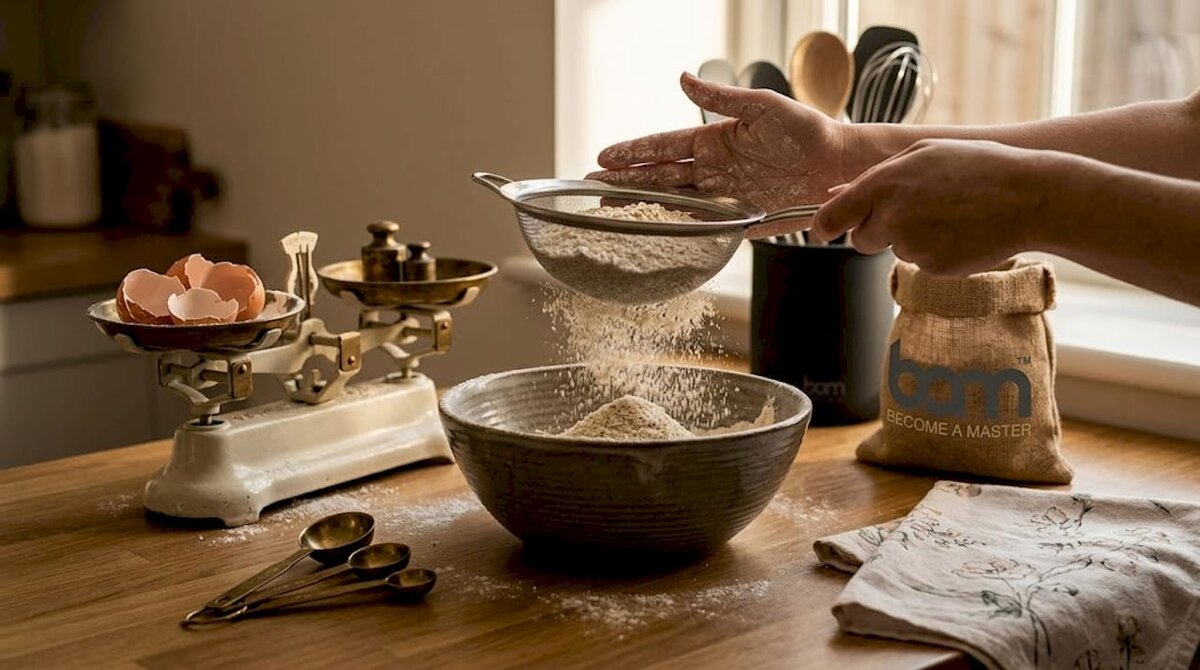
Coconut flour is highly absorbent and needs significantly more liquid or egg in the recipe. A useful starting point: for every 100g of plain flour, use around 30g of coconut flour and increase eggs or liquid accordingly.
Combining flours often produces the best results. Almond flour provides moisture and richness; oat flour adds structure. A 50/50 blend works well in most cake and muffin recipes.
Pro Tip: When switching to coconut flour, add one extra egg per 30g of flour used. This compensates for its high absorption rate and prevents a dry, crumbly texture.
Cutting sugar directly reduces the calorie density of your bakes. A standard Victoria sponge can contain over 300 calories per slice largely from sugar. Replacing it with erythritol or tagatose brings that figure down substantially without changing the portion size.
This is the most clinically significant advantage. Using low-glycaemic sweeteners combined with almond or oat flour creates bakes with steadier blood sugar responses. For anyone managing diabetes or insulin resistance, this is genuinely meaningful.
Excess sugar intake is directly associated with obesity, type 2 diabetes, and heart disease. Reducing it through your baking habits contributes to lower cumulative exposure over time.
Sugar spikes are followed by crashes. Bakes made with fibre-rich flours and low-glycaemic sweeteners release energy more gradually, so you feel sustained rather than briefly energised and then flat.
Sugar feeds the oral bacteria responsible for tooth decay. Sweeteners like erythritol and xylitol do not ferment in the mouth, which means your sugar-free brownies are genuinely kinder to your teeth.
Sugar-free recipes can accommodate diabetics, those on low-carbohydrate diets, and people following specific medical nutrition plans. Baking this way means more people at your table can eat what you make.
When you replace sugar with whole-food alternatives and switch to almond or oat flour, you are adding protein, fibre, and healthy fats to what would otherwise be nutritionally empty calories. The bake becomes a vehicle for nutrition rather than just pleasure.
This is the practical emotional benefit. You can eat a slice of cake and feel good about it. That shift in relationship with food is underrated. It removes the cycle of indulgence and regret that makes healthy eating feel punishing.
Working without sugar forces you to understand what each ingredient actually does. You learn to balance moisture, sweetness, and structure deliberately. That knowledge makes you a better baker across all recipes, not just sugar-free ones.
Homemade sugar-free baking gives you full visibility of what goes in. This matters because sugar-free products are not inherently healthier; many commercial versions add extra fat and fillers to compensate for the missing sugar. When you bake at home, you avoid that trade-off entirely.
Sugar does more than sweeten. It retains moisture, contributes to browning through caramelisation and the Maillard reaction, and provides structural bulk. Remove it without compensating and you get bakes that are dry, pale, and dense.
Common issues and practical fixes:
It is also worth being realistic about sweetener limitations. Short-term use of artificial sweeteners can modestly reduce weight and calorie intake, but long-term reliance reinforces a preference for intensely sweet flavours. The goal of sugar-free baking should be to gradually recalibrate your palate, not to replicate exactly the sweetness level of conventional bakes.
Pro Tip: Reduce the total sweetness in your recipes by 20% compared to what you think you need. After a few weeks, your palate adjusts and you will find that level genuinely satisfying rather than lacking.
Also, learning the right use of baking powder and baking soda becomes especially important in sugar-free recipes, since you are already adjusting multiple variables at once.
I have spent a fair amount of time testing sugar-free recipes, and the honest truth is that the first attempts are rarely impressive. The texture is off, the colour is wrong, and you wonder why you bothered. That phase passes quickly once you understand what sugar was actually doing in the recipe.
What I have found is that the biggest mistake people make is treating sugar-free baking as a one-to-one substitution exercise. It is not. It is a reformulation. Once you accept that, the results improve dramatically. I now bake sugar-free versions of recipes I genuinely prefer to the originals, not because I am compromising but because the flavours of almond flour, good-quality cocoa, and monk fruit sweetener are actually more interesting than the sugar-heavy versions.
The social dimension matters too. Being able to offer a genuinely delicious cake to a diabetic friend or a guest on a low-carbohydrate diet changes the dynamic around food. Inclusive baking is one of the underappreciated advantages of sugar-free recipes.
Start with one recipe. Adjust it over two or three attempts. The learning curve is shorter than you expect.
— Andraz
Bamchocolate stocks a range of ingredients and accessories designed for home bakers who want results, not compromises. Whether you are starting out or refining established recipes, the right tools and ingredients make a measurable difference.
The 101 BAM pastry recipe collection includes sugar-free and low-sugar ideas that work in a real home kitchen, not just a professional one. For those building out their pantry, the BAM Basic pastry package brings together core baking ingredients suited to healthier recipe adaptations. And if you want to explore the full range of baking accessories that support precise, consistent results in sugar-free baking, Bamchocolate has you covered from tins to thermometers.
Good ingredients are the foundation. Everything else follows.
The key benefits include improved blood sugar stability, reduced calorie intake, better dental health, and greater dietary inclusion. Homemade sugar-free bakes also give you full control over ingredient quality, which commercial products rarely offer.
Erythritol, monk fruit extract, and tagatose are the most reliable for home baking. Tagatose in particular behaves like sucrose in terms of browning and texture, making it ideal for recipes where appearance matters.
Yes, significantly. Flour choice often has more impact on blood sugar response than the sweetener itself. Almond and oat flours lower the glycaemic load of the whole bake.
Not automatically. Many commercial sugar-free products add extra fat and fillers to compensate for missing sugar, which can undermine the health benefit. Baking from scratch gives you full control.
Absolutely. The benefits of reduced sugar intake, including steadier energy, lower chronic disease risk, and better dental health, apply to everyone, not just those managing blood glucose conditions.



 Chocolate novelties



 Slovenščina
 Hrvatski
 Deutsch
 Italiano
 Česky
Česky
 Polski
 Magyar
 Français
 Slovák
 Nederlands
 Español