 info@bamchocolate.com
  Login
Login 

 en
en 
 BAM Cake converter
  Login
Login Claudia
Avtorica vsebin


 Reading time:
11 minutes
Reading time:
11 minutes 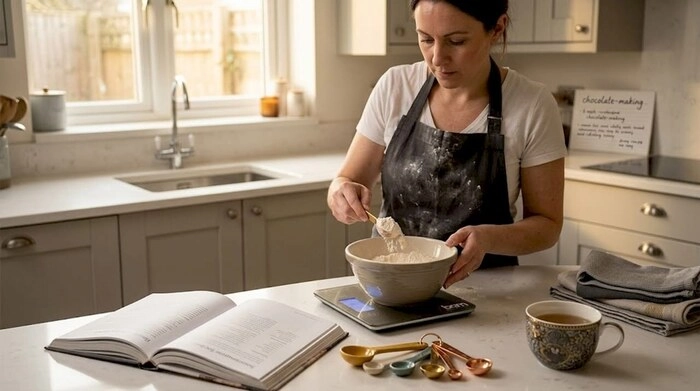
Unlock your baking potential with expert tips for home bakers. Discover ten actionable ways to achieve consistent, delicious results every time!
TL;DR:
- Measuring flour by weight with a digital scale significantly reduces measurement errors and improves baking consistency.
- Using room temperature ingredients and calibrating your oven with a thermometer help produce even, reliable results every time.
Inconsistent results are one of the most common frustrations home bakers face. You follow the recipe exactly, yet the cake sinks, the biscuits spread too much, or the bread comes out dense. The culprit is rarely the recipe itself. Small factors like how you measure flour, the temperature of your butter, or the actual heat inside your oven are often to blame. These tips for home bakers cut through the guesswork and give you ten practical, expert-backed changes you can make right now to bake with more confidence and consistency.
| Point | Details |
|---|---|
| Weigh your ingredients | Use a digital scale rather than cups to avoid up to 30% measurement error in flour. |
| Bring ingredients to room temperature | Cold butter and eggs emulsify poorly, leading to denser, uneven bakes. |
| Verify your oven temperature | Most home ovens run 15 to 30°C off; an oven thermometer corrects this quickly. |
| Mix with intention | Overmixing develops tough gluten; use timers and stroke counts to stay consistent. |
| Keep a baking log | Recording variables like humidity, flour brand, and resting times helps you improve over time. |
This is the single most impactful change you can make. Measuring flour by volume can vary by 20 to 30% depending on how you scoop, which directly affects texture. The spoon-and-level method yields roughly 125g per cup, while scooping straight from the bag can pack in closer to 155g. That 24% difference is the reason your muffins turn out dense or your pastry is too dry.
The fix is straightforward:
Pro Tip: Once you start weighing ingredients, write the gram equivalents directly onto your recipe cards. You will never go back to cups.
Cold butter, eggs straight from the fridge, and chilled milk are among the most common causes of baking failures. Cold eggs and butter emulsify poorly, trapping air unevenly and producing cakes that are denser than they should be. Room temperature ingredients blend together smoothly, creating a stable emulsion that holds air and rises evenly.
Getting ingredients to the right temperature does not have to take hours:
Pro Tip: If you forget to take butter out in advance, grate it straight from the fridge using a box grater. The thin strands soften in under five minutes at room temperature.
Your oven’s dial is not telling you the truth. Most home ovens have temperature inaccuracies of 15 to 30°C, and professional tests have found variances exceeding 30°C even in high-end models. Baking at the wrong temperature is why your cakes brown too fast on the outside while staying raw in the middle.
Here is how to take control:
Pro Tip: Write your oven’s offset on a sticky note inside a cupboard door. You will reference it every single time you bake.
Mixing is not just stirring. The amount of time and effort you put into mixing directly controls the texture of your final bake. Overmixing develops gluten strands that make cakes and muffins tough and chewy. Undermixing leaves dry flour streaks and an uneven crumb.
The key is knowing what to look for:
Understanding the science behind leavening agents also helps here. Overmixing after adding baking powder or soda can deflate the gas bubbles before they have a chance to set in the oven.
Pan material, colour, and size all affect how your bake turns out, often more than bakers expect. Dark metal pans brown bakes faster than light-coloured pans because they absorb more radiant heat. Silicone moulds conduct heat more slowly, which means bake times need to be extended.
A few practical rules:
Most home bakers skip this step entirely, and it shows. Resting allows the flour to fully hydrate, gluten to relax, and leavening agents to begin working. The result is a more even crumb, better rise, and improved flavour.
For muffin and pancake batters, a ten-minute rest at room temperature makes a noticeable difference. For enriched doughs like brioche or cinnamon rolls, a cold overnight rest in the fridge develops flavour compounds that simply cannot form in a rushed two-hour proof. Shortcrust pastry benefits from a 30-minute chill before rolling, which prevents shrinkage during baking.
The habit of resting also gives you time to preheat the oven properly, prepare your pans, and double-check your recipe. It turns a rushed process into a methodical one.
This is home baking advice that professionals take seriously but most home bakers ignore. Keeping a baking log lets you track the variables that affect your results: flour brand, ingredient weights, oven calibration readings, resting times, humidity, and your notes on the final product.
You do not need anything elaborate. A small notebook or a notes app on your phone works perfectly. After each bake, record:
Over time, this log becomes your personal baking reference. You will spot patterns, such as noticing that your sponges always come out flat on rainy days, and you will know exactly what to adjust.
Investing in quality ingredients is not about spending more for the sake of it. It is about removing variables. When you use the same brand of flour, butter, and chocolate each time, you eliminate one more unknown from your baking equation.
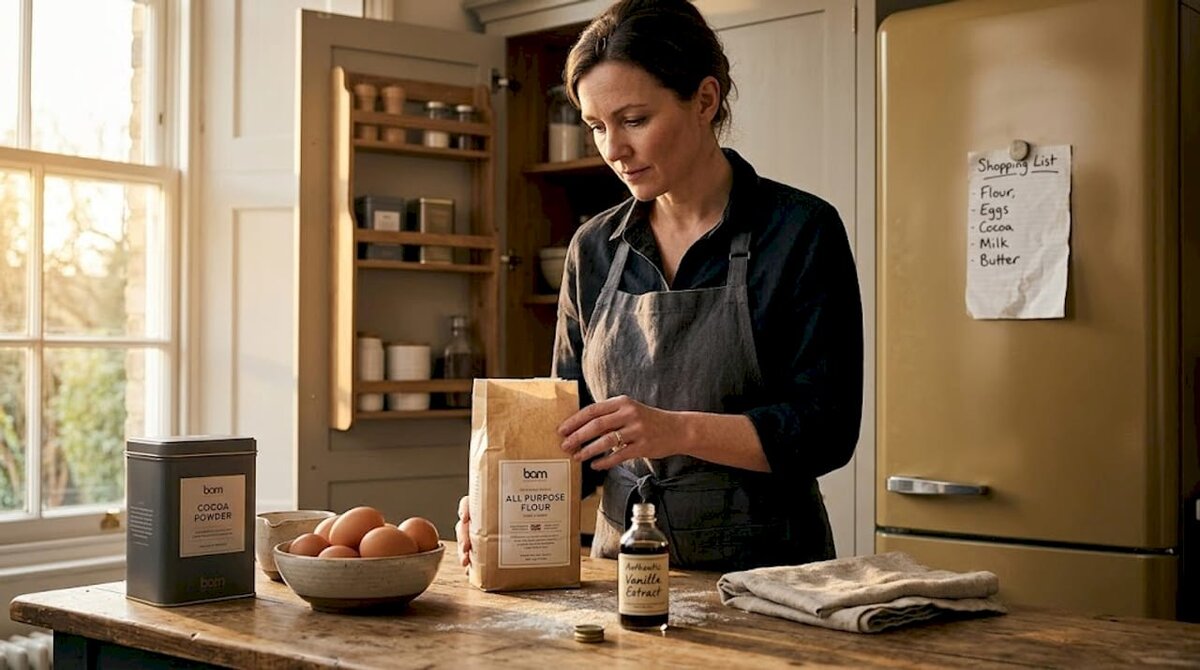
For chocolate-based bakes in particular, the quality of your cocoa or couverture chocolate has a direct impact on flavour depth and texture. Premium chocolate with a higher cocoa butter content melts more smoothly and sets with a better snap. Knowing which chocolate to choose for baking is a skill worth developing early.
Pro Tip: Buy ingredients in quantities that you will use within a reasonable time. Old baking powder loses potency, and stale flour absorbs liquid differently. Freshness matters.
Recipes give you a time range, not a guarantee. Oven variations, altitude, humidity, and even the age of your ingredients all affect how long something actually takes to bake. Relying solely on the timer is one of the most common mistakes bakers make.
Learn the physical cues instead. A well-baked sponge springs back when pressed lightly in the centre. Biscuits firm up as they cool, so pull them out when they look just underdone. Bread sounds hollow when tapped on the base. Understanding when biscuits and cakes are ideally baked by sight and touch rather than time alone is one of the most useful skills you can develop.
| Tip | Key benefit | Difficulty | Impact level |
|---|---|---|---|
| Weigh flour with a scale | Eliminates up to 30% measurement error | Low | Very high |
| Use room temperature ingredients | Improves emulsification and rise | Low | High |
| Use an oven thermometer | Corrects temperature inaccuracies of 15 to 30°C | Low | Very high |
| Mix with intention and timing | Prevents tough or streaky textures | Medium | High |
| Choose the correct pan | Controls browning and bake time | Low | Medium |
| Rest batter and dough | Improves crumb, flavour, and rise | Low | Medium |
| Keep a baking log | Builds consistency over time | Low | High |
| Use consistent, quality ingredients | Removes ingredient variables | Low | Medium |
| Read physical cues, not just the clock | Prevents over and underbaking | Medium | High |
| Understand your leavening agents | Prevents flat or dense bakes | Medium | High |
Professional bakers stress understanding the science behind baking rather than rigidly following recipes. This table is a starting point. Pick two or three tips to implement first, get comfortable, then add more. An incremental approach works far better than trying to overhaul everything at once.
I spent a long time wondering why my bakes never quite matched the recipe photos. The cakes were fine. But they were not consistent. Some weeks the sponge was perfect; other weeks it was flat and slightly gummy. The difference was almost always something I had rushed or skimmed over.
The moment I started weighing every ingredient and using an oven thermometer, the results became noticeably more reliable. Not perfect immediately, but repeatable. And repeatability is what separates a baker who occasionally gets lucky from one who actually understands the craft.
What I have found is that investing in a scale and thermometer is genuinely the fastest way to improve. Not a new recipe book, not a fancier mixer. Just those two tools. The rest is patience and attention. Baking rewards the methodical. If you rush the rest, skip the log, or eyeball your flour, you are making the process harder than it needs to be. Be patient with yourself. Every baker has a drawer full of failures they learned from.
— Andraz
Applying these tips is much easier when you have the right equipment to hand. Bamchocolate stocks a range of baking accessories including digital scales, oven thermometers, and precision tools that make accurate measuring and temperature control straightforward. For bakers who want to put these techniques into practice straight away, the BAM Basic pastry package offers a curated selection of premium ingredients and recipe guidance in one place. If you are ready to expand your repertoire, the 101 BAM pastry recipe collection gives you a wide range of tested recipes to work through as your skills develop.
Weigh flour using a digital kitchen scale in grams. If you use cups, spoon the flour lightly into the cup and level it off with a straight edge. Scooping directly from the bag can add 20 to 30% more flour than the recipe intends.
Cold ingredients are usually the cause. Cold butter and eggs emulsify poorly, trapping air unevenly and producing a dense crumb. Bring all dairy and eggs to room temperature before you start mixing.
Place an independent oven thermometer on the middle rack and preheat for at least 15 minutes after the signal sounds. Most home ovens run 15 to 30°C hotter or cooler than the dial indicates.
Once you add the flour, mix only until the last streak disappears. For most cake batters using an electric mixer, that is around 60 seconds on medium speed. Overmixing develops gluten and makes the cake tough.
Yes. Recording ingredient weights, oven readings, resting times, and results lets you identify patterns and make targeted improvements. It is one of the most effective habits for achieving consistent results over time.



 Chocolate novelties



 Slovenščina
 Hrvatski
 Deutsch
 Italiano
 Česky
Česky
 Polski
 Magyar
 Français
 Slovák
 Nederlands
 Español