 info@bamchocolate.com
 Login


 en

 BAM Cake converter
 Login
Claudia
Avtorica vsebin


 Reading time:
11 minutes
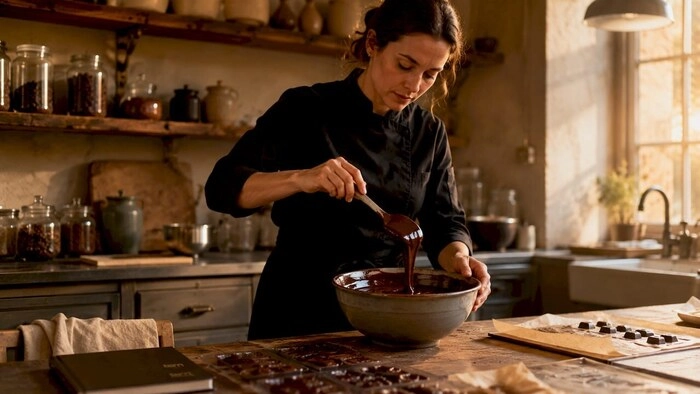
Discover what is single batch chocolate and how it elevates your baking. This guide explores the craft chocolate movement and its benefits.
TL;DR:
- Single batch chocolate is artisan, bean-to-bar chocolate made in limited quantities by one producer. It offers better flavor clarity, freshness, and ethical sourcing compared to mass-produced chocolate. Proper tempering and transparent ingredient lists are key indicators of high-quality single batch chocolate.
Single batch chocolate is defined as chocolate produced in limited artisan quantities, where one maker controls every stage from raw cacao bean to finished bar. The industry term for this approach is “bean-to-bar” production, and it sits at the heart of the craft chocolate movement. That movement grew from nearly zero to over 2,500 bean-to-bar manufacturers globally between 2006 and 2026. The scale of that growth signals a genuine shift in how chocolate lovers and culinary enthusiasts think about quality, origin, and flavour. If you want to understand what is single batch chocolate and why it matters for gourmet baking, this guide covers every angle.
Single batch chocolate is the direct opposite of continuous automated production. Mass-market chocolate is made on industrial lines that run without pause, blending beans from dozens of origins and adding emulsifiers, vegetable fats, and artificial flavourings to hit a consistent, shelf-stable result. Single batch production rejects all of that. Bean-to-bar makers control all steps from raw bean roasting to bar moulding, which gives them full flavour transparency and origin clarity.
The result is a product with a traceable identity. Batch codes and origin details link the finished bar back to specific farms or cooperatives. That traceability is not a marketing detail. It is the mechanism that makes flavour consistency and ethical sourcing possible at the same time. When you buy a bar with a batch code, you can verify exactly where the cacao came from and how it was processed. The fine chocolate story is built on that transparency.
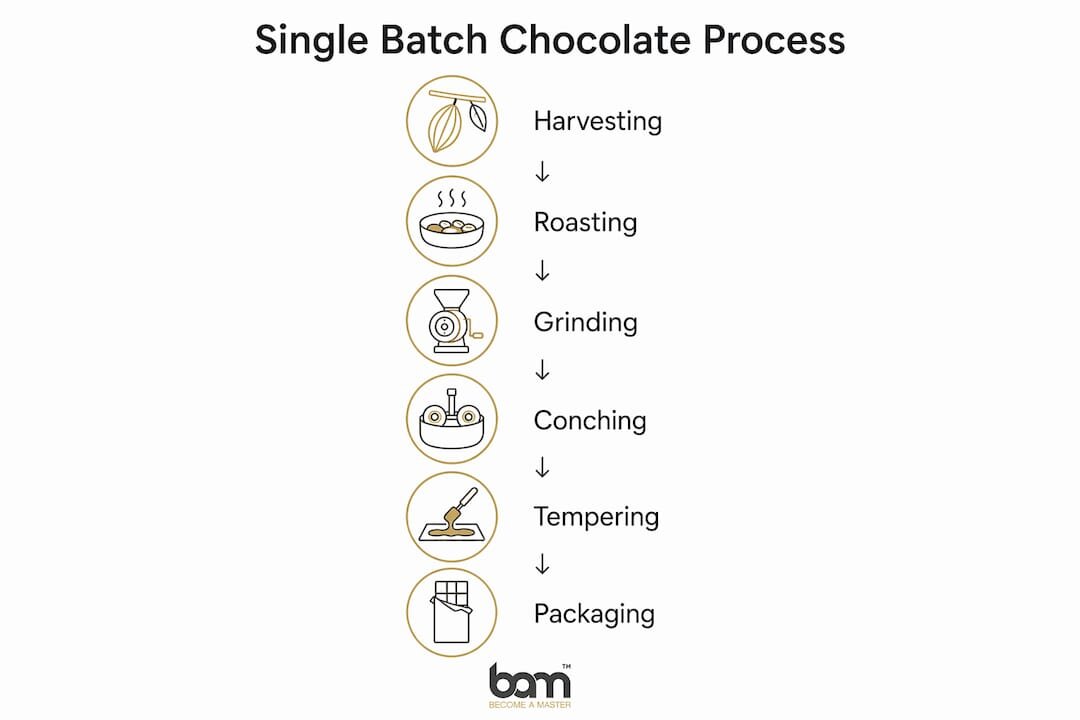
The bean-to-bar process follows a fixed sequence of stages, each of which shapes the final flavour and texture.
Producing a 1–2 lb batch typically requires 3–4 hours of active labour within a total cycle time of 36–54 hours. Most of that cycle is unattended machine processing. That fact debunks the common assumption that small batch chocolate demands constant human attention. The maker’s skill lies in setting up each stage correctly, not in standing over the machine.
Pro Tip: When conching at home, taste the chocolate every few hours. The flavour shifts noticeably as volatile acids dissipate. Stopping too early leaves a sharp, acidic edge; going too long can flatten the origin character.
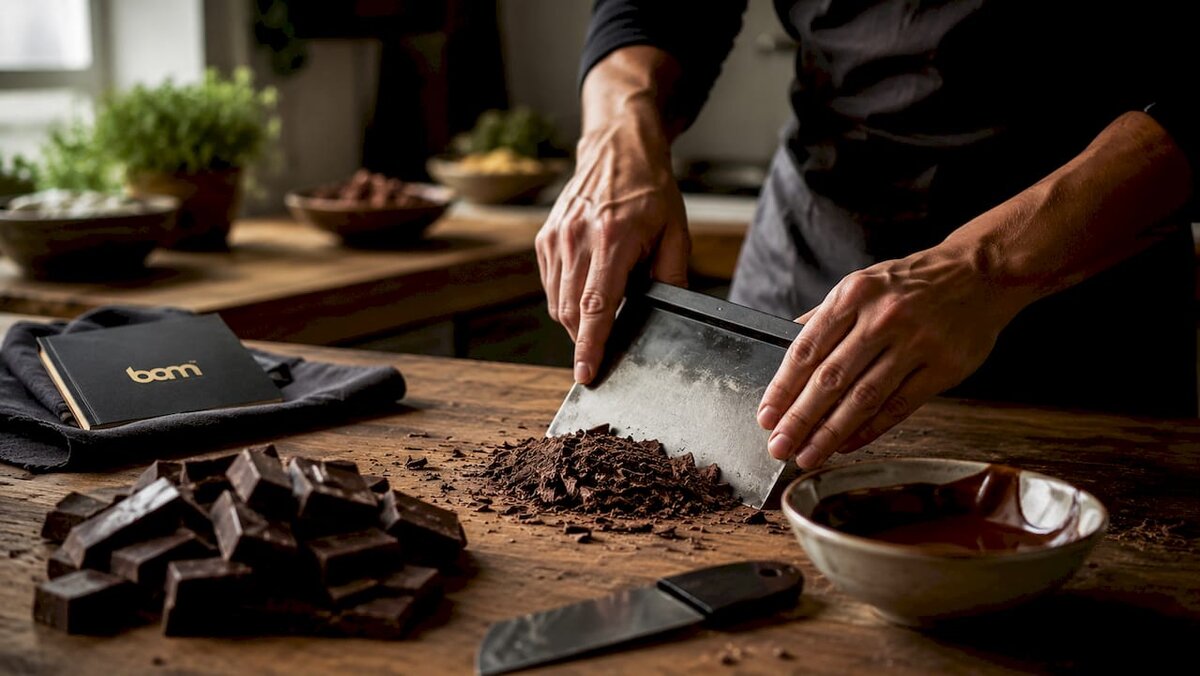
Artisan makers also make a deliberate choice about ingredients. Small batch chocolate uses no fillers, preservatives, or artificial flavours, prioritising real ingredients for true chocolate flavour. Industrial emulsifiers like soya lecithin are excluded. The result is a shorter, cleaner ingredient list that lets the cacao speak for itself.
The advantages of single batch chocolate over commodity chocolate are concrete and measurable in the eating experience.
For home bakers and culinary enthusiasts, these benefits translate directly into better results. A ganache made with single batch chocolate carries the origin character of the cacao into the finished dessert. A truffle shell tempered from a well-made bar snaps at the table and melts cleanly on the tongue.
Knowing what to look for separates a genuinely well-made bar from one that simply carries artisan branding.
Pro Tip: Let a piece of single batch chocolate melt on your tongue without chewing. The flavour evolves in stages as the cocoa butter releases. This is the clearest way to experience origin character and assess whether the tempering was done correctly.
A common misconception is that small batch automatically means better. The batch size matters less than the maker’s control over each stage. A poorly conched or badly tempered bar is still a poor bar, regardless of how small the production run was. Seek out makers who publish their sourcing details and process notes. Transparency is the real quality signal.
Single batch chocolate changes the outcome of baked goods and confections in ways that commodity chocolate simply cannot replicate. The table below shows how the qualities of single batch chocolate map to specific baking applications.
| Baking application | How single batch chocolate helps |
|---|---|
| Ganaches and truffles | Origin flavour carries through cream and butter; no artificial notes compete |
| Pastry glazes | Correct tempering produces a glossy, stable glaze that sets with a clean snap |
| Mousse and soufflé | Clean ingredient profile means no emulsifiers interfere with aeration |
| Chocolate chip biscuits | Richer cocoa flavour survives high oven temperatures better than commodity chips |
| Bonbon shells | Consistent cocoa butter content gives reliable contraction for easy demoulding |
The texture benefits are particularly significant. Chocolate that has been correctly tempered by the maker melts at a predictable rate, which matters when you are working with ganache ratios or coating confections. Commodity chocolate often contains added vegetable fats that shift the melting point unpredictably. That inconsistency is the reason professional pastry chefs prefer single batch or single origin chocolate for refined work.
Freshness also plays a role in baking outcomes. Single batch chocolate is typically produced in smaller runs and sold closer to its production date. Fresher chocolate retains volatile aromatic compounds that bake off in older stock. A chocolate fondant made with a fresh single batch bar smells noticeably more complex coming out of the oven. For guidance on choosing good quality chocolate for your recipes, the production date and batch information on the packaging are your most reliable starting points.
The purity of single batch chocolate also gives recipe developers more control. When the chocolate contains only cacao, sugar, and cocoa butter, you can adjust sweetness, fat content, and flavour intensity with precision. Adding a chocolate that contains undisclosed emulsifiers or fats introduces variables you cannot account for. For culinary enthusiasts working on original recipes, that control is worth the premium price.
A well-sourced single origin artisanal bar illustrates this point clearly. An 85% cocoa bar sweetened with jaggery and made farm-to-bar carries a flavour profile that shifts the character of any recipe it enters. That is not possible with a generic dark chocolate compound.
Single batch chocolate delivers superior flavour, texture, and ingredient purity because one maker controls every stage of production from raw bean to finished bar.
| Point | Details |
|---|---|
| Definition | Single batch chocolate is artisan, bean-to-bar chocolate made in limited quantities by one maker. |
| Production time | Active labour is 3–4 hours per batch; total cycle time runs 36–54 hours. |
| Quality indicator | A clean, crisp snap confirms correct tempering and genuine craftsmanship. |
| Baking advantage | Purity and freshness give bakers precise control over flavour and texture in recipes. |
| Traceability | Batch codes and origin details link the bar to specific farms, confirming ethical sourcing. |
By Andraz
Most home bakers treat chocolate as a background ingredient. They reach for whatever is on the shelf and assume the recipe does the heavy lifting. That is the wrong way to think about it. The chocolate is the recipe. Everything else is support.
What I have noticed working with single batch chocolate is that the differences show up most clearly in simple preparations. A two-ingredient ganache made with a well-sourced single batch bar is more interesting than a complex layered dessert made with commodity chocolate. The origin character does not hide. It amplifies.
The pitfall I see most often is buying on cacao percentage alone. A 70% bar from a mass producer and a 70% bar from a single batch maker are not the same product. The percentage tells you the ratio of cacao to sugar. It tells you nothing about the quality of the cacao, the length of the conch, or whether the tempering was done correctly. Read the full label. Look for the origin, the batch code, and the ingredient list before the percentage.
My honest recommendation: start with a homemade chocolate bar project using a single origin bean-to-bar chocolate as your base. Taste it plain first. Then bake with it. The difference in your finished product will settle the question of whether the premium is worth it.
— Andraz
Bamchocolate stocks a range of baking accessories suited to working with single batch and artisan chocolate at home. From tempering tools to confectionery moulds, the range covers what you need to get consistent results. The BAM Basic pastry package bundles core confectionery ingredients for enthusiasts who want to start working with premium chocolate without sourcing each component separately. For those ready to go further, the 101 BAM pastry recipe book provides structured guidance on using quality chocolate across a full range of pastry preparations. Bamchocolate also carries a curated selection of premium chocolate products for bakers who want to work with the best available ingredients.
Single batch refers to the production method: limited quantities made by one maker controlling every stage. Single origin refers to the sourcing: cacao from one defined geographic location. A chocolate can be both, or either one independently.
A clean, crisp snap when breaking the bar is the primary indicator of correct tempering. A waxy or soft break suggests poor temperature control or the presence of added vegetable fats.
The higher price reflects direct trade sourcing, the exclusion of cheap fillers and emulsifiers, and the labour involved in small-scale production. Global cocoa production runs at roughly 5 million metric tons annually; single batch output is a small fraction of that, and the premium pricing reflects the quality gap.
Yes. Single batch chocolate works in any recipe that calls for chocolate. The flavour complexity and clean ingredient profile improve the result in simple preparations like brownies and biscuits, not just in complex confections.
Bean-to-bar means the maker processed the chocolate from raw cacao beans through every stage to the finished bar. It confirms that one producer controlled roasting, refining, conching, and tempering, rather than buying pre-made chocolate mass and simply moulding it.


 Confectionery tips



 Slovenščina
 Hrvatski
 Deutsch
 Italiano
 Česky
 Polski
 Magyar
 Français
 Slovák
 Nederlands
 Español