 info@bamchocolate.com
  Login
Login 

 en
en 
 BAM Cake converter
  Login
Login Claudia
Avtorica vsebin


 Reading time:
11 minutes
Reading time:
11 minutes 
Discover what a recipe book for bakers really is and how it enhances your baking skills. Choose the right resources for perfect results!
TL;DR:
- Baking-specific cookbooks emphasize precise measurements, ingredient science, and detailed techniques to ensure consistent results. They include step-by-step instructions, process photos, and troubleshooting sections, distinguishing them from general cookbooks. Choosing a book aligned with your skill level and reading it thoroughly helps improve baking confidence and proficiency.
Not every cookbook will help you bake a perfect sponge. Understanding what is a recipe book for bakers, and how it differs from a general cookbook, is the first step towards choosing resources that actually improve your results. Baking is precise. It relies on chemistry, ratios, and technique in ways that cooking often does not. A recipe book built specifically for bakers reflects that reality. It structures knowledge differently, explains the “why” behind each step, and gives you the kind of detail that turns a collapsed loaf into a confident success.
| Point | Details |
|---|---|
| Baking books are specialised | They focus on technique, ingredient science, and precise measurements rather than general cooking guidance. |
| Match the book to your level | Beginner baking cookbooks offer 100 to 150 foundational recipes; advanced books can exceed 2,000 recipes and variations. |
| Process photos matter | Visual cues in baking books help you identify correct dough texture, aeration, and batter consistency at each stage. |
| Scaling formulas add flexibility | The best baking recipe books include formulas to adjust recipe quantities without losing quality. |
| Use books as learning tools | Read headnotes, study technique sections, and treat troubleshooting tips as part of the recipe itself. |
A general cookbook might tell you to “mix until combined.” A baking recipe book tells you what combined actually looks like, why it matters, and what happens if you overmix. That distinction is not minor. It is the difference between a book that documents recipes and one that teaches you to bake.
Baking recipe books are built around several core features that set them apart:
The structure of a baking recipe book reflects the nature of baking itself. You cannot improvise your way through a croissant. The book needs to carry you through the process with enough detail that you understand each decision, not just follow instructions blindly. Understanding baking powder and baking soda, for example, is the kind of ingredient-level knowledge that a proper baking book addresses directly.
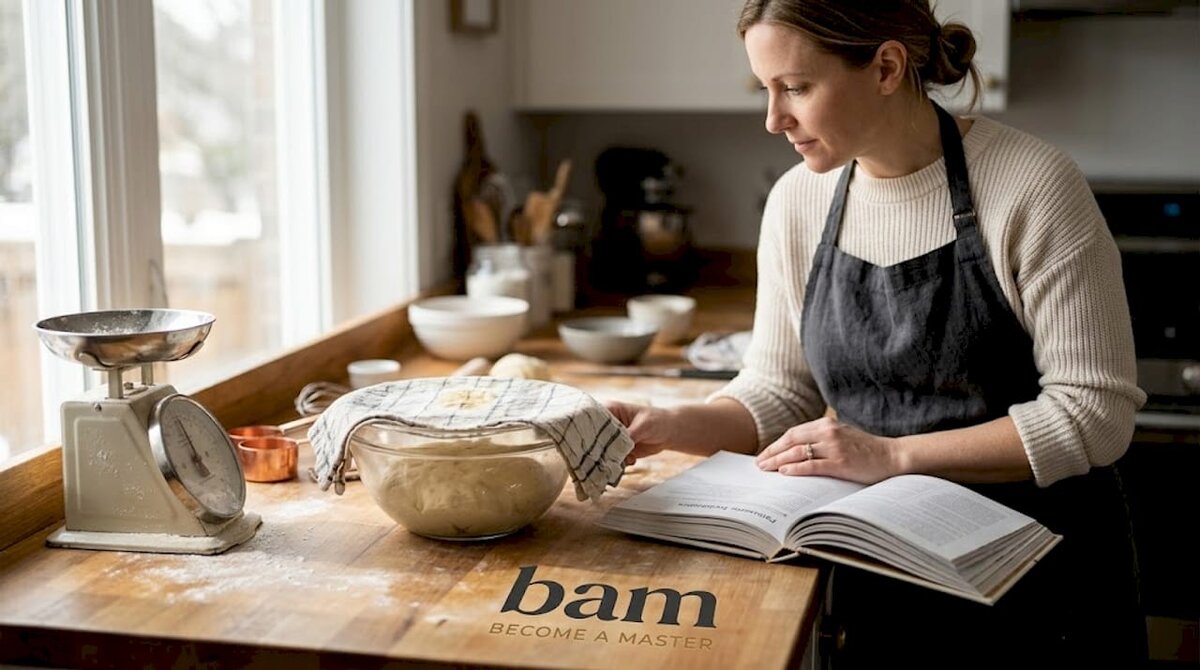
Not all baking books serve the same baker. The range runs from slim, reassuring guides for complete novices to dense, science-heavy references that experienced pastry chefs return to for years. Knowing which type suits you saves time and money.
| Type | Best for | Recipe count | Key features |
|---|---|---|---|
| Beginner baking cookbooks | New home bakers | 100 to 150 recipes | Technique breakdowns, simple language, process photos |
| Intermediate collections | Confident home bakers | 150 to 500 recipes | Broader range, some science, classic and modern recipes |
| Science-based references | Advanced bakers | 500 to 2,000+ recipes | Ratios, chemistry, troubleshooting, scaling formulas |
| Specialist books | Pastry chefs, decorators | Varies | Focus on one discipline: bread, pastry, chocolate, etc. |
Beginner baking books typically feature 100 to 150 recipes with foundational technique instructions, covering methods like creaming, folding, and kneading in plain language. The goal is confidence before complexity. Books from publishers like King Arthur Baking Co. and America’s Test Kitchen are frequently cited in this category for their reliability and clear instruction.
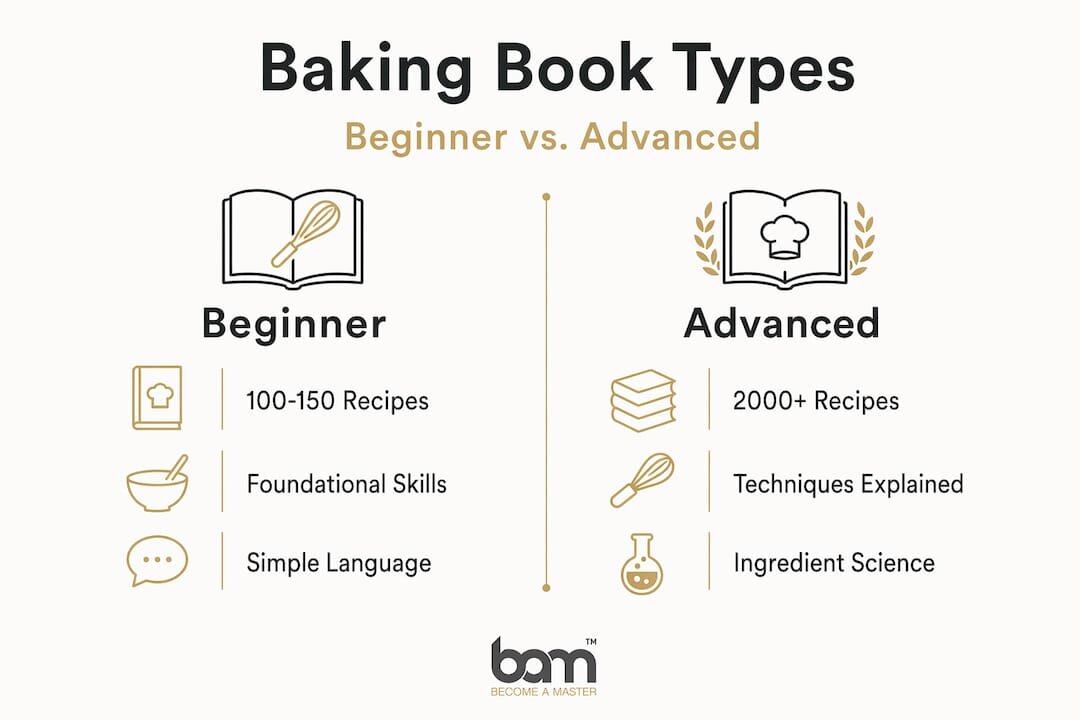
At the other end, science-focused baking books can contain over 2,000 recipes and variations, serving both beginners and professionals who want to understand the mechanics behind every result. These books explain gluten networks, leavening chemistry, and the precise role each ingredient plays. Experienced bakers use them regularly to troubleshoot problems and adapt recipes with confidence.
Updated editions also matter. The 35th anniversary edition of The Cake Bible adds approximately 30% new content, including updated equipment guidance and ingredient information. That kind of revision keeps a book relevant as ingredients, ovens, and baking trends evolve.
Pro Tip: If you are buying your first dedicated baking book, look for one that covers at least three core techniques in depth: creaming, folding, and proving. These appear in the majority of home baking recipes and mastering them early pays off across dozens of future bakes.
Owning a good baking book is not the same as using it well. Most home bakers read the recipe once and start measuring. The bakers who improve fastest treat the book as a course, not a checklist.
Here is a practical approach to getting the most from any baking recipe book:
The best baking books for beginners act as an extra hand in the kitchen, offering reliable guidance that builds confidence with each recipe. That reliability comes from the author’s testing process, which is why choosing books from trusted sources matters. For hands-on technique support, resources like practical tips for baking cakes complement what you read in a recipe book with focused, applied guidance.
Pro Tip: Keep a small notebook with your baking books. After each recipe, write one sentence about what worked and one about what you would change. After six months, that notebook becomes your most personalised baking reference.
With hundreds of baking books available, the choice can feel overwhelming. These are the features worth prioritising when selecting a book for your kitchen:
A few titles consistently appear in conversations about the best baking recipe books, and they illustrate the range of what a specialist baking book can be.
Each of these books meets a different need. The right one for you depends on where you are in your baking journey and what you want to achieve next.
I have used general cookbooks for baking, and I have used books written specifically for bakers. The difference is not subtle. When I first tried to make a layered sponge using a general cookbook, the recipe gave me four steps and a temperature. That was it. The cake was dense, the layers uneven, and I had no idea why.
When I switched to a dedicated baking book, the same type of recipe came with notes on butter temperature, explanations of why over-creaming creates a tight crumb, and a photo showing exactly what the batter should look like before it goes into the tin. I made a better cake on the first attempt, not because I had suddenly become more skilled, but because I had better information.
What I have found is that the best baking recipe books function as a baker’s guide to recipes in the truest sense. They do not just give you a list of ingredients. They teach you to read a recipe critically, understand what each component does, and adapt when something does not go to plan. That is a skill that transfers across every recipe you ever attempt.
My honest recommendation: do not buy a baking book based on its cover photography alone. Read the introduction, check whether the author explains technique or just lists steps, and look for a troubleshooting section. Those three things tell you more about a book’s usefulness than any recipe count.
— Andraz
Once you have a solid baking recipe book in hand, the next step is making sure your ingredients and accessories match the quality of your recipes. Bamchocolate offers a range of baking accessories designed to support home bakers working from detailed recipe books, from precision tools to specialist ingredients.
For bakers looking for structured recipe inspiration alongside quality products, the 101 BAM pastry recipe collection provides curated guidance built around premium confectionery ingredients. If you want to stock your kitchen with the essentials for pastry and confectionery work, the BAM Basic pastry package brings together the core ingredients referenced across popular baking books. For more adventurous projects, the BAM Confectionery set Creamy fillings pairs well with recipe books that focus on layered pastries and filled cakes.
A recipe book for bakers is a specialised collection of recipes focused on baking techniques, precise measurements, and ingredient science. Unlike general cookbooks, baking recipe books include step-by-step instructions, process photography, and troubleshooting guidance designed to help bakers achieve consistent results.
Beginner baking cookbooks typically feature 100 to 150 recipes with clear technique breakdowns and simple language, while advanced books can contain over 2,000 recipes and focus on baking science, ratios, and scaling formulas for experienced bakers.
Look for precise measurements in weights, technique explanations that cover the “why” behind each step, process photography, author credibility, and a troubleshooting section. These features separate a genuinely useful baking book from a basic recipe collection.
Read headnotes and ingredient notes before you start, follow the recipe exactly on your first attempt, and use the troubleshooting section after any failure. Keeping notes on each bake accelerates your progress significantly.
Yes, particularly for reference books. Updated editions incorporate new equipment standards, revised ingredient guidance, and additional recipes. The 35th anniversary edition of The Cake Bible, for example, adds around 30% more content than the original, including scaling formulas for different batch sizes.


 Confectionery tips


 Slovenščina
 Hrvatski
 Deutsch
 Italiano
 Česky
Česky
 Polski
 Magyar
 Français
 Slovák
 Nederlands
 Español