 info@bamchocolate.com
 Login


 en

 BAM Cake converter
 Login
Claudia
Avtorica vsebin


 Reading time:
9 minutes
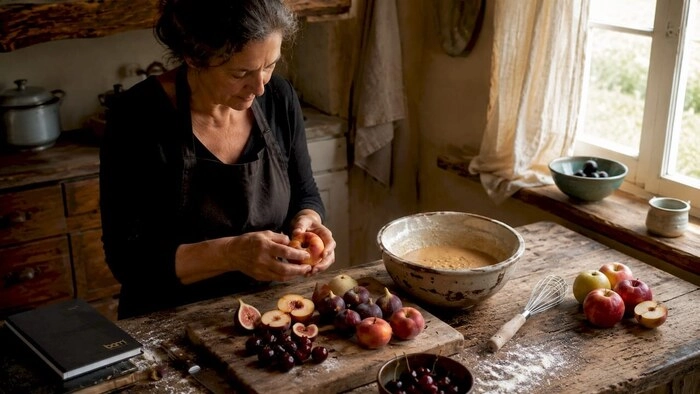
Discover why seasonal ingredients in baking enhance flavor and texture. Learn how peak-ripeness produces superior baking results.
TL;DR:
- Seasonal baking ingredients peak in flavor and texture because they are harvested at full ripeness. Using ripe produce enhances aroma and sweetness while providing consistent baking performance. Preserving fruit through freezing or proper handling extends their seasonal quality year-round.
Seasonal baking ingredients are those harvested at their natural peak ripeness, delivering superior flavour, texture, and functional performance in baked goods. The core reason why seasonal ingredients in baking outperform out-of-season alternatives is physiological. Sugars, organic acids, aromatic molecules, and pigments accumulate fully during final ripening stages on the plant. Early-harvested produce misses this window entirely. Resources like Bakerpedia and CollectiveCrop have documented how this ripening gap translates directly into measurable differences in baking outcomes, from crumb moisture to aroma intensity.
Flavour in fruit is not a fixed property. It builds progressively as the fruit ripens, driven by biochemical changes that only complete when the fruit reaches full maturity on the plant. Bakers who understand this process gain a real advantage when selecting ingredients.
The key compounds are sugars, organic acids, and volatile aromatic molecules. Research on ‘O’Neal’ blueberries shows that sugars increase and acidity declines from early to late ripening stages, producing the balanced sweetness that makes a blueberry muffin genuinely satisfying rather than sharp and flat. These shifts are not subtle. They represent the difference between an ingredient that contributes flavour and one that merely adds bulk.
Aroma compounds tell an equally clear story. A 2026 metabolomics study on ‘Shine Muscat’ grapes found that linalool’s aroma contribution increased from 53% to 95% across ripening stages. Linalool is a floral, citrus-adjacent volatile that carries through heat during baking. A grape harvested early delivers a fraction of that aromatic payload. The same principle applies to stone fruits, berries, and pome fruits used across seasonal baking recipes.
| Ripening stage | Soluble solids (sugars) | Aroma intensity | Baking suitability |
|---|---|---|---|
| Early harvest | Low | Weak | Poor |
| Mid-season | Moderate | Building | Acceptable |
| Peak ripeness | High | Full | Excellent |
| Overripe | Declining | Variable | Reduced |
Pro Tip: When selecting stone fruits for tarts or crumbles, press gently near the stem. Fruit that yields slightly is at or near peak ripeness and will deliver the fullest aroma and sugar content in your bake.
A 2026 study on ‘Ruaner’ pears added another layer of nuance. It found that tree age affects fructose and volatile esters, meaning even within a single seasonal crop, variability exists. Bakers working with local suppliers benefit from tasting before committing to large quantities.
Flavour is only half the story. Seasonal ingredients also change how a recipe behaves in the oven, and not always in ways that are immediately obvious.
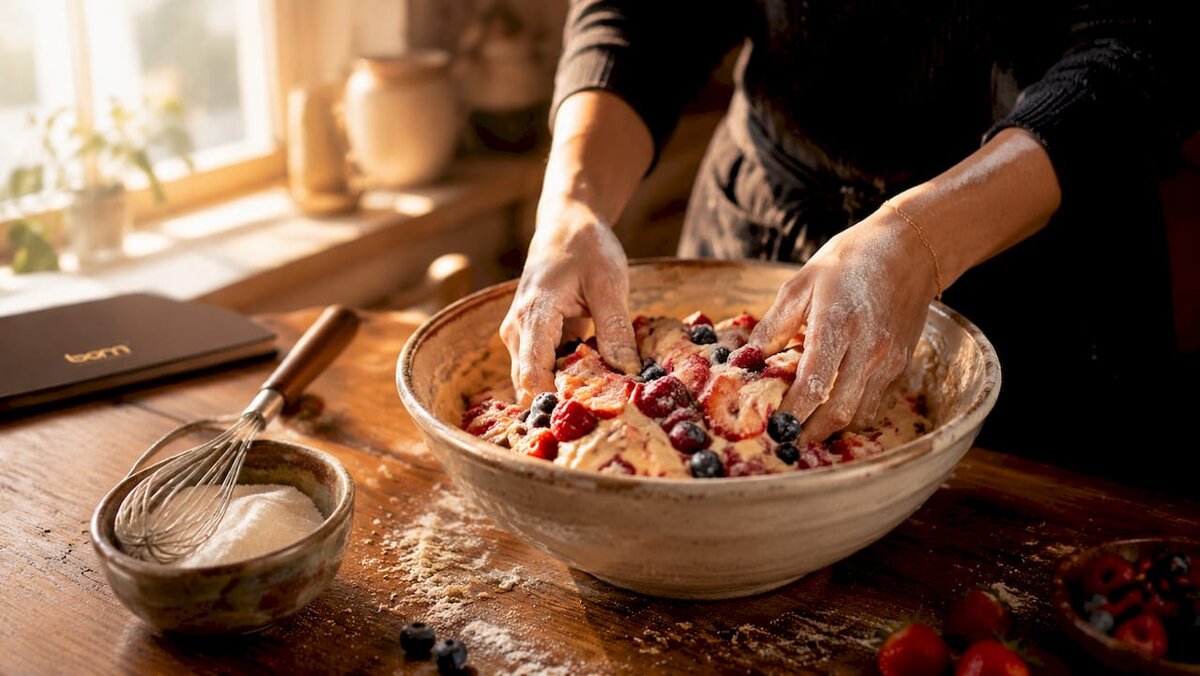
The central issue is water activity. Ripe, in-season fruits carry water activity levels between 0.97 and 0.99, which is high enough to cause moisture migration into surrounding batter or pastry. This is the mechanism behind soggy rings in fruit tarts and wet crumb in fruit-studded loaves. The fruit releases water into the matrix during baking, disrupting the starch gelatinisation that gives structure to the crumb.
Bakerpedia identifies hydrocolloids as the standard formulation response. Adding a small quantity of pectin, xanthan gum, or modified starch to the batter creates a matrix that absorbs and holds excess moisture. This keeps the crumb stable without sacrificing the flavour benefits of using ripe, in-season fruit. Practical cake baking tips often address this exact challenge when working with high-moisture summer fruits.
Seasonal variability also affects baking time. A juicy august peach behaves differently from a firmer september variety of the same species. Bakers who treat seasonal ingredients as fixed quantities will encounter inconsistency. The solution is to treat moisture content as a variable and adjust accordingly.
Key practical adjustments when baking with high-moisture seasonal fruits:
Pro Tip: For fruit tarts using in-season berries, blind bake the pastry case fully before adding any filling. This single step eliminates most moisture migration problems without any formulation changes.
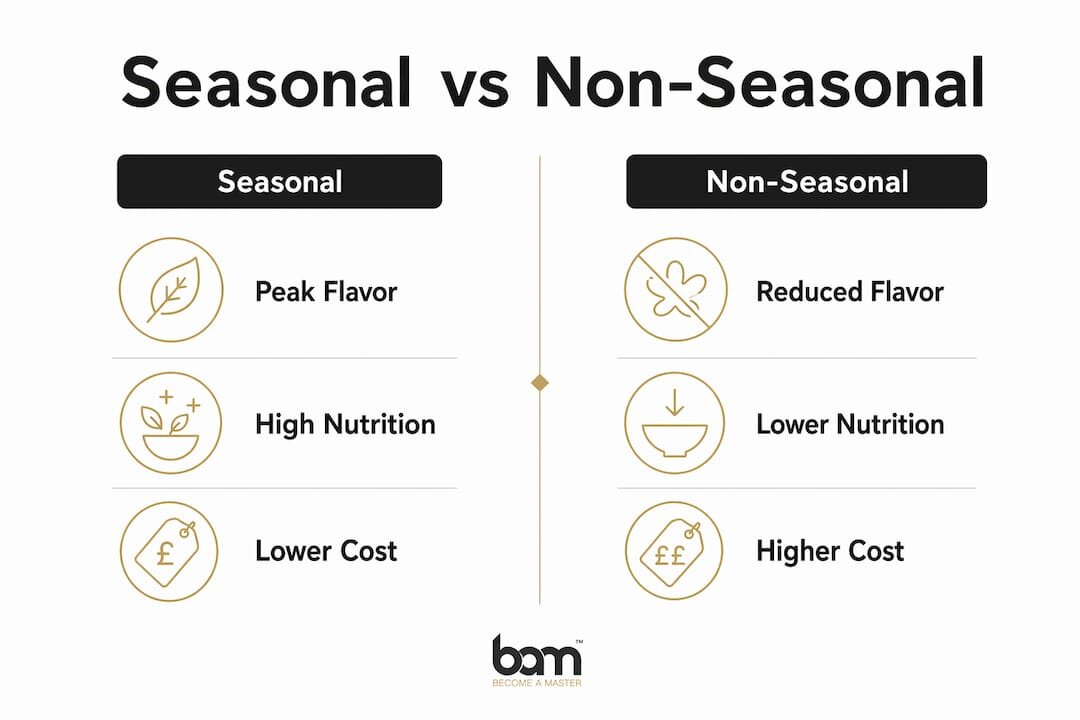
The differences between peak-season and out-of-season produce are measurable across flavour, nutrition, cost, and environmental impact. Bakers who compare them side by side rarely go back.
Antioxidant losses in produce increase significantly during extended storage, according to a 2003 study published in the Journal of Agricultural and Food Chemistry. This matters for baking because antioxidants in fruit contribute to colour stability and flavour complexity during heating. An out-of-season strawberry that has spent two weeks in cold storage delivers less of both.
Cost is a practical factor that often goes unmentioned. Locally harvested in-season strawberries cost significantly less than imported out-of-season varieties. For home bakers producing in volume, this difference adds up across a full baking season.
| Factor | Seasonal ingredients | Non-seasonal ingredients |
|---|---|---|
| Flavour intensity | High, full aromatic profile | Reduced, flat |
| Antioxidant content | Preserved at harvest | Depleted during storage |
| Moisture consistency | Variable but predictable by season | Artificially controlled |
| Cost | Lower when locally sourced | Higher due to transport and storage |
| Environmental impact | Lower carbon footprint | Higher due to long-distance supply chains |
| Formulation predictability | Requires seasonal adjustment | More uniform but less flavourful |
The environmental case for baking with local ingredients is straightforward. Shorter supply chains mean less refrigeration, less transport, and lower carbon output. For bakers who care about sourcing, seasonal and local are almost always the same choice.
Baking with seasonal produce does not mean limiting your repertoire to what is available this week. A structured approach lets you work with peak-season quality throughout the year.
Build a seasonal substitution ladder. Match fruits by functional category rather than by name. Firm fruits like apples and pears behave similarly in baking. Juicy fruits like peaches, plums, and berries share moisture characteristics. Substituting within functional categories preserves texture and reduces the need for major recipe rewrites.
Freeze at peak ripeness. Freezing captures flavour compounds at their highest concentration. Spread berries in a single layer on a tray, freeze until solid, then transfer to bags. Frozen fruit releases more liquid on thawing, so reduce added moisture in the recipe accordingly.
Adjust sugar and acid ratios by season. Spring rhubarb is sharper than summer rhubarb. Early-season plums carry more acid than late-season ones. Taste your ingredient before baking and adjust sugar quantities to compensate. A simple rule: if the fruit tastes sharp raw, add 10–15% more sugar to the recipe.
Use preservation techniques to extend the season. Jam, compote, and canned fruit retain much of the flavour profile of peak-season produce. These work particularly well in filled pastries, layer cakes, and enriched breads where a concentrated fruit flavour is desirable.
Track your seasonal calendar. Note which varieties you use and when, alongside any recipe adjustments made. This builds a personal reference that makes each subsequent season more consistent. Knowing when biscuits and cakes are ideally baked is easier when you also know the behaviour of the fruit going in.
Pro Tip: Label frozen fruit bags with the variety, harvest date, and any recipe notes. This turns your freezer into a seasonal ingredient library that supports consistent baking through winter.
Seasonal ingredients deliver better baking results because peak-ripeness produce contains higher concentrations of sugars, aromatic compounds, and antioxidants than early-harvested or long-stored alternatives.
| Point | Details |
|---|---|
| Ripeness drives flavour | Sugars, acids, and aroma compounds only reach full concentration at peak ripeness on the plant. |
| Moisture requires management | High water activity in ripe fruit causes soggy textures; hydrocolloids and flour coatings correct this. |
| Seasonal means lower cost | Locally sourced in-season produce costs less than imported out-of-season equivalents. |
| Substitution preserves quality | Matching fruits by functional category lets bakers swap ingredients without losing texture or flavour. |
| Freezing extends the season | Freezing at peak ripeness locks in flavour compounds for use throughout the year. |
The first time I noticed a real difference was with a simple blueberry loaf. I had made the same recipe a dozen times using supermarket blueberries in january. Then I made it in july with fruit from a local farm, picked two days earlier. The crumb was deeper in colour, the aroma filled the kitchen before the loaf was even out of the oven, and the flavour held through to the last slice. Same recipe. Entirely different result.
What changed my approach was understanding that the difference was not about freshness as a marketing concept. It was about the biochemistry of ripening. Once I started thinking about fruit as an ingredient with a measurable flavour profile that changes week by week, I stopped treating seasonal produce as interchangeable with its off-season equivalent.
The texture challenge took longer to solve. I ruined several tarts before I understood that juicy summer fruit needed a different formulation than the firmer fruit I had been using in autumn. Adding a small amount of cornflour to berry fillings was the fix. It sounds minor, but it is the kind of adjustment that separates a consistent baker from one who blames the oven.
My honest advice: taste every piece of fruit before it goes into a recipe. Not to check if it is nice, but to calibrate. If it is sharper than expected, add sugar. If it is very juicy, reduce liquid elsewhere. The science supports this approach, and the results speak for themselves.
— Andraz
Bamchocolate stocks a range of products that pair directly with seasonal baking. The BAM Confectionery set Fruit fillings offers concentrated fruit-based fillings that complement fresh seasonal produce in tarts, layer cakes, and pastries. For bakers who want to extend their repertoire, the 101 BAM pastry recipe book covers formulations suited to ingredient variability across seasons. The full range of baking accessories includes tools and additives that support recipe adjustments when working with high-moisture seasonal fruits. Bamchocolate also offers the BAM Basic pastry package as a practical starting point for bakers building a core ingredient kit around seasonal recipes.
Seasonal ingredients are harvested at peak ripeness, when sugars, organic acids, and aromatic compounds reach their highest concentrations. Early-harvested produce misses this final accumulation stage, resulting in flat flavour in baked goods.
Ripe seasonal fruit carries high water activity, which causes moisture to migrate into surrounding batter and create soggy textures. Adding hydrocolloids like pectin or coating fruit in flour before mixing corrects this.
Locally sourced in-season produce costs less than imported out-of-season equivalents because it requires less storage and transport. This cost difference is meaningful for bakers working with fruit in volume.
Frozen fruit captured at peak ripeness retains most of its flavour compounds and is a reliable substitute for fresh seasonal produce. Reduce added liquid in the recipe to account for the extra moisture released during thawing.
Match replacement fruits by functional category: firm fruits like apples and pears are interchangeable in most recipes, as are juicy fruits like peaches and plums. Adjust thickening agents when switching between firm and juicy categories.


 Confectionery tips



 Slovenščina
 Hrvatski
 Deutsch
 Italiano
 Česky
 Polski
 Magyar
 Français
 Slovák
 Nederlands
 Español